The best engineering building sets for middle school students turn abstract STEM ideas into something kids can design, test, troubleshoot, and improve. This roundup compares structural engineering kits, mechanical models, robotics sets, coding projects, and electronics systems for different ages and skill levels.
Whether your student enjoys bridges, vehicles, robots, or experiments, look for a kit that balances clear instructions with enough flexibility to encourage genuine problem-solving. The right choice should match their experience, attention span, available workspace, and interest in building or programming.
Best 10 Engineering Building Sets for Middle School Students Picks for 2026
Hands-On Structures
Discovering Buildings & Bridges
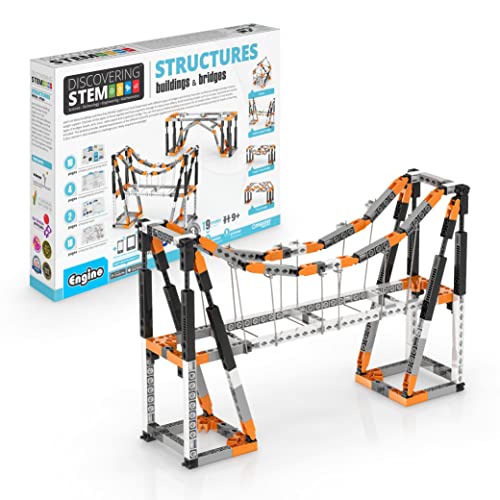
- Build nine structure and bridge models
- Includes theory, experiments, and a quiz
- Multi-directional snap-fit construction system
Best For: Ages 9+ exploring structural engineering
Mechanical Motion

- Includes 20 machine and vehicle projects
- Adds 22 experiments about forces and energy
- 80-page illustrated learning manual
Best For: Ages 8–14+ learning mechanical engineering
Build-and-Code Challenge
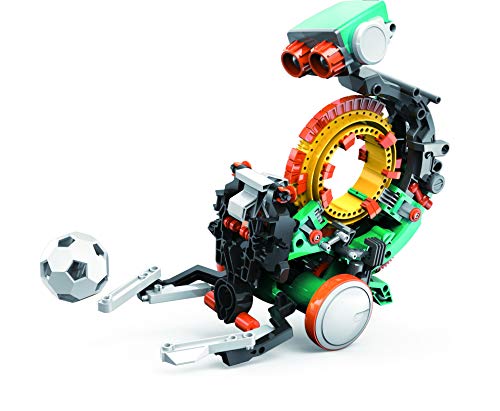
- Builds a robot that throws, lifts, kicks, and draws
- Programs actions with a mechanical coding wheel
- Multi-hour project for ages 10+
Best For: Students combining mechanical engineering and coding
Structural Design Lab

- Build 20 structural models
- Includes 285+ interchangeable pieces
- Teaches load, tension, and compression
Best For: Ages 8–14 studying structural physics
Advanced Circuit Explorer

- 750-plus circuit project configurations
- Includes guided student training materials
- Adds solar, sound, radio, and computer-interface experiments
Best For: Students exploring electrical engineering through guided, hands-on projects
Structural Design Builder
Thames & Kosmos Architectural Engineering

- Builds 20-plus architectural models
- Explores trusses, arches, domes, and steel frames
- Includes a 44-page full-color instruction manual
Best For: Students interested in architecture, structures, and physical model building
Hands-On Robotics Challenge

- Combines wooden construction with electronics
- Includes motors, PCB board, and wiring
- No soldering required; six AA batteries needed
Best For: Students ready for a challenging robotics and mechanical-building project
Hands-On Mechanics Pick

- 703-piece build with realistic V8 details
- USB-powered moving piston display
- Designed for ages 14 and up
Best For: Older students interested in cars and mechanical engineering
Physics Exploration Pick

- Build six working physics models
- Covers inertia, friction, and circular motion
- Includes theory, experiments, quizzes, and a 3D app
Best For: Guided physics learning for ages 9 and up
Robotics and Coding Pick

- 780 pieces create six rebuildable designs
- Remote and app control with coding modes
- Rechargeable motorized play with lights
Best For: Young builders interested in robotics and programming
Hands-On Structures – Discovering Buildings & Bridges
For shoppers comparing engineering building sets for middle school students, this Engino kit offers a focused introduction to structural design. Students can build nine models, including houses, pyramids, and several bridge styles, while exploring practical engineering concepts.
Best For: Curious learners ages 9 and up who want building projects with structural-engineering lessons, experiments, and quiz activities.
Pros:
- Builds nine real-world structures, including beam, arch, truss, cable-stayed, and suspension bridges.
- Includes theory, facts, experiments, and a quiz alongside illustrated instructions.
- Snap-fit parts connect in multiple directions for more complex three-dimensional models.
- Designed for reuse and supported by a two-year limited warranty.
Cons:
- Its subject focus is primarily buildings and bridges rather than robotics or coding.
- The set is intended for one builder at a time.
This is a strong choice when the goal is to connect hands-on construction with core structural principles. Its school and STEM-program use makes it especially suitable for guided learning or science-fair preparation.
Mechanical Motion – Machines & Vehicles
This Thames & Kosmos set is a versatile option among engineering building sets for middle school students, combining 20 construction projects with 22 supplemental experiments. The reusable parts let learners investigate machines, vehicles, forces, gears, energy, and motion.
Best For: Students ages 8–14+ who prefer mechanical engineering projects with clear real-world connections.
Pros:
- Offers 20 hands-on builds, including a crane, elevator, windmill, tightrope walker, and all-wheel-drive ATV.
- Adds 22 experiments covering gravity, weight, momentum, gears, and energy conversion.
- Reusable components can be combined and reconfigured into different functional models.
- Includes an 80-page, full-color manual with illustrated instructions and explanations.
Cons:
- The broad mechanical focus may be less suitable for students specifically seeking bridge or skyscraper design.
- It is recommended for ages 8–14+, so advanced students may outgrow the introductory material.
Choose this kit for variety and guided exploration. It provides a useful bridge between building activities and everyday mechanical systems, from construction equipment to automotive engineering.
Build-and-Code Challenge – Mech-5 Robot
For students who want engineering building sets for middle school students with a coding component, Mech-5 combines hands-on assembly with mechanical programming. After building the robot, learners place coding buttons on its wheel to control actions such as throwing, lifting, kicking, and drawing.
Best For: Future engineers ages 10 and up who want an extended robot-building project with introductory coding and problem-solving.
Pros:
- Builds a mechanical coding robot that can perform multiple physical actions.
- Uses a coding wheel and buttons to introduce programming concepts without requiring a computer.
- Detailed assembly instructions support a multi-hour, hands-on construction experience.
- Targets coding, programming, problem-solving, and STEM skills.
Cons:
- Assembly requires patience and careful attention to the step-by-step directions.
- Requires two AAA batteries, which are not listed as included.
- Its focus is one robot rather than a collection of different engineering models.
Mech-5 is a good fit when active building and simple coding are equally important. Its mission-based design gives students a tangible way to see how programmed inputs produce mechanical movement.
Structural Design Lab – Bridges & Skyscrapers
This intermediate Thames & Kosmos kit is a strong candidate among engineering building sets for middle school students interested in how structures handle loads. Its interchangeable pieces support 20 models while the manual explains force, compression, tension, and building materials.
Best For: Ages 8–14 who want an intermediate bridge-and-skyscraper project centered on structural physics.
Pros:
- Builds 20 different structural models.
- Includes more than 285 interchangeable plastic building pieces.
- Explores force, load, compression, tension, and related structural concepts.
- Comes with a 36-page illustrated experiment and assembly manual.
Cons:
- The intermediate skill level may require adult guidance for some younger builders.
- Its emphasis is structural engineering rather than coding or powered mechanisms.
This kit suits learners who want to test and compare structural forms rather than simply assemble decorative models. The broad selection of models and reusable pieces gives students room to revisit concepts through multiple builds.
Advanced Circuit Explorer – Snap Circuits Extreme SC-750R
For shoppers comparing engineering building sets for middle school students, the Snap Circuits Extreme SC-750R is a broad electronics-focused option. Its snap-together components and guided training materials support hands-on exploration of circuits, sound, light, radio, and other electrical concepts.
Best For: Middle school students interested in electrical engineering, guided STEM projects, and experimenting with many circuit configurations.
Pros:
- Supports more than 750 project configurations with an 80-plus-piece kit.
- Includes a student training program, study guide, and colorful instruction book.
- Offers advanced components such as an electromagnet, solar cell, analog meter, and computer interface.
Cons:
- The large number of projects may feel overwhelming without following the guide.
- Its focus is electrical circuits rather than physical structure or mechanical construction.
This is a strong choice when variety and electronics instruction matter most. The included study materials also make it suitable for supplemental curriculum use or homeschooling.
Structural Design Builder – Thames & Kosmos Architectural Engineering
Among engineering building sets for middle school students, Thames & Kosmos Architectural Engineering stands out for its focus on structures and architectural design. Students build trusses, arches, domes, and scaled-down real-world buildings while learning how building materials and structural elements work.
Best For: Young builders who enjoy architecture, model construction, structural problem-solving, and guided STEM activities.
Pros:
- Builds more than 20 models, including structural elements and real-world buildings.
- Includes flexible pieces designed to mimic steel frames.
- Provides a 44-page, full-color manual with building exercises and design prompts.
Cons:
- The kit centers on architectural structures rather than electronics or robotics.
- Some students may finish the guided models before exploring their own designs.
This set offers a clear introduction to architectural engineering without requiring batteries. Its combination of instructions and open-ended design makes it a practical pick for students interested in how buildings stand and function.
Hands-On Robotics Challenge – DIY Wooden Robot Arm Kit
For students seeking engineering building sets for middle school students with a mechanical focus, this DIY robot arm combines wooden construction with basic electronics. Assembly involves motors, a PCB microcontroller board, wires, and a guided tutorial, creating an approachable introduction to robotic movement and circuits.
Best For: Students who enjoy challenging builds, mechanical engineering, robotics, and learning how electrical controls produce movement.
Pros:
- Combines a wooden 3D assembly project with motors, wiring, and circuit concepts.
- Requires no soldering and includes the accessories needed for assembly.
- Encourages problem-solving, patience, logical thinking, and motor skills.
Cons:
- Six AA batteries are required but are not included.
- The assembly may be demanding for younger or less experienced builders.
- The product notes describe a single robot-arm project rather than multiple builds.
This kit is a good fit when the goal is to build and operate one functional mechanism. It offers more mechanical assembly than a typical circuit kit, while still introducing basic electronic control.
Hands-On Mechanics Pick – V8 Engine Model Kit
For older middle school students interested in engineering building sets for middle school students, this 703-piece V8 engine model offers a detailed mechanical build. Its transparent cylinder heads, simulated piston movement, and turbocharger make the finished model useful for visualizing how an engine works.
Best For: Teens and older students who enjoy cars, mechanical engineering, and detailed construction projects.
Pros:
- Realistic V8 features include transparent cylinder heads and moving simulated pistons.
- USB-powered motor lets builders watch the internal mechanism operate without batteries.
- ABS construction is described as non-toxic, odor-free, and tested to ASTM and CPSIA standards.
- Encourages creativity, logical thinking, and problem-solving through hands-on building.
Cons:
- The manufacturer recommends it for ages 14 and up.
- Only one engine model is included, so it offers less model variety than multi-build kits.
- The detailed 703-piece assembly may require patience and adult support for some builders.
This is a strong choice when the goal is to explore engine mechanics rather than robotics or coding. The powered, see-through design adds an engaging demonstration element after construction.
Physics Exploration Pick – Engino Physics Laws Kit
This Engino kit is a practical option for families comparing engineering building sets for middle school students because it connects construction with hands-on physics. Builders can create six working models while exploring inertia, friction, and circular motion through theory, experiments, and quizzes.
Best For: Students ages 9 and up who want guided physics activities alongside model building.
Pros:
- Builds six working models, including a rocket launcher, crash test rig, and sharpening wheel.
- Includes theory, experiments, fun facts, and a four-page quiz section.
- Interactive 3D app supports virtual building and adds another learning format.
- Targets concentration, construction, critical thinking, logical thinking, and STEM skills.
Cons:
- The set focuses specifically on inertia, friction, and circular motion, so its topic range is narrower than a general construction kit.
- The six models are build options rather than six completed models at once.
- Plastic components and instructional materials may feel more educational than open-ended.
Choose this set when structured learning matters as much as building. Its printed explanations and experiments make it especially suitable for independent study, classroom enrichment, or guided parent-child activities.
Robotics and Coding Pick – 6-in-1 STEM Robot Kit
Students looking for engineering building sets for middle school students may appreciate the variety in this 780-piece robot kit. It supports six rebuildable vehicle and robot designs, then adds remote control, app-based play, path coding, and STEM programming for a more interactive project.
Best For: Ages 8 and up who enjoy robotics, programmable play, remote-controlled vehicles, and rebuildable models.
Pros:
- 780 pieces can be used to create six models, including robots, a tank, a fighter, and tracked vehicles.
- Offers both 2.4GHz remote control and mobile-app control.
- App features include driving simulation, gravity control, path coding, and STEM programming.
- Rechargeable battery, motor system, and lighting add movement and interactive play.
Cons:
- Only one of the six models can be built at a time.
- App features require a compatible mobile device and may add screen-based play.
- The set requires a nonstandard rechargeable battery, which may need charging before use.
This is the most versatile option of the three for students who want construction followed by active experimentation. It combines rebuilding with basic coding and control, although families should be comfortable using the required app.
How We Picked the Best Engineering Building Sets for Middle School Students
We prioritized kits that offer meaningful hands-on engineering rather than simple assembly alone. The selection covers structures, machines, physics, electronics, robotics, coding, and motorized models so families can compare different ways to learn through making. We also considered stated age ranges, project variety, reusability, instructional support, and how well each set can grow with a middle school student’s skills.
Because “middle school” can include a wide range of ages and abilities, treat manufacturer age guidance as a starting point. A younger beginner may need adult help with small parts, wiring, or programming, while an experienced builder may prefer open-ended challenges over step-by-step instructions.
Quick Comparison
| Best For | Look For |
|---|---|
| Structural engineering | Bridge, tower, building, and load-testing projects |
| Mechanical learners | Gears, linkages, vehicles, engines, and moving mechanisms |
| Robotics and coding | Programmable controllers, app support, sensors, or remote control |
| Electronics beginners | Clearly labeled components, guided circuits, and safe experimentation |
| Physics exploration | Projects demonstrating inertia, friction, motion, or circular forces |
| Advanced or family projects | Many models, modular parts, and opportunities for redesign |
Key Buying Factors for Engineering Building Sets for Middle School Students
Project Type and Learning Goals
Choose a kit that connects with the student’s interests. Structural sets are a strong fit for learners who enjoy testing stability and weight. Mechanical kits explain motion through gears and linkages, while coding robots add logic, sequencing, and debugging. Electronics kits are useful for circuit fundamentals but may require more careful organization.
Difficulty and Instruction Quality
Check whether the set provides illustrated manuals, experiment explanations, or digital tutorials. A kit that is too simple can lose a capable student’s interest; one that is too complex may become frustrating without supervision. Multiple difficulty levels or model options provide a better path for progression.
Parts, Power, and Compatibility
Confirm what is included before buying. Some motorized and robotic sets may require batteries, a compatible device, or app access. Also consider whether parts can be reused in custom builds, whether replacements are available, and how easy the pieces are to sort and store.
Safety and Workspace
Small components, wires, motors, and tools call for an uncluttered workspace and age-appropriate supervision. Review battery requirements, sharp edges, and any electrical or mechanical precautions, especially when a student is working independently.
Who Should Buy Which Engineering Building Sets for Middle School Students?
Choose a structural or architectural set for a student fascinated by buildings, bridges, and real-world design. Mechanical engineering kits suit hands-on learners who want to see gears, engines, and vehicles move. Robotics kits are best for students drawn to coding, remote control, or programmable challenges. Electronics sets make sense for curious beginners who want to explore circuits and components. Physics-focused kits are a good choice when the goal is to connect classroom concepts with visible experiments.
For a gift, favor a kit with several projects and clear instructions. For a classroom, club, or siblings sharing equipment, prioritize durable, reusable parts and varied challenge levels. The best Engineering Building Sets for Middle School Students are those that invite a second build: after completing the instructions, the student should have enough parts and confidence to test a new idea of their own.