The best chemistry sets for girls turn science into an active, confidence-building experience. These kits combine colorful materials, guided experiments, and age-appropriate explanations to help children explore reactions, mixtures, acids, bases, and laboratory techniques.
Our roundup includes beginner-friendly sets for younger children, larger experiment collections for ages 8 to 12, and themed kits designed to make STEM learning especially engaging. Use the guide below to choose the right balance of safety, supervision, experiment variety, and long-term value.
Best 10 Chemistry Sets for Girls Picks for 2026
Best Overall
National Geographic Amazing Chemistry Set

- 100+ experiment ideas with 15 supplied-material activities
- Includes crystal growing, reactions, and glowing projects
- Real-style test tubes, beakers, and pipettes
Best For: Ages 8 and up seeking variety and extended STEM play
Best Lab Station

- 57-piece setup with a dedicated lab station
- Includes cards, manual, and multiple lab vessels
- Non-hazardous chemicals with no borax
Best For: Ages 6 and up who prefer an organized chemistry workspace
Best Girl-Focused Pick
Butterfly EduFields 150+ Experiments Kit

- Designed for girls ages 8 to 12
- Includes 150+ guided experiment ideas
- ASTM-certified kit with creative molds and tools
Best For: A giftable, girl-focused introduction to hands-on STEM
Best for Younger Kids
National Geographic Junior Chemistry Set

- Recommended for ages 4 and up
- Includes 50 illustrated experiments
- More than 20 child-safe lab tools
Best For: Young children starting hands-on chemistry and STEM play
Best Starter Lab
Butterfly EduFields 100+ Experiments Kit

- 100+ activities for ages 4-8
- Includes goggles, gloves, and basic tools
- Kid-friendly, step-by-step guide
Best For: Young beginners who want lots of guided science activities
Best Science-Magic Pick
National Geographic Magic Chemistry Set
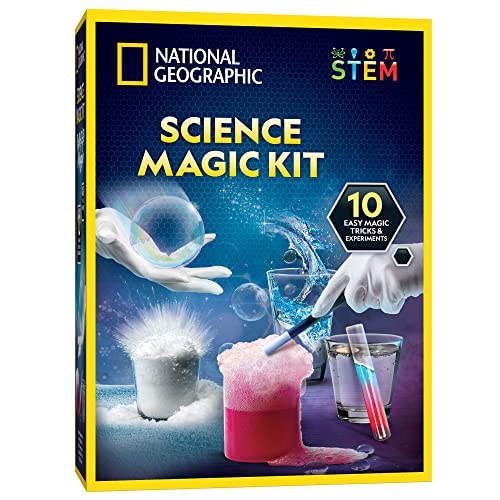
- 10 science experiments styled as magic tricks
- Includes tools, wand, and white gloves
- Illustrated guide explains the underlying science
Best For: Ages 8-12 who enjoy performing experiments
Best Variety for Older Kids
UNGLINGA 150 Experiments Science Kit

- 150 projects across multiple science topics
- Includes tools, materials, and goggles
- Step-by-step illustrated manual
Best For: Ages 8+ seeking extensive hands-on science variety
Best Overall Chemistry Set
National Geographic Chemistry Set

- 45 listed hands-on experiments
- Includes volcano, geyser, and rocket activities
- Illustrated instructions support STEM learning
Best For: Kids who enjoy visual, reaction-based chemistry projects
Most Comprehensive Chemistry Set
Doctor Jupiter Girls' Science Kit

- Includes more than 135 experiments
- Covers chemistry and broader science themes
- Provides several lab-style tools and ingredients
Best For: Families seeking maximum experiment variety
Best Themed Chemistry Set

- Includes 50 total experiments
- Materials provided for 15 activities
- Features glow, slime, lava lamp, and pH projects
Best For: Barbie fans who enjoy colorful, hands-on experiments
Best Overall – National Geographic Amazing Chemistry Set
For shoppers comparing chemistry sets for girls ages 8 and up, this National Geographic kit offers a broad mix of hands-on reactions and classic lab tools. It includes materials for 15 experiments plus a bonus guide with 85 additional projects using common household items.
Best For: Kids who want a substantial chemistry set with crystal growing, color-changing reactions, glowing projects, and plenty of follow-up activities.
Pros:
- Offers more than 100 experiment ideas in total.
- Includes materials for 15 experiments, including crystal growing and color-changing activities.
- Provides real-style tools such as test tubes, beakers, and pipettes.
- Designed for hands-on STEM learning and backed by a U.S. support team.
Cons:
- The kit is recommended for ages 8 and up, so it may not suit younger children.
- Only 15 experiments include the supplied materials; the bonus projects use household items.
This is a strong all-around choice when variety matters. Its combination of included materials, recognizable lab equipment, and extra household-item experiments gives young learners room to continue exploring after the first activities.
Best Lab Station – Ooze Labs Chemistry Station
This Ooze Labs set stands out among chemistry sets for girls because it provides a colorful, functional lab-station format rather than just a collection of loose supplies. The 57-piece kit supports activities such as glowing slime, fizzing reactions, bubbles, and chromatography.
Best For: Children ages 6 and up who will enjoy a dedicated, organized chemistry setup with experiment cards and a full-color manual.
Pros:
- Includes a large chemistry station with 57 total pieces.
- Supplies beakers, test tubes, flasks, pipettes, and other lab-style equipment.
- Experiment cards clip onto the station for convenient reference.
- Uses non-hazardous chemicals and does not contain borax.
Cons:
- The set is recommended for ages 6 and up, so older children may want more advanced chemistry.
- Some experiments, including slime and fizzing activities, may require adult supervision and cleanup.
The built-in station is the main advantage here. It makes the kit feel like a real workspace and keeps instructions close at hand, making it a practical pick for children who enjoy structured, activity-based play.
Best Girl-Focused Pick – Butterfly EduFields 150+ Experiments Kit
Designed specifically for girls ages 8 to 12, this Butterfly EduFields kit is a targeted option among chemistry sets for girls. It combines 150-plus experiment ideas with creative activities, a volcano mold, colors, safety goggles, and an illustrated manual.
Best For: Girls ages 8 to 12 who want a giftable science kit with many guided activities and a clearly girl-focused presentation.
Pros:
- Includes 150-plus experiment ideas through the main guide and bonus booklet.
- Provides an illustrated, step-by-step manual for independent exploration.
- Includes a volcano mold, beaker-style supplies, colors, measuring tools, and face masks.
- Advertised as ASTM F963-17 safety certified.
Cons:
- The notes list 30 kit items, so many of the 150-plus activities may rely on household materials.
- The product is specifically targeted to ages 8 to 12 and may be less suitable outside that range.
This kit makes sense for families prioritizing a girl-focused gift and a large number of guided projects. Its illustrated instructions and creative experiment components may help keep science approachable and engaging.
Best for Younger Kids – National Geographic Junior Chemistry Set
For younger children, this National Geographic Junior set offers an accessible entry point into chemistry. Recommended for ages 4 and up, it includes 50 hands-on experiments that use common household items such as baking soda and vinegar, along with more than 20 child-safe lab tools.
Best For: Preschool and early-elementary learners who need simple, illustrated activities and an introductory science experience.
Pros:
- Recommended for children ages 4 and up.
- Includes 50 hands-on experiment ideas with illustrated, step-by-step instructions.
- Provides more than 20 child-safe lab tools, including test tubes and goggles.
- Uses familiar household items for many activities.
Cons:
- It is an introductory kit and may be too simple for older children seeking advanced reactions.
- Many activities use common household supplies, so not every experiment relies solely on included materials.
This is the most age-accessible option in the roundup. Its illustrated instructions, child-safe tools, and household-item approach make it a sensible first chemistry set for young learners beginning to explore STEM.
Best Starter Lab – Butterfly EduFields 100+ Experiments Kit
For younger children, the Butterfly EduFields kit is a practical choice among chemistry sets for girls. It combines more than 100 guided activities with basic tools, colorful materials, and a kid-friendly manual for early STEM exploration.
Best For: Girls ages 4-8 who are starting hands-on science activities and enjoy variety.
Pros:
- Includes 100+ experiments covering chemistry, STEM, and general science concepts.
- Provides useful starter equipment, including safety goggles, gloves, measuring cups, a test tube, and a volcano mold.
- Step-by-step instructions support independent participation and guided parent activities.
- Designed to meet ASTM F963-17 safety standards, according to the supplied details.
Cons:
- Some activities use household ingredients, so not every experiment is completely self-contained.
- The large activity count may require adult help with setup and organization for younger children.
This is the strongest fit for families prioritizing age-appropriate variety and an approachable first science kit over advanced laboratory depth.
Best Science-Magic Pick – National Geographic Magic Chemistry Set
The National Geographic Magic Chemistry Set offers a performance-focused alternative to traditional chemistry sets for girls. Its 10 experiments are presented as magic tricks, making it especially appealing to children who enjoy demonstrations and sharing results with family or friends.
Best For: Children ages 8-12 who want entertaining, presentation-ready experiments.
Pros:
- Includes 10 experiments such as making a coin float, changing liquid colors, and creating instant snow.
- Comes with the tools needed for the listed experiments, plus a magic wand and white gloves.
- Illustrated instructions explain the science behind each trick and include additional facts.
- Requires no batteries and is designed for hands-on STEM learning.
Cons:
- With 10 activities, it offers less experiment variety than the larger kits in this roundup.
- The magic-trick theme may be less suitable for children seeking extended traditional lab projects.
This kit stands out when engagement and show-and-tell appeal matter more than a high experiment count. It is a compact, ready-to-use option for older elementary-age learners.
Best Variety for Older Kids – UNGLINGA 150 Experiments Science Kit
The UNGLINGA 150 Experiments kit is a broad option for families comparing chemistry sets for girls ages 8 and up. Its projects span chemistry, physics, earth science, surface tension, crystals, volcanoes, and other hands-on topics, providing plenty of material for repeated activity time.
Best For: Older children who want a wide range of experiments and are comfortable using some household supplies.
Pros:
- Offers 150 experiments across chemistry, physics, earth science, and related topics.
- Includes science tools and kid-friendly materials, along with goggles for a laboratory-style experience.
- Illustrated, step-by-step instructions make the projects easier to follow.
- Supports flexible use during weekends, school breaks, and family learning time.
Cons:
- Some experiments require regular household items in addition to the included materials.
- The supplied details identify the recommended age as 8 years and up, so it is not aimed at preschool beginners.
- The broad subject range may feel less focused than a kit dedicated mainly to chemistry.
Choose this set when maximum activity variety is the priority. Its wide topic coverage can sustain interest, though parents should plan to supervise setup and gather household ingredients as needed.
Best Overall Chemistry Set – National Geographic Chemistry Set
For shoppers comparing chemistry sets for girls ages 8 and up, this National Geographic kit offers a focused introduction to hands-on reactions. Its 45 listed experiments include volcanoes, geysers, rockets, and other fizzy or bubbly activities, with illustrated instructions to help children work through each project.
Best For: Kids who want an engaging chemistry-themed STEM kit with recognizable, action-oriented experiments.
Pros:
- Includes 45 experiments covering volcano, geyser, rocket, and chemical-reaction activities.
- Kid-friendly, illustrated instructions explain each step and introduce chemistry concepts.
- Designed to support hands-on STEM learning and safe experiment procedures.
- Requires no batteries and is recommended for ages 8 and up.
Cons:
- The listed experiments may require some basic materials beyond the kit’s components.
- The activity mix is centered on chemistry demonstrations rather than a broad range of science topics.
Choose this set if you want a straightforward, experiment-driven option from a recognizable educational brand. It is especially appealing for children who enjoy dramatic reactions and clear visual guidance.
Most Comprehensive Chemistry Set – Doctor Jupiter Girls' Science Kit
Among chemistry sets for girls, the Doctor Jupiter Ultimate Science Kit stands out for its breadth. It combines more than 135 experiments across volcano, water, color, crystal-growing, and other science themes, making it a substantial choice for children ages 8 and up who want many activities in one package.
Best For: Curious kids and families looking for a large variety of guided experiments and parent-child activity opportunities.
Pros:
- Offers more than 135 experiments through the instruction manual and bonus booklet.
- Includes lab-style equipment such as a measuring cylinder, conical flask, test-tube stand, funnel, and tray.
- Covers diverse themes including water, color, volcano, and crystal-growing science.
- The manufacturer states that the kit meets U.S. ASTM F963-17 toy safety standards.
Cons:
- Not every activity is strictly chemistry-focused, since the kit spans several science topics.
- Some experiments use basic household materials in addition to the included supplies.
- The large experiment count may feel less focused for children seeking a compact chemistry-only kit.
This is the strongest fit when variety matters more than a narrow chemistry curriculum. Its extensive activity library and included tools can also make it a useful option for shared parent-child experimenting.
Best Themed Chemistry Set – Barbie Chemistry Activity Lab
For children drawn to character-themed chemistry sets for girls, the Barbie Chemistry Activity Lab pairs familiar branding with practical STEM activities. The kit includes supplies for 15 experiments and a bonus guide with 35 more, including glow-in-the-dark slime, a lava lamp, glowing chalk, pH science, and polymer activities.
Best For: Barbie fans who want a visually engaging chemistry kit with glow, color-change, slime, and fizzing projects.
Pros:
- Provides 50 total experiments, with materials for 15 and a guide for 35 household-item activities.
- Includes goggles, lab tools, supplies, and materials for immediate experimentation.
- Features appealing projects such as glowing slime, lava lamp, glowing chalk, and sodium alginate worms.
- Step-by-step directions and a learning guide connect activities with chemistry concepts.
Cons:
- Only 15 of the 50 experiments include the listed kit materials; the rest use household items.
- The Barbie theme may be less appealing to children who prefer a neutral lab presentation.
This kit is a good match when presentation and project variety are equally important. It offers a balance of ready-to-start activities and additional experiments that extend play with common household supplies.
How We Picked the Best Chemistry Sets for Girls
We compared these Chemistry Sets for Girls by looking at the intended age range, number and variety of experiments, clarity of instructions, included equipment, educational value, and how easily a child can participate with an adult nearby. We also considered whether a kit supports repeat play or is mainly designed for a single run through its activities.
Experiment counts are useful, but they do not tell the whole story. A smaller kit with clear lessons and reusable tools may be a better choice than a larger kit filled with similar activities. Adult supervision, household supplies, and refill needs also affect the overall value.
Quick Comparison
| Best For | What to Look For |
|---|---|
| First chemistry kit | Simple directions, forgiving experiments, and a younger age rating |
| Maximum variety | 100 or more activities and a broad selection of materials |
| Short, engaging sessions | Compact kits with clearly themed experiments or demonstrations |
| STEM-focused learning | Explanations of observations, variables, reactions, and results |
| Gift appeal | Bright presentation, recognizable themes, and easy-to-follow projects |
Key Buying Factors for Chemistry Sets for Girls
Age and Skill Level
Choose the kit according to the child’s current abilities rather than buying solely for the largest experiment count. Kits for ages 5 to 7 generally emphasize sensory exploration and simple cause-and-effect activities. Sets for ages 8 to 12 can introduce more precise measuring, recording observations, and basic chemical concepts.
Safety and Supervision
Check the manufacturer’s age guidance and read the instructions before starting. Children should work on a stable, washable surface with eye protection where recommended. Never substitute ingredients or combine materials outside the directions. Some experiments require continuous adult supervision, especially when powders, heat, glass-like equipment, or household chemicals are involved.
Experiment Quality and Supplies
Look for a balanced activity mix rather than a high number of nearly identical demonstrations. Confirm what is included and which common household ingredients must be supplied separately. Reusable tools, storage space, replacement materials, and clearly labeled components can make a kit much easier to use.
Learning and Presentation
The strongest kits explain why an experiment works and encourage children to make predictions, observe changes, and record results. A fun theme or character branding can attract interest, but the instructions should remain readable and scientifically useful.
Who Should Buy Which Chemistry Sets for Girls?
Choose a beginner-oriented set for a younger child or a first introduction to science experiments. For an enthusiastic child who wants repeated projects, prioritize a larger kit with 100 or more activities and a range of experiment types. A compact themed set is a good option for shorter attention spans, travel, or a child who prefers demonstrations with a clear visual payoff.
For families focused on structured STEM learning, select the kit with the clearest explanations and observation-based activities. If the main goal is a memorable birthday or holiday gift, presentation and recognizable themes may matter more—provided the age rating, supervision requirements, and included supplies fit your household.