Outdoor filming demands support that is steadier than handheld shooting but faster and lighter than a full tripod. The right monopod can help control camera shake, follow moving subjects, and adapt quickly to uneven locations.
This roundup compares 10 camera monopods for outdoor filming, from compact travel models to heavier video-ready designs with fluid heads, feet, and removable tripod bases.
Best 10 Camera Monopods for Outdoor Filming Picks for 2026
Best All-Around Video Support
NEEWER TP71 Carbon Fiber Monopod

- Adjustable removable tripod base
- Fluid head with 360° panning
- DJI RS and 501PL compatibility
Best For: Outdoor video and mobile production
Best Heavy-Duty 4-in-1 Option
K&F CONCEPT MS-79 Fluid Monopod

- Supports up to 17.64 pounds
- Converts to four shooting configurations
- 360° fluid head with independent locks
Best For: Heavy camera and telephoto-lens setups
Best High-Capacity Quick-Release Model

- 12 kg maximum load capacity
- Quick-release system on both supports
- Three detachable support configurations
Best For: Fast-changing professional camera setups
Best Lightweight Trekking-Style Pick

- 650 g carbon-fiber construction
- 10 kg load capacity
- Includes phone holder and metal spike
Best For: Hiking, travel, and mobile outdoor filming
Best for Easy Setup
NEEWER TP78 Fluid-Head Monopod

- 74.8-inch reach with five-section height adjustment
- 360-degree pan and -70 to +90-degree tilt
- Detachable feet and 13.2-pound load capacity
Best For: Outdoor videographers seeking fluid movement and versatile support
Best Lightweight Pick
Amazon Basics 67-Inch Camera Monopod
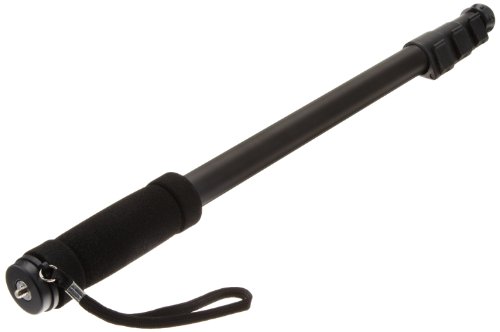
- Weighs about 12.8 ounces for easy transport
- Extends to 67 inches with four sections
- Rubber foot and retractable spikes improve footing
Best For: Travelers and casual outdoor shooters who want minimal weight
Best for Heavy Camera Rigs

- 22-pound capacity for larger camera setups
- Q6 head offers 360-degree pan and broad tilt range
- Three configurations include monopod and low-angle tripod
Best For: Videographers using heavier cameras or compatible gimbals
Best Modular Video Support
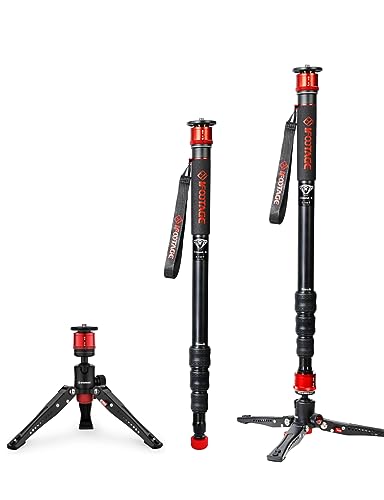
- 71.7-inch maximum height
- 17.6-pound payload
- Detachable mini-tripod base
Best For: Outdoor videographers who value modular support and quick setup
Best Heavy-Duty Convertible Setup

- Tripod-to-monopod conversion
- 33-pound vertical load rating
- 360-degree ball head
Best For: Outdoor creators needing a versatile, accessory-friendly support system
Best Lightweight Hiking Companion

- 0.83-pound carry weight
- 16.9-inch folded length
- 61-inch height and 11.02-pound capacity
Best For: Travelers and hikers who prioritize portability and versatile outdoor use
Best All-Around Video Support – NEEWER TP71 Carbon Fiber Monopod
For camera monopods for outdoor filming, the NEEWER TP71 combines a lightweight carbon-fiber build with a removable, adjustable tripod base and a fluid video head. Its 71.6-inch reach, quick-release compatibility, and 6 kg load capacity suit mobile video work where fast setup and smooth movement matter.
Best For: Outdoor filmmakers, sports shooters, wedding videographers, and creators using DJI RS gimbals or Manfrotto 501PL plates.
Pros:
- Adjustable base supports 360° rotation, 45° tilt, and stable positioning on uneven ground.
- Fluid head provides 360° panning, -70°/+90° tilt, damping control, and a balance system.
- Folds to 28.3 inches and includes a carry bag, lanyard, and built-in Allen key.
Cons:
- Its 6 kg load limit is lower than some heavier-duty aluminum alternatives.
- The removable base and fluid head add components compared with a simple monopod.
The TP71 is a versatile choice when you want a monopod that can shift between stabilized video, low-angle work, and portable outdoor shooting without carrying a full tripod.
Best Heavy-Duty 4-in-1 Option – K&F CONCEPT MS-79 Fluid Monopod
The K&F CONCEPT MS-79 is a practical pick among camera monopods for outdoor filming when flexibility and payload capacity are priorities. Its detachable parts let it function as a tall monopod, tabletop tripod, low-angle stand, or handheld stabilizer, while the fluid head supports up to 17.64 pounds.
Best For: Wildlife tracking, sports, interviews, conferences, weddings, and travel creators carrying heavier camera and telephoto-lens setups.
Pros:
- Four-in-one design separates into a fluid head, monopod, tripod base, and foot pad without tools.
- 360° panning and +90°/-60° tilt include independent locking and a detachable reversible handle.
- Five sections adjust from 25.2 to 70.5 inches, with a 32.5 mm maximum tube diameter.
Cons:
- At 4.2 pounds, it is heavier than the lightweight carbon-fiber models listed here.
- Its 70.5-inch maximum height is slightly shorter than the tallest options.
This model favors stability and versatility over minimum carry weight, making it well suited to demanding location work where the ability to change shooting modes is valuable.
Best High-Capacity Quick-Release Model – SIRUI AM-404FL Monopod
For outdoor filming that involves frequent equipment changes, the SIRUI AM-404FL stands out among camera monopods for outdoor filming with its matching quick-release systems on the monopod and tripod base. The aluminum design reaches 75.8 inches and supports up to 12 kg, while the detachable base adds low-angle and fixed-support options.
Best For: Videographers using cameras or camcorders who need fast mounting, high payload capacity, and a flexible detachable base.
Pros:
- Quick-release mounting system allows fast installation on both the monopod and tripod base.
- 12 kg load capacity accommodates substantial camera setups.
- Three configurations support a fixed video monopod, extension rod, or low-angle camera tripod.
Cons:
- At 2.1 kg, it is not the lightest option for long outdoor hikes.
- The aluminum construction is heavier than carbon-fiber alternatives.
- It is listed as not water resistant.
The AM-404FL is a strong fit for production crews that value quick transitions and load capacity, especially when a monopod and compact low-angle support need to share one kit.
Best Lightweight Trekking-Style Pick – Koolehaoda MP-286C
The Koolehaoda MP-286C is a compact choice for camera monopods for outdoor filming, especially when low carry weight matters. Its 10-layer carbon-fiber construction weighs about 650 g, extends to 62 inches, and includes a phone holder, metal spike, and reversible 1/4-inch and 3/8-inch mounting system.
Best For: Hiking, travel filming, wildlife shooting, sports coverage, interviews, and smartphone or camera creators who need a packable support.
Pros:
- Lightweight carbon-fiber construction provides a 10 kg load rating.
- Six twist-lock sections adjust from 15 to 62 inches and use a sealed dustproof design.
- Can serve as a monopod, trekking pole, overhead boom, or support for a mini tripod base.
Cons:
- It does not include a fluid video head for controlled pans and tilts.
- Its 62-inch maximum height is shorter than the other models in this roundup.
- The product is listed as not water resistant.
The MP-286C prioritizes portability and adaptability, making it a sensible choice for outdoor creators who move frequently and can supply their own head or use a direct camera mount.
Best for Easy Setup – NEEWER TP78 Fluid-Head Monopod
For camera monopods for outdoor filming, the NEEWER TP78 combines a tall 74.8-inch reach with a fluid video head and detachable feet. Its adjustable support can help you work on uneven ground while maintaining smooth camera movement.
Best For: Outdoor videographers who want fluid pans, broad height adjustment, and a removable tripod-style base.
Pros:
- Fluid head supports 360-degree panning and -70 to +90-degree tilting with damping control.
- Detachable feet can serve as a desktop tripod, while the monopod supports horizontal or vertical positioning.
- Five-section aluminum construction adjusts from 26.8 to 74.8 inches and supports up to 13.2 pounds.
- Includes a Manfrotto-compatible quick-release plate, 1/4-inch and 3/8-inch screws, and a side accessory thread.
Cons:
- At 3.8 pounds, it is heavier than a basic lightweight monopod.
- The larger fluid-head design may be more equipment than casual still photographers need.
The TP78 is a versatile choice when filming outdoors calls for smooth head movement, extra reach, and more stability than a conventional monopod. Its 13.2-pound capacity and accessory mounting options also suit larger camera setups.
Best Lightweight Pick – Amazon Basics 67-Inch Camera Monopod
The Amazon Basics WT1003 is a straightforward option among camera monopods for outdoor filming. It weighs less than a pound, extends to 67 inches, and uses a rubber foot with retractable spikes for changing surfaces.
Best For: Travelers and casual outdoor shooters who prioritize low weight, simple setup, and easy carrying.
Pros:
- Lightweight aluminum design weighs about 12.8 ounces and includes a carrying bag.
- Four sections extend to 67 inches for flexible shooting height.
- Non-skid rubber foot and retractable spikes support use on different surfaces.
- Cushion grip and adjustable wrist strap improve portability and handling.
Cons:
- Its 6.6-pound capacity is lower than the other listed monopods.
- It has a basic universal 1/4-inch mount rather than a fluid video head.
- The product is not water resistant.
This model makes the most sense when portability matters more than advanced video control. It offers useful reach and adaptable footing without adding the weight or complexity of a fluid-head system.
Best for Heavy Camera Rigs – COMAN KX3232Q6 Fluid Monopod
Among camera monopods for outdoor filming, the COMAN KX3232Q6 stands out for its 22-pound load rating and upgraded Q6 fluid head. Its removable base and multiple locking options give filmmakers flexibility for low-angle, overhead, and standard shots.
Best For: Videographers using heavier cameras, DJI RS2/RS3/RS4 gimbals, or Manfrotto-compatible setups.
Pros:
- Supports up to 22 pounds while extending to 73.2 inches.
- Q6 fluid head provides 360-degree panoramic movement and +90 to -60-degree tilt.
- Three configurations include a fixed monopod, portable monopod stand, and low-angle tripod.
- Top-press and side-lock quick-release options, plus built-in hex keys, speed installation.
Cons:
- At 3.9 pounds, it is not the lightest option for long hikes.
- The product is not water resistant.
- Its advanced head and multi-mode base may be excessive for simple still-camera support.
The KX3232Q6 is a strong fit for outdoor productions that need substantial payload capacity and flexible positioning. Its 3-in-1 base and gimbal compatibility make it especially useful when one support system must handle varied shooting angles.
Best Modular Video Support – IFOOTAGE Cobra 3 A180T
For outdoor filmmakers who want camera monopods for outdoor filming with quick deployment, the IFOOTAGE Cobra 3 A180T combines a 71.7-inch reach with a detachable mini-tripod base. Its modular aluminum design and quick-disconnect system are suited to fast-moving shoots.
Best For: Videographers who need a tall, modular monopod with a removable support base.
Pros:
- Reaches 71.7 inches and folds to 27.2 inches.
- Supports up to 17.6 pounds.
- Detachable mini tripod creates a versatile 3-in-1 setup.
- Offers quick-disconnect locking and freely convertible 1/4-inch and 3/8-inch screws.
Cons:
- At 2.76 pounds, it is heavier than some travel-focused monopods.
- It is not water resistant.
The Cobra 3 is a strong option when stability, payload capacity, and fast configuration changes matter more than minimum carry weight. Its five-section build and modular base make it particularly practical for video work in changing outdoor locations.
Best Heavy-Duty Convertible Setup – SmallRig CT-10
The SmallRig CT-10 is a useful choice among camera monopods for outdoor filming when you want the flexibility of a full tripod as well. Its aluminum design converts from tripod to monopod and includes a 360-degree ball head for flexible framing.
Best For: Outdoor creators who need one support system for tripod, monopod, low-angle, and accessory-mounted shooting.
Pros:
- Converts between tripod and monopod configurations.
- Adjusts from 16 to 71 inches with four-section legs and flip locks.
- Supports up to 33 pounds vertically or 11 pounds when tilted.
- Three additional 1/4-inch threaded holes accommodate accessories such as phones, monitors, or magic arms.
Cons:
- Its 3.4-pound weight is relatively substantial for hiking.
- The listed folded size is 16.9 inches for the compact configuration, while the supplied details also list a 43 cm folded size.
- Telephoto lenses may require an additional tripod or lens mount for better balance.
With its high vertical load rating, ball head, and convertible design, the CT-10 favors versatility and support capacity over ultralight portability. It is well suited to creators carrying multiple accessories or switching between stationary and mobile shooting.
Best Lightweight Hiking Companion – ULANZI TB12
For travelers comparing camera monopods for outdoor filming, the ULANZI TB12 stands out for its low 0.83-pound weight and compact 16.9-inch folded length. It extends to 61 inches and can also serve as a selfie stick or walking and trekking pole.
Best For: Hikers, travelers, and hobbyist photographers carrying compact cameras, mirrorless cameras, or DSLRs.
Pros:
- Weighs approximately 0.83 pounds for easier carrying.
- Folds to 16.9 inches and fits in a 20-inch carry-on.
- Five-section design offers five listed height positions from 16.9 to 61 inches.
- Supports cameras up to 11.02 pounds and offers multiple outdoor-use modes.
Cons:
- Its 61-inch maximum height is shorter than the tallest options in this roundup.
- It is not water resistant.
- The lightweight design has a lower payload rating than the IFOOTAGE and SmallRig models.
The TB12 is the most travel-friendly option here, especially when pack weight and compact storage are priorities. Its lower capacity and shorter reach make it better suited to mobile outdoor shooting than heavy professional video rigs.
How We Picked the Best Camera Monopods for Outdoor Filming
We focused on the features that matter most in real outdoor shooting: maximum height, folded size, construction, load capacity, base stability, head design, and portability. The selection includes carbon-fiber and aluminum models, compact six-section designs, and monopods with fluid or ball heads for video and photography.
Because a monopod is not a hands-free substitute for a tripod, we also considered how easily each design can be repositioned and whether its feet or removable base add useful support without making the setup unnecessarily bulky.
Quick Comparison
| Type | Best For | What to Look For |
|---|---|---|
| Carbon fiber monopod | Frequent travel and long shoots | Lower weight, vibration control, and durable locks |
| Aluminum monopod | Value and general outdoor use | Strong load rating, comfortable grip, and stable foot |
| Fluid-head monopod | Video panning and tilting | Smooth drag, reliable locking, and compatible plate |
| Monopod with tripod base | Events, wildlife, and stationary framing | Base stability, removable feet, and safe operating limits |
Key Buying Factors for Camera Monopods for Outdoor Filming
Height and Folded Length
Choose a model that reaches a comfortable shooting height without requiring the center column or camera to sit awkwardly above eye level. A shorter folded length is valuable for hiking and air travel, while extra sections can improve portability but may take longer to deploy.
Material and Weight
Carbon fiber generally reduces carrying weight and can damp some vibration, making it appealing for extended outdoor work. Aluminum is often more affordable and can provide excellent rigidity, but it may feel heavier during long walks or all-day assignments.
Head and Base Design
A ball head is versatile for still photography, while a fluid head is better suited to controlled video movement. Feet or a removable tripod base can improve balance on firm ground, but they do not eliminate the need to hold the monopod in windy or crowded conditions.
Load Capacity and Compatibility
Check the complete payload, including the camera, lens, cage, microphone, and monitor. Use a safety margin rather than matching the advertised maximum exactly. Confirm that the mounting screw, quick-release plate, and head movement work with your camera setup.
Locks, Grip, and Weather Exposure
Twist locks pack neatly, while flip locks are often faster to adjust with gloves. Look for a secure handgrip, wrist strap, replaceable foot, and corrosion-resistant hardware if you regularly film near rain, dust, sand, or salt water.
Who Should Buy Which Camera Monopods for Outdoor Filming?
Choose a carbon-fiber model if you hike, travel frequently, or carry several support accessories. Choose aluminum if price, durability, and a higher payload matter more than minimum weight. Choose a fluid-head design for sports, events, wildlife, or camera movement that needs smoother control. Choose a tripod-base model when you want more stability for brief stationary shots, but still need a setup that is faster and lighter than a full tripod.
For occasional family videos or lightweight mirrorless cameras, a compact basic monopod may be sufficient. For professional outdoor filming, prioritize a strong head, dependable locks, a generous payload margin, and a base system suited to the terrain you actually use.