The right flash can make indoor portraits, events, and everyday snapshots look more balanced without requiring a complicated lighting setup. For beginners, the best choice depends on camera compatibility, automatic exposure support, power, size, and how easily the unit can grow with your skills.
This roundup compares 10 camera flashes for beginners, including compact mini flashes, affordable manual speedlights, and more capable wireless models for photographers ready to learn off-camera lighting.
Best 10 Camera Flashes for Beginners Picks for 2026
Best Pocket Flash
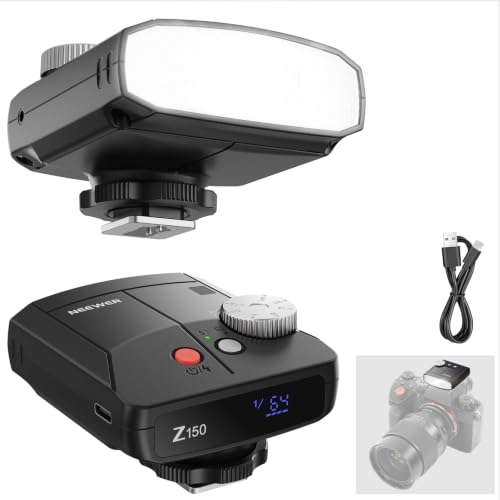
- Lightweight 3.6-ounce design
- Manual output from 1/1 to 1/64
- Rechargeable battery with USB-C charging
Best For: Casual fill light and portable manual flash practice
Best Wireless Starter
Godox TT600 ThinkLite Speedlite

- Built-in Godox 2.4G wireless system
- GN60 output for off-camera lighting
- Supports multiple groups and channels
Best For: Beginners building a Godox multi-light setup
Best Manual Starter

- GN33 output with eight manual power levels
- S1/S2 optical modes for off-camera setups
- Includes stand, pouch, filters, and 24-month warranty
Best For: Beginners learning manual flash photography
Best TTL Upgrade

- TTL and high-speed sync up to 1/8000s
- X5 functions as hotshoe and wireless transmitter
- Compact magnetic design with touchscreen and USB-C charging
Best For: Sony beginners entering wireless flash photography
Best Pocket Option

- Ultra-light 0.07 lb design for travel
- Four manual power levels with GN8 output
- Rechargeable battery supports 500+ full-power flashes
Best For: Portable manual fill flash for compatible cameras
Best Compact Pick
NEEWER Z160 SE Mini Manual Flash

- Lightweight 5.3-ounce design
- Rechargeable battery with up to 650 full-power flashes
- Manual power and S1/S2 optical slave modes
Best For: Beginners wanting a compact rechargeable manual flash
Best All-Around Power – Godox TT600 with Diffuser
For beginners seeking versatile camera flashes, the Godox TT600 combines strong GN60 output, bounce-friendly head movement, and a built-in 2.4G wireless system. Its included diffuser can soften light and reduce harsh shadows, while the large LCD helps simplify manual adjustments.
Best For: Beginners who want an affordable, high-power manual flash for portraits, events, and off-camera lighting.
Pros:
- GN60 output and consistent 5600K color temperature across the power range.
- Built-in Godox 2.4G wireless system supports up to five groups and 32 channels.
- Tilts from -7° to 90° and rotates 360° for bounce lighting.
- Includes a dedicated diffuser, mini stand, and storage bag.
Cons:
- Requires four AA batteries, which are not included.
- HSS requires a compatible Godox wireless trigger and works off-camera.
- Manual flash operation may require more setup than TTL models.
The TT600 is a strong starting point for learning flash exposure and building a Godox wireless system. Confirm your camera’s compatibility before buying, especially because several listed Canon and Fujifilm models are excluded.
Best Pocket Flash – NEEWER Z150 Mini Manual Flash
The NEEWER Z150 is a compact option for beginners who want a simple fill flash for everyday photography. It weighs only 3.6 ounces and uses a universal center-contact hot shoe, but all flash power adjustments are manual and it does not provide TTL or HSS.
Best For: Beginners who prioritize a lightweight, retro-style flash for casual portraits, travel, and on-the-go fill light.
Pros:
- Very compact 3.6-ounce design with a built-in rechargeable battery.
- Offers manual power from 1/1 to 1/64 plus S1 and S2 optical slave modes.
- Delivers up to 640 full-power flashes according to the supplied notes.
- USB-C charging and a 3.1-second recycle time support portable use.
Cons:
- No TTL, HSS, automatic flash exposure, or camera-menu control.
- Maximum sync speed is 1/200 second.
- Mirrorless cameras must use mechanical shutter mode.
The Z150 keeps flash operation straightforward and portable, making it useful for learning manual exposure or adding modest fill light. Check the detailed compatibility list and confirm your camera has a standard center-contact hot shoe before ordering.
Best Wireless Starter – Godox TT600 ThinkLite Speedlite
For beginners planning to expand beyond a single flash, the Godox TT600 offers a useful introduction to wireless lighting. It has GN60 power, a built-in 2.4G Godox X system, and remote control and HSS capabilities when paired with a compatible Godox trigger.
Best For: Beginners building a multi-light Godox setup for portraits, events, and creative off-camera lighting.
Pros:
- Built-in 2.4G wireless transmission reaches up to 100 meters according to the supplied notes.
- GN60 guide number provides strong illumination for a range of shooting situations.
- Supports up to five groups and 32 channels for more advanced setups.
- Recycles in approximately 0.1 to 2.6 seconds and provides about 230 full-power flashes.
Cons:
- Four AA batteries are required and not included.
- HSS and remote functions require a compatible Godox TTL wireless trigger.
- It cannot achieve HSS while mounted directly on the camera hot shoe.
The TT600 is a practical choice when wireless expansion matters more than automatic exposure. It is especially suitable for beginners willing to learn manual flash control, but camera and trigger compatibility should be checked before purchase.
Best TTL Compact Flash – VILTROX Spark Z3-S for Sony
The VILTROX Spark Z3-S is a compact camera flash for beginners using Sony cameras who want both automatic and manual control. Its A TTL mode can simplify exposure, while seven manual power levels, a rechargeable battery, and a supplied softbox add flexibility for everyday shooting.
Best For: Sony beginners who want a small on-camera flash with TTL convenience and rechargeable power.
Pros:
- Supports A TTL automatic mode as well as manual operation.
- Rechargeable 1800mAh battery provides up to 650 full-power flashes.
- Compact GN16 design with 26Ws output and seven adjustable power levels.
- Includes S1 and S2 optical triggering modes and a softbox.
Cons:
- Designed for Sony cameras rather than broad multi-brand compatibility.
- GN16 output is lower than the GN60 output of the Godox TT600 models.
- Maximum listed sync speed is 1/250 second.
The Spark Z3-S is a convenient entry point for Sony users who prefer TTL assistance without carrying a full-size speedlight. Its compact output suits everyday portraits and fill light, while the rechargeable battery reduces the need to carry spare AA cells.
Best Manual Starter – PHOTOOLEX FK300 Speedlite
For beginners comparing camera flashes for beginners, the PHOTOOLEX FK300 is a straightforward manual speedlite with useful power, broad camera compatibility, and simple controls. Its S1 and S2 optical modes also provide an accessible way to experiment with off-camera lighting.
Best For: Beginners who want an affordable, manual flash for portraits, events, product photography, and basic multi-light setups.
Pros:
- GN33 output provides more reach than many entry-level mini flashes.
- Manual, S1, and S2 modes support both on-camera and optical off-camera use.
- Eight power levels from 1/128 to 1/1 offer practical exposure control.
- Includes a pouch, stand, color filters, and a 24-month warranty.
Cons:
- Manual exposure control requires the photographer to set flash power.
- It does not provide TTL automation or radio wireless triggering.
- The flash is not water resistant.
The FK300 is a good learning tool if you are comfortable practicing manual exposure and want a full-size flash with useful accessories. Its universal single-contact hot shoe is convenient, but confirm your camera’s compatibility before buying.
Best TTL Upgrade – GODOX iT32 with X5 Trigger
Among camera flashes for beginners, the GODOX iT32 with X5 trigger is a more automated option for compatible Sony cameras. TTL exposure, high-speed sync, and a two-in-one hotshoe and wireless trigger design make it easier to move from simple on-camera flash to a multi-light setup.
Best For: Sony users who want TTL convenience, high-speed sync, and a compact path into the Godox X wireless flash system.
Pros:
- TTL exposure control reduces the need to set flash power manually.
- High-speed sync supports shutter speeds up to 1/8000s.
- The X5 works as both an on-camera hotshoe and wireless transmitter.
- Magnetic mounting, touchscreen controls, USB-C charging, and a built-in diffuser add convenience.
Cons:
- The supplied configuration is specifically identified for Sony cameras.
- It is not water resistant.
- Its broader multi-light functionality depends on the Godox X System.
This is the strongest choice here for beginners who prefer automation and expect to expand into wireless lighting. Check your exact Sony model and the Godox X System compatibility details before purchasing.
Best Pocket Option – ULANZI SL01 Mini Flash
The ULANZI SL01 is a tiny, rechargeable option for beginners comparing camera flashes for beginners and prioritizing portability. It uses single-contact sync rather than TTL, so it is best suited to photographers who want simple manual fill light for casual portraits, travel, and still-life work.
Best For: Travelers and casual shooters who need an ultra-light manual flash for compatible single-contact hotshoes.
Pros:
- At 0.07 lb, it is exceptionally light and easy to carry.
- Four power settings from 1/1 to 1/8 provide basic manual control.
- The built-in 250mAh battery delivers over 500 full-power flashes per charge.
- USB-C charging takes about 60 minutes and supports use while charging.
Cons:
- It has no TTL automation.
- GN8 output is modest compared with larger speedlites.
- Compatibility is limited to suitable single-contact hotshoes, and the charger and cable are not included.
The SL01 makes sense when size and simplicity matter more than reach or automation. Carefully verify your exact camera model and hotshoe type, especially because the supplied notes list several incompatible cameras.
Best Compact Pick – NEEWER Z160 SE Mini Manual Flash
For beginners comparing camera flashes for beginners, the NEEWER Z160 SE is an approachable compact option when you are comfortable adjusting exposure manually. Its lightweight body, built-in battery, and simple rotary controls suit casual photography and travel.
Best For: Beginners who want a small, rechargeable manual flash for street, travel, or everyday photography.
Pros:
- Compact 5.3-ounce design helps reduce hand fatigue.
- Built-in 1200mAh battery supports up to 650 full-power flashes.
- Offers manual power from 1/128 to 1/1 plus S1/S2 optical slave modes.
- Works with many standard single-contact hot shoe cameras.
Cons:
- No TTL, HSS, automatic exposure, or camera-menu control.
- Fixed 35mm focal length and no modeling light.
- Fujifilm and compatible mirrorless cameras must use mechanical shutter mode.
The Z160 SE is a good learning tool if you want to practice balancing flash power, aperture, and ISO without carrying a full-size speedlight. Confirm your camera’s hot shoe compatibility before ordering.
Best Learning Value – NEEWER TT560 Manual Speedlite
The NEEWER TT560 is a practical starting point for anyone shopping for camera flashes for beginners and wanting a traditional, adjustable speedlight. It provides more output and head movement than a mini flash, while keeping operation fully manual.
Best For: Beginners learning bounce flash, off-camera lighting, and manual exposure with DSLR or mirrorless cameras.
Pros:
- GN38 output offers useful reach for portraits and events.
- Flash head tilts 0°-90° and rotates 0°-270° for bounce lighting.
- Provides eight manual power levels, S1/S2 optical slave modes, and PC sync.
- Supports a wide range of Canon, Nikon, Sony, Fuji, Panasonic, Olympus, and Pentax cameras.
Cons:
- No TTL, HSS, automatic exposure, or camera-menu control.
- Requires four AA batteries, which are not included.
- Shutter speeds should generally be set to 1/200s or slower for reliable synchronization.
With its articulating head and stronger output, the TT560 gives beginners room to explore bounce and off-camera techniques. Its manual controls require practice, but that can make exposure fundamentals easier to understand.
Best Wireless Starter Kit – Godox TT520II Flash Bundle
The Godox TT520II is a useful choice for beginners exploring camera flashes for beginners and wanting wireless triggering included. Its manual controls are straightforward, while the bundled transmitter, diffuser, filters, stand, and carrying bag provide a practical starting kit.
Best For: Beginners who want to experiment with wireless or off-camera manual lighting.
Pros:
- Built-in 433MHz wireless system includes an RT transmitter and 16 channels.
- Offers M, S1, and S2 modes with eight power levels from 1/128 to full power.
- Includes a diffuser, color filters, mini stand, protection bag, and transmitter.
- Built-in reflection board and wide panel diffuser support softer-looking illumination.
Cons:
- Exposure control is manual rather than TTL or automatic.
- Compatibility can vary by camera model despite broad brand support.
- It is not water resistant.
The TT520II stands out when the goal is to learn off-camera flash without buying the basic accessories separately. Beginners should still verify their camera model and be prepared to set flash output manually.
How We Picked These Camera Flashes for Beginners
We focused on practical features that matter when learning flash photography: camera compatibility, guide number or watt-second output, recycle performance, power control, battery design, wireless options, and ease of use. The selection includes both basic manual flashes and TTL-capable models so new photographers can choose between simplicity and automatic exposure assistance.
We also considered portability. A compact flash may be ideal for travel or casual portraits, while a larger speedlight can provide more reach and greater flexibility when bouncing light. Because compatibility varies considerably, verify your camera mount and wireless system before purchasing.
Quick Comparison
| Flash Type | Best For | What to Check |
|---|---|---|
| Compact mini flash | Travel, snapshots, and small cameras | Limited range and manual controls |
| Manual speedlight | Learning exposure and budget off-camera setups | Camera compatibility and trigger method |
| TTL flash | Fast-moving events and easier exposure | Correct brand-specific TTL version |
| Wireless-capable flash | Portraits and creative lighting | Transmitter, frequency, and system compatibility |
Key Buying Factors for Camera Flashes for Beginners
TTL Versus Manual Control
TTL automatically estimates flash output through the camera, making it useful for changing distances and candid subjects. Manual flashes cost less and provide consistent output, but you must adjust power yourself. Beginners who want the easiest starting point may prefer TTL, while learners building studio-style skills may appreciate manual control.
Compatibility Matters
Check whether the flash is designed for Canon, Nikon, Sony, Fujifilm, Olympus, Pentax, or another system. A manual flash may fire on several cameras, but TTL, high-speed sync, wireless control, and dedicated menus often require a brand-specific version. Sony users should also confirm whether an adapter or correct multi-interface shoe is needed.
Power, Recycling, and Battery Life
A higher guide number generally means more reach, particularly when bouncing light off ceilings. Recycle time affects how quickly you can take another flash-lit image. Built-in rechargeable batteries are convenient, while AA-powered units can be easier to keep running during long sessions by carrying spare cells.
Wireless Features and Movement
Built-in radio or optical triggering can help you move the flash away from the camera. Confirm the required transmitter and operating frequency before buying. A swiveling and tilting head is especially useful for bouncing light, while fixed mini flashes prioritize compactness over control.
Who Should Buy Which Camera Flashes for Beginners?
- For the smallest travel setup: Choose a mini flash such as the ULANZI SL01 or NEEWER Z150/Z160 SE, provided their limited output suits your subjects.
- For learning manual flash: Consider the NEEWER TT560, PHOTOOLEX FK300, or a Godox TT600 model for straightforward power adjustments.
- For wireless experimentation: Look for a Godox or compatible radio-equipped flash and pair it with the correct transmitter.
- For Sony users seeking automation: Choose a Sony-specific TTL model, such as the VILTROX or GODOX iT32 option, after confirming camera and accessory compatibility.
- For event and portrait flexibility: A more powerful speedlight with bounce capability and faster recycling is usually a better long-term investment than the smallest flash.
Whichever model you choose, start with low power, bounce the light when possible, and practice adjusting flash compensation or manual output. Those habits will help you get better results as your experience grows.