The right bench vise can make automotive repairs faster, safer, and more precise. Whether you are pressing bushings, holding brackets, cutting hardware, or working on engine components, a stable vise gives you the leverage and control a workbench alone cannot provide.
We selected 10 bench vises for automotive work across several sizes, mounting styles, jaw capacities, and budgets so you can match your workspace and projects with the right level of clamping strength and versatility.
Best 10 Bench Vises for Automotive Work Picks for 2026
Heavy-Duty Classic
Wilton Mechanics Bench Vise 746

- 6-inch jaws with 5-3/4-inch opening
- 30,000 PSI cast iron body
- 360-degree swivel base and pipe jaws
Best For: Permanent automotive shop benches and demanding repairs
Mobile Worksite Pick
Stark USA 6-Inch Tow Hitch Vise

- Mounts to a 2-inch hitch or workbench
- 6-inch jaws for varied repair materials
- Portable 29-pound design
Best For: Roadside repairs and mobile automotive work
Balanced Shop Option

- 6-inch jaws and 6-inch opening
- 72,000 PSI ductile iron construction
- 1/4- to 3-inch pipe capacity
Best For: General-purpose garage and heavier-duty shop projects
Feature-Rich Value
VEVOR 6-Inch Swivel Bench Vise

- 360-degree swivel base and 5.9-inch opening
- 60,000 PSI ductile iron construction
- Includes jaw pads, bolts, and nuts
Best For: Versatile DIY garage and multipurpose repair work
Best Articulating Vise

- 360° multi-angle positioning
- Eight locks rated to 130 ft-lbs
- Swap-in five-inch jaw pads
Best For: Multi-angle automotive repairs and general bench work
Best Heavy-Duty Mechanics Vise
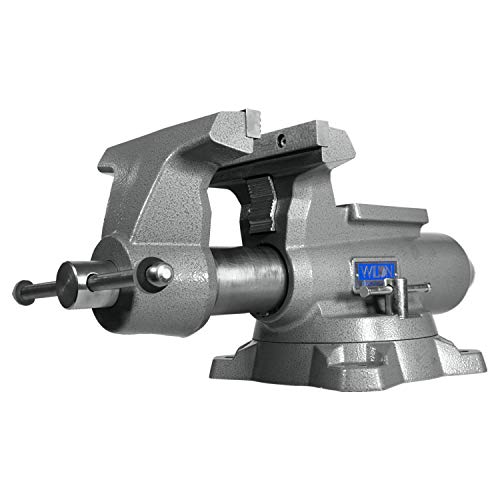
- Eight-inch jaw width
- 60,000 psi ductile iron body
- 360° swivel base with double locks
Best For: Professional garages and heavy automotive work
Best Value Swivel Vise

- 360° swiveling base and head
- 5,512-pound clamping force
- Pipe jaws and integrated anvil
Best For: Multipurpose home garages and mixed bench projects
Heavy-Duty All-Rounder
VEVOR 6.5-Inch Swivel Bench Vise

- Up to 5,620 pounds of clamping force
- 360-degree head and base rotation
- Magnetic jaw pads included
Best For: Heavy-duty automotive repair and pipe work
Workshop Value Pick
6-Inch Forged Steel Bench Vise

- Forged steel construction
- 2,200 pounds of clamping force
- 270-degree swivel base with bolts
Best For: General garage repairs and DIY work
Maximum Capacity Choice
VEVOR 8-Inch Two-Way Bench Vise

- Up to 6,744 pounds of clamping force
- 8-inch forward and 11.5-inch reverse openings
- 360-degree base with pipe jaws
Best For: Large parts and heavy-duty automotive repair
Heavy-Duty Classic – Wilton Mechanics Bench Vise 746
Wilton Mechanics Bench Vise, 6" Jaw Width, 5-3/4" Jaw Opening, 4-1/8" Throat (Model 746)
Check Price On AmazonFor demanding automotive work, the Wilton Mechanics Bench Vise 746 combines a 6-inch jaw width with a 5-3/4-inch opening and a 360-degree swivel base. Its 30,000 PSI gray cast iron body, replaceable hardened steel jaws, and large anvil support serious garage tasks.
Best For: Mechanics who need a rugged, permanently mounted bench vise for clamping parts, pipes, and general automotive repairs.
Pros:
- 360-degree ductile iron swivel base with double lockdowns for stability
- Replaceable hardened steel top and pipe jaws
- Large anvil surface and fully enclosed spindle and nut
- Heavy-duty 30,000 PSI cast iron construction with a lifetime warranty
Cons:
- At 64 pounds, it is not designed for easy repositioning
- Requires a suitable workbench installation
This is a strong choice when durability and stability matter more than portability. The swivel base and pipe jaws add useful flexibility for automotive shop work.
Mobile Worksite Pick – Stark USA 6-Inch Tow Hitch Vise
The Stark USA 6-Inch Tow Hitch Vise is a practical option for automotive work when you need a vise away from the shop. It can mount to a standard 2-inch truck or trailer hitch receiver or attach to a workbench, creating a flexible mobile workstation.
Best For: Mobile mechanics, contractors, farmers, and DIY users handling roadside, trailer, or outdoor repairs.
Pros:
- 2-in-1 design supports hitch and workbench mounting
- 6-inch jaws hold pipes, bars, lumber, and other workpieces
- Portable setup suits roadside maintenance and job sites
- Heavy-duty steel construction for general repair tasks
Cons:
- Requires a standard 2-inch hitch receiver for mobile use
- Its 29-pound weight still makes transport and setup necessary
Choose this model if portability is central to your workflow. It sacrifices the permanence of a traditional shop vise for the ability to bring clamping support directly to the vehicle or worksite.
Balanced Shop Option – Wilton Apprentice Vise WVA6
The Wilton Apprentice WVA6 offers a useful balance for automotive work, with 6-inch jaws, a 6-inch opening, and 72,000 PSI ductile iron construction. Its 3.75-inch throat and large anvil make it suitable for both clamping and light forming tasks in a garage or workshop.
Best For: Garage users who want a strong, general-purpose 6-inch vise for larger materials and heavier-duty projects.
Pros:
- 6-inch jaw width and opening accommodate larger workpieces
- 72,000 PSI ductile iron provides substantial material strength
- Large anvil supports hammering and forming work
- Handles pipe from 1/4 to 3 inches
Cons:
- Supplied notes do not specify a swivel base
- Does not list replaceable jaws or included mounting hardware
The WVA6 is a straightforward choice for users who prioritize high-strength construction and broad capacity. Its large opening and pipe range make it adaptable for many automotive repair jobs.
Feature-Rich Value – VEVOR 6-Inch Swivel Bench Vise
The VEVOR 6-Inch Bench Vise is a versatile option for automotive work, combining a 5.9-inch jaw opening with a 360-degree swivel base, replaceable serrated jaws, and magnetic jaw pads. Its pipe-clamping range and included mounting hardware support varied garage tasks.
Best For: DIY mechanics and workshop users who want one multipurpose vise for flat stock, pipe, sharpening, grinding, and cutting.
Pros:
- 360-degree swivel base supports flexible positioning
- 60,000 PSI ductile iron body with powder-coated finish
- Replaceable carbon-steel serrated jaws and included magnetic pads
- Clamps pipes from 0.6 to 2.9 inches and includes bolts and nuts
Cons:
- At 25 pounds, it is lighter than the heaviest-duty shop vises
- Its listed 3.5-inch throat depth is more limited than some larger designs
This vise stands out for flexibility and included accessories. It is well suited to varied home-garage work where swivel positioning, pipe handling, and convenient installation are more important than maximum mass.
Best Articulating Vise – IQ Vise 360°
For automotive work that requires access from multiple angles, the IQ Vise 360° Articulating Bench Vice is a flexible option among bench vises for automotive work. Its ball-and-socket design lets you rotate, tilt, and swivel a part before locking it in place with the quick cam lever.
Best For: Mechanics and hobbyists who need multi-angle positioning for filing, drilling, sawing, or general repairs.
Pros:
- 360° articulation with eight fixed locking positions.
- Rated to hold against up to 130 ft-lbs of torque.
- Five-inch parallel jaws accept interchangeable Flex-Fit pads.
- Integrated ports support optional lights, magnifiers, and phone holders.
Cons:
- At 10 pounds, it is lighter than the heavier-duty vises in this roundup.
- Optional IQ Connect accessories and additional jaw types are sold separately.
The IQ Vise stands out when positioning is more important than maximum mass. Its adjustable setup and swappable pads make it practical for varied repair tasks, while the hardened steel and cast aluminum construction supports workbench mounting.
Best Heavy-Duty Mechanics Vise – Wilton 880M
Wilton Mechanics Pro Bench Vise, 8" Jaw Width, 8-1/2" Jaw Opening, 4-1/2" Throat (Model 880M), Grey
Check Price On AmazonThe Wilton Mechanics Pro 880M is built for demanding bench vises for automotive work, with an eight-inch jaw width, an eight-and-a-half-inch opening, and a 60,000 psi ductile iron construction. Its enclosed spindle and thrust bearing are designed to provide smooth operation and strong clamping with less effort.
Best For: Professional garages and serious home shops handling large, force-intensive automotive parts.
Pros:
- Large eight-inch jaws and four-and-a-half-inch throat provide substantial working capacity.
- 360° swivel base uses double lockdowns for secure positioning.
- Precision-machined slide bar helps limit front-jaw movement.
- Large anvil and lifetime manufacturer warranty add shop utility and support.
Cons:
- At 83.1 pounds, it requires a sturdy bench and a more involved installation.
- Its industrial size may be excessive for compact workspaces or light repairs.
This is the most substantial choice of the three for users who prioritize rigidity, jaw capacity, and durable shop construction. The enclosed spindle and needle roller thrust bearing are useful advantages when repeated clamping force is part of the job.
Best Value Swivel Vise – PONY 5-Inch Heavy Duty
The PONY 5-Inch Heavy Duty Bench Vise combines a 360° swivel base and head with pipe jaws, an anvil, and serrated replaceable jaw faces. For bench vises for automotive work, it offers a versatile setup for holding parts during cutting, grinding, sanding, sawing, and other general shop tasks.
Best For: Home garages and multipurpose workshops needing a capable five-inch vise for metal, pipe, and repair projects.
Pros:
- Five-inch jaw width and opening suit a broad range of bench work.
- Base and front jaw both rotate 360° for flexible positioning.
- Includes permanent pipe jaws, an anvil, and replaceable hardened steel jaw faces.
- Specified clamping force reaches up to 5,512 pounds.
Cons:
- Its five-inch capacity is smaller than the Wilton’s eight-inch jaws.
- The supplied notes do not specify the vise’s overall weight.
The PONY is a practical middle ground for users who want more versatility than a basic fixed vise without moving up to an industrial-size model. Its rotating head, pipe-holding features, and anvil make it especially adaptable for mixed garage work.
Heavy-Duty All-Rounder – VEVOR 6.5-Inch Swivel Bench Vise
For automotive work that involves irregular parts, pipe, or frequent repositioning, this VEVOR model is one of the more versatile bench vises for automotive work. Its ductile cast iron body, 360-degree head and base rotation, wide opening, and included magnetic jaw pads suit demanding garage tasks while helping protect finished surfaces.
Best For: Heavy-duty automotive repair, pipe work, welding, and projects requiring flexible positioning.
Pros:
- Heavy-duty ductile cast iron construction with up to 5,620 pounds of clamping force.
- 360-degree vertical and horizontal swivel head and base improve workpiece positioning.
- Pipe jaws, V-jaws, a 5-inch maximum opening, and a large anvil support varied tasks.
- Included magnetic jaw pads help reduce scratching on delicate materials.
Cons:
- At 38.9 pounds, it is substantial and may require a sturdy workbench.
- Its larger footprint may be more than needed for light-duty garage projects.
This is a strong choice when an automotive vise needs both serious holding power and broad positioning flexibility. The included pads add useful protection for parts that could be marked by standard jaws.
Workshop Value Pick – 6-Inch Forged Steel Bench Vise
This 6-inch model offers a straightforward setup for home garages and DIY automotive tasks. Among bench vises for automotive work, it stands out for its forged steel construction, built-in pipe jaw, 270-degree swivel base, and included mounting bolts.
Best For: General garage repairs, light-to-moderate automotive work, woodworking, and DIY projects.
Pros:
- Forged steel construction is designed for durability and corrosion resistance.
- 6-inch jaws open to 4.3 inches and provide up to 2,200 pounds of clamping force.
- Multi-jaw design accommodates both flat material and pipe or tube work.
- 270-degree swivel base and included four-bolt mounting kit add flexibility and stability.
Cons:
- Its 2,200-pound clamping force is lower than the other listed models.
- It does not provide the full 360-degree rotation offered by the VEVOR alternatives.
This vise is a sensible choice for a versatile home workshop where automotive jobs are regular but not exceptionally demanding. Its included hardware makes it easier to secure to a suitable workbench from the outset.
Maximum Capacity Choice – VEVOR 8-Inch Two-Way Bench Vise
For larger components and high-force jobs, this 8-inch VEVOR is built to handle demanding automotive work. It combines ductile iron construction, up to 6,744 pounds of clamping force, two-way jaws, a four-bolt mounting design, and a 360-degree rotating base.
Best For: Large automotive parts, heavy-duty repair, drilling, pipe cutting, and work requiring a wide jaw opening.
Pros:
- Highest stated clamping force in this group at up to 6,744 pounds.
- Two-way jaws open to 8 inches forward or 11.5 inches in reverse.
- 360-degree rotating base supports convenient workpiece positioning.
- Built-in pipe jaws grip round stock from 0.59 to 2.36 inches.
Cons:
- At 44.3 pounds, it needs a particularly sturdy, securely mounted workbench.
- The large 8-inch format may be excessive for small parts or limited bench space.
This is the most capable option here for oversized workpieces and intense clamping demands. Its two-way jaw design gives it unusual capacity, while the rotating base and pipe jaws keep it useful beyond flat automotive components.
How We Picked the Best Bench Vises for Automotive Work
We focused on features that matter in a garage or professional shop: jaw width and opening, throat depth, construction, swivel capability, mounting stability, portability, and useful extras such as pipe jaws or integrated anvils. We also included a range of formats, from compact 5-inch vises to larger 8-inch models and a hitch-mounted option for mobile work.
Automotive tasks can involve substantial force, so dependable construction and a secure mounting system received more weight than appearance alone. Product specifications should still be checked carefully before purchase, particularly for maximum opening, mounting-hole dimensions, and supported loads.
Quick Comparison
| Best For | Recommended Size | Features to Prioritize |
|---|---|---|
| General home-garage repairs | 5–6 inches | Swivel base, replaceable jaws, solid mounting |
| Large automotive components | 8 inches | Wide opening, deep throat, heavy construction |
| Mobile or trackside work | Portable or hitch-mounted | Fast setup, receiver compatibility, manageable weight |
| Angled or precision work | Articulating model | Multi-angle positioning and secure locking |
Key Buying Factors for Bench Vises for Automotive Work
Jaw Width and Opening
A wider jaw generally provides better support for large brackets, suspension components, and other bulky parts. Jaw opening matters just as much: a vise with a wide opening can accommodate thicker workpieces, while a deeper throat supports material farther from the jaw edge.
Construction and Clamping Strength
Cast or ductile iron bodies offer useful rigidity for many shop tasks, while forged steel typically provides greater toughness under demanding use. Look for a smooth screw, strong slide, durable jaw plates, and a base that does not flex when force is applied.
Mounting and Swivel Range
A fixed vise is often the most stable choice for heavy pressing or impact work. A 360-degree swivel base improves access around a component, but it must lock firmly. For portable models, confirm that the mounting method suits your bench, truck hitch, or trailer setup.
Automotive-Specific Versatility
Pipe jaws, an integrated anvil, replaceable serrated jaws, and multi-angle positioning can expand a vise’s usefulness. These features are valuable for holding tubing, shaping small parts, or accessing awkward components, but they should not replace a sturdy primary clamp.
Who Should Buy Which Bench Vises for Automotive Work?
Home mechanics: A 5- or 6-inch swivel vise is usually the best balance of capacity, cost, and workbench space for brake, exhaust, hardware, and general repair projects.
Serious DIY builders and professionals: Choose an 8-inch model when you regularly handle large parts or need a wider opening and deeper throat. Make sure your bench can support its weight and clamping forces.
Mobile technicians: A hitch-mounted vise is practical when work happens away from a permanent shop, provided your vehicle has the correct 2-inch receiver and the setup can be secured safely.
Precision-focused users: An articulating vise is worth considering when positioning and access matter more than maximum brute strength. For any model, bolt it to a rigid surface whenever possible and avoid exceeding its rated capacity.