The best barometers for classrooms make changing air pressure visible and measurable, helping students connect weather observations with real-world forecasting.
This roundup compares teaching instruments, wall-mounted weather stations, and multifunction gauges so you can choose the right balance of readability, durability, and hands-on learning.
Best 10 Barometers for Classrooms Picks for 2026
Best All-in-One Pick
Learning Resources Weather Center

- Measures pressure, humidity, and temperature
- Includes a meteorology activity guide
- Battery-free kit for ages 5–10
Best For: Elementary weather and science lessons
Best Dedicated Teaching Tool
Eisco Labs Aneroid Teaching Barometer

- 13 cm dial with dual pressure units
- Exposed mechanism illustrates pressure changes
- Reads inches of mercury and millibars
Best For: Focused barometric pressure demonstrations
Best Display Station
Ambient Weather BA212 Wall Station

- Liquid barometer with temperature and humidity
- Includes comfort zone indicator
- Wall-mounted cherry-finish design
Best For: Permanent indoor classroom weather displays
Best Temperature Companion
Learning Resources Classroom Thermometer

- Large analog Celsius/Fahrenheit display
- Indoor and outdoor use
- Recessed tube helps prevent breakage
Best For: Adding temperature readings to a classroom weather station
Classic Analog Pick
Ambient Weather YG315 Weather Station
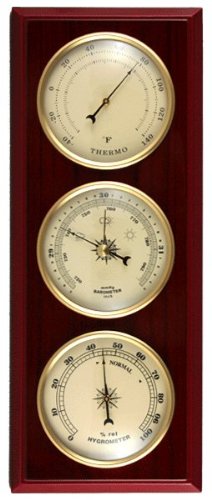
- Combines barometer, thermometer, and hygrometer
- 2.5-inch analog dials
- Horizontal or vertical hanging options
Best For: Compact indoor classroom weather displays
Visual Demonstration Pick
Weather Glass Liquid Barometer

- Visualizes pressure through liquid movement
- Includes wall bracket and drip tray
- Filling kit and blue pigment included
Best For: Hands-on demonstrations of weather-pressure trends
Large-Dial Teaching Pick
3-in-1 Imperial Weather Station

- Measures pressure, temperature, and humidity
- 5.2-inch mechanical dial
- Fahrenheit and imperial pressure scales
Best For: Multi-variable classroom weather tracking
All-Season Classroom Monitor

- Tracks pressure, temperature, and humidity
- Automatic calibration with a 7-inch display
- Hangs or stands for flexible placement
Best For: Classrooms needing a clear, multifunctional weather display
Traditional Dial Pick

- Measures pressure, temperature, and humidity
- Readable mechanical dial needs no batteries
- Designed for indoor or outdoor wall mounting
Best For: Hands-on weather lessons using traditional instruments
Simple Silver Gauge
Analog Classroom Barometer Set
- Analog 3-in-1 pressure, temperature, and humidity gauge
- Clean dial for quick weather checks
- No-battery mechanical design for wall mounting
Best For: Daily classroom weather observation with a traditional gauge
Best All-in-One Pick – Learning Resources Weather Center
For hands-on barometers for classrooms, the Learning Resources Weather Center combines barometric pressure measurement with temperature and humidity readings. Its activity guide and kid-focused design make it a practical introduction to meteorology for children ages 5–10.
Best For: Elementary classrooms and science activities introducing basic weather instruments.
Pros:
- Measures barometric pressure, relative humidity, and air temperature.
- Includes an activity guide explaining how to use each instrument.
- Requires no batteries and supports hands-on science learning.
Cons:
- Recommended for children ages 5–10, so it may be limited for advanced instruction.
- Designed for indoor use.
This is a strong choice when you want more than a standalone barometer. It gives younger students several weather variables to observe in one compact educational kit.
Best Dedicated Teaching Tool – Eisco Labs Aneroid Teaching Barometer
The Eisco Labs Aneroid Teaching Barometer is a focused option for classrooms that need a clear, dedicated pressure instrument. Its 13 cm dial uses both inches and millibars, while the exposed aneroid mechanism helps students see pressure changes directly.
Best For: Demonstrating barometric pressure readings and unit conversions in science lessons.
Pros:
- Displays readings in inches and millibars.
- Exposed aneroid design shows changes in pressure.
- Covers 28–31 inches of mercury and 960–1060 millibars.
Cons:
- Measures barometric pressure only, without temperature or humidity instruments.
- Its 13 cm dial may be less visible from the back of a large classroom.
Choose this model when pressure measurement is the main teaching objective. The dual-unit dial and visible mechanism offer useful talking points for demonstrations and weather observations.
Best Display Station – Ambient Weather BA212 Wall Station
The Ambient Weather BA212 is a wall-mounted option for classrooms that want barometric pressure instruction alongside temperature and humidity context. Its cherry-finish wood frame and liquid barometer design also make it a visually distinctive addition to an indoor science area.
Best For: Indoor classrooms, libraries, or offices seeking a permanent multi-function weather display.
Pros:
- Measures liquid barometric pressure, temperature, and humidity.
- Includes a comfort zone indicator for temperature and humidity.
- Wall-mounted cherry-finish design suits a classroom display.
Cons:
- Its 18-inch height and wood construction make it less portable than a compact teaching kit.
- Designed for indoor use.
- The classic display has no digital readout.
This station fits a classroom that values a permanent observation point and broader weather context. Its liquid barometer can support lessons about how changing atmospheric pressure relates to weather conditions.
Best Temperature Companion – Learning Resources Classroom Thermometer
Although it is not a barometer, the Learning Resources Classroom Thermometer can complement barometers for classrooms by adding a clear temperature reading to weather lessons. Its large analog display shows both Celsius and Fahrenheit and is suitable for indoor or outdoor use.
Best For: Classrooms that already have a barometer and need an accessible temperature-reading tool.
Pros:
- Teaches students to read Celsius and Fahrenheit.
- Large analog display is designed for classroom visibility.
- Suitable for indoor and outdoor use.
- Recessed tube helps prevent breakage.
Cons:
- It measures temperature only and does not measure barometric pressure.
- Its upper temperature range is 120°F.
Use this as a supporting instrument rather than a standalone barometer. It is particularly useful for building a classroom weather station where students compare temperature readings with pressure observations.
Classic Analog Pick – Ambient Weather YG315 Weather Station
For classrooms looking for barometers for classrooms with a traditional, easy-to-display design, the Ambient Weather YG315 combines a barometer with thermometer and hygrometer dials. Its wood-and-glass presentation can support lessons about atmospheric pressure, temperature, and humidity.
Best For: Classrooms that want a compact, traditional weather station with multiple analog readings.
Pros:
- Combines barometer, thermometer, and hygrometer functions.
- 2.5-inch dials provide a clear analog teaching display.
- Can be hung horizontally or vertically.
- Solid wood base has a cherry lacquer finish.
Cons:
- The smaller dials may be less visible from the back of a large classroom.
- It is designed for indoor use.
The YG315 is a practical choice when appearance and multi-variable observation matter. Its compact format works well on a classroom wall or display area, though teachers should consider viewing distance before mounting it.
Visual Demonstration Pick – Weather Glass Liquid Barometer
This liquid weather glass offers a visual way to introduce atmospheric pressure in classrooms. As pressure changes, the liquid level in the spout typically rises or falls, giving students a simple observation point for discussing weather trends.
Best For: Science classrooms that prioritize hands-on observation and visual demonstrations of pressure changes.
Pros:
- Shows pressure changes through visible liquid movement.
- Includes a metal wall-mount bracket and drip tray.
- Comes with a syringe, tubing, and blue pigment for filling.
- Sealed glass body offers a distinctive science-display appearance.
Cons:
- Requires filling and setup before use.
- Liquid overflow may occur as conditions change, despite the drip tray.
- It does not provide a numeric pressure scale in the supplied details.
This barometer is most useful as a visual teaching aid rather than a precision instrument. Its setup requirements and lack of a stated numeric scale make it better suited to demonstrations of trends than exact atmospheric-pressure readings.
Large-Dial Teaching Pick – 3-in-1 Imperial Weather Station
For teachers seeking barometers for classrooms with multiple readable measurements, this 3-in-1 weather station combines atmospheric pressure, temperature, and humidity in one 5.2-inch dial housing. Its imperial scales and metal construction suit everyday classroom weather tracking.
Best For: Classrooms that want a wall-mounted, multi-reading station with Fahrenheit and humidity scales.
Pros:
- Measures barometric pressure, temperature, and humidity.
- Displays a 28.75–31 inHg pressure range and 0%–100% RH humidity range.
- Uses an imperial Fahrenheit temperature scale.
- Supports horizontal or vertical wall installation.
Cons:
- The supplied details do not specify a numeric accuracy for pressure or humidity.
- The mechanical dial may require closer viewing from across a large room.
- Its compact 5.2-inch diameter limits display size.
The AW007A offers the broadest measurement coverage of these options, making it useful for regular classroom observations and weather journals. Its mechanical, analog format also keeps the lesson focused on reading physical instruments rather than digital displays.
All-Season Classroom Monitor – 3-in-1 Wall Weather Station
For classrooms seeking barometers for classrooms with added environmental context, this 3-in-1 station combines a barometer, thermometer, and hygrometer. Its 7-inch display, automatic calibration, and dual hanging or standing placement make readings easy to incorporate into everyday lessons.
Best For: Classrooms that want one visible instrument for tracking temperature, humidity, and atmospheric pressure.
Pros:
- Combines temperature, humidity, and pressure readings in one station.
- Automatic calibration supports convenient monitoring.
- 7-inch display is designed for clear visibility.
- Can be hung or placed on a stand.
Cons:
- Uses an electronic display rather than traditional mechanical dials.
- Its listed pressure range is narrower than some analog weather instruments.
This is a versatile classroom display when teachers want barometric data alongside basic indoor environmental readings. The aluminum frame and portable design also support flexible placement.
Traditional Dial Pick – Analog 3-in-1 Weather Station
This analog option is a practical choice among barometers for classrooms, especially for lessons involving mechanical instruments and weather observation. Its clear dial shows air pressure, temperature, and humidity without batteries.
Best For: Classrooms that prefer a traditional, readable weather gauge for hands-on observation.
Pros:
- Measures air pressure from 950–1070 hPa, temperature, and humidity.
- Clear dial and readable fonts support quick viewing.
- Mechanical sensor technology requires no batteries.
- Suitable for indoor or outdoor wall mounting.
Cons:
- Analog readings may require more interpretation than a digital display.
- The compact 5.6-ounce design may be better suited to close-range viewing.
With its traditional dial and three measurement functions, this weather station can make daily observations more tangible for students. The metal and ABS construction is designed for routine use.
Simple Silver Gauge – Analog Classroom Barometer Set
For teachers comparing barometers for classrooms, this silver analog weather station offers a straightforward way to display air pressure, temperature, and humidity. Its clean dial and mechanical sensor design support routine weather observation without batteries.
Best For: Classrooms wanting a simple, wall-mountable instrument for daily weather checks.
Pros:
- Provides three measurements in one traditional instrument.
- Readable dial helps students check conditions quickly.
- Measures pressure from 950–1070 hPa, temperature, and humidity.
- Designed for indoor and outdoor use.
Cons:
- Does not include a digital display or automatic calibration.
- Supplied notes do not specify temperature accuracy or included mounting components.
This model is a focused choice for classrooms that value visual, mechanical readings over electronic features. Its silver finish and compact traditional design can fit into a weather-monitoring area.
How We Picked the Best Barometers for Classrooms
We selected instruments that can support demonstrations, daily weather observations, or student-led data collection. The lineup includes dedicated teaching barometers alongside combination stations that measure temperature, humidity, and air pressure. We considered dial readability, measurement range, mounting options, classroom visibility, ease of use, and whether each design encourages active participation rather than simply serving as decoration.
For elementary settings, a large, intuitive display and simple terminology can matter most. Middle and high school classrooms may benefit from an aneroid mechanism, a wider pressure scale, or multiple instruments that allow students to compare readings over time.
Quick Comparison
| Best for | Recommended type | What to prioritize |
|---|---|---|
| Weather demonstrations | Dedicated teaching barometer | Clear scale, visible mechanism, easy adjustments |
| Daily classroom observations | Wall-mounted weather station | Large dials, sturdy mounting, quick readings |
| Cross-curricular projects | 3-in-1 weather station | Pressure, temperature, and humidity in one display |
| Young students | Simple weather center | Visual clarity, accessible controls, guided activities |
Key Buying Factors for Barometers for Classrooms
Readability and Scale
Choose numerals and indicators that students can see from their seats. A large wall display is useful for whole-class discussions, while a smaller instrument may work better at a science station. Confirm whether the scale uses hPa, inHg, or both if students will compare local readings with weather reports.
Measurement Range and Accuracy
Most classroom activities need consistent, understandable readings more than laboratory-level precision. A broad pressure range is helpful for tracking weather changes, but students should also learn that readings depend on elevation and local conditions. If accuracy is important, look for clear calibration guidance and compare readings with a trusted local weather source.
Construction and Installation
Wall-mounted units save desk space and keep instruments visible, but they need a secure location away from direct sunlight, heaters, vents, and exterior doors. Metal or finished housings can withstand regular use, while glass liquid barometers may require extra care. Check included hardware and mounting requirements before purchase.
Single-Purpose or Multifunction Design
A dedicated barometer keeps the lesson focused on air pressure. A 3-in-1 station adds temperature and humidity for richer observation logs, but its smaller dials may be less legible. Select the format that matches your lesson plans rather than assuming more measurements are always better.
Who Should Buy Which Barometers for Classrooms?
Choose a teaching-focused barometer when students will practice reading pressure, discuss rising and falling trends, or conduct demonstrations. Choose a large traditional weather station when visibility and quick daily readings are the priorities. A 3-in-1 station is the better fit for weather journals, climate units, and projects that compare several conditions at once.
Before ordering, measure the intended wall or shelf space, confirm the unit’s measurement scales, and decide whether students will handle the instrument. For shared classrooms, favor simple displays and durable construction; for supervised labs, a more specialized teaching model can provide greater instructional value.