The best advanced chemistry sets make complex concepts tangible through guided experiments, molecular modeling, and reusable laboratory tools. This roundup compares 10 options for different ages, skill levels, and learning goals.
Whether you need a serious home laboratory, an organic chemistry model set, or an engaging kit for younger learners, use the guide below to narrow your choices by safety, scope, and long-term value.
Best 10 Advanced Chemistry Sets Picks for 2026
Best Overall Advanced Chemistry Set

- 333+ experiments across inorganic, organic, and electrochemistry
- Includes real lab equipment and safety goggles
- 192-page manual supports structured learning
Best For: Serious young scientists, homeschoolers, and high-school chemistry preparation
Best Molecular Modeling Set
Advanced General and Organic Chemistry Model Set

- 180 precision parts for organic and inorganic structures
- Includes VSEPR geometries and square planar geometry
- Quiet, tool-free assembly with organized storage
Best For: Visual learners studying molecular geometry and stereochemistry
Best for Younger Experimenters
National Geographic Mega Science Lab
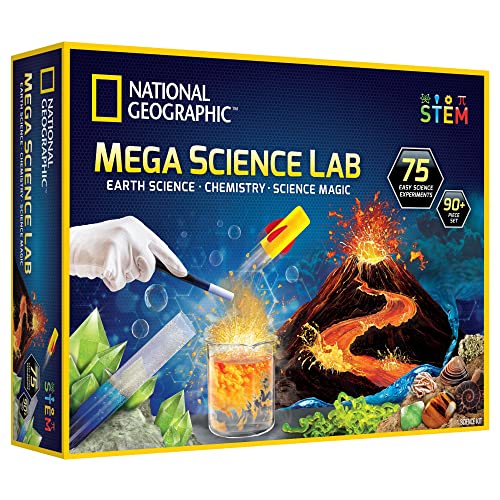
- Three-in-one kit with chemistry, Earth science, and science magic
- Includes 75 total experiments
- Designed for children ages 8 and up
Best For: Young learners who want varied, hands-on STEM activities
Best Large Molecular Model Collection
LINKTOR 444-Piece Molecular Model Kit

- 444 pieces for organic and inorganic chemistry modeling
- Includes ball-and-stick, space-filling, and Fullerene components
- Supports geometry, bond angles, and stereochemistry
Best For: Students and teachers needing extensive 3D molecular modeling
Best Intermediate Lab

- 250 experiments with an 18-chapter manual
- Includes an alcohol burner and real lab equipment
- Designed for ages 11+ with adult supervision
Best For: Young chemists building toward high school chemistry
Best Colorful Station

- 57-piece station for hands-on activities
- Includes cards and a full-color manual
- Uses non-hazardous chemicals without borax
Best For: Younger learners who enjoy colorful chemistry demonstrations
Best First Real Lab

- 125 experiments in 10 organized chapters
- Includes glassware, goggles, and seven chemicals
- Introduces real lab technique for ages 10+
Best For: Beginners moving beyond kitchen-science activities
Best Hands-On Starter
National Geographic 45-Experiment Chemistry Set

- 45 guided experiments for ages 8 and up
- Includes volcano, geyser, and rocket activities
- Illustrated instructions support STEM learning
Best For: Young beginners who want varied, exciting chemistry activities
Best Guided Classic
Thames & Kosmos Chemistry Chem C500

- 28 guided introductory chemistry experiments
- 48-page manual explains results and procedures
- Includes beakers, test tubes, pipettes, and chemicals
Best For: Ages 10–15 seeking structured, explanation-rich experiments
Best for Experiment Variety
National Geographic 100+ Chemistry Set

- More than 100 total experiment ideas
- 15 featured experiments include kit materials
- 85 bonus projects use household items
Best For: Young learners who want an extensive, reusable activity library
Best Overall Advanced Chemistry Set – Thames & Kosmos CHEM C3000
For shoppers seeking advanced chemistry sets with genuine lab equipment and substantial experiment coverage, the Thames & Kosmos CHEM C3000 is the most comprehensive option here. It includes more than 333 experiments across inorganic, organic, and electrochemistry, plus a detailed manual for guided learning.
Best For: Students age 12 and up, homeschoolers, and aspiring chemists ready for high-school-level chemistry preparation.
Pros:
- Offers more than 333 experiments organized into 27 subject-focused chapters.
- Includes authentic equipment such as beakers, test tubes, an Erlenmeyer flask, burner, electrodes, and safety goggles.
- Provides a 192-page manual covering topics from atomic structure and acids to organic chemistry and proteins.
- Includes safety rules, first-aid guidance, labeling information, and waste-disposal instructions.
Cons:
- Adult supervision is required throughout the experiments.
- Some experiments require additional common household materials.
- Its advanced scope may be more than younger or beginning learners need.
The CHEM C3000 stands out when depth, authentic equipment, and structured instruction matter more than a quick introductory activity. Its broad curriculum makes it a strong long-term learning investment for serious young scientists.
Best Molecular Modeling Set – Advanced General and Organic Chemistry Model Set
Among advanced chemistry sets focused on molecular visualization, this 180-piece model set is designed to make three-dimensional structures easier to build and study. Its VSEPR geometries, color-coded atoms, and tool-free connections support general, organic, and inorganic chemistry concepts.
Best For: Students and instructors studying molecular geometry, stereochemistry, VSEPR theory, and organic or inorganic structures.
Pros:
- Includes five VSEPR geometries plus square planar for complex ions.
- Uses color-coded components, scaled bond lengths, and rigid or flexible bonds.
- Push-and-twist assembly is quiet, tool-free, and easy to take apart.
- Comes in a storage case with eight compartments and offers replacement parts.
Cons:
- It is a molecular modeling kit rather than a hands-on chemical reaction set.
- The supplied age details are inconsistent, so shoppers should verify suitability based on the learner.
- The compact case may limit the number of structures displayed at once.
This set is a practical choice when the goal is spatial understanding rather than conducting experiments. Its dedicated bond sites and range of geometries make it particularly useful for visual learners working through molecular structure.
Best for Younger Experimenters – National Geographic Mega Science Lab
For families comparing advanced chemistry sets for younger children, the National Geographic Mega Science Lab combines chemistry with Earth science and science magic. It includes 45 packaged experiments plus 30 additional activities using common household items, making it a broad and approachable STEM option.
Best For: Children ages 8 and up who want varied, activity-based introductions to chemistry, Earth science, and observation skills.
Pros:
- Combines three themes: Earth science, chemistry, and science magic.
- Includes 75 experiments in total, including household-material activities.
- Offers engaging projects such as volcanoes, crystals, bubbling reactions, gas-powered rockets, and floating coins.
- Includes rock, mineral, and crystal specimens for hands-on Earth science exploration.
Cons:
- Its chemistry content is part of a broader multi-topic kit rather than a dedicated advanced chemistry curriculum.
- Some activities rely on common household items.
- It does not provide the extensive chemistry theory or laboratory equipment found in more advanced kits.
The Mega Science Lab is best viewed as a wide-ranging science activity center rather than a deep chemistry course. Its variety and accessible experiments make it a strong pick for children who benefit from changing subjects and quick hands-on projects.
Best Large Molecular Model Collection – LINKTOR 444-Piece Molecular Model Kit
This LINKTOR kit is a strong choice for shoppers who want advanced chemistry sets centered on building and comparing molecular structures. With 444 pieces, it supports ball-and-stick and space-filling models, helping learners examine chemical bonds, bond angles, molecular geometry, and stereochemistry in three dimensions.
Best For: Students, teachers, and advanced learners from middle-school study through graduate-level molecular modeling.
Pros:
- Includes 136 atoms, 158 bonds, and 150 Fullerene C-60 parts.
- Supports both ball-and-stick and space-filling molecular models.
- Helps demonstrate chemical structure, bond angles, molecular geometry, and stereochemistry.
- Standardized atom colors and disconnecting tools support repeated building and disassembly.
Cons:
- It focuses on physical molecular modeling rather than chemical reactions or supplied chemicals.
- The 444-piece collection may require careful sorting and storage.
- The supplied manufacturer age recommendation is inconsistent with the stated educational range, so buyers should use their judgment.
The LINKTOR kit offers exceptional breadth for structure-focused learning, especially with its dedicated Fullerene components. It is most valuable when students need to see molecular forms from multiple angles rather than perform laboratory procedures.
Best Intermediate Lab – Chem C2000
For young scientists ready to move beyond beginner activities, the Thames & Kosmos Chem C2000 is a substantial choice among advanced chemistry sets. It combines 250 experiments with real lab equipment, an alcohol burner, and a 128-page manual covering topics from acids and bases to electrochemistry and chromatography.
Best For: Ages 11 and up with adult supervision, especially homeschoolers and students preparing for high school chemistry.
Pros:
- Includes 250 experiments across 18 themed chapters.
- Introduces heat-based work with an alcohol burner and tripod components.
- Provides glassware, goggles, electrolysis equipment, and selected chemicals for genuine reactions.
- Includes detailed safety, first-aid, labeling, and waste-disposal guidance.
Cons:
- Its intermediate level may be too demanding for younger or first-time experimenters.
- Adult supervision is required, particularly for heat-based experiments.
- The larger equipment selection requires more setup and storage space.
Chem C2000 is a strong middle ground between introductory and advanced study. Its broad experiment range and expanded apparatus make it a worthwhile pick for learners who want a structured, genuine home laboratory experience.
Best Colorful Station – Ooze Labs Chemistry Station
The Ooze Labs Chemistry Station offers a more approachable entry point to advanced chemistry sets, with a large plastic workstation and 57 pieces for colorful, hands-on activities. It focuses on engaging demonstrations such as glowing slime, fizzing reactions, bubbles, chromatography, and an underwater volcano.
Best For: Children ages 6 and up who want an accessible, visually engaging introduction to chemistry.
Pros:
- Includes a complete station with beakers, test tubes, flasks, pipettes, and other tools.
- Provides experiment cards plus a separate 16-page full-color manual.
- Uses non-hazardous chemicals and does not contain borax.
- Offers a broad mix of colorful, activity-based experiments.
Cons:
- Its plastic equipment and activity-focused design are less laboratory-oriented than the Thames & Kosmos sets.
- The manual is shorter than those included with the more advanced kits.
- Younger users may still need adult help with setup and cleanup.
This is the most playful option in the group. Choose it for accessible demonstrations and a ready-made lab-station format rather than a deep, sequential chemistry curriculum.
Best First Real Lab – Chem C1000
The Thames & Kosmos Chem C1000 is a practical starting point for families comparing advanced chemistry sets but wanting a manageable first laboratory experience. Its 125 experiments introduce real lab technique through electrochemistry, chromatography, crystal growth, indicators, water chemistry, and food chemistry.
Best For: Ages 10 and up with adult supervision, including elementary and middle school students, homeschoolers, and beginners ready to move beyond kitchen-science kits.
Pros:
- Offers 125 guided experiments in 10 organized chapters.
- Includes glass test tubes, graduated beakers, safety goggles, and other lab equipment.
- Supplies seven real chemicals for experiments involving indicators, metals, electrochemistry, and crystals.
- Provides clear explanations and integrated safety and disposal guidance.
Cons:
- It has fewer experiments and less equipment than the intermediate C2000.
- It is intended as a beginner set, so experienced young chemists may outgrow it sooner.
- Adult supervision is required for the included chemical experiments.
Chem C1000 delivers a structured foundation without the larger scope of the C2000. It is the better fit when the priority is learning basic laboratory technique before stepping up to more demanding chemistry work.
Best Hands-On Starter – National Geographic 45-Experiment Chemistry Set
For families seeking advanced chemistry sets with an accessible starting point, this National Geographic kit offers 45 guided experiments for children ages 8 and up. Activities include volcanoes, geysers, rockets, and other fizzy reactions, with illustrated instructions that introduce core chemistry concepts and safe experimental practices.
Best For: Kids ages 8 and up who want a broad, activity-packed introduction to hands-on chemistry.
Pros:
- Includes 45 experiments spanning reactions, volcanoes, geysers, and rockets.
- Illustrated, kid-friendly instructions explain each step and the related chemistry.
- Supports STEM learning and introduces the scientific process and safety fundamentals.
Cons:
- The supplied information does not specify which household materials may be needed for every activity.
- Its recommended age begins at 8, so it may be less suitable for younger children.
Choose this set when variety and approachable instructions matter most. It is a practical stepping-stone into chemistry, especially for children drawn to dramatic demonstrations and structured STEM activities.
Best Guided Classic – Thames & Kosmos Chemistry Chem C500
Among advanced chemistry sets for older children, the Thames & Kosmos Chemistry Chem C500 emphasizes clear explanations alongside experimentation. Its 28 guided activities cover acids and bases, fizzy and foamy reactions, invisible ink, and changes between solids, liquids, and gases.
Best For: Children ages 10–15 who benefit from a structured experiment manual and introductory chemistry explanations.
Pros:
- Provides 28 classic chemistry experiments with a focused introductory scope.
- The 48-page, full-color guide explains both procedures and why reactions occur.
- Includes practical equipment such as beakers, test tubes, stoppers, pipettes, and chemicals.
- Explores acids and bases, states of matter, and invisible ink.
Cons:
- It includes fewer experiments than the two National Geographic sets in this roundup.
- The recommended age range starts at 10, making it less appropriate for younger beginners.
This is a strong pick for learners who prefer depth and explanation over a very large experiment count. The dedicated guide makes it especially useful for adults looking for a more lesson-like chemistry experience.
Best for Experiment Variety – National Geographic 100+ Chemistry Set
This National Geographic kit stands out among advanced chemistry sets for its unusually large activity count. It combines materials for 15 featured experiments with a guide to 85 additional projects using common household items, including crystal growing, color-changing solutions, glowing test tubes, and bouncy-ball activities.
Best For: Kids ages 8 and up who want many repeatable chemistry projects and hands-on tools such as test tubes, beakers, and pipettes.
Pros:
- Offers more than 100 experiments across the included materials and bonus guide.
- Features engaging activities such as crystal growing, glowing worms, and color-changing reactions.
- Includes supplies for 15 featured experiments plus 85 household-material projects.
- Uses real scientific tools, including test tubes, beakers, and pipettes.
Cons:
- Only 15 experiments are identified as including all required kit materials; the other 85 use common household items.
- The large number of activities may require more planning and material gathering over time.
Select this set if long-term variety is your priority. The combination of ready-to-run experiments and household-material extensions gives curious young scientists plenty of ways to continue practicing chemistry after the main activities are complete.
How We Picked These Advanced Chemistry Sets
We focused on experiment variety, instructional quality, included equipment, age appropriateness, and the usefulness of each kit beyond a single afternoon of activities. Sets with detailed manuals, reusable components, and a clear progression from basic demonstrations to more challenging concepts received particular attention. We also included molecular model kits because visualizing structures is an important part of learning organic and inorganic chemistry.
Quick Comparison
- Best for serious progression: Thames & Kosmos Chem C3000
- Best intermediate option: Thames & Kosmos Chem C2000
- Best beginner chemistry set: Thames & Kosmos Chem C1000
- Best for younger learners: National Geographic Chemistry and Mega Science Lab sets
- Best for molecular modeling: LINKTOR Chemistry Molecular Model Kit
- Best for focused structure study: Advanced General and Organic Chemistry Model Set
- Best compact starter: Thames & Kosmos Chem C500
- Best experiment-focused introduction: Ooze Labs: Chemistry Station
Key Buying Factors for Advanced Chemistry Sets
Experiment Depth and Progression
Check the number of activities, but do not treat that figure as the only measure of value. A strong manual should explain the underlying principles and organize experiments in a sensible sequence. Intermediate and advanced learners usually benefit more from depth, repeatability, and varied techniques than from a high count of short demonstrations.
Equipment and Consumables
Look for genuine lab-style tools such as test tubes, droppers, measuring vessels, goggles, and stands. Confirm which chemicals or consumables are included and which must be replaced. Reusable equipment can make a more advanced set worthwhile, while replacement availability matters for frequent use.
Age, Supervision, and Safety
Match the kit to the learner’s reading ability, patience, and previous experience—not just the listed age range. Younger children should use supervised sets with simple instructions. More advanced experiments may require an adult to handle materials, provide ventilation, and enforce careful measuring and cleanup.
Learning Format
Molecular model kits are especially useful for bonding, geometry, isomers, and reaction visualization. Wet-lab kits are better for observing indicators, reactions, separation, and measurement. Students studying chemistry formally may get the most value by combining both formats.
Who Should Buy Which Advanced Chemistry Sets?
Choose the Chem C3000 for a motivated student who wants the broadest progression and expects to use the set repeatedly. The Chem C2000 suits learners who already understand basic laboratory routines but are not ready for the most extensive option. Beginners should start with the Chem C1000 or Chem C500, depending on desired experiment depth.
For children ages 8–12, National Geographic’s 45-, 75-, and 100-plus-experiment sets offer accessible introductions, with the larger kits providing more variety. Choose Ooze Labs for an engaging, activity-led first experience. Finally, select the LINKTOR or Advanced General and Organic Chemistry Model Set when the priority is understanding molecular structures rather than conducting chemical reactions.