3D printing can make lessons more engaging, but particles, odors, and VOCs deserve careful attention in shared classrooms and makerspaces. The right air purifier can reduce airborne contaminants without adding distracting noise or complicated maintenance.
We compare 10 options for different printer types, room layouts, and school budgets, focusing on filtration, airflow, compatibility, operating noise, and practical classroom use.
Best 10 3d Printer Air Purifiers for Schools Picks for 2026
Best for Compatible Bambu and ELEGOO Setups

- Four-stage HEPA and carbon filtration
- Adjustable speed with 22W motor
- Includes hose, hoods, and spare pre-filters
Best For: Classrooms using compatible Bambu Lab or ELEGOO printers
Best for Quiet Multi-Printer Classrooms

- HEPA H13 and activated carbon filtration
- 60 m³/h airflow for enclosed printers
- Adapters support multiple printer brands
Best For: School labs with varied enclosed 3D printers
Best for High-Airflow Monitoring
Creality 250 m³/h Air Purifier

- 250 m³/h airflow and 1700 Pa suction
- Real-time PM2.5 display
- Five-stage dust and odor filtration
Best For: Larger makerspaces and extended printing sessions
Best for Bambu Lab Classrooms

- HEPA H13 plus activated carbon filtration
- 60 m³/h stable airflow
- Quick-swap filters and broad adapter support
Best For: Bambu Lab P1S/X1C classrooms and makerspaces
Quiet Resin-Printer Filtration
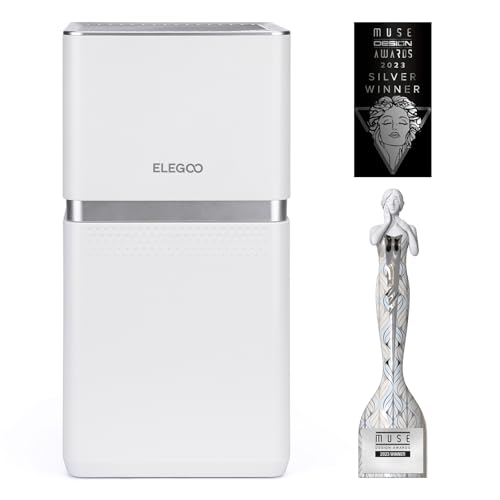
- Up to 35 dB listed noise level
- VOC and filter-life reminders
- Two fan speeds with automatic switching
Best For: Compatible ELEGOO resin-printer classrooms needing quiet operation
Enclosed Classroom Fume Control
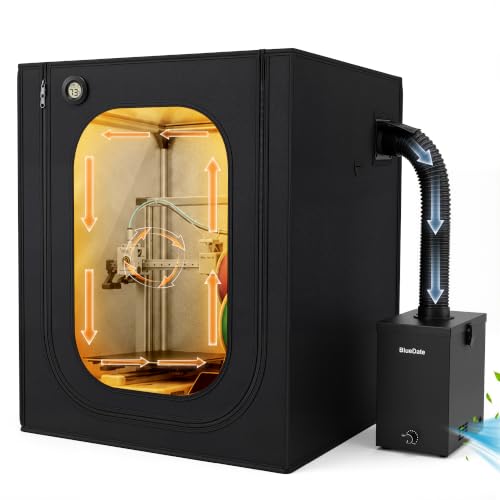
- Four-stage HEPA and carbon filtration
- Adjustable speed control
- Enclosure adds dust and contact protection
Best For: Classrooms needing broad printer compatibility and containment
Best for Creality K2 Classrooms

- Four-stage HEPA and carbon filtration
- Adjustable fan speed and 55 dB rating
- Includes hose, hoods, and spare pre-filters
Best For: Creality K2 and K2 Pro FDM printer stations
Best Quiet Resin Option

- Quiet 35 dB operation
- Uses 6 watts and includes a VOC sensor
- Compatible with many ELEGOO resin printers
Best For: Quiet resin-printing classrooms
Best Universal Classroom Pick

- Designed for FDM and resin printers
- Six-layer filtration with HEPA and carbon
- Three fan modes and filter reminder light
Best For: Mixed-printer school labs
Best for Compatible Bambu and ELEGOO Setups – BD-60B Smoke Purifier
For schools seeking 3d printer air purifiers for schools, the BD-60B is a compact, enclosed-printer-focused option with adjustable airflow and layered particle and odor filtration. It is specifically listed as compatible with several Bambu Lab and ELEGOO models, though some setups may require a bracket.
Best For: Classrooms or makerspaces using compatible Bambu Lab or ELEGOO enclosed printers.
Pros:
- Four-stage filtration combines pre-filter, HEPA, and activated carbon media.
- Adjustable speed supports different airflow and noise preferences.
- Includes a smoke pipe, magnetic suction hoods, power supply, and five pre-filters.
- Compact metal housing is ready to use without printing parts for most listed models.
Cons:
- At 55 dB, it may be noticeable in quiet teaching spaces.
- Compatibility is model-specific; the P2S requires a separately printed riser bracket.
- Its listed coverage is 100 square feet, so it is intended for localized printer use rather than whole-room purification.
The BD-60B makes the most sense when a school has the listed Bambu Lab or ELEGOO printers and wants a dedicated extractor with flexible speed control. Confirm the printer model and mounting requirements before ordering.
Best for Quiet Multi-Printer Classrooms – Mintion V1 Filter System
The Mintion V1 is a compact choice for schools comparing 3d printer air purifiers for schools, particularly where enclosed printers use materials such as PLA, PETG, ABS, ASA, or nylon. Its pre-filter, HEPA H13, and activated carbon combination is designed to address both particles and printing odors.
Best For: Educational institutions and makerspaces that need a tool-free, adaptable filter for enclosed printers.
Pros:
- Three-stage filtration includes a pre-filter, HEPA H13 filter, and activated carbon.
- Up to 60 m³/h airflow is designed for enclosed 3D printers.
- Factory-configured for Bambu Lab P1S/X1C, with optional adapters for other brands.
- Compact design and accessible filters simplify installation and maintenance.
Cons:
- Compatibility with many non-Bambu printers depends on an optional or printed adapter.
- The supplied notes do not specify filter replacement intervals or room coverage.
- It is intended for enclosed printers, limiting usefulness with open-frame models.
With its broad adapter approach and education-focused positioning, the Mintion V1 is a practical fit for school labs with varied enclosed printers. Check whether the required connector is included for each printer in the room.
Best for High-Airflow Monitoring – Creality 250 m³/h Air Purifier
For schools that want strong localized airflow and visible air-quality feedback, this Creality purifier offers a high-capacity design among 3d printer air purifiers for schools. It combines a 360-degree airflow system, five-stage filtration, and a real-time PM2.5 display for monitoring fine particles.
Best For: Larger makerspaces or extended printing sessions where airflow performance and PM2.5 visibility matter.
Pros:
- Turbo airflow is rated up to 250 m³/h with 1700 Pa suction.
- Real-time PM2.5 display provides visible particle-level feedback.
- Five-stage filtration is stated to remove 99.99% of dust and odors.
- Standard and V-Fold carbon filter options are rated for up to 1,000 and 1,500 hours, respectively.
Cons:
- The 28-pound weight makes it less portable than compact desktop units.
- The supplied details do not specify compatibility with particular printer models.
- The listed particle retention size is 2.5 micrometers, so schools should review specifications for their specific emissions-control needs.
This is the strongest choice in the group for airflow capacity and on-device PM2.5 feedback, but its larger, heavier design may be better suited to a dedicated makerspace station than a rotating classroom setup. Verify placement and printer integration before purchase.
Best for Bambu Lab Classrooms – V1 HEPA H13 Carbon Filter
This V1 filter system is purpose-built for enclosed 3D printers and is a focused option for schools evaluating 3d printer air purifiers for schools. It comes ready for Bambu Lab P1S and X1C printers, while printed connector files and adapter kits support additional enclosed models.
Best For: Bambu Lab-based classrooms, workshops, and makerspaces that want compact filtration with quick filter changes.
Pros:
- Triple-layer system uses a pre-filter, HEPA H13 filter, and activated carbon bed.
- HEPA H13 is specified to capture more than 99.97% of ultrafine particles down to 0.3 µm.
- Stable airflow reaches up to 60 m³/h and is designed not to disrupt enclosure temperature stability.
- Tool-free, quick-swap filter modules make maintenance straightforward.
Cons:
- The default connector is for Bambu Lab P1S and X1C; other printers may need adapters or printed connectors.
- It is designed for enclosed printers rather than general room air cleaning.
- The supplied notes do not provide a stated filter life or noise rating.
Schools already using Bambu Lab P1S or X1C printers get the simplest installation path with this compact system. For mixed-brand labs, confirm the adapter process and connector availability before standardizing on it.
Quiet Resin-Printer Filtration – Marsmate Large Air Purifier
For schools looking for 3d printer air purifiers for schools, the ELEGOO Marsmate is a practical choice for compatible resin-printer setups. Its activated-carbon filter, quiet operation, and VOC reminder help support more comfortable printing in shared learning spaces.
Best For: Schools using compatible ELEGOO resin printers that want quiet, dedicated odor and VOC monitoring support.
Pros:
- Operates at a listed noise level of up to 35 dB.
- Offers low- and high-speed modes, plus automatic switching.
- Built-in sensor reminds users when VOC levels or filter life indicate replacement.
- Large, durable ABS housing is designed for photocuring applications.
Cons:
- Compatibility is strongest with specified ELEGOO resin printers and models with expansion interfaces.
- Uses activated-carbon filtration rather than a listed HEPA filter.
- The 14-pound, large-format housing may require dedicated desk space.
The Marsmate stands out when quiet operation and automated reminders matter more than portability. Verify printer compatibility and available workspace before choosing it for a classroom or lab.
Enclosed Classroom Fume Control – BD-60A Printer Enclosure
For schools evaluating 3d printer air purifiers for schools, the BD-60A combines an enclosure with a desktop smoke purifier. Its multi-stage filtration, adjustable airflow, and broad printer compatibility make it suited to classrooms using open-style or resin printers.
Best For: Schools that want an enclosure, odor and particulate capture, and added physical protection around a 3D printer.
Pros:
- Uses pre-filter, HEPA, and activated-carbon stages in a four-stage filtration design.
- Lists capture of 99.97% of particles as small as 0.3 microns.
- Stepless speed control supports different airflow and noise preferences.
- Fire-resistant construction and an enclosure help limit dust release and accidental contact.
Cons:
- At 55 dB, it is louder than the listed noise level of some smaller purifiers.
- The 650 x 750 x 800 mm enclosure requires substantial floor or table space.
- Confirm the exact printer model against the compatibility list before purchase.
The BD-60A is the most comprehensive option here for schools prioritizing containment and multi-stage filtration. Its size and noise level make placement and classroom workflow important considerations.
Compact Resin-Chamber Odor Control – ELEGOO USB Purifier 2-Pack
For schools seeking compact 3d printer air purifiers for schools, this two-pack plugs directly into compatible ELEGOO resin printers. Built-in activated carbon targets odors, while the small USB design keeps the purifier inside the printer chamber with minimal space demands.
Best For: Schools with compatible ELEGOO resin printers that need simple, low-power odor control at each printer.
Pros:
- Plug-and-play USB connection uses the printer chamber interface.
- Two purifiers are included for multiple printers or replacement use.
- Replaceable activated-carbon cubes are listed to last over one year.
- Compact design and quiet, stable operation suit crowded work areas.
Cons:
- Compatibility is limited to the specified ELEGOO resin-printer models.
- Activated carbon is listed for odors; no HEPA filtration is specified.
- Replacement carbon cubes must be purchased separately.
This 2-pack is a straightforward choice for compatible ELEGOO printer stations where space, power use, and easy installation matter. It is less suitable if a school needs enclosure-level containment or particulate filtration.
Best for Creality K2 Classrooms – K2/K2 Pro Fume Extractor
BlueDate 3D printer Air Purifier Compatible With CREALITY K2,K2 Pro FDM 3D Printer
Check Price On AmazonFor schools using compatible Creality printers, this dedicated fume extractor is a focused option among 3d printer air purifiers for schools. Its multi-stage filtration, adjustable fan speed, and included accessories make it practical for a classroom workstation, provided the printer connection is compatible.
Best For: Schools running Creality K2 or K2 Pro FDM printers that want source-level smoke, odor, and particulate capture.
Pros:
- Four-stage filtration combines pre-filters, HEPA, and activated carbon.
- Adjustable speed helps balance airflow and noise; listed noise level is 55 dB.
- Includes hose, magnetic hoods, power supply, replacement pre-filters, and a one-year warranty.
- Compact metal housing is designed for the Creality K2 and K2 Pro.
Cons:
- Not compatible with the Creality K2 Plus according to the supplied notes.
- Other printer models require a separately made exhaust-port adapter.
- At 10.6 pounds, it is less portable than smaller desktop units.
This is the most printer-specific choice in the group. Confirm the model and exhaust connection before ordering, especially in a shared school lab where equipment compatibility matters.
Best Quiet Resin Option – ELEGOO MARSMATE Air Purifier
The ELEGOO MARSMATE is a low-power, quiet option for schools using compatible resin printers. As one of the more classroom-friendly 3d printer air purifiers for schools, it uses activated carbon, automatic fan modes, and a VOC sensor to help manage resin-related odors and emissions.
Best For: Resin-printing classrooms that prioritize quiet operation, low energy use, and VOC monitoring.
Pros:
- Operates at a listed 35 dB with just 6 watts of power.
- Built-in VOC sensor can alert users when the filter needs attention.
- Designed for numerous ELEGOO Mars, Saturn, and Jupiter resin printers.
- Replaceable activated-carbon filter is designed for simple changes and can last up to two months.
Cons:
- Uses activated carbon as the listed filter type, without a stated HEPA stage.
- Filter life depends on use and is listed as up to two months.
- Its 14-pound weight and relatively tall body may require dedicated shelf space.
Choose MARSMATE when quiet operation is especially important, such as in classrooms, libraries, or labs with long print sessions. Check that the resin printer has the required extension port before buying.
Best Universal Classroom Pick – Phrozen Air Purifier Max
The Phrozen Air Purifier Max is designed for both FDM and resin printers, making it a flexible candidate among 3d printer air purifiers for schools. Its six-layer filtration, three fan modes, and filter reminder support varied classroom printing schedules without requiring a model-specific setup.
Best For: School labs with mixed FDM and resin printers that need one adaptable purifier for dust, smoke, odors, and VOCs.
Pros:
- Works with both resin and FDM printing environments.
- Six-layer filtration includes activated carbon and HEPA components.
- Three fan settings accommodate high-emission jobs, normal use, and quieter runs.
- Slide-out filter and replacement reminder light simplify maintenance.
Cons:
- Listed operating noise is 42 dB, so it is not the quietest option here.
- The 10 kg weight makes it less convenient to move between classrooms.
- Its 17-inch height and roughly 11.7-inch depth require substantial desk or shelf space.
This is the strongest all-around fit when a school uses different printer types. Its flexible modes and straightforward filter replacement are useful for shared equipment, though its large, heavy enclosure should be planned into the workstation layout.
How We Picked the Best 3d Printer Air Purifiers for Schools
We evaluated these models for the needs of school makerspaces, technology labs, libraries, and classrooms. Our main criteria were filtration design, airflow, printer compatibility, noise, controls, maintenance, and installation flexibility.
Models with HEPA filtration can help capture fine particles, while activated carbon is important for odors and some gaseous emissions. However, no purifier replaces ventilation, printer enclosures, safe material choices, or following the manufacturer’s operating guidance. Product claims such as TVOC removal and coverage should be treated as performance indicators, not guarantees for every room or filament.
Quick Comparison
| Best For | Look For | Why It Matters |
|---|---|---|
| FDM classroom printers | HEPA plus activated carbon | Addresses particles, odors, and some VOCs |
| Resin printing | Carbon filtration and enclosure compatibility | Helps manage resin odors and fumes |
| Multiple printers | Higher airflow or one purifier per enclosure | Improves source control in busy labs |
| Quiet classrooms | Low-noise operation and adjustable speeds | Limits disruption during instruction |
| Portable setups | USB power or compact construction | Makes placement easier between classes |
Key Buying Factors for 3d Printer Air Purifiers for Schools
Filtration and Airflow
Prioritize a true HEPA or HEPA H13 filter when fine-particle capture is the goal, and choose activated carbon for odor and vapor reduction. Airflow matters because a small filter moving very little air may be inadequate near an active printer. For enclosed printers, confirm that the purifier can fit inside or connect to the enclosure without blocking ventilation or creating unsafe heat buildup.
Compatibility and Installation
Check the exact printer model, enclosure dimensions, power requirements, and mounting method. Several options are designed for specific Bambu Lab, Creality, ELEGOO, or Phrozen printers, while compact USB units may offer broader placement flexibility. Compatibility should include access to replacement filters, not just physical fit.
Noise, Controls, and Maintenance
Quiet operation is especially valuable in classrooms, but compare noise ratings with fan speed and airflow rather than relying on a low number alone. Useful features include multiple speeds, automatic operation, PM2.5 monitoring, timers, and clear filter-replacement indicators. Schools should also budget for replacement filters and assign responsibility for inspecting and changing them.
Safety and Room Strategy
Use purification as one layer of control alongside ventilation, enclosures, supervision, and approved materials. Place the purifier close to the emission source, keep intakes and outlets unobstructed, and avoid treating a portable unit as proof that a room is adequately ventilated.
Who Should Buy Which 3d Printer Air Purifiers for Schools?
Choose a printer-specific HEPA-and-carbon system for a dedicated FDM workstation where fit and source capture matter most. A higher-airflow model is better for a busy makerspace or multiple-printer area, provided its noise level is acceptable. Compact USB carbon purifiers suit small enclosed setups, travel carts, or supplemental odor control. Resin-printer users should favor models designed for resin odor and enclosure use, such as larger carbon-focused units.
For most schools, the best choice is the model that matches the printer and enclosure, provides verifiable filtration, runs quietly enough for instruction, and has affordable replacement filters. Confirm local ventilation and safety requirements before purchasing.