Printing at home is more comfortable when airborne particles and material odors are managed at the source. The right purifier can make a meaningful difference around resin and filament printers, especially in smaller rooms or shared workspaces.
This roundup compares 10 options for different printer types, enclosure sizes, noise preferences, and filtration needs so hobbyists can choose with greater confidence.
Best 10 3d Printer Air Purifiers for Hobbyists Picks for 2026
Best Overall Filtration
Bambu Lab HEPA H13 Filter System

- Three-layer filtration with HEPA H13 and activated carbon
- Up to 60 m³/h airflow for enclosed printers
- Tool-free, quick-swap filter modules
Best For: Bambu Lab P1S/X1C owners seeking at-source filtration
Best for Resin Printers

- Activated-carbon purification rated to remove up to 95% TVOC
- 35 dB operation with 6W power use
- VOC sensor provides filter replacement reminders
Best For: ELEGOO resin printers with an extension port
Best Compact Option
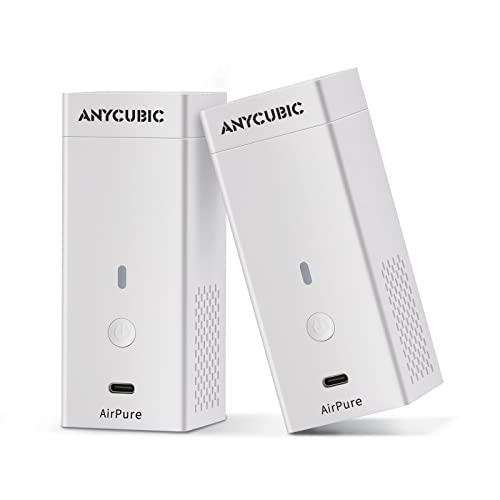
- Tiny 4.5 x 1.8 x 1.8-inch footprint
- High-density carbon targets resin odors
- Replaceable filters rated for 3–6 months
Best For: Compact LCD/DLP resin-printing setups
Best Flexible Setup

- Four-layer filter captures particles to 0.3 microns
- Works for at-source or area purification
- Smart sync and filter-life monitoring
Best For: Desktop users switching between printer and room purification
Compact Resin Odor Pick
ELEGOO Mini Air Purifier 2-Pack

- Two compact activated-carbon purifiers
- At least 24 hours of battery runtime
- Designed for LCD/DLP/MSLA resin printers
Best For: Portable odor control in small resin-printing setups
Filament-Focused HEPA Pick

- Pre-filter, HEPA H13, and carbon stages
- Up to 60m³/h airflow
- Supports PLA, PETG, ABS, ASA, and nylon
Best For: Enclosed printers using varied filament materials
Best Compatible Fume Extractor

- Four-stage HEPA and activated-carbon filtration
- Stepless fan-speed adjustment
- Includes hose, hoods, and replacement pre-filters
Best For: Bambu Lab and ELEGOO printer owners
Best Quiet Multi-Printer Option

- Six-layer filtration with activated carbon
- Three fan modes and 42 dB operation
- Works with FDM and resin printers
Best For: Mixed FDM and resin-printing workspaces
Best for Quiet Resin Printing
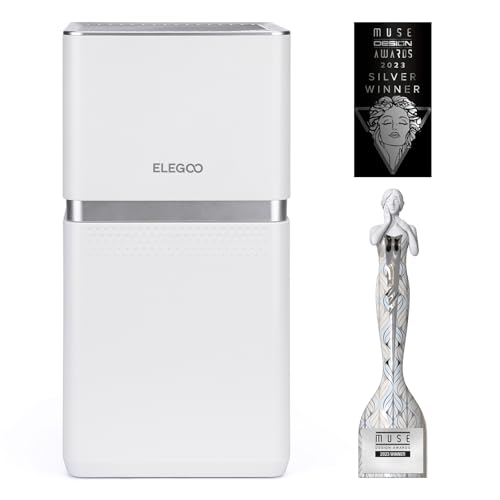
- Very quiet 35 dB operation
- Automatic and two-speed fan control
- VOC and filter-life reminders
Best For: ELEGOO resin-printer users prioritizing low noise
Best Overall Filtration – Bambu Lab HEPA H13 Filter System
For hobbyists comparing 3d printer air purifiers for hobbyists, this purpose-built system stands out for enclosed printers and emissions-focused filtration. Its three-layer design combines a pre-filter, True HEPA H13 media, and activated carbon to address particles, fumes, and odors from materials including PLA, PETG, ABS, ASA, and Nylon.
Best For: Bambu Lab P1S and X1C owners who want at-source filtration with broad adapter potential.
Pros:
- True HEPA H13 filtration captures over 99.97% of 0.3-micron ultrafine particles, according to the supplied specifications.
- Activated carbon targets fumes such as styrene and caprolactam.
- Up to 60 m³/h airflow, compact dimensions, and tool-free filter changes.
- Designed to maintain negative pressure without disrupting enclosure temperature stability or print quality.
Cons:
- The default connector is for Bambu Lab P1S and X1C; other printers may require adapter kits or printed connectors.
- Its specialized design is less suitable if you only need general room air purification.
This is the strongest choice when particle and VOC control are higher priorities than the simplest plug-and-play setup. Check the connector requirements for your printer before buying.
Best for Resin Printers – ELEGOO MARSMATE Air Purifier
The ELEGOO MARSMATE is a practical option for resin-printing hobbyists searching for 3d printer air purifiers for hobbyists. It uses activated carbon to remove up to 95% of TVOC, includes a VOC sensor for filter reminders, and is designed for compatible ELEGOO photocuring printers.
Best For: ELEGOO resin printer users who want quiet, low-power VOC and odor reduction.
Pros:
- Runs at 35 dB with 6W power consumption.
- VOC sensor monitors concentration and alerts you when the filter needs attention.
- Large activated-carbon filter is rated for use up to two months.
- Compatible with a broad selection of ELEGOO Mars, Saturn, and Jupiter models with an extension port.
Cons:
- Its filtration is activated-carbon based rather than a listed HEPA particle-filtration system.
- The supplied dimensions make it considerably larger than mini printer purifiers.
- Filter life depends on use and is specified as up to two months.
MARSMATE makes the most sense for resin setups where quiet operation, VOC awareness, and straightforward filter replacement matter. Confirm that your printer has the required extension port.
Best Compact Option – ANYCUBIC Mini Purifier 2-Pack
For small resin-printing workspaces, the ANYCUBIC Mini Purifier offers a lightweight approach to 3d printer air purifiers for hobbyists. This two-pack uses high-density activated carbon to absorb resin odors, with a compact body that can sit directly on or beside compatible LCD and DLP printers.
Best For: Hobbyists who need highly portable odor control for compact resin printers or multiple setups.
Pros:
- Extremely compact at 4.5 x 1.8 x 1.8 inches and only 17 g per unit.
- High-density activated-carbon filter is designed to absorb resin odors.
- Fan runs at up to 5,000 rpm with stated operating noise at or below 40 dB.
- Replaceable filters are rated for three to six months of continuous use.
Cons:
- Activated carbon is specified for odors; the notes do not describe HEPA particle filtration.
- The compact design is intended for printer-level use rather than whole-room purification.
- Although listed as battery powered, the supplied notes do not specify battery runtime.
This two-pack is appealing when space and portability matter most. Choose it for localized resin odor management, not as a substitute for ventilation or a larger area purifier.
Best Flexible Setup – Creality Ease Air Purifier
The Creality Ease is a flexible pick among 3d printer air purifiers for hobbyists because it supports both at-source and area purification. Its four-layer filter captures particles down to 0.3 microns, while 500 g of granular activated carbon helps address printing odors and emissions.
Best For: Desktop users who want one compact purifier for either an enclosed printer connection or nearby workspace circulation.
Pros:
- Four-layer filtration combines particle capture down to 0.3 microns with 500 g of activated carbon.
- Two rear-cover configurations support printer-connected or area-purification use.
- Smart synchronization works with compatible printers and includes filter-life monitoring.
- Three fan speeds provide quieter low-speed operation or stronger circulation.
Cons:
- Smart synchronization is limited to compatible printers.
- The supplied notes do not list specific printer models or detailed dimensions.
- Filter replacement timing depends on the monitored filter-life status rather than a stated fixed interval.
Choose the Ease when flexibility is more important than a highly specialized printer-specific design. Its two operating modes make it suitable for changing between enclosed-printer extraction and general desktop purification.
Compact Resin Odor Pick – ELEGOO Mini Air Purifier 2-Pack
For hobbyists comparing 3d printer air purifiers for hobbyists, the ELEGOO Mini Air Purifier is a compact, battery-powered option for LCD, DLP, and MSLA resin printers with enough interior space. Its activated-carbon filter targets resin odors without adding much noise or bulk.
Best For: Resin-printing hobbyists who want portable odor control and two small units for separate printers or work areas.
Pros:
- Two-pack provides coverage for multiple compatible printers.
- Activated carbon is designed to absorb irritating resin odors.
- Runs for at least 24 hours on a full 2,000mAh charge.
- Compact 44 × 44 × 107mm design and a listed 10dB noise level.
Cons:
- Designed for resin odor filtration rather than broad particle filtration.
- Carbon blocks require replacement every three to six months, with replacements purchased separately.
- It must fit inside the printer enclosure to be suitable.
This is a straightforward choice when space and low operating noise matter most. The two-pack and long battery runtime are useful for hobby setups, but users seeking ventilation or HEPA filtration will need a different type of system.
Dual-Printer Ventilation Pick – ANYCUBIC Purifier 2.0
Among 3d printer air purifiers for hobbyists, the ANYCUBIC Purifier 2.0 stands out for actively exhausting chamber air outdoors instead of relying only on an internal filter. Its split port can serve two printers, making it practical for a multi-printer workspace.
Best For: Hobbyists with enclosed resin printers, an available window or vent, and two printers to connect to one exhaust system.
Pros:
- Directs printer-chamber odors outside through an exhaust hose.
- Split port supports connection to two printers with one purifier.
- Includes an approximately 10-foot exhaust hose for flexible placement.
- Operates at a listed 52dB and is described as quieter than most 3D printers.
Cons:
- Outdoor venting requires a suitable wall vent, window, or other opening.
- Some listed printer combinations require 3D-printed adapters.
- Its 2.12-pound package and hose make it less compact than an internal mini purifier.
This model makes the most sense when continuous ventilation is more important than a small footprint. Check your printer’s ventilation-port compatibility and plan the hose route before buying, especially if you want to use the dual-printer connection.
Filament-Focused HEPA Pick – Mintion V1 Filter System
For hobbyists seeking 3d printer air purifiers for hobbyists that address both particles and odors, the Mintion V1 uses a pre-filter, HEPA H13 filter, and activated-carbon stage. Its external design is intended for enclosed printers and supports common materials including PLA, PETG, ABS, ASA, and nylon.
Best For: Enclosed-printer users working with varied filaments who want a dedicated external filtration system with up to 60m³/h airflow.
Pros:
- Three-stage filtration combines pre-filter, HEPA H13, and activated carbon.
- Designed to capture ultrafine particles and reduce VOC-related odors.
- Supports common filaments, including PLA, PETG, ABS, ASA, and PA/nylon.
- Compact external design, tool-free installation claim, and accessible replaceable filters.
Cons:
- Compatibility with some printer brands depends on an optional printed adapter.
- It is intended for enclosed printers rather than open-frame setups.
- The 3.63-pound package is less lightweight than a small internal purifier.
The Mintion V1 is the broadest filtration option of these three for hobbyists who print multiple filament types. Its external format and filter combination are appealing for enclosed machines, but confirm the required adapter and available space around your printer.
Best Compatible Fume Extractor – BD-60B Desktop Air Purifier
For hobbyists seeking 3d printer air purifiers for hobbyists, the BD-60B is a compact, metal-cased option designed for select Bambu Lab and ELEGOO printers. Its multi-stage filtration, adjustable fan speed, and included smoke pipe and magnetic hoods make it practical for capturing fumes, odors, and particulate matter near the printer.
Best For: Bambu Lab and ELEGOO owners who want a dedicated, adjustable fume extractor with included connection accessories.
Pros:
- Four-stage filtration combines pre-filter, HEPA, and activated-carbon layers.
- Stepless speed control supports different airflow and noise preferences.
- Includes a smoke pipe, pipe joint, magnetic suction hoods, and five replacement pre-filters.
Cons:
- Compatibility is model-specific; the Bambu Lab P2S requires a separately printed riser bracket.
- At 55 dB and 10.6 pounds, it is less suited to buyers prioritizing the quietest or lightest unit.
The BD-60B stands out when direct printer compatibility and flexible installation matter most. Confirm your exact printer model before buying, especially if you use a P2S.
Best Quiet Multi-Printer Option – Phrozen Air Purifier Max
The Phrozen Air Purifier Max is a flexible choice for hobbyists comparing 3d printer air purifiers for hobbyists across FDM and resin setups. It uses six filtration layers with activated carbon, offers three fan modes, and runs at a listed 42 dB for quieter workstation use.
Best For: FDM and resin-printing hobbyists who want selectable fan modes and a low-noise purifier with easy filter changes.
Pros:
- Designed for both resin and FDM printing environments.
- Six-layer filtration includes activated-carbon layers for odors, VOCs, and plastic fumes.
- Three modes—Power, Balanced, and Quiet—accommodate different print jobs.
- Slide-out filter replacement and a reminder light simplify maintenance.
Cons:
- Its 17-inch height and 10 kg weight require substantial workspace.
- The listed particle retention size is 2.5 microns, so buyers should review whether that meets their specific particulate-filtration needs.
This is a well-rounded option for shared hobby spaces where resin odors, FDM fumes, and operating noise are all concerns. Its larger footprint is the main trade-off for the feature set.
Best for Quiet Resin Printing – ELEGOO Marsmate Air Purifier
For resin-printing hobbyists looking at 3d printer air purifiers for hobbyists, the ELEGOO Marsmate emphasizes quiet operation and printer-focused compatibility. It provides low and high fan modes, automatic switching, and a VOC-based reminder system in a larger ABS housing.
Best For: ELEGOO resin-printer users who prioritize very quiet operation and automatic filter-life monitoring.
Pros:
- Listed operating noise is just 35 dB.
- Low and high fan speeds can be switched manually or set to automatic switching.
- Sensor monitors VOC concentration and provides filter-replacement reminders.
- Compatible with numerous ELEGOO Saturn and Mars models, plus printers with expansion interfaces.
Cons:
- The large 16.14-inch-tall design takes up considerable desk or floor space.
- Its filtration is listed as activated carbon rather than a HEPA system.
- At 14 pounds, it is not especially portable.
The Marsmate is particularly appealing for overnight or living-area printing where sound matters. Check the expansion-interface requirement and your exact printer model before purchasing.
How We Picked the Best 3d Printer Air Purifiers for Hobbyists
We focused on the features that matter most in a home workshop: filtration design, compatibility, airflow, noise, form factor, and ease of replacement-filter access. The selection includes compact carbon units for resin printers, larger purifiers for enclosed machines, and models that combine HEPA-style particle filtration with activated carbon for odors and volatile compounds.
Compatibility is especially important. A purifier designed for a specific enclosure or printer family may offer better fit and power integration than a universal unit, while a standalone model can be easier to move between machines.
Quick Comparison
| Best For | Look For | Typical Advantage |
|---|---|---|
| Resin printing | Dense activated carbon and compact sizing | Helps manage resin odor near the printer |
| Enclosed filament printers | HEPA H13 plus carbon filtration | Targets particles and material odors |
| Large enclosures | Higher airflow and larger filter area | More effective air turnover |
| Shared spaces | Low-noise operation and smart controls | Less disruption during long prints |
| Multiple printers | Portable or universal design | Easy to reposition as needed |
Key Buying Factors for 3d Printer Air Purifiers for Hobbyists
Filtration and Airflow
HEPA filtration is useful for fine particles, while activated carbon is the key component for many odors and gaseous compounds. Neither specification tells the whole story: filter size, sealing, fan strength, and air changes around the printer also affect performance. Match airflow to the enclosure rather than choosing solely by headline filter claims.
Printer and Enclosure Compatibility
Check dimensions, mounting points, power requirements, and whether the purifier can connect to your printer’s control system. Resin-printer accessories often fit inside or beside the vat enclosure, whereas enclosed filament printers may need a dedicated rear, side, or internal filter module.
Noise, Maintenance, and Running Cost
For bedrooms, offices, or living areas, a quiet fan and automatic control can be more valuable than maximum airflow. Confirm replacement-filter availability and price before buying. Filters require periodic replacement, particularly in dusty environments or during frequent ABS, ASA, nylon, or resin printing.
Safety Expectations
An air purifier is not a substitute for ventilation, proper resin handling, enclosure use, or manufacturer safety guidance. Keep the workspace ventilated, follow curing and storage instructions, and avoid relying on filtration alone for high-emission materials.
Who Should Buy Which 3d Printer Air Purifiers for Hobbyists?
Choose a compact activated-carbon purifier if you mainly use a resin printer and need localized odor control. Select a HEPA-and-carbon system for enclosed filament printers or mixed materials where both particles and odors matter. Larger models suit bigger enclosures or frequent printing, while quiet smart-sync units are a strong fit for shared rooms and long unattended jobs.
If you own several printers, prioritize a portable universal model or buy dedicated units where fit and airflow are clearly better. For the best overall setup, pair the appropriate purifier with enclosure ventilation and regular filter maintenance.