Choosing the best memory cards for archiving means balancing capacity, write endurance, compatibility, and dependable file transfers—not simply choosing the card with the highest advertised speed.
This roundup compares 10 SD and microSD options for photographers, videographers, dash-cam owners, and anyone who needs a practical way to preserve important files.
Best 10 Memory Cards for Archiving Picks for 2026
High-Capacity 4K Archive Pick

- 512GB SDXC capacity for large libraries
- V30 rating supports 4K UHD video
- Durable build with five-year warranty
Best For: Photographers and videographers needing high-capacity SD storage
Continuous-Recording Archive Pick
SanDisk 128GB High Endurance microSD

- Built for dash cams and monitoring systems
- V30 support for Full HD and 4K video
- Includes adapter and lifetime manufacturer warranty
Best For: Continuous video recording in dash cams and security systems
Fast Transfer Archive Pick

- 256GB SDXC capacity for photo and video archives
- Up to 225MB/s advertised read speed
- V30 support for compatible 4K 60FPS recording
Best For: Photographers and videographers who frequently transfer large files
Compact Everyday Archive Pick

- 32GB SDHC capacity for smaller archives
- Up to 100MB/s advertised read speed
- Compatible with many SDHC-capable devices
Best For: Everyday photos and modest storage needs
High-Capacity 4K Pick
Gigastone 256GB 4K Camera Pro SD Card

- 256GB SDXC capacity for photos and 4K video
- V30/Class 10 rating with speeds up to 170MB/s
- Includes mini case and five-year limited warranty
Best For: High-capacity camera archiving and 4K recording
Everyday Archive Value

- 128GB capacity for photos and Full HD video
- Up to 140MB/s read speed on compatible devices
- U1/Class 10 rating with protective features
Best For: Compact cameras and Full HD photo archives
Performance Archive Choice
SanDisk Extreme PRO 128GB SD Card
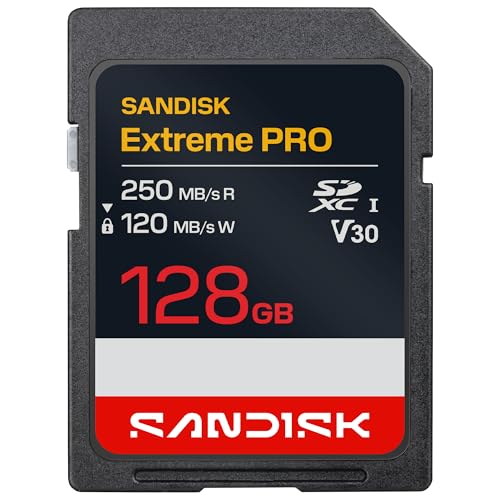
- U3/V30 ratings for 4K UHD and Full HD video
- Up to 250MB/s read speed advertised
- Durable design and Memory Zone organization support
Best For: High-speed 4K capture and large-file archiving
Everyday Archive Pick
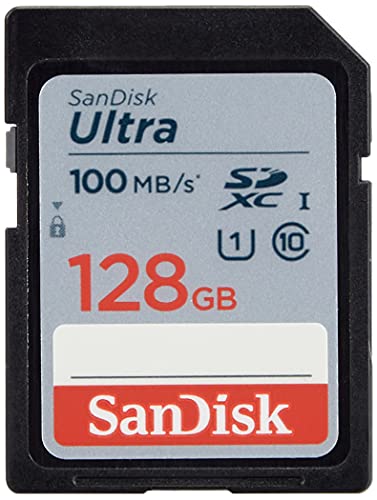
- 128GB capacity for photos and Full HD video
- Class 10 and U1 rated
- Up to 100MB/s read speed
Best For: Everyday camera storage and Full HD recording
Fast Workflow Choice

- Up to 200MB/s read speed
- Up to 90MB/s write speed
- U3 and V30 for compatible 4K video
Best For: 4K capture, burst photography, and quick file offloads
Best Simple Pick

- 128GB storage for larger archives
- U3 and V30 rated for compatible 4K video
- Up to 150MB/s transfer speed
Best For: 4K video, burst photography, and high-capacity storage
High-Capacity 4K Archive Pick – GIGASTONE 512GB SD Card
For photographers and videographers building a long-term collection of footage, the GIGASTONE 512GB SDXC card is a practical choice among memory cards for archiving. Its large capacity, V30 rating, and advertised 170MB/s transfer speed support 4K workflows, while the included mini case adds convenient storage protection.
Best For: Digital cameras, DSLRs, camcorders, and PC users who need substantial 4K-ready storage.
Pros:
- 512GB capacity provides room for sizable photo and video libraries.
- V30 and 4K UHD compatibility suit high-resolution recording.
- Water-, temperature-, shock-, magnetic-, and X-ray-proof design.
- Includes a mini case and five-year limited manufacturer warranty.
Cons:
- Full-size SD format is not intended for devices requiring microSD cards.
- Advertised maximum read speed may depend on the host device and workflow.
Choose this card when capacity and broad physical durability matter more than using a compact microSD format. The five-year warranty and recovery offering add reassurance for an archive-oriented setup.
Continuous-Recording Archive Pick – SanDisk 128GB High Endurance microSD
The SanDisk High Endurance 128GB microSDXC card is designed for repeated video capture, making it a strong option when memory cards for archiving will be used in dash cams or monitoring systems. Its high-endurance construction, V30 rating, and included adapter support ongoing recording and convenient file transfers.
Best For: Dash cams, home monitoring systems, and compatible microSD devices that continuously record video.
Pros:
- High-endurance design is intended for continuous video recording.
- Supports Full HD and 4K video use with compatible devices.
- Temperature-, water-, shock-, humidity-, and magnet-proof card design.
- Includes an adapter for devices with a full-size SD slot.
Cons:
- 128GB capacity is smaller than the full-size SD options in this roundup.
- Advertised recording-hour figures vary with resolution, device, and usage.
- Not compatible with Nintendo Switch 2 according to the supplied notes.
This is a specialized archival choice for footage captured continuously rather than a general-purpose high-capacity media card. Confirm your device’s microSD compatibility and recording requirements before buying.
Fast Transfer Archive Pick – Lexar 256GB Silver SD Card
The Lexar 256GB Silver SDXC card suits photographers and videographers who regularly move large files into an archive. With up to 225MB/s advertised read speed, up to 160MB/s write speed, and a V30 rating, it combines transfer efficiency with support for 4K 60FPS recording on compatible equipment.
Best For: Camera users who want fast transfers, 256GB of storage, and 4K-capable recording support.
Pros:
- 256GB capacity balances archive space with manageable card size.
- High advertised read and write speeds can shorten transfer times.
- V30 rating supports up to 4K 60FPS recording when devices allow it.
- Compatible with cameras from Canon, Sony, Nikon, and others.
Cons:
- Actual performance depends on the camera, card reader, and computer.
- 4K 60FPS support still depends on the host device and recording settings.
The Lexar is a compelling middle ground for active shooters who archive frequently and value faster offloads. Its durability features and lifetime limited warranty further support regular field use.
Compact Everyday Archive Pick – SanDisk 32GB Ultra SD Card
The SanDisk 32GB Ultra SDHC card is a straightforward, lower-capacity option for memory cards for archiving everyday photos and smaller file collections. Its Class 10 rating and advertised 100MB/s read speed make it suitable for compatible cameras and computers when you do not need the capacity of a 128GB or larger card.
Best For: Basic camera storage, modest photo archives, and users who prefer a simple SDHC card from an established brand.
Pros:
- Compact 32GB capacity works well for smaller collections.
- Up to 100MB/s advertised read speed supports convenient file transfers.
- Compatible with cameras, PCs, smartphones, cell phones, and tablets that support SDHC.
- Dust-proof and described as water- and impact-resistant.
Cons:
- 32GB provides considerably less archive space than the other listed cards.
- SDHC capacity may require more frequent offloading for extensive video libraries.
- Supplied notes do not identify a V30 or 4K-specific rating.
This card is best for uncomplicated, smaller-scale storage rather than a large video archive. It makes sense when broad device compatibility and modest capacity are the main priorities.
High-Capacity 4K Pick – Gigastone 256GB 4K Camera Pro SD Card
For memory cards for archiving, the Gigastone 256GB SDXC card offers generous capacity for photos and 4K video. Its V30 rating, advertised transfer speed of up to 170MB/s, and included mini case make it a practical option for compatible cameras and organized storage.
Best For: DSLR users, digital cameras, HD camcorders, and PC-based photo or video storage.
Pros:
- 256GB capacity provides substantial room for archived photos and video.
- V30 and Class 10 ratings support 4K UHD video use.
- Waterproof, temperature-proof, shock-proof, magnetic-proof, and X-ray-proof design.
- Includes a mini case and a five-year limited manufacturer warranty.
Cons:
- Full-size SD format is not intended for devices requiring microSD cards.
- Advertised transfer speed depends on the host device and usage conditions.
Choose this card when capacity and 4K compatibility matter more than selecting a smaller archive card. Verify that your camera supports SDXC and V30 media before buying.
Everyday Archive Value – SanDisk Ultra 128GB SDXC Card
For memory cards for archiving everyday photos and Full HD clips, the SanDisk Ultra 128GB SDXC card is a straightforward choice for compatible compact and mid-range cameras. It combines useful capacity with an advertised read speed of up to 140MB/s.
Best For: Compact to mid-range point-and-shoot cameras and camcorders recording Full HD video.
Pros:
- 128GB capacity stores a large collection of pictures and video.
- Class 10 and U1 ratings are designed for Full HD video recording.
- Advertised read speeds reach up to 140MB/s with compatible devices.
- Waterproof, temperature-proof, drop-proof, magnetic-proof, and X-ray-proof features.
Cons:
- U1 is aimed at Full HD rather than the V30-rated 4K performance of faster cards.
- Card reader compatibility requires a separately sold SanDisk SD UHS-I reader.
- Actual capacity is lower than the stated 128GB after formatting.
This SanDisk is a sensible archive card for standard photography and Full HD workflows. If your camera records high-bitrate 4K, consider a card with a V30 rating instead.
Performance Archive Choice – SanDisk Extreme PRO 128GB SD Card
For memory cards for archiving high-resolution stills and 4K footage, the SanDisk Extreme PRO 128GB SDXC card prioritizes speed and video performance. Its V30 and U3 ratings, plus advertised read speeds up to 250MB/s, suit demanding compatible camera workflows.
Best For: Camera users capturing 4K UHD video, high-resolution stills, and frequently transferring large files.
Pros:
- U3 and V30 ratings support 4K UHD and Full HD recording.
- Advertised read speeds reach up to 250MB/s, with write speeds listed up to 120MB/s for this 128GB model.
- Designed with dust-proof, temperature-proof, waterproof, wearout-proof, and X-ray-proof features.
- SanDisk Memory Zone desktop app can help back up, organize, and transfer content.
Cons:
- 128GB offers less archive capacity than higher-capacity versions in the product line.
- Peak speed claims require compatible hardware and conditions.
This is the strongest fit here for active 4K shooters and large-file transfers, while still serving as a capable photo archive card. Confirm your camera and reader can take advantage of its higher-speed specifications.
Everyday Archive Pick – SanDisk Ultra 128GB SDXC
SanDisk 128GB Ultra SDXC UHS-I Memory Card - 100MB/s, C10, U1, Full HD, SD Card - SDSDUNR-128G-GN6IN
Check Price On AmazonFor straightforward memory cards for archiving, the SanDisk Ultra 128GB offers ample space for photos and Full HD video in compatible cameras. Its Class 10 and U1 ratings suit everyday capture, while the advertised read speed of up to 100MB/s can help with file transfers.
Best For: Compact and mid-range point-and-shoot cameras, photo storage, and Full HD video.
Pros:
- 128GB capacity for storing many photos and Full HD videos
- Class 10 and U1 ratings support Full HD video recording with compatible devices
- Up to 100MB/s read speed for faster transfers
- Temperature-, water-, and X-ray-proof construction
Cons:
- Write speed is lower than the advertised maximum read speed
- Full HD performance depends on the host device and file attributes
This is a sensible archive-oriented choice when capacity and broad everyday camera compatibility matter more than high-end 4K recording performance.
Fast Workflow Choice – SanDisk Extreme PRO 64GB
SANDISK 64GB Extreme PRO SDXC UHS-I Memory Card - C10, U3, V30, 4K UHD, SD Card - SDSDXXU-064G-GN4IN
Check Price On AmazonThe SanDisk Extreme PRO 64GB is a strong option for memory cards for archiving when quick offloading and demanding capture are priorities. It supports 4K UHD video and burst photography, with up to 200MB/s read speeds when paired with compatible equipment.
Best For: 4K UHD video, sequential burst photography, and users who regularly transfer large files.
Pros:
- Up to 200MB/s read speed with compatible devices and readers
- Up to 90MB/s write speed for smooth 4K UHD capture
- U3 and V30 ratings support compatible 4K recording
- Waterproof, temperature-proof, shockproof, and X-ray-proof
Cons:
- 64GB capacity is lower than the two 128GB alternatives
- Maximum QuickFlow speeds require compatible equipment
Choose this card for a faster, performance-focused archiving workflow, particularly if you frequently move video files from the card to a computer.
Best Simple Pick – SanDisk Extreme 128GB
For photographers seeking memory cards for archiving alongside 4K capture, the SanDisk Extreme 128GB combines generous capacity with U3 and V30 ratings. It offers advertised transfer speeds up to 150MB/s and is built for demanding conditions.
Best For: 4K UHD video, sequential burst photography, and larger on-card photo archives.
Pros:
- 128GB capacity for larger photo and video libraries
- U3 and V30 ratings support real-time 4K recording with compatible devices
- Up to 150MB/s transfer speed and up to 70MB/s shot speed
- Drop-, temperature-, water-, and X-ray-proof design
Cons:
- Advertised speeds require compatible devices and may vary by usage conditions
- Video support depends on the host device and file attributes
This is the more balanced choice for users who want 128GB of archive space without stepping down from 4K-oriented performance ratings.
How We Picked the Best Memory Cards for Archiving
We focused on the specifications that matter when storing valuable photos and video: capacity, interface type, speed class, stated read and write performance, and intended use. The selection includes standard SD cards for cameras, a microSD card designed for continuous recording, and models ranging from basic Full HD storage to faster 4K-oriented options.
Advertised speeds are useful for comparing products, but real-world performance depends on the camera, card reader, host device, file sizes, and workload. We also treated recovery support and endurance claims as useful advantages, not substitutes for maintaining multiple backups.
Quick Comparison
- Best for high-capacity camera storage: The 256GB and 512GB SDXC options provide more room for large photo libraries and extended video sessions.
- Best for demanding 4K workflows: U3 and V30 cards are the most suitable choices in this lineup for sustained video recording.
- Best for continuous recording: The SanDisk High Endurance microSDXC card is designed for dash cams and home monitoring systems.
- Best for basic Full HD use: SanDisk Ultra and the 32GB SDHC option suit everyday cameras and modest storage needs.
- Best for fast transfers: The Lexar Silver and SanDisk Extreme PRO models advertise higher read speeds, provided the reader and device support them.
Key Buying Factors for Memory Cards for Archiving
Capacity and File Organization
Choose capacity based on your shooting habits and backup schedule. A 32GB or 64GB card may be sufficient for occasional Full HD photos, while 128GB, 256GB, or 512GB cards are more practical for RAW images, 4K footage, and fewer card changes. Larger cards should still be copied to a computer or dedicated backup drive promptly.
Speed Class and Sustained Writing
For video, look for U3 and V30 markings when supported by the camera. These indicate a minimum sustained write-performance class that is more meaningful than maximum read speed alone. U1 and standard Class 10 cards are generally better suited to photographs and lower-bitrate Full HD recording.
Compatibility and Durability
Confirm whether your device accepts SDHC, SDXC, or microSD media and check its maximum supported capacity. A microSD card requires a suitable adapter for full-size SD slots. For dash cams and surveillance devices, prioritize endurance-rated media and follow the manufacturer’s formatting recommendations.
Archiving Best Practices
Memory cards are convenient transport media, but they should not be your only archive. Use at least two additional copies, ideally on separate storage devices or in a reputable cloud service. Verify copied files, safely eject cards, format them in the recording device, and replace cards showing errors or unreliable performance.
Who Should Buy Which Memory Cards for Archiving?
Photographers with large libraries should favor 256GB or 512GB SDXC cards, especially when shooting RAW or long bursts. 4K camera users should choose a U3/V30 card after confirming the camera’s requirements. Everyday camera owners can save money with a 64GB or 128GB Ultra-class card for photos and Full HD video. Dash-cam and security-camera owners should select the high-endurance microSD option rather than a card intended only for occasional use. Finally, frequent editors and professionals may benefit from faster-read models, but only if their card reader and workflow can take advantage of those speeds.