Choosing a Wi-Fi router with dual 10GbE ports can help you make full use of multi-gig internet, fast NAS storage, wired backhaul, and demanding home networks. The best choice depends on more than peak wireless speed.
We compared ten leading Wi-Fi 7 and multi-gig routers across port layouts, wireless capacity, mesh support, management features, and practical use cases to help you find the right fit.
Best 10 Wi Fi Router with Dual 10gbe Ports Picks for 2026
Best Wi-Fi 7 Dual-10G Home Router

- Wi-Fi 7 up to 7.2Gbps
- One 10G SFP+ and one 10G WAN/LAN port
- AiMesh, VPN, security, and parental controls
Best For: Gaming households and flexible 10G home networks
Best VPN-Focused Wi-Fi 7 Router

- Tri-band Wi-Fi 7 with speeds up to 9Gbps
- WireGuard and OpenVPN up to 680Mbps
- AdGuard Home, Bark controls, and high device capacity
Best For: VPN-heavy households and DIY network users
Best Business Dual-10G Wired Router
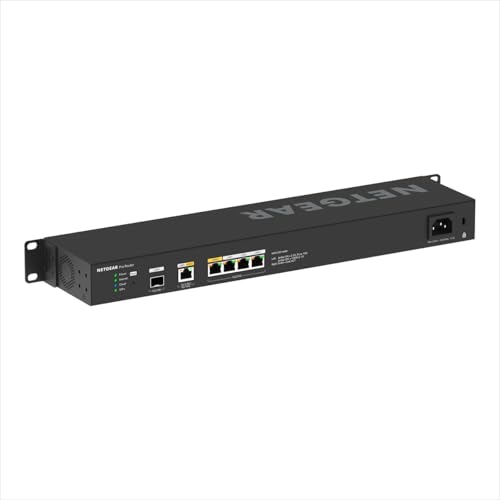
- 10G LAN/WAN and 10G SFP+ connectivity
- Dual-WAN failover and load balancing
- VLAN, VPN, rack-mount, and Insight management support
Best For: Small businesses using separate wireless access points
Best Tri-Band Dual-10G Wi-Fi 7 Router

- Tri-band Wi-Fi 7 up to 19,000Mbps
- Two flexible 10G WAN/LAN ports
- Four 2.5G ports, EasyMesh, and VPN support
Best For: High-bandwidth homes and gaming networks
Best Premium Pick

- Dual 10G and four 2.5G ports
- Quad-band WiFi 7 up to 30 Gbps
- Gaming acceleration and up to 3,500 sq. ft. coverage
Best For: High-performance gaming and multi-gig home networks
Best Value Multi-Gig Option

- One 10G and four 2.5G connections
- Tri-band WiFi 7 with up to 9.7 Gbps
- Coverage up to 2,600 sq. ft. for 120 devices
Best For: WiFi 7 homes needing one 10G link and several 2.5G ports
Best for 2.5G Expansion

- Five 2.5GbE ports for wired devices
- Dual-band WiFi 7 up to 6,500 Mbps
- AiMesh and AiProtection Pro support
Best For: Homes building a 2.5G wired network with mesh expansion
Best Value Wi-Fi 7 Router
TP-Link BE6500 Dual-Band WiFi 7 Router

- Wi-Fi 7 with MLO, Multi-RUs, and 4K-QAM
- Up to 2,400 sq. ft. and 90 devices
- One 2.5Gbps WAN/LAN and one 2.5Gbps LAN port
Best For: Homes wanting affordable Wi-Fi 7 coverage and multi-gig wired networking
Best Dual-10GbE Pick

- Two configurable 10Gbps WAN/LAN ports
- Tri-band Wi-Fi 7 with 6GHz and 320MHz channels
- Up to 3,500 sq. ft. coverage and AiMesh support
Best For: Multi-gig homes and wired networks needing two 10GbE connections
Best Feature-Rich Alternative

- Tri-band Wi-Fi 7 with 6GHz and 320MHz channels
- Four 2.5G ports instead of dual 10GbE
- Advanced VPN, security, and AiMesh features
Best For: Wi-Fi 7 users prioritizing security, VPNs, and 2.5G networking
Best Wi-Fi 7 Dual-10G Home Router – ASUS RT-BE88U
If you need a wi fi router with dual 10gbe ports for a high-performance home, the ASUS RT-BE88U combines Wi-Fi 7 with one 10G SFP+ port and one 10G WAN/LAN port. Its 2.6GHz quad-core processor, AiMesh support, and security features make it a strong option for demanding wired and wireless networks.
Best For: Gaming households, fast fiber connections, and users building a flexible 10G home network.
Pros:
- Wi-Fi 7 speeds up to 7.2Gbps with Multi-Link Operation and 4096-QAM.
- Provides one 10G SFP+ port, one 10G WAN/LAN port, four 2.5G ports, and four 1G ports.
- Includes AiMesh, AiProtection Pro, VPN support, parental controls, and Guest Network Pro.
Cons:
- Its dual-band design is less expansive than a tri-band Wi-Fi 7 router.
- The feature-rich setup may be more than casual users need.
The RT-BE88U is especially compelling when both high-speed Ethernet and advanced home-network controls matter. It is a capable all-around choice for users who want 10G connectivity without giving up robust Wi-Fi 7 features.
Best VPN-Focused Wi-Fi 7 Router – GL.iNet Flint 3
The GL.iNet Flint 3 is a practical choice for shoppers comparing a wi fi router with dual 10gbe ports but prioritizing VPN control and connected-device capacity. It offers tri-band Wi-Fi 7, support for more than 100 devices, and WireGuard and OpenVPN speeds rated up to 680Mbps.
Best For: DIY network users, VPN-heavy households, and families wanting broad tri-band coverage.
Pros:
- Tri-band Wi-Fi 7 supports MLO, enhanced OFDMA, 4K-QAM, and low-latency connectivity.
- WireGuard and OpenVPN speeds are rated up to 680Mbps.
- Includes AdGuard Home support, Bark parental controls, 1GB DDR4 RAM, and 8GB eMMC storage.
Cons:
- Its five ports are 2.5G rather than dual 10G ports.
- Firmware updating is specifically recommended during initial setup.
- Coverage is rated for up to 2,000 square feet, less than some larger routers.
Flint 3 is not a direct match for buyers who specifically require dual 10G Ethernet, but it stands out for VPN performance, customization, and tri-band wireless capacity. It is better suited to users who value network software features over maximum wired throughput.
Best Business Dual-10G Wired Router – NETGEAR PR60X
For a business-oriented wi fi router with dual 10gbe ports setup, the NETGEAR PR60X focuses on wired performance, redundancy, and centralized management rather than built-in wireless networking. It combines a configurable 10G LAN/WAN port with a 10G SFP+ port, dual-WAN failover, and VLAN support.
Best For: Small businesses and advanced wired networks that use separate Wi-Fi access points.
Pros:
- Includes one 10G LAN/WAN port and one 10G SFP+ port.
- Dual-WAN failover and load balancing help support reliable connectivity.
- Supports up to 32 VLANs, multiple VPN types, rack mounting, and NETGEAR Insight management.
Cons:
- This is a wired router, not an all-in-one Wi-Fi router.
- NETGEAR Insight includes a one-year subscription.
- Its business-focused features may be excessive for basic home use.
The PR60X is the strongest fit when uptime, segmentation, remote administration, and 10G backhaul are the main priorities. Pair it with compatible access points if you need Wi-Fi coverage.
Best Tri-Band Dual-10G Wi-Fi 7 Router – TP-Link Archer BE800
The TP-Link Archer BE800 is a strong match for shoppers seeking a wi fi router with dual 10gbe ports and maximum wireless capacity. Its tri-band BE19000 platform includes two flexible 10G WAN/LAN ports, eight antennas, and four additional 2.5G ports for a fast home or gaming network.
Best For: High-bandwidth homes, gaming setups, and users wanting flexible fiber or copper 10G connections.
Pros:
- Tri-band Wi-Fi 7 delivers combined speeds up to 19,000Mbps.
- Two 10G WAN/LAN ports support RJ45 and SFP+/RJ45 combo connectivity.
- Includes four 2.5G ports, EasyMesh compatibility, HomeShield features, VPN support, and a USB 3.0 port.
Cons:
- Some advanced HomeShield features may require additional service terms.
- Its high-end performance may be unnecessary for slower internet plans.
- A modem is required for most internet service providers.
With two flexible 10G ports and a three-band Wi-Fi 7 design, the Archer BE800 is one of the most complete options in this group for future-proofing a busy network. It makes the most sense when multiple high-speed wireless and wired devices will use the network at once.
Best Premium Pick – ASUS ROG Rapture GT-BE98 Pro
If you need a wi fi router with dual 10gbe ports, the ASUS ROG Rapture GT-BE98 Pro is built for demanding gaming, high-speed transfers, and busy households. Its quad-band WiFi 7 design supports up to 30 Gbps, while the two 10G ports and four 2.5G ports provide unusually flexible wired connectivity.
Best For: Gamers, creators, and large households with multi-gig wired devices.
Pros:
- Dual 10G ports plus four 2.5G ports support extensive multi-gig networking.
- WiFi 7 features 320MHz channels, 4096-QAM, and Multi-Link Operation.
- Triple-Level Game Acceleration is designed to help reduce gaming and streaming latency.
- Coverage is listed at up to 3,500 square feet, with mesh support and enhanced antenna efficiency.
Cons:
- Its advanced feature set and large design may be more router than a typical home needs.
- The supplied notes do not indicate a second 10G port that can be dedicated exclusively to WAN or LAN use; port configuration may vary by setup.
The GT-BE98 Pro stands out when both wireless performance and wired capacity matter. It is a premium choice for users who can take advantage of multiple 10G or 2.5G connections and gaming-focused controls.
Best Value Multi-Gig Option – TP-Link Archer BE600
The TP-Link Archer BE600 is a practical WiFi 7 choice for users who want fast wireless service and several multi-gig connections. It is not a true wi fi router with dual 10gbe ports, but it combines one 10 Gbps WAN/LAN port with four 2.5 Gbps ports for a flexible wired setup.
Best For: Homes with WiFi 7 devices, a multi-gig modem, and several 2.5G wired clients.
Pros:
- Includes one 10 Gbps WAN/LAN port, one 2.5 Gbps WAN/LAN port, and three 2.5 Gbps LAN ports.
- WiFi 7 supports Multi-Link Operation, Multi-RUs, 4K-QAM, and 320MHz channels.
- Rated wireless speeds reach 5,765 Mbps on 6 GHz, 2,882 Mbps on 5 GHz, and 1,032 Mbps on 2.4 GHz.
- TP-Link lists coverage up to 2,600 square feet for as many as 120 devices.
Cons:
- Only one port is rated at 10 Gbps, so it does not meet a dual-10GbE requirement.
- Some security and support features may depend on the selected service or configuration.
The Archer BE600 offers a strong balance of WiFi 7 capability and wired expansion without requiring two 10G ports. Consider it if one 10G connection and multiple 2.5G links fit your network plan.
Best for 2.5G Expansion – ASUS RT-BE82U WiFi 7 Router
The ASUS RT-BE82U focuses on straightforward WiFi 7 performance and wired flexibility through five 2.5GbE ports. It is not a wi fi router with dual 10gbe ports, so it is better suited to networks where 2.5G switching, mesh expansion, and security features matter more than 10G connectivity.
Best For: Homes wanting several 2.5G wired connections and an expandable ASUS AiMesh network.
Pros:
- Five 2.5GbE ports provide ample wired connectivity for compatible devices.
- WiFi 7 supports speeds up to 6,500 Mbps, 4096-QAM, and Multi-Link Operation.
- AiMesh enables seamless roaming and whole-home network expansion.
- AiProtection Pro, parental controls, VPN support, and a security scan are included in the listed features.
Cons:
- No 10GbE port is listed, so it cannot serve users specifically seeking dual 10G connectivity.
- Its dual-band design offers less band capacity than the quad-band ASUS model in this roundup.
The RT-BE82U is a sensible option when your wired devices top out at 2.5GbE and you value ASUS mesh expansion and built-in security tools. Choose another model if dual 10G ports are essential.
Best Value Wi-Fi 7 Router – TP-Link BE6500 Dual-Band WiFi 7 Router
The TP-Link BE6500 is a practical choice if you want a Wi-Fi router with dual 10GbE ports but do not need that level of wired connectivity. It uses Wi-Fi 7 features such as Multi-Link Operation, Multi-RUs, and 4K-QAM, while providing one 2.5Gbps WAN/LAN port, one 2.5Gbps LAN port, and three 1Gbps LAN ports.
Best For: Homes upgrading to Wi-Fi 7 with gigabit-plus internet, multiple connected devices, and a preference for straightforward app-based setup.
Pros:
- Wi-Fi 7 support with MLO, Multi-RUs, and 4K-QAM
- Coverage up to 2,400 square feet for up to 90 devices
- Includes EasyMesh support, parental controls, QoS, and VPN features
Cons:
- Does not have dual 10GbE ports
- Dual-band design lacks a dedicated 6GHz band
- Requires a separate modem
The BE6500 makes more sense for buyers prioritizing broad home coverage and accessible Wi-Fi 7 features over maximum wired throughput. Its 2.5Gbps ports suit multi-gig connections, but shoppers specifically seeking a Wi-Fi router with dual 10GbE ports should consider a higher-end model.
Best Dual-10GbE Pick – ASUS RT-BE96U WiFi 7 Router
The ASUS RT-BE96U is the strongest match here for shoppers specifically seeking a Wi-Fi router with dual 10GbE ports. This tri-band Wi-Fi 7 router combines two 10Gbps WAN/LAN ports with 6GHz support, 320MHz channels, 4096-QAM, and a stated aggregate data rate of up to 19Gbps.
Best For: Large homes, demanding wired networks, high-bandwidth transfers, and users who want flexible WAN/LAN port configuration.
Pros:
- Two 10Gbps WAN/LAN ports for high-speed wired connections
- Tri-band Wi-Fi 7 with 6GHz support and 320MHz bandwidth
- Includes AiMesh support, AiProtection Pro, parental controls, and VPN features
- Coverage listed up to 3,500 square feet
Cons:
- Likely more router than basic broadband plans require
- Large footprint compared with compact home routers
- Performance depends on compatible devices and network equipment
With the clearest dual-10GbE specification in this roundup, the RT-BE96U is the natural fit for a multi-gig home or small-business network. Its two ports can be used flexibly as WAN or LAN, making it more adaptable than routers limited to a single high-speed uplink.
Best Feature-Rich Alternative – ASUS RT-BE9700 WiFi 7 Router
The ASUS RT-BE9700 is a feature-rich tri-band Wi-Fi 7 router with 6GHz support, 320MHz channels, and speeds up to 9,700Mbps. It is not a Wi-Fi router with dual 10GbE ports—the supplied specifications list four 2.5G ports—but it offers flexible WAN options, AiMesh expansion, advanced VPN features, and subscription-free network protection.
Best For: Users who want strong Wi-Fi 7 features, multiple 2.5G connections, and extensive security or VPN controls without requiring 10GbE ports.
Pros:
- Tri-band Wi-Fi 7 with 6GHz and 320MHz channels
- Four 2.5G ports for multi-gig wired devices
- Advanced VPN support, including site-to-site VPN and Instant Guard
- AiMesh support for seamless whole-home expansion
Cons:
- Does not provide dual 10GbE ports
- Listed coverage is lower than the RT-BE96U at up to 2,750 square feet
- Supplied details list four antennas, fewer than the RT-BE96U’s eight
The RT-BE9700 is a sensible alternative when 2.5G wired connectivity is sufficient and security, VPN flexibility, or mesh expansion matter more than 10GbE. For direct-attached storage or other 10GbE workloads, the RT-BE96U remains the better fit.
How We Picked the Best Wi Fi Router with Dual 10gbe Ports
We focused on routers that offer two 10GbE-capable connections or a comparable dual-10G configuration, while also considering wireless standard, band layout, LAN flexibility, and real-world upgrade potential. Wi-Fi 7 models received particular attention for Multi-Link Operation, 320MHz channels, and 6GHz support, although client compatibility and regional rules can affect performance.
We also considered whether each router suits ordinary home use, gaming, professional networking, VPN-heavy setups, or mesh expansion. Features such as multi-gig WAN, wired backhaul, parental controls, security tools, and cloud management can matter as much as headline throughput.
Quick Comparison
| Best For | What to Prioritize | Recommended Type |
|---|---|---|
| Fast multi-gig internet | 10GbE WAN and strong Wi-Fi 7 capacity | High-end tri-band or quad-band router |
| Gaming and many devices | Low-latency features, 6GHz, and high aggregate throughput | Gaming-focused Wi-Fi 7 model |
| NAS and wired networking | Two 10GbE ports plus flexible LAN switching | Router with robust multi-gig port options |
| VPN and privacy | VPN throughput, protocol support, and policy controls | VPN-oriented or advanced consumer router |
| Whole-home coverage | Mesh compatibility and wired backhaul | Mesh-ready Wi-Fi 7 router |
Key Buying Factors for a Wi-Fi Router with Dual 10GbE Ports
Port Configuration
Check whether both 10GbE ports can be used as WAN or LAN, or whether one is dedicated to internet input. Flexible ports are valuable if you plan to connect a 10GbE switch, NAS, desktop, or second internet connection. Also verify whether remaining ports are 2.5GbE rather than standard gigabit.
Wireless Capacity and Coverage
Tri-band and quad-band designs generally provide more capacity than dual-band routers, especially in crowded homes. A 6GHz band can offer cleaner, faster connections at short to medium range, but it has less wall penetration than 5GHz. Antenna placement, home construction, and node location still determine coverage.
Internet Speed and Hardware Limits
A 10GbE port does not guarantee 10Gbps internet or wireless transfers. Confirm your modem or fiber handoff, subscription speed, client adapters, switch, and cabling. For sustained local transfers, look for sufficient CPU performance, memory, and a practical 10GbE LAN path.
Software, Security, and Expansion
Compare subscription requirements, automatic updates, parental controls, guest networking, VPN support, and traffic monitoring. If coverage is a concern, choose a model with compatible mesh nodes and wired-backhaul support rather than relying solely on wireless repeaters.
Who Should Buy Which Wi Fi Router with Dual 10gbe Ports?
Choose a high-end tri-band or quad-band Wi-Fi 7 router if you have several multi-gig clients, heavy streaming, gaming systems, and smart-home devices. A gaming-oriented model makes sense when latency controls and prioritization are more important than simple coverage. VPN-focused buyers should favor strong protocol support and tested VPN performance.
For smaller homes or fewer Wi-Fi 7 devices, a more affordable dual-band model may deliver better value while preserving dual-10GbE connectivity. If you are building a serious wired network, prioritize flexible 10GbE port assignment and add a multi-gig switch as your device count grows.