If you’re shopping for your first sky-imaging setup, the right camera can make the difference between frustration and fun. The best beginner options are easy to connect, simple to focus, and flexible enough for planets, the Moon, and brighter deep-sky targets.
This roundup of astronomy cameras for beginners focuses on practical features, not hype: compatibility, sensor quality, app control, and overall ease of use.
Best 10 Astronomy Cameras for Beginners Picks for 2026
Smart dual-screen starter
4K Smart Telescope with 64GB Card

- Dual-screen viewing with internal and external displays
- One-touch 4K photo and video capture
- Includes 64GB card and supports up to 512GB storage
Best For: Families and beginners who want an easy all-in-one smart telescope
Simple USB imaging starter
SV105 USB Telescope Eyepiece Camera
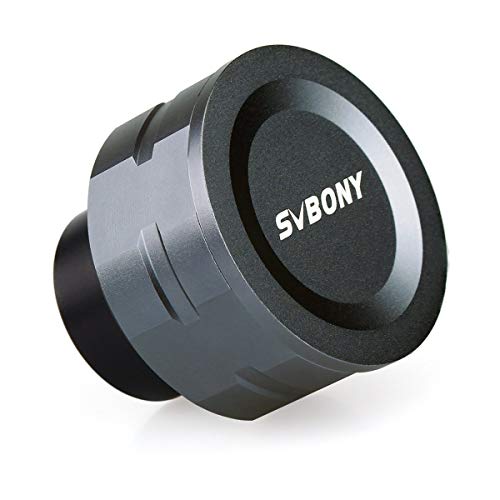
- Plug-and-play USB setup with no driver required
- Designed for Moon and planet imaging
- 1.25-inch fit works with telescope filters
Best For: Beginners who want an easy first astrophotography camera
Smart app-controlled pick
Seestar S30 Pro Smart Telescope
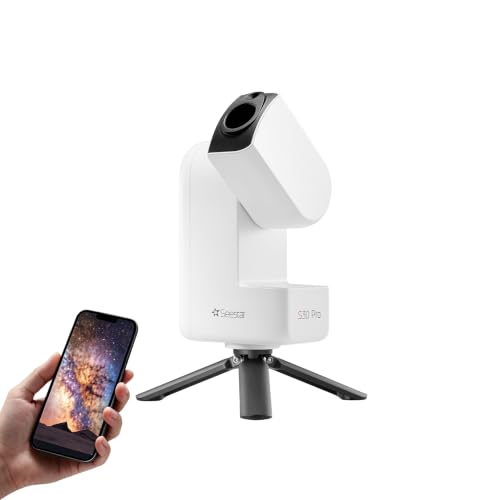
- App control with automatic GOTO targeting and tracking
- Dual-camera 4K imaging with one-tap modes
- Portable design with light-pollution filters
Best For: Beginners who want automated astrophotography in a travel-friendly package
Compact 4K eyepiece camera

- 8MP sensor supports up to 4K video capture
- UVC plug-and-play with Windows, macOS, and Linux
- Removable IR cut filter for flexible imaging
Best For: Beginners and classrooms wanting a simple telescope imaging upgrade
Portable Smart Telescope Pick
DWARFLAB Dwarf 3 Smart Telescope

- 3 lb portable design for travel and backyard use
- App-controlled auto-tracking with 4K clarity
- Built-in processing for quick image enhancement
Best For: Beginners who want a lightweight smart telescope for easy astrophotography
High-Sensitivity Planetary Pick

- IMX585 sensor with strong low-noise performance
- Good for planetary imaging, EAA, and lucky imaging
- 1/1.2-inch frame with 3856×2180 resolution
Best For: Beginners focusing on planets and entry-level deep-sky imaging
Easy Plug-and-Play Pick
SVBONY SV205 Astrophotography Camera

- Plug-and-play USB camera with no driver needed
- 7.05MP IMX415 sensor for clear lunar and planetary shots
- Real-time viewing on laptop or PC
Best For: First-time users who want a simple camera for the Moon and planets
Wireless Beginner Imaging Pick

- 8MP CMOS with 4K video and up to 64MP still capture
- Built-in 2.8-inch IPS screen and WiFi viewing
- Fits eyepieces from 23mm to 60mm
Best For: Beginners wanting a simple wireless eyepiece camera
Entry-Level Planetary Choice

- IMX662 sensor with low noise and good red sensitivity
- SharpCap presets for planetary and long-exposure modes
- 128MB buffer plus ROI and BIN functions
Best For: New users wanting an entry-level camera for planets and the Moon
Compact High-Detail Option

- IMX715 sensor with 1.45μm pixels for detailed imaging
- USB 3.0 and 512MB cache for smooth capture
- Works with SharpCap, AstroDMX Capture, and NINA
Best For: Beginners ready for a computer-based planetary imaging setup
Smart dual-screen starter – 4K Smart Telescope with 64GB Card
If you want astronomy cameras for beginners that feel simple right away, this smart telescope gives you a more guided path into sky viewing and recording. The dual-screen design lets you watch on the built-in display or the 3-inch external screen, while one-touch photo and video capture makes it easier to save what you see without extra gear.
Best For: Families, kids, and first-time users who want an all-in-one smart telescope with easy viewing and built-in recording.
Pros:
- Dual-screen setup supports real-time viewing on an internal or external display.
- Built-in 4K astrophotography camera with one-touch photo and video modes.
- 64GB card included, with support for up to 512GB external storage.
- 300mm focal length and 78mm aperture with fully coated optics.
Cons:
- Magnification is listed up to 350X, but real-world results will depend on conditions.
- It is larger and more specialized than a simple phone-style telescope adapter.
This is a strong beginner-friendly choice if you want a guided smart telescope instead of a more hands-on camera accessory. The screen-based workflow and included storage make it especially appealing for casual moon and stargazing sessions.
Simple USB imaging starter – SV105 USB Telescope Eyepiece Camera
Among astronomy cameras for beginners, the SV105 is a straightforward USB eyepiece camera for getting started with lunar and planetary imaging. It plugs into a telescope and computer for real-time viewing, so you can record quick video or watch bright targets without a complicated setup.
Best For: Beginners who want a simple entry into telescope imaging on a Windows, Linux, Android, or Mac laptop workflow.
Pros:
- Plug-and-play design with no driver required for basic use.
- Built for lunar, planetary, and bright terrestrial targets.
- IMX307 sensor and dark-light compensation technology for low-light clarity.
- Standard 1.25-inch body works with telescope filters and many mounts.
Cons:
- Compatibility varies by system and may require different capture apps.
- It is aimed at bright targets, not deep-sky imaging.
This camera makes sense if you want a budget-friendly way to start learning telescope imaging. Its simple USB workflow is the main advantage, especially for Moon and planet sessions.
Smart app-controlled pick – Seestar S30 Pro Smart Telescope
If you are comparing astronomy cameras for beginners, the Seestar S30 Pro stands out because it automates much of the hard work. You power it on, connect the app, and let the telescope handle targeting, tracking, and one-tap imaging for the Moon, Milky Way, star trails, and other night-sky subjects.
Best For: New users who want a portable smart telescope with app control, auto tracking, and simplified deep-sky imaging.
Pros:
- Automatic GOTO targeting and tracking reduce setup complexity.
- Dual-camera 4K imaging captures sharper detail across different sky scenes.
- One-tap imaging modes for Milky Way, star trails, planets, and galaxies.
- Light-pollution filters and apochromatic optics help improve urban viewing.
Cons:
- Deep-sky imaging requires the device to stay stationary during captures.
- It is a more advanced and expensive solution than a basic USB camera.
This is a strong pick if you want a beginner-friendly telescope that does much of the imaging work automatically. The app-based workflow and built-in processing make it especially practical for first-time astrophotography.
Compact 4K eyepiece camera – 8MP USB Astronomy Camera
This USB eyepiece is a practical option if you want astronomy cameras for beginners without moving straight to a full smart telescope. It uses a standard 1.25-inch fit, works as a UVC device for live viewing, and records up to 4K video for the Moon, planets, and other bright objects.
Best For: Beginners, students, and classroom users who want a compact telescope camera for simple lunar and planetary imaging.
Pros:
- 8MP sensor supports up to 4K video and 1080P high-frame-rate capture.
- UVC plug-and-play support makes live viewing straightforward.
- Compatible with Windows, macOS, and Linux systems.
- Removable IR cut filter helps improve natural color and imaging flexibility.
Cons:
- Manual telescope focusing is required; it does not autofocus.
- Best suited to bright targets rather than deep-sky objects.
This camera is a solid step-up option for learning how telescope imaging works. Its cross-platform support and compact build make it useful for backyard use, demos, and STEM settings.
Portable Smart Telescope Pick – DWARFLAB Dwarf 3 Smart Telescope
If you want astronomy cameras for beginners that keep setup simple, the DWARFLAB Dwarf 3 is built around automation and portability. Its app-controlled workflow, auto-tracking, and built-in processing make it easier to capture and refine shots without needing a PC or complex software.
Best For: Beginners who want a lightweight, app-driven smart telescope for quick lunar, planetary, and deep-space imaging.
Pros:
- Only 3 lb, so it is easy to pack for travel and backyard sessions.
- Dual imaging system handles both daytime subjects and night sky targets.
- 4K auto-tracking helps follow stars, planets, and other moving subjects.
- Cloud-powered processing can turn captures into finished images from the app.
Cons:
- More expensive and feature-heavy than a basic beginner camera.
- Best results depend on using the companion app and cloud workflow.
- At 2.28 kg listed weight, it is portable but not pocket-sized.
This is a strong pick if you want an easy first step into smart astrophotography with minimal manual setup. The Dwarf 3 focuses on convenience, automation, and travel-friendly size rather than traditional camera-telescope complexity.
High-Sensitivity Planetary Pick – SVBONY SV705C IMX585 Camera
For astronomy cameras for beginners who want to move beyond simple moon shots, the SVBONY SV705C offers a strong entry into planetary imaging, EAA, and lucky imaging. Its IMX585 sensor, high signal-to-noise performance, and 1.25-inch format give you a practical upgrade path for brighter celestial targets.
Best For: Beginners interested in planetary imaging and entry-level deep-sky or EAA-style captures.
Pros:
- IMX585 sensor is designed for strong detail and better low-noise capture.
- High near-infrared sensitivity can improve performance on certain celestial targets.
- Dual-gain HCG helps preserve dynamic range at high gain settings.
- 1/1.2-inch frame and 3856×2180 resolution provide a generous capture area.
Cons:
- It is more specialized than a general-purpose beginner camera.
- Requires the right telescope interface and setup to use effectively.
- Best suited to bright objects and imaging workflows, not casual visual observing alone.
This camera makes sense if your beginner setup is aimed at planets and more advanced imaging techniques. It brings several sensor advantages that can help when you are ready to learn capture, stacking, and image refinement.
Easy Plug-and-Play Pick – SVBONY SV205 Astrophotography Camera
If you are comparing astronomy cameras for beginners, the SVBONY SV205 stands out for its plug-and-play approach and straightforward USB connection. It is aimed at lunar and planetary shooting, with real-time viewing on a laptop or PC and no driver required for basic use.
Best For: First-time users who want a simple camera for the Moon, planets, and daytime telescope viewing.
Pros:
- Plug and play operation without a driver makes setup easier.
- Supports real-time viewing and video capture through a laptop or PC.
- 7.05MP IMX415 sensor provides a clear image for its class.
- USB 3.0 cable and 1.25-inch barrel fit many telescope setups.
Cons:
- Primarily suited to lunar and planetary imaging, not wide deep-sky work.
- Mac support requires Astroamx Capture and does not extend to iPhone or iPad.
- You may need the right adapter if your telescope eyepiece size differs.
This is the most approachable option here if you want to get started quickly and keep the learning curve low. It is a practical, budget-friendly style of astronomy camera for beginners who mainly want bright-target captures.
Wireless Beginner Imaging Pick – 4K Wireless Telescope Camera
If you’re shopping for astronomy cameras for beginners, this wireless telescope camera is a flexible way to start capturing the Moon, planets, and other bright targets without jumping straight into a complex imaging setup. It combines 4K video support, an 8MP sensor, and a built-in screen, so you can frame and review shots more easily during first-time sessions.
Best For: Beginners who want a simple, wireless eyepiece camera for telescopes, binoculars, or microscopes.
Pros:
- 8MP CMOS sensor with 4K video support and up to 64MP image capture
- Rotatable 2.8-inch IPS display plus WiFi viewing within a 32 ft range
- Universal mounting groove fits eyepieces from 23mm to 60mm
- 2000mAh battery, microSD support up to 512GB, and XDVPRO app control
Cons:
- Manual focus only, so setup still depends on your telescope
- Designed as an eyepiece camera rather than a dedicated deep-sky imaging rig
- Wireless convenience may be more than some users need for basic lunar shots
Overall, this is a practical starter option if you want an easier entry into casual astrophotography and live viewing. The combination of screen, app control, and broad compatibility makes it especially approachable for beginners.
Entry-Level Planetary Choice – SV305C Color Telescope Camera
Among astronomy cameras for beginners, the SV305C is a straightforward entry-level pick for lunar, planetary, and EAA use. It uses the IMX662 sensor with low readout noise, has quick mode presets in SharpCap, and includes a 1.25-inch universal interface, which helps make the first steps into camera-based observing feel more manageable.
Best For: New users who want an entry-level color camera for planets, the Moon, and EAA.
Pros:
- IMX662 sensor with low readout noise and improved red spectral sensitivity
- Planetary high-speed mode and sky long-exposure mode in SharpCap
- Built-in 128MB DDRIII buffer helps prevent dropped frames
- ROI and BIN functions provide more control over capture speed and sensitivity
Cons:
- Requires a computer and astronomy software to use
- Manual focus only, so telescope focusing still matters
- Entry-level design is aimed more at planetary and EAA work than advanced deep-sky imaging
This model makes sense if you want an affordable-feeling path into dedicated astronomy camera use without a steep learning curve. Its preset modes and buffer help simplify the workflow, especially for users focusing on bright targets.
Compact High-Detail Option – SV715C Planetary Camera
If you want astronomy cameras for beginners but are ready for a more capable planetary setup, the SV715C is built around a small-pixel IMX715 sensor and USB 3.0 transfer speeds. It is aimed at detailed planetary imaging, works with popular astronomy software, and keeps the body lightweight for easy mounting on a telescope.
Best For: Beginners who want to grow into higher-detail planetary imaging on a computer-based setup.
Pros:
- IMX715 sensor with 1.45μm pixels for detailed 4K planetary imaging
- USB 3.0 supports up to 45.5 fps at full resolution
- 512MB DDR3 cache helps keep frames smooth and lossless
- Compatible with SharpCap, AstroDMX Capture, and NINA
Cons:
- Not compatible with smartphones
- No built-in focus adjustment; you must focus with the telescope focuser
- Designed for planetary work, so it is less of an all-purpose starter camera
This is the best fit if your beginner setup already includes a computer and you want better headroom for sharp planetary detail. It asks a little more from the user, but it also offers more performance for those willing to learn the workflow.
How We Picked the Best Astronomy Cameras for Beginners
We prioritized models that are approachable for first-time users, with a focus on simple setup, broad telescope compatibility, and sensible image quality for common beginner targets. We also looked for cameras that reduce the learning curve with app-based control, USB connectivity, or smart-telescope automation.
Quick Comparison
In this category, the easiest choice is often a smart telescope with built-in imaging and guided alignment. Traditional USB eyepiece cameras are usually more affordable and work well if you already own a telescope, but they may require more manual tweaking. If you want the least hassle, smart systems are best; if you want lower cost and more flexibility, a standard astronomy camera is often the better fit.
Key Buying Factors for Astronomy Cameras for Beginners
Ease of Setup
Look for plug-and-play operation, app control, or clear software support. Beginners benefit from fewer cables, fewer settings, and fewer compatibility headaches.
Sensor and Resolution
Higher megapixels are not everything. Sensor size, pixel size, and low-light performance matter more for astronomy. For beginners, a camera that performs well in dim conditions is usually more useful than one with a bigger headline number.
Target Type
Planets and the Moon need sharp detail and stable tracking, while deep-sky objects need better light sensitivity and often longer exposures. Choose a camera that matches what you most want to shoot first.
Mount and Telescope Compatibility
Check whether the camera fits 1.25-inch eyepiece holders, USB connections, or smart-telescope systems. Compatibility is one of the most important filters when comparing Astronomy Cameras for Beginners.
Software and Control
Good software can make a modest camera perform much better. Features like live stacking, exposure control, and easy capture tools are especially helpful for newcomers.
Who Should Buy Which Astronomy Cameras for Beginners?
If you want the simplest start, choose a smart telescope with built-in app control and automated imaging. If you already have a telescope and want the most affordable path into astrophotography, a USB planetary or color eyepiece camera is a strong choice. If your main goal is lunar and planetary detail, favor cameras with strong sensitivity and compact pixel design. If you want a more versatile all-around setup, look for a model that balances ease of use with decent low-light performance.
For most first-time buyers, the best Astronomy Cameras for Beginners are the ones that make it easy to get a clear first image quickly, then leave room to grow as your skills improve.