The best wireless mechanical keyboards combine responsive switches, flexible connectivity, and a cleaner desk setup without forcing you to give up customization. This roundup covers compact 75% models, full-size boards, office-friendly options, and feature-rich gaming keyboards.
Use the guide below to compare layouts, switch types, battery considerations, and connection modes so you can choose a keyboard that fits your workspace and daily use.
Best 10 Wireless Mechanical Keyboards Picks for 2026
Best Customizable 75% Pick

- Tri-mode connectivity with up to five devices
- Hot-swappable 3-pin and 5-pin switch support
- 75% layout with knob, RGB, and PBT keycaps
Best For: Gamers and beginners customizing a compact keyboard
Best Low-Profile Office Pick
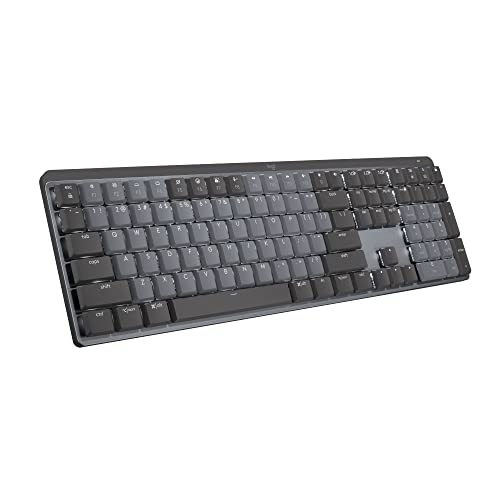
- Quiet tactile low-profile mechanical switches
- Full-size layout with smart backlighting
- Pairs with up to three devices
Best For: Office productivity and multi-device typing
Best Battery-Life Gaming Pick
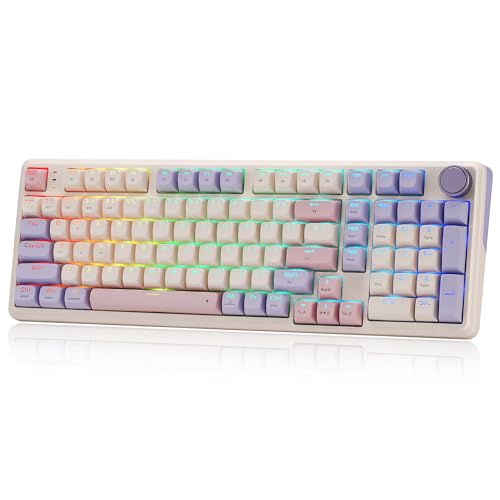
- 8000mAh battery with tri-mode connectivity
- Gasket design with five-layer dampening
- 100-key layout, RGB, PBT keycaps, and control knob
Best For: Gamers wanting long runtime and a cushioned feel
Best Compact Full-Function Pick

- 96% 99-key layout keeps a number area
- Tri-mode connection supports up to five devices
- 8000mAh battery and hot-swappable PCB
Best For: Work-and-gaming setups needing compactness plus number keys
Full-Size Wireless Pick

- Tri-mode wireless and USB-C connectivity
- Four programmable shortcut keys
- Gasket mount with hot-swap support
Best For: Full-size work-and-gaming setups
Compact Customizable Pick
75% Wireless Mechanical Keyboard

- Space-saving 82-key 75% layout
- Tri-mode multi-device connectivity
- Hot-swappable switches and volume knob
Best For: Compact desks and beginner customization
Retro Full-Size Pick
Redragon K710 Typewriter Style

- Clicky blue switches with round keycaps
- Wired, Bluetooth, and 2.4GHz modes
- Rechargeable battery and metal panel
Best For: Retro-style typing and gaming setups
Best Space-Saving Pick
Kisnt KN85 Wireless Mechanical Keyboard

- 75% layout saves desk space while retaining function and arrow keys
- Tri-mode USB-C, 2.4GHz, and Bluetooth connectivity
- Gasket mount and hot-swap support for cushioned, customizable typing
Best For: Small desks, multi-device setups, and softer thocky typing
Best Office-to-Gaming Balance
Lenovo GK10 Wireless Mechanical Keyboard

- Compact 80% layout suits work, study, and gaming
- Tri-mode connectivity supports Bluetooth, 2.4GHz, and USB-C
- Brown switches provide tactile feedback with reduced click noise
Best For: Office users, students, and casual gamers
Best Customization Features
Redragon K671KS Wireless Mechanical Keyboard
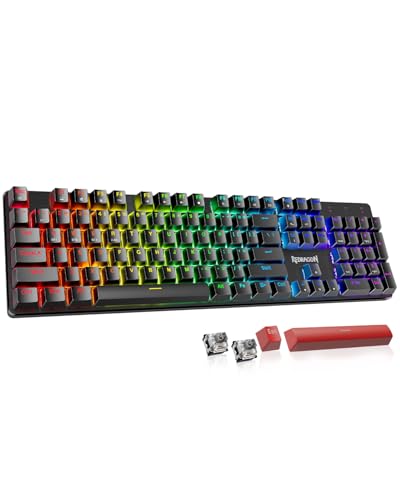
- Tri-mode connectivity supports up to five devices
- Programmable macros, remapping, and per-key RGB controls
- Hot-swap design includes spare switches and keycaps
Best For: Gamers and keyboard hobbyists who prioritize customization
Best Customizable 75% Pick – AULA F75 Pro
The AULA F75 Pro is a strong option among wireless mechanical keyboards for shoppers who want a compact layout, flexible connectivity, and easy switch customization. Its 75% design keeps arrow keys while saving desk space, and the included knob handles lighting or media controls.
Best For: Gamers and DIY keyboard beginners who want a compact, hot-swappable board with tri-mode connectivity.
Pros:
- Bluetooth 5.0, 2.4GHz wireless, and USB-C wired modes support up to five devices.
- Hot-swappable PCB accepts 3-pin and 5-pin switches without soldering.
- 4000mAh battery, RGB lighting, PBT keycaps, and a multifunction knob add practical flexibility.
- Five-layer dampening and pre-lubed components are designed for a softer, quieter typing feel.
Cons:
- The 75% layout omits the dedicated number pad found on full-size keyboards.
- Advanced macro and lighting customization requires the F75 driver.
Choose the F75 Pro if you want a feature-rich compact keyboard that can serve both gaming and everyday work. Its moderate-size layout and beginner-friendly hot-swap design make it especially versatile.
Best Low-Profile Office Pick – Logitech MX Mechanical
The Logitech MX Mechanical is one of the more office-friendly wireless mechanical keyboards, combining tactile quiet switches with a full-size, low-profile layout. Smart illumination, multi-device pairing, and USB-C charging make it suited to productive desk setups.
Best For: Office users who want a quiet tactile feel, full-size keys, and seamless switching between up to three devices.
Pros:
- Tactile quiet switches provide noticeable feedback with less noise.
- Full-size low-profile design offers a familiar layout and improved ergonomics.
- Pairs with up to three devices through Bluetooth Low Energy or the included Logi Bolt receiver.
- Rechargeable battery lasts up to 15 days with backlighting or up to 10 months with it off.
Cons:
- It offers single-color backlighting rather than RGB effects.
- The full-size form factor takes more desk space than compact alternatives.
- Customization features depend on Logitech Options+ software.
The MX Mechanical is a practical choice when typing comfort and workplace usability matter more than gaming-focused RGB or hot-swappable parts. Its quiet tactile switches and long battery life suit extended daily use.
Best Battery-Life Gaming Pick – Redragon K768 PRO
The Redragon K768 PRO stands out among wireless mechanical keyboards with a practical 100-key layout, gasket construction, and an unusually large 8000mAh battery. It also combines tri-mode connectivity with hot-swappable switch support for a flexible gaming and customization setup.
Best For: Gamers who want long wireless runtime, a cushioned typing feel, and a near-full-size layout without a dedicated number pad.
Pros:
- USB-C, Bluetooth, and 2.4GHz modes provide flexible connectivity.
- 8000mAh battery is designed for extended use between charges.
- Gasket covers, five-layer dampening, and linear switches target a soft, creamy typing sound.
- PBT keycaps, RGB lighting, a control knob, and programmable software add useful customization.
Cons:
- The 100-key layout is not a true full-size keyboard with a number pad.
- Its gaming-oriented design may be more than needed for basic office typing.
The K768 PRO is a compelling fit if battery capacity and a cushioned mechanical feel are priorities. Its 100-key layout preserves many practical keys while keeping the footprint more compact than a traditional full-size board.
Best Compact Full-Function Pick – AULA F99
The AULA F99 is a versatile choice among wireless mechanical keyboards for shoppers who need arrow keys and a number area without moving to a bulky full-size design. Its 96% layout, tri-mode connection, hot-swap PCB, and 8000mAh battery support both work and gaming.
Best For: Users who want a compact keyboard that retains a number area, supports multiple devices, and allows switch and keycap changes.
Pros:
- Bluetooth 5.0, 2.4GHz, and USB-C modes can connect with up to five devices.
- Hot-swappable PCB supports 3-pin and 5-pin switches without soldering.
- 96% 99-key layout retains arrow keys and a number area while saving desk space.
- 8000mAh battery, double-shot PBT keycaps, RGB lighting, and macro support suit long-term use.
Cons:
- The compact 96% arrangement may take adjustment compared with a standard full-size layout.
- Macro and advanced lighting features require the included driver software.
The F99 is a well-rounded option for buyers who do not want to sacrifice the number area for compactness. Its large battery and hot-swap design make it suitable for a mixed work, study, and gaming setup.
Full-Size Wireless Pick – Redragon K745 PRO
The Redragon K745 PRO is a practical choice for shoppers seeking wireless mechanical keyboards with a full-size layout. Its tri-mode connectivity, four dedicated shortcut keys, gasket-mounted construction, and hot-swappable switch support make it suitable for both gaming and everyday productivity.
Best For: Users who want a full-size wireless keyboard with shortcut keys, customizable switches, and a cushioned typing feel.
Pros:
- Tri-mode USB-C, Bluetooth, and 2.4GHz connectivity supports switching among devices.
- Four programmable hotkeys provide quick access to shortcuts, macros, or default functions.
- Gasket mounting, five-layer dampening, and translucent PBT keycaps support a softer, quieter typing experience.
- Hot-swappable sockets accept compatible 3-pin and 5-pin switches.
Cons:
- The 108-key full-size design takes up more desk space than compact layouts.
- Its gaming-focused RGB styling may not suit minimalist workspaces.
The K745 PRO stands out when you want a complete number-pad layout without giving up wireless flexibility or customization. It is a strong fit for mixed work-and-gaming setups where dedicated shortcuts are useful.
Compact Customizable Pick – 75% Wireless Mechanical Keyboard
This 75% wireless mechanical keyboard focuses on desk efficiency without removing essential navigation keys. It combines tri-mode connectivity, a gasket mount, hot-swappable switches, a rotary volume knob, and RGB lighting in an 82-key layout.
Best For: Students, gamers, and home-office users who want a compact keyboard with customization options and dedicated arrow keys.
Pros:
- The 82-key 75% layout saves desk space while retaining arrow keys and other essential controls.
- Tri-mode Bluetooth, 2.4GHz, and USB-C connections support laptops, tablets, phones, and PCs.
- Hot-swap sockets support compatible 3-pin and 5-pin switches without soldering.
- A rotary knob provides convenient volume adjustment and muting.
Cons:
- The compact layout omits the dedicated number pad found on full-size keyboards.
- Its linear switches may not be ideal for shoppers specifically seeking a clicky or tactile factory feel.
This model is a flexible entry point into customizable wireless mechanical keyboards. Its space-saving layout and broad device compatibility make it especially practical for smaller desks and multi-device users.
Retro Full-Size Pick – Redragon K710 Typewriter Style
The Redragon K710 brings a distinctive typewriter-inspired look to wireless mechanical keyboards. Its 104-key layout, clicky blue switches, round keycaps, rechargeable battery, and tri-mode connectivity make it a style-forward option for gaming and everyday typing.
Best For: Buyers who want a retro full-size keyboard with audible clicky feedback, RGB lighting, and multiple connection modes.
Pros:
- Tri-mode wired, Bluetooth, and 2.4GHz connectivity supports flexible device use.
- Clicky blue switches provide audible feedback and tactile response.
- Round keycaps, a metal panel, and retro styling create a distinctive typewriter aesthetic.
- Rechargeable 4000mAh battery and 104-key anti-ghosting support extended use and simultaneous inputs.
Cons:
- Clicky switches can be louder than linear alternatives.
- The full-size design is less space-efficient than compact wireless keyboards.
- The retro styling may not appeal to users seeking a subdued modern appearance.
The K710 is best chosen for its combination of visual character and traditional full-size functionality. It makes sense for shoppers who specifically enjoy clicky switches and want a keyboard that stands out on the desk.
Best Space-Saving Pick – Kisnt KN85 Wireless Mechanical Keyboard
The Kisnt KN85 is a practical choice for shoppers comparing wireless mechanical keyboards for compact desks, laptop setups, and gaming. Its 75% layout keeps function keys and arrow keys while leaving out the number pad, and tri-mode connectivity supports USB-C, 2.4GHz, and Bluetooth connections.
Best For: Small desks, multi-device users, and typists who want a softer, thockier sound with hot-swappable switches.
Pros:
- Compact 85-key layout preserves F1–F12 and arrow keys while saving desk space.
- Supports USB-C, 2.4GHz wireless, and Bluetooth 5.0 across multiple devices.
- Gasket mount, pre-lubed linear switches, and PBT keycaps are designed for a cushioned, mellow typing sound.
- Hot-swappable PCB accepts both 3-pin and 5-pin switches without soldering.
Cons:
- No dedicated number pad, so it is less suitable for frequent numeric data entry.
- Key remapping and macro features require Windows software in wired or 2.4GHz mode.
- Animated RGB effects can reduce battery life, and the initial full charge may take about 7–8 hours.
The KN85 stands out when desk space, flexible connectivity, and a quieter-feeling typing experience matter more than having a number pad. Its hot-swap support also gives beginners and enthusiasts room to tune the feel over time.
Best Office-to-Gaming Balance – Lenovo GK10 Wireless Mechanical Keyboard
The Lenovo GK10 offers a compact 80% layout for shoppers who want wireless mechanical keyboards that can handle office work, studying, gaming, and everyday typing. Brown switches provide tactile feedback with less noise than clicky switches, while Bluetooth, 2.4GHz, and USB-C modes support flexible setups.
Best For: Office users, students, and casual gamers who want balanced tactile feedback in a compact keyboard.
Pros:
- 80% layout saves desk space without giving up a full-function arrangement.
- Tri-mode connectivity works with laptops, desktops, tablets, and gaming setups.
- Brown switches offer tactile feedback with lower noise than clicky alternatives.
- Full-key hot-swap design allows switch replacement without soldering.
Cons:
- The compact layout does not include a dedicated number pad.
- The supplied notes do not specify battery capacity or battery life.
- Its one-year warranty is shorter than some competing options listed here.
The GK10 is a straightforward all-rounder for users moving between productivity and entertainment. Its brown switches and hot-swap capability make it approachable for everyday use while still leaving room for customization.
Best Customization Features – Redragon K671KS Wireless Mechanical Keyboard
The Redragon K671KS is aimed at shoppers comparing wireless mechanical keyboards for gaming and customization. It combines Bluetooth, 2.4GHz, and USB-C connectivity with programmable controls, per-key RGB adjustments, hot-swappable switches, and durable PBT keycaps.
Best For: Gamers and hobbyists who want extensive lighting, macro, and switch-customization options.
Pros:
- Tri-mode connection supports USB-C, Bluetooth 3.0/5.0, and 2.4GHz wireless, with up to five devices noted.
- Programmable software supports remapping, shortcuts, macros, and individual RGB adjustments.
- Hot-swap design includes eight spare linear switches and two extra red keycaps.
- Metal panel and plate, double-injection PBT keycaps, and spill-proof construction add practical durability features.
Cons:
- The 81-key layout does not provide a dedicated number pad.
- The supplied compatibility details emphasize Windows, including a Windows 11 minimum requirement.
- Red linear switches provide less built-in tactile feedback than brown or clicky options.
The K671KS is the most feature-focused option of the three for users who enjoy configuring their keyboard. Its included replacement parts and extensive software controls make it especially appealing for gaming setups and ongoing customization.
How We Picked the Best Wireless Mechanical Keyboards
We focused on practical features that affect everyday use: connection reliability, layout, switch options, hot-swappable sockets, battery capacity, build features, and compatibility with gaming and productivity setups. The selection includes keyboards with Bluetooth, 2.4GHz wireless, USB-C wired modes, or a combination of these connections.
We also considered whether each model suits a specific buyer, from users who want a compact custom board to those who need a familiar full-size layout with a number pad. RGB lighting, knobs, gasket-style construction, and pre-lubed switches were treated as useful extras rather than substitutes for dependable typing performance.
Quick Comparison
| What to Compare | Best Fit | Why It Matters |
|---|---|---|
| 75% or 80% layout | Gaming, compact desks, general use | Saves space while retaining arrow keys and commonly used controls. |
| 96% or full-size layout | Office work and spreadsheets | Includes navigation keys and a number pad for efficient data entry. |
| Tri-mode connectivity | Multi-device users | Lets you switch between Bluetooth, low-latency 2.4GHz, and wired USB-C. |
| Hot-swappable switches | Keyboard enthusiasts | Allows switch changes without soldering, subject to socket compatibility. |
Key Buying Factors for Wireless Mechanical Keyboards
Layout and Desk Space
Choose a 75% or 80% keyboard if you want arrow keys and a compact footprint. A 96%, 100-key, or full-size model is better when you regularly use a number pad. Smaller layouts may require function-layer shortcuts for navigation and media controls.
Connectivity and Battery
For gaming, 2.4GHz wireless typically offers lower latency than Bluetooth. Bluetooth is convenient for laptops, tablets, and multiple devices, while USB-C provides a dependable wired fallback and lets you continue using the keyboard while charging. Check how many devices the keyboard supports and whether a wireless receiver is included.
Switches, Sound, and Customization
Linear switches feel smooth and are popular for gaming, while tactile switches provide a noticeable bump that many typists prefer. Mechanical keyboards can be loud, especially with clicky switches, so consider your workspace and whether sound-dampening construction or pre-lubed switches is important. Hot-swappable models offer the most room to personalize feel and sound.
Build and Usability Features
Look for adjustable feet, stable keycaps, readable legends, convenient media controls, and a comfortable typing angle. A rotary knob can make volume or lighting adjustments faster, while RGB backlighting is most useful when its brightness and effects can be controlled easily.
Who Should Buy Which Wireless Mechanical Keyboards?
Choose a Compact Custom Board for Flexible Everyday Use
A 75% or 80% hot-swappable keyboard is a strong choice for users who want a smaller desk footprint, arrow keys, and room to experiment with switches and keycaps.
Choose a Full-Size Model for Office Productivity
If spreadsheets, accounting, or frequent number entry are part of your routine, select a full-size or near-full-size board. Models with familiar layouts reduce adjustment time and keep the number pad readily available.
Choose Tri-Mode Wireless for Multiple Devices
Users who move between a desktop, laptop, and tablet should prioritize Bluetooth plus 2.4GHz and USB-C. This combination offers the broadest compatibility without sacrificing a responsive gaming connection.
Choose a Gaming-Focused Keyboard for Low-Latency Play
For competitive or fast-paced games, favor a model with a dedicated 2.4GHz receiver, reliable battery performance, anti-ghosting support, and switches that match your preferred actuation and sound profile.