Camera external recorders with HDMI input can give your setup cleaner recordings, larger monitoring options, and a practical way to capture footage without relying entirely on a camera’s internal storage. The right model depends on your resolution, frame-rate, codec, power, and workflow requirements.
This roundup includes compact USB capture devices, standalone HDMI recorders, monitor-recorders, and multi-input systems. Use the buying guide below to narrow the options by performance, portability, connectivity, and ease of use.
Best 10 Camera External Recorders with Hdmi Input Picks for 2026
Best Portable Pick

- 4K60 input with 1080p60 H.264 recording
- HDMI or DisplayPort over USB-C
- Compact design with AUX audio monitoring
Best For: Portable recording, gaming, and device mirroring
Best Studio-Style Option
Blackmagic HyperDeck Studio HD Mini

- HDMI, 3G-SDI, USB, and RCA connectivity
- Records digital video to SD cards
- Two-year warranty included
Best For: Structured studio and multi-connection workflows
Best for Legacy Sources
ClearClick Video2USB Capture Device
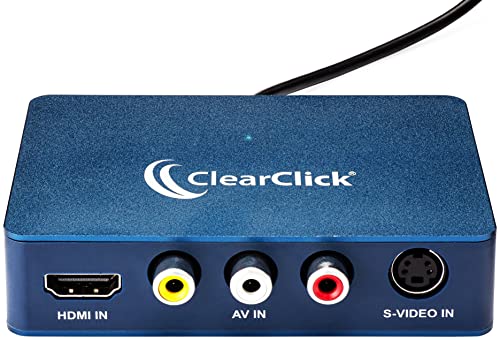
- HDMI capture up to 1080p from sources up to 4K30
- AV, RCA, and S-Video inputs
- USB-C plug-and-play with included software
Best For: Analog digitization and computer-based capture
Best Professional Camera Monitor
Atomos Ninja TX Camera Monitor/Recorder

- HDMI 2.0 and 12G-SDI input/output
- 5.2-inch 1500-nit touchscreen
- ProRes, DNx, H.265, and H.264 recording
Best For: Professional camera monitoring and production workflows
Best Plug-and-Play Pick

- 4K input with 1080p at 60Hz output
- Built-in 3.5mm mic input
- USB-A/USB-C, plug-and-play operation
Best For: Computer-based streaming, recording, and commentary
Best Standalone Recorder
ZowieREC 4K HDMI Video Recorder

- Records up to 4K at 30fps without a PC
- TF Card and USB storage support
- 4K HDMI pass-through and scheduling
Best For: Standalone camera, console, and HDMI recording
Best Compact USB-C Option

- 4K input with 1080p60 or 2K30 output
- USB-C and USB 3.0 connectivity
- Compact, driver-free aluminum design
Best For: Portable computer-based streaming and recording
Best Dual-Input Recorder
4K60 2-Channel HDMI Video Recorder

- Two HDMI inputs with PIP/POP/PMP support
- Built-in 7-inch preview monitor
- Records to USB or SD card
Best For: Multi-camera switching and portable monitoring
Best 4K Standalone Recorder

- Records up to 4K30 and passes through 4K60
- Supports H.264 and H.265 codecs
- Standalone USB or TF-card recording
Best For: PC-free 4K capture and TV playback
Best Versatile HD Recorder
Box Pro 1080p HDMI Capture DVR
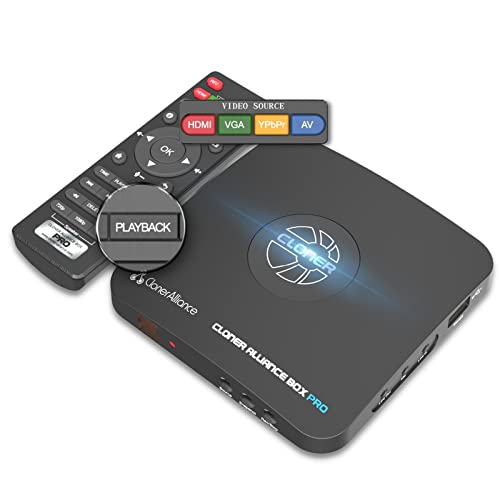
- 1080p60 standalone HDMI recording
- Also accepts multiple analog video inputs
- Scheduled recording and TV playback
Best For: HD camera capture and analog video archiving
Best Portable Pick – UNISHEEN UR-M2 HDMI Recorder
For shoppers comparing camera external recorders with HDMI input, the UNISHEEN UR-M2 stands out as a compact standalone option with 4K60 input and 1080p60 recording. Its USB-C interface also accepts DisplayPort input, making it flexible for cameras, computers, game consoles, and other compatible devices.
Best For: Portable recording, game capture, device mirroring, and creators who want headphone or microphone monitoring through the AUX port.
Pros:
- Accepts 4K60 input and records at up to 1080p60 using H.264 encoding.
- Supports HDMI or DisplayPort over USB-C for broader device compatibility.
- Compact 107 x 60 x 18 mm design with plug-and-play setup.
- Allows instant viewing and playback of TF-card clips through a smartphone.
Cons:
- Recording is limited to 1080p60 rather than 4K.
- Its USB-C input requires a compatible DisplayPort-output device when used without HDMI.
The UR-M2 is a practical choice when portability and connection flexibility matter more than professional studio features. It is especially appealing for straightforward recording and streaming setups that benefit from external audio access.
Best Studio-Style Option – Blackmagic HyperDeck Studio HD Mini
The Blackmagic Design HyperDeck Studio HD Mini is a studio-oriented choice among camera external recorders with HDMI input. It combines HDMI connectivity with 3G-SDI, USB, RCA, and SD-card recording, making it suited to more structured video-production environments.
Best For: Studio workflows and users who need a recorder with multiple connection types, SD-card media, and support for compatible Canon, Sony, and Nikon cameras.
Pros:
- Provides HDMI connectivity alongside 3G-SDI, USB, and RCA connections.
- Records digital video to an SD card.
- Offers RCA audio input and 16-channel capability listed in the specifications.
- Includes a two-year warranty.
Cons:
- The supplied information does not specify recording resolution or HDMI input format.
- At 953 g, it is substantially less portable than compact capture devices.
This HyperDeck is best considered when connectivity and studio integration are priorities. Buyers focused specifically on HDMI recording resolution should confirm the detailed format support before purchasing.
Best for Legacy Sources – ClearClick Video2USB Capture Device
The ClearClick Video2USB is a versatile pick for camera external recorders with HDMI input when your setup includes both modern and legacy sources. It captures HDMI video up to 1080p and also accepts AV, RCA, and S-Video inputs for VCRs, camcorders, DVD players, and older gaming systems.
Best For: Digitizing analog footage, capturing HDMI sources to a computer, and live streaming through a USB-C connection on PC, Mac, or Linux.
Pros:
- Captures HDMI sources at up to 1080p and accepts sources up to 4K30.
- Supports AV, RCA, and S-Video devices, including VCRs and older camcorders.
- USB-C plug-and-play design includes a USB-A adapter.
- Software and step-by-step instructions are included.
Cons:
- Does not support copyrighted or content-protected HDMI sources.
- HDMI recording output is limited to 1080p.
- It relies on a computer for recording or streaming rather than operating as a standalone recorder.
Choose the Video2USB if source flexibility is more important than standalone operation. Its combination of HDMI and analog inputs makes it particularly useful for preserving older video collections alongside newer equipment.
Best Professional Camera Monitor – Atomos Ninja TX Camera Monitor/Recorder
The Atomos Ninja TX is a premium camera-focused option among camera external recorders with HDMI input, combining a bright 5.2-inch touchscreen monitor with HDMI 2.0 and 12G-SDI input/output. It records to CFexpress Type B media and supports several professional recording codecs.
Best For: Camera operators and production teams needing on-camera monitoring, high-quality recording, wireless uploading, and advanced connectivity.
Pros:
- Offers HDMI 2.0 and locking 12G-SDI input/output.
- Records Apple ProRes, Avid DNx, H.265, and H.264 formats.
- Includes a bright 1500-nit touchscreen and CFexpress Type B recording.
- Provides Wi-Fi 6, timecode synchronization, camera-to-cloud uploading, and 8K30 ProRes RAW recording.
Cons:
- Its 0.67 kg weight and professional feature set make it less suited to casual users.
- Recording media is CFexpress Type B rather than an included card.
- Battery operation requires a compatible L-Series battery.
The Ninja TX is the strongest fit for demanding camera workflows where monitoring, codec choice, and connectivity justify the higher level of equipment. It offers considerably more production capability than a basic HDMI capture device.
Best Plug-and-Play Pick – Acer 4K HDMI Capture Card
For shoppers comparing camera external recorders with HDMI input, the Acer OCB5B0 is a compact USB capture card focused on straightforward computer-based recording and streaming. It accepts up to 4K HDMI input and provides 1080p at 60Hz output, while USB-A and USB-C connectivity broadens compatibility with modern setups.
Best For: Creators, gamers, teachers, and streamers who want an easy HDMI-to-computer capture solution with low-latency video and an integrated mic input.
Pros:
- Supports 4K input with 1080p at 60Hz output and YUY2 video.
- Includes a 3.5mm mic input for live commentary and voice recording.
- Plug-and-play design requires no extra drivers or external power.
- Works with cameras, consoles, Windows, macOS, Linux, Android, OBS, VLC, and other listed platforms.
Cons:
- It is a USB capture device rather than a standalone recorder, so a compatible computer or host device and capture software are needed.
- The listed video capture resolutions are up to 1080p, despite the 4K HDMI input capability.
The Acer is a practical choice when your workflow centers on a laptop or desktop. Its mic input, dual USB connector options, and included one-year warranty add convenience, but shoppers seeking recording directly to a memory card should consider a standalone model instead.
Best Standalone Recorder – ZowieREC 4K HDMI Video Recorder
Among camera external recorders with HDMI input, the ZowieREC stands out because it can record without a PC. It accepts HDMI from cameras, camcorders, consoles, computers, and other sources, supports TF Card or USB storage, and includes HDMI pass-through for viewing content while recording.
Best For: Users who want standalone HDMI recording, scheduled captures, and 4K pass-through without tying the recorder to a computer.
Pros:
- Records independently at up to 4K at 30fps without a PC.
- Supports 4Kp60 and 1080p120 input and loop-out, with 1080p60 recording available.
- Offers TF Card and USB storage options for recording and playback.
- Includes pause, resume, snapshot, and scheduled-recording functions.
Cons:
- It records HDMI output rather than accepting analog AV directly; an AV-to-HDMI adapter is not included.
- Protected or copyrighted HDMI sources are not supported.
- Recording at 4K is limited to 30fps according to the supplied specifications.
This is the most recorder-like option in the group, especially for users who want storage and control built into the device. Its pass-through supports high-resolution viewing, while its recording modes are more limited than its maximum input and loop-out specifications.
Best Compact USB-C Option – Guermok 4K HDMI Capture Card
The Guermok capture card is a portable option for camera external recorders with HDMI input when your destination is a computer, tablet, or compatible Android device. It accepts up to 4K at 30Hz and outputs up to 1080p at 60Hz or 2K at 30Hz over USB 3.0, making it suited to streaming, meetings, and real-time recording.
Best For: Mobile creators and streamers who need a small HDMI-to-USB-C capture device for OBS, online meetings, gaming, or outdoor setups.
Pros:
- Supports 4K at 30Hz input and up to 1080p at 60Hz or 2K at 30Hz output.
- Includes USB-C connectivity and a USB 3.0-to-USB-C adapter.
- Compact aluminum-alloy housing is designed for heat dissipation and portability.
- Works with listed systems and software including Windows, macOS, Linux, Android, OBS, VLC, Zoom, and major streaming platforms.
Cons:
- Requires capture software and is not intended to send video directly to a monitor or TV.
- It supports one-way HDMI-to-USB-C transmission; USB-C-to-HDMI conversion may cause signal loss.
- USB 3.0 is recommended for the intended bandwidth, and setup may require restarting OBS after audio configuration.
Guermok makes sense for a lightweight computer-based capture kit, particularly where USB-C is convenient. It offers useful frame-rate options for live work, but it is not a standalone recorder and its performance depends on the host port, software, and signal format.
Best Dual-Input Recorder – 4K60 2-Channel HDMI Video Recorder
For shoppers comparing camera external recorders with hdmi input, the UNISHEEN UR500 stands out for its two HDMI inputs, built-in monitor, and standalone recording options. It accepts signals up to 4K60, outputs at 1080p60, and can save video to USB storage or an SD card.
Best For: Camera operators and creators who need to switch between two HDMI sources, monitor feeds locally, or use PIP/POP/PMP layouts.
Pros:
- Two HDMI inputs support up to 4K60 signals and source switching.
- Built-in 7-inch screen enables convenient previewing.
- Records to USB drives or SD cards and supports USB connectivity with OBS on Windows, Mac, and Linux.
- Can run from the included power supply or compatible F550/F750/F970 batteries.
Cons:
- Maximum capture output is 1080p at 60fps rather than 4K recording.
- Storage devices and batteries are not included.
- Does not record or stream HDCP-protected content.
The UR500 is a flexible choice when two HDMI inputs and on-device monitoring matter more than 4K recording. Its portable power support is useful for field setups, while its 1080p output keeps expectations clear.
Best 4K Standalone Recorder – UHD Pro 4K HDMI Capture DVR
The ClonerAlliance UHD Pro is a strong option among camera external recorders with hdmi input when standalone 4K capture and passthrough are priorities. It records to USB storage or a TF card without a PC, supports H.264 and H.265 codecs, and passes through 4K at 60fps.
Best For: Camera users, gamers, and presenters who want standalone 4K recording, TV playback, and pause/resume control.
Pros:
- Records 4K video at 24fps, with recording support up to 4K30.
- Supports 4K60 HDMI passthrough for viewing on a TV.
- Offers H.264 and H.265 encoding, selectable resolutions, and bitrates up to 50Mbps.
- Includes pause/resume recording, scheduling, and audio-only recording options.
Cons:
- Included editing and conversion software is for Windows only.
- HDR and Dolby audio must be disabled at the source during recording.
- HDCP-protected sources are not supported.
Choose the UHD Pro if you want a dedicated recorder that can capture 4K without a computer while preserving a 4K60 passthrough signal. Its cinematic 24fps mode and codec choices add flexibility, though source compatibility requires attention.
Best Versatile HD Recorder – Box Pro 1080p HDMI Capture DVR
For buyers seeking camera external recorders with hdmi input and broad legacy-device support, the ClonerAlliance Box Pro combines 1080p60 HDMI recording with analog conversion. It records MP4 files to USB storage, supports scheduled recording, and works without a PC for capture and TV playback.
Best For: Camera users and archivists who need HDMI recording alongside RCA, composite, component, YPbPr, or VGA inputs.
Pros:
- Captures HDMI video at up to 1080p60 without requiring a computer.
- Supports HDMI, RCA, composite, component, YPbPr, and VGA sources.
- Records to USB storage and plays captured video on a TV with the included remote.
- Offers scheduled recording and less-than-90ms passthrough latency.
Cons:
- Does not provide 4K recording.
- Included editing and conversion software supports Windows but not Mac.
- HDCP-protected sources are unsupported.
The Box Pro is best suited to mixed-source setups rather than 4K workflows. Its analog inputs make it particularly useful for digitizing older camera, VHS, and video-player outputs, while HDMI recording handles modern 1080p sources.
How We Picked These Camera External Recorders with Hdmi Input
We focused on devices that accept HDMI signals from cameras and other video sources, then evaluated them by recording capability, passthrough or monitoring support, supported resolutions and frame rates, connectivity, portability, and workflow flexibility. The selection includes both computer-dependent capture cards and standalone recorders, since each suits a different type of creator.
We also considered practical details such as USB interface speed, codec support, input variety, loop-out functionality, onboard screens, storage options, and whether a product is better suited to live streaming, field recording, archival conversion, or professional production.
Quick Comparison
| Best For | Look For |
|---|---|
| Portable camera recording | Compact design, low power demand, and reliable media support |
| Professional monitoring | Monitor-recorder features, accurate display, and camera-to-cloud tools |
| Streaming with a computer | USB 3.0 capture, HDMI passthrough, and broad operating-system compatibility |
| Standalone recording | Built-in encoding, independent controls, and recording without a PC |
| Multiple HDMI sources | Dual inputs, picture-in-picture modes, and flexible switching |
| Legacy video conversion | HDMI plus composite, component, VGA, or S-Video support |
Key Buying Factors for Camera External Recorders with Hdmi Input
Resolution, Frame Rate, and Passthrough
Check the difference between input support, passthrough support, and actual recording resolution. A recorder may accept or pass through 4K at 60 frames per second while recording only 1080p. If you need smooth 4K monitoring and high-quality files, verify all three specifications separately.
Standalone Recording or USB Capture
Standalone models can record directly to internal or removable storage, making them useful for field work and simple archiving. USB capture cards usually send the HDMI signal to a computer and are often better for streaming, video calls, and software-based production. Some products combine both approaches.
Codec, Storage, and File Workflow
H.264 is broadly compatible and convenient for editing or sharing, while H.265 can reduce file sizes but may require newer hardware and software. Confirm supported cards, drives, file systems, maximum clip sizes, and whether recordings split automatically during long sessions.
Power, Heat, and Audio
For camera-mounted or mobile use, consider USB power, battery compatibility, heat management, and cable placement. HDMI audio support is essential, but an audio input, headphone output, or embedded-audio control can be valuable when monitoring sound directly.
Signal Compatibility
Verify HDMI version, HDCP limitations, refresh-rate support, color format, and resolution compatibility with your camera. Consumer cameras, game consoles, and computers may output different signal types, and protected HDMI sources may not be recordable.
Who Should Buy Which Camera External Recorders with Hdmi Input?
Choose a compact USB capture card if you mainly stream or record through a computer and want a straightforward, affordable setup. Prioritize USB 3.0, 1080p60 capture, and HDMI loop-out.
Choose a standalone HDMI recorder if you want to record without a computer, digitize multiple source types, or create a simple living-room or field workflow. Look for onboard controls, removable storage, and dependable playback.
Choose a monitor-recorder if you shoot professionally and need a larger, more useful display, advanced recording formats, exposure tools, or cloud-connected production features.
Choose a multi-input recorder if your workflow includes two cameras, picture-in-picture presentations, switching, or simultaneous source management. Confirm how the device handles audio and whether each input can be recorded independently.