Choosing the right meter makes it easier to monitor nutrient strength, protect sensitive crops, and keep a hydroponic system consistent. The best conductivity meters for hydroponics provide clear EC or TDS readings without adding unnecessary complexity.
We compared these 10 options by measurement range, accuracy, calibration features, durability, ease of use, and the practical needs of home growers and more demanding setups.
Best 10 Conductivity Meters for Hydroponics Picks for 2026
Best Waterproof Pen

- Reads EC, CF, PPM, and temperature
- Waterproof floating design
- Factory calibrated with one-year warranty
Best For: Portable nutrient checks in hydroponic systems
Best Continuous Monitor
UIUZMAR 7-in-1 Hydroponic Meter

- Monitors seven water and environment values
- Supports continuous reservoir immersion
- Wi-Fi app access with alerts
Best For: Remote monitoring of active hydroponic systems
Best Calibration Kit

- ±1% full-scale accuracy
- Automatic calibration and temperature compensation
- Includes buffers and carrying case
Best For: Repeatable, dedicated EC testing
Best Multipurpose Pen
YINMIK 4-in-1 Hydroponic Meter

- Measures pH, EC, PPM, and temperature
- Supports extended immersion
- Includes pH and EC calibration solutions
Best For: Home growers needing combined pH and nutrient testing
Premium EC Precision
Apera EC60 Conductivity Tester

- Measures EC, TDS, salinity, and temperature
- Replaceable probe with automatic calibration
- IP67 waterproof and includes calibration supplies
Best For: Dedicated hydroponic EC monitoring
Beginner-Friendly 4-in-1

- Displays pH, EC, and temperature together
- Includes pH and EC calibration solutions
- Supports EC, TDS/PPM, and multiple hydroponic systems
Best For: Beginners needing pH and EC in one meter
Complete Multi-Parameter Kit

- Measures pH, EC, TDS, salinity, and temperature
- Replaceable multi-parameter probe
- Includes calibration and storage solutions
Best For: Advanced hydroponic monitoring across multiple parameters
Best Versatile Combo

- Measures pH, TDS, EC, and temperature
- ATC and automatic calibration included
- Backlit displays with hold functions
Best For: Growers wanting one kit for nutrient and pH monitoring
Best for Nutrient Reservoirs
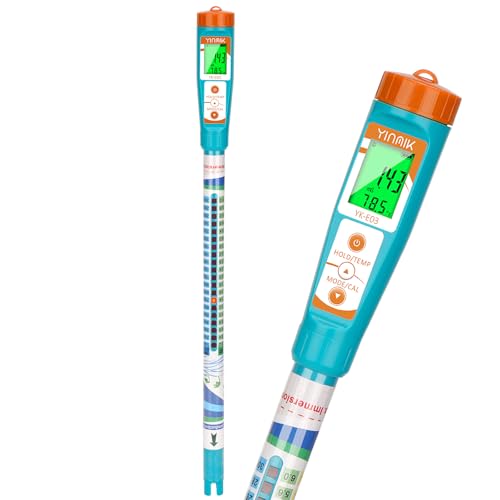
- 35cm stick reaches nutrient reservoirs
- Supports EC, CF, and two ppm scales
- Includes ATC and calibration solution
Best For: Frequent nutrient-tank testing and mixing
Best Simple EC/TDS Tester
HM Digital COM-80 EC/TDS Meter

- Measures EC and TDS on four scales
- ATC with ±2% readout accuracy
- Fast response and data-hold function
Best For: Routine EC/TDS nutrient testing
Best Waterproof Pen – Bluelab Conductivity Pen
For growers who want a straightforward option among conductivity meters for hydroponics, the Bluelab PENCON combines EC, TDS, CF, and temperature readings in a compact waterproof pen. It arrives factory calibrated and includes a battery, so it is ready for routine nutrient checks.
Best For: Hydroponic growers seeking a durable, portable nutrient-testing pen.
Pros:
- Measures EC, CF, PPM 500, PPM 700, and temperature.
- Automatic temperature compensation supports consistent readings as temperature changes.
- Waterproof, floating design with auto-off and low-battery indicators.
- Factory calibrated and backed by a one-year limited warranty.
Cons:
- Probe-care kit is sold separately.
- Calibration is optional, but regular cleaning is recommended for accuracy.
The Bluelab PENCON is a practical choice when portability and simple nutrient checks matter more than continuous monitoring or pH measurement.
Best Continuous Monitor – UIUZMAR 7-in-1 Hydroponic Meter
The UIUZMAR 7-in-1 is designed for growers who want more than spot checks from conductivity meters for hydroponics. Its composite probe continuously monitors nutrient and environmental data, while Wi-Fi connectivity lets you review readings and receive alerts through a smartphone app.
Best For: Indoor, aeroponic, DWC, and other setups needing continuous reservoir oversight.
Pros:
- Measures pH, EC, PPM, CF, ORP, temperature, and humidity.
- Probe can remain immersed in a hydroponic nutrient reservoir.
- Wi-Fi smartphone access supports remote viewing and real-time alerts.
- Designed for various hydroponic and aeroponic cultivation methods.
Cons:
- Its 2.18-pound size may be less convenient than a pocket tester.
- Uses a more involved setup than a simple handheld pen.
Choose this model if ongoing data and remote notifications are priorities; it is less suited to growers who only need occasional manual readings.
Best Calibration Kit – Apera EC20 Pocket Tester
The Apera EC20 is a focused, accuracy-oriented choice among conductivity meters for hydroponics. Its BPB probe, automatic calibration, temperature compensation, and included calibration solutions make it well suited to repeatable EC testing across a 0-to-20 mS/cm range.
Best For: Growers who prioritize dependable EC measurements and a complete portable kit.
Pros:
- Provides ±1% full-scale accuracy from 0 to 20 mS/cm.
- BPB probe is designed for accuracy and consistency across a wide range.
- Automatic calibration recognizes buffers, with ATC for temperatures from 0 to 50°C.
- Includes calibration solutions, batteries, lanyard, and carrying case.
Cons:
- Measures conductivity rather than pH or a broader set of parameters.
- The listed response time is 8 seconds.
With long stated battery life and a two-year instrument warranty, the EC20 is a strong fit for growers who want a dedicated, properly supported EC tester.
Best Multipurpose Pen – YINMIK 4-in-1 Hydroponic Meter
The YINMIK 4-in-1 offers a convenient middle ground for growers comparing conductivity meters for hydroponics. It displays pH, EC or PPM, and temperature, supports extended immersion, and includes pH and EC calibration solutions for use out of the box.
Best For: Home growers who want combined pH and nutrient readings in one handheld tester.
Pros:
- Provides pH, EC, PPM, and temperature readings.
- Supports long-term immersion for checking nutrient systems in place.
- Automatic temperature compensation helps account for temperature differences.
- Includes pH 4.00 and 7.00 solutions plus 1413 µS/cm EC buffer.
Cons:
- It is a handheld tester rather than a Wi-Fi-enabled continuous monitor.
- The supplied notes do not specify a warranty length.
The YINMIK is a practical choice for home hydroponics when you need pH and nutrient measurements together without stepping up to a larger monitoring system.
Premium EC Precision – Apera EC60 Conductivity Tester
For growers comparing conductivity meters for hydroponics, the Apera EC60 is a focused EC, TDS, salinity, and temperature tester with automatic calibration and temperature compensation. Its replaceable probe and waterproof housing make it a practical choice for repeated nutrient-solution checks.
Best For: Hydroponic growers who want a durable, dedicated conductivity tester with flexible readings and a complete calibration kit.
Pros:
- Measures conductivity, TDS, salinity, and temperature with one-tap mode switching.
- Automatic one- to three-point calibration and automatic temperature compensation from 0–50°C.
- Replaceable Platinum Black sensor and IP67 waterproof, floatable design.
- Includes calibration solutions, bottles, batteries, lanyard, and carrying case.
Cons:
- It focuses on conductivity-related measurements rather than pH.
- Requires four AAA batteries.
The EC60 stands out when reliable EC monitoring and long-term probe replaceability matter more than having a multi-parameter pH meter.
Beginner-Friendly 4-in-1 – EZTOCH Hydroponic pH EC Meter
This EZTOCH meter is a versatile option among conductivity meters for hydroponics, combining pH, EC, TDS/PPM, and temperature readings in a compact tester. It can display three measurements at once and includes ready-to-use calibration solutions, which helps simplify routine reservoir checks.
Best For: Hydroponic beginners and hobby growers who need pH and conductivity readings in one straightforward meter.
Pros:
- Displays pH, EC, and temperature simultaneously, with a mode for pH, PPM, and temperature.
- Offers a 0.00–19.99 mS/cm conductivity range with a 0.01 mS/cm unit.
- Includes pH 4.00, pH 7.00, and EC 1413 μS/cm calibration solutions.
- Suitable for DWC, Kratky, aeroponic, aquaponic, and other hydroponic setups.
Cons:
- The supplied notes do not specify waterproofing, probe replacement, or battery details.
- Its PPM feature uses a stated 500 hydroponic conversion unit, which may not match every grower’s preferred factor.
With simultaneous displays and included calibration liquids, this is a convenient all-in-one starting point for growers managing both nutrient strength and pH.
Complete Multi-Parameter Kit – Apera PC60 5-in-1 Tester
For growers who want more than conductivity alone, the Apera PC60 combines EC with pH, TDS, salinity, and temperature measurements. Its replaceable multi-parameter probe, color-backlit display, and included storage and calibration supplies make it suited to regular hydroponic testing.
Best For: Serious hydroponic users who want a professional-feeling pocket meter for nutrient strength, pH, salinity, and temperature.
Pros:
- Measures pH, EC, TDS/PPM, salinity, and temperature.
- Uses a replaceable multi-parameter probe with easy installation.
- Shows temperature alongside the selected measurement and indicates stable readings.
- Includes calibration solutions, storage solution, batteries, bottles, lanyard, and carrying case.
Cons:
- Its broader feature set may be more than needed for growers seeking only EC readings.
- The supplied notes do not provide specific measurement ranges or accuracy figures.
The PC60 is the most comprehensive option here, particularly when pH and salinity data are as important to your nutrient-management routine as conductivity.
Best Versatile Combo – VIVOSUN pH, TDS & EC Meter
The VIVOSUN combo is a practical choice for growers who want conductivity meters for hydroponics alongside pH, TDS, and temperature readings. Its separate pH and TDS/EC testers cover common reservoir-monitoring tasks, with automatic temperature compensation and broad measurement ranges.
Best For: Hydroponic growers who also need pH and temperature testing in one kit.
Pros:
- Measures EC, TDS, temperature, and pH with the included two-meter set.
- Offers ATC, one-touch automatic calibration, and included buffer powder packs.
- Backlit displays, hold functions, and memory support convenient reading and recording.
Cons:
- The kit uses separate testers rather than one all-in-one probe.
- Its pH accuracy is listed as ±0.1 pH, which may not suit users seeking tighter pH precision.
Choose this model if broad water-quality coverage matters more than a dedicated EC-only design. It is especially useful for growers managing pH and nutrient concentration together.
Best for Nutrient Reservoirs – YINMIK Long-Stick EC Meter
The YINMIK is designed specifically for mixing and checking hydroponic nutrient reservoirs. Its 35cm stick can stir AB nutrients while measuring conductivity, making it a convenient option for growers comparing EC, CF, and multiple ppm scales.
Best For: Hydroponic, aquaponic, aeroponic, and deep-water-culture growers who test nutrient tanks frequently.
Pros:
- Long 35cm stick reaches into nutrient reservoirs and can also be used as a stirring rod.
- Supports EC, CF, PPM 500, and PPM 700 measurement units.
- Includes ATC, a lock function, pre-calibration, and a 1413μS/cm calibration solution.
Cons:
- Temperature measurement is limited to 32–122°F (0–50°C).
- This is an EC/TDS-focused meter and does not include pH testing.
Its long probe and flexible measurement scales make it a strong fit for nutrient-management routines. Select it when reservoir access and compatibility with different hydroponic standards are priorities.
Best Simple EC/TDS Tester – HM Digital COM-80 EC/TDS Meter
The HM Digital COM-80 is a straightforward option for growers seeking conductivity meters for hydroponics without extra pH functions. It measures EC and TDS across four scales, provides 1 μS/ppm resolution, and includes automatic temperature compensation for nutrient testing.
Best For: Growers who want a compact, dedicated EC/TDS meter for routine nutrient checks.
Pros:
- Measures both EC and TDS, with μS, mS, ppm, and ppt scales.
- Provides automatic temperature compensation and a listed ±2% readout accuracy.
- Includes data hold, auto-off, low-battery indication, and a 0.5-second response time.
Cons:
- It does not measure pH or temperature as a displayed standalone reading.
- Its TDS range is limited to 0–5000 ppm.
- The unit uses three LR44 batteries.
This compact tester makes sense for established hydroponic routines centered on EC and TDS. Its simple controls and multiple scales are useful when you do not need a multi-parameter kit.
How We Picked the Best Conductivity Meters for Hydroponics
We focused on meters that measure electrical conductivity (EC), total dissolved solids (TDS), or both, since these readings help estimate nutrient concentration. We considered stated accuracy, usable measurement range, display clarity, calibration process, temperature compensation, waterproofing, and sensor design.
Multi-function models were evaluated for the usefulness of their added pH, salinity, ORP, temperature, or humidity readings. We also included straightforward EC and TDS pens for growers who prefer a simpler tool with fewer settings to manage.
Quick Comparison
| Best For | What to Look For |
|---|---|
| Routine nutrient checks | Reliable EC readings, automatic temperature compensation, and simple calibration |
| Full water monitoring | pH, EC, TDS, salinity, and temperature in one instrument |
| Portable testing | Compact waterproof construction and a readable digital display |
| Value-focused growing | Basic EC or TDS measurement with replaceable or protected sensors |
Key Buying Factors for Conductivity Meters for Hydroponics
EC, TDS, and Conversion Scales
EC is the direct conductivity measurement and is commonly expressed in mS/cm. TDS converts conductivity into an estimated dissolved-solids value, but different meters may use 500, 700, or another conversion scale. If you compare readings between devices, use the same scale or rely on EC for greater consistency.
Accuracy and Measurement Range
Choose a range that covers your nutrient program without forcing the meter near its limits. A stated accuracy of around ±1% is useful for precise mixing, while a basic tester may be adequate for occasional checks. Resolution matters too: smaller increments make gradual changes easier to spot.
Calibration and Maintenance
Calibration should be straightforward and supported by the correct standard solution. Rinse the probe with clean water after testing, avoid contaminating calibration fluid, and store the sensor according to the manufacturer’s instructions. A replaceable probe can extend the useful life of a higher-quality meter.
Waterproofing and Temperature Compensation
Hydroponic testing involves frequent splashes, so waterproof housing is a practical advantage. Automatic temperature compensation helps produce more consistent readings when solution temperatures change, although it does not replace proper calibration.
Who Should Buy Which Conductivity Meters for Hydroponics?
Choose a simple EC or TDS pen if you mainly need quick nutrient checks and already own a separate pH meter. This approach is affordable and keeps routine testing fast. A combined pH/EC/TDS meter is better for growers who want fewer tools and regularly adjust both nutrient strength and acidity.
For larger gardens, repeated testing, or tighter nutrient control, prioritize a meter with published accuracy, dependable calibration, temperature compensation, and a durable waterproof design. Multi-parameter models can be convenient, but buy one only if you will use the additional measurements; otherwise, a focused conductivity tester may be easier to maintain and more reliable for everyday work.