The right light meter for photography can make exposure decisions faster, more consistent, and easier to repeat—especially when shooting film, portraits, or controlled studio scenes.
We selected 10 meters spanning compact digital models, battery-free analog designs, flash-capable tools, and handheld illuminance testers so you can match the meter to your camera and workflow.
Best 10 Light Meter for Photography Picks for 2026
Best All-Around Meter

- Incident and reflected metering
- Photo, Cine, and HD Cine modes
- Tenth-of-a-stop exposure accuracy
Best For: Hybrid photo, flash, and video work
Best for Film Cameras

- 7° narrow-angle spot metering
- Laser rangefinder up to 50 m
- Rechargeable USB-C battery
Best For: Vintage cameras and film photography
Best Compact Cine Meter

- Ambient, flash, and reflected metering
- Cine and HD Cine modes
- Lux and foot-candle readouts
Best For: Compact filmmaking and location scouting
Best for Illuminance Measurements
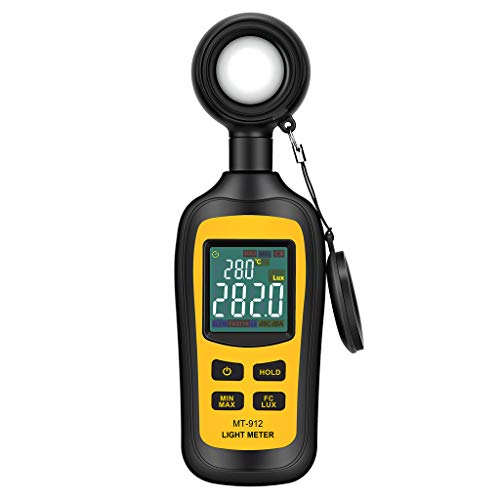
- Measures up to 200,000 lux
- Reads ambient temperature
- MIN/MAX and data-hold functions
Best For: Set design and general lighting checks
Classic Battery-Free Choice
Sekonic L-398A Studio Deluxe III

- Battery-free analog metering
- Incident and reflected measurement
- Includes versatile measurement accessories
Best For: Photographers who prefer tactile controls and no battery dependence
High-Range Digital Option

- Measures up to 200,000 lux
- Lux and foot-candle modes
- Includes hold, backlight, and min/max functions
Best For: Brightness and lighting-intensity checks across indoor and outdoor settings
Advanced Hybrid Meter
Sekonic LiteMaster Pro L-478D-U
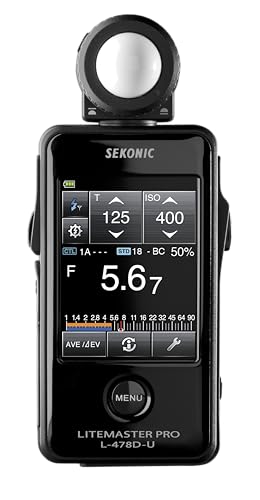
- Touchscreen incident and flash metering
- Cine frame-rate and shutter-angle controls
- Illuminance and luminance measurement modes
Best For: Professional stills, flash, and motion-production workflows
Best Compact Meter

- 26g ultra-compact design
- 0.96-inch adjustable OLED screen
- USB-C rechargeable battery with 20+ hours of use
Best For: Portable film-camera setups needing digital metering
Best Retro Metal Design

- 35-degree reflective metering
- Three tactile independent dials
- Full metal body with USB-C charging
Best For: Photographers who prefer hands-on controls and a classic finish
Best Black Metal Meter

- 35-degree reflective metering
- ISO 1–3200 and F1–F28 range
- Customizable indicators and tactile dials
Best For: Discreet film-camera setups with detailed exposure control
Best All-Around Meter – Sekonic L-308X-U Flashmate
If you need a versatile light meter for photography, the Sekonic L-308X-U combines incident and reflected readings with dedicated photo, cine, and HD Cine modes. Its pocket-sized design and tenth-of-a-stop accuracy make it a practical choice for stills, flash, and video work.
Best For: Photographers and DSLR or mirrorless videographers who want one compact meter for ambient and electronic flash exposure.
Pros:
- Measures ambient and electronic flash exposures accurately to a tenth of a stop.
- Supports photo, Cine, and HD Cine modes for stills and video workflows.
- Offers a broad ambient range and shutter-speed span, including readings up to 1/8000 second.
- Compact 4.3-by-2.5-by-0.9-inch design weighs only 3.52 ounces.
Cons:
- Requires two AAA batteries.
- Its wide feature set may be more than needed for simple ambient-light readings.
The L-308X-U is a strong all-purpose option when you regularly switch between still photography, flash, and video. Its specialized modes and compact build add flexibility without making it bulky.
Best for Film Cameras – CHI L.D. Light Meter Pro
The CHI L.D. Light Meter Pro is a specialized light meter for photography designed for vintage cameras and film workflows. It combines narrow-angle spot metering with exposure, distance, and laser rangefinding features in a pocket-sized body.
Best For: Film photographers and vintage-camera users who want precise spot readings plus distance measurement in one device.
Pros:
- Provides a 7° ultra-narrow spot-metering angle for pinpoint exposure control.
- Calculates exposure and distance with one tap.
- Built-in laser rangefinder measures from 0.1 to 50 meters and supports continuous-on operation.
- Bright 0.96-inch OLED displays ISO, shutter speed, aperture, distance, and EV readings.
Cons:
- Weighs 5.6 ounces, making it heavier than some compact meters.
- Uses a nonstandard rechargeable battery rather than replaceable standard cells.
Choose this model if pinpoint readings and rangefinding are more valuable to you than broad video-oriented features. Its rechargeable USB-C design also suits photographers who prefer an integrated battery.
Best Compact Cine Meter – Sekonic FLASHMATE L-308X
Sekonic FLASHMATE L-308X Photographers and Film Makers Exposure Meter - Black/Blue
Check Price On AmazonThe Sekonic FLASHMATE L-308X is a compact light meter for photography and filmmaking that handles ambient and flash readings. Its sliding lumisphere, reflected-light lens, and dedicated Cine and HD Cine modes make it useful from location scouting through on-set exposure checks.
Best For: Photographers and cinematographers who need a small meter for ambient, flash, reflected-light, and cinema exposure work.
Pros:
- Measures both ambient and flash lighting in a pocket-sized design.
- Sliding lumisphere supports ambient readings, while the lens provides a 40° reflected-light reception angle.
- Offers Cine and HD Cine modes for filmmaking applications.
- Displays readings in lux and foot-candles as well as exposure values.
Cons:
- Requires AA batteries.
- The listed dimensions are larger than the stated compact body weight may suggest.
This is a practical choice for users who want dedicated cinema functions without carrying a larger professional meter. It is especially appealing for scouting and quick exposure checks on set.
Best for Illuminance Measurements – Digital Lux Light Meter
This handheld digital lux meter is better suited to general illuminance measurement than camera exposure control. It measures up to 200,000 lux, includes ambient temperature readings, and provides useful MIN/MAX, data-hold, and auto-power-off functions for lighting checks at home, in offices, factories, or on set.
Best For: Set designers and users who need broad lux measurements rather than dedicated photographic incident, reflected, or flash metering.
Pros:
- Measures luminosity from 0 to 200,000 lux.
- Includes ambient temperature measurement.
- Offers MIN/MAX readings, data hold, auto power-off, and low-battery indication.
- Includes a two-year warranty and a lightweight handheld design.
Cons:
- Does not list photographic exposure, aperture, shutter-speed, or flash modes.
- Requires three AAA batteries.
- Its stated accuracy varies between lower and higher illuminance ranges.
If your goal is evaluating brightness in lux, this meter offers a useful measurement range and straightforward display features. For camera-ready exposure calculations, a dedicated photographic meter such as one of the Sekonic models is a better fit.
Classic Battery-Free Choice – Sekonic L-398A Studio Deluxe III
The Sekonic L-398A is a practical light meter for photography when you want straightforward, battery-free operation. Its analog dial shows aperture and shutter-speed combinations at a glance, while incident and reflected measurement options support studio and location work.
Best For: Photographers who prefer an analog workflow, dependable battery-free operation, and versatile incident/reflected readings.
Pros:
- Battery-free amorphous photocell operates from ambient light.
- Full dial readout provides multiple aperture and shutter combinations.
- Swivel head and included lumisphere, lumidisc, lumigrid, and other accessories add flexibility.
- Compact construction suits studio and field use.
Cons:
- Analog operation may feel less immediate than a digital touchscreen meter.
- Its measurement approach does not provide the listed cine and flash-analysis functions of more advanced digital models.
The L-398A is a strong fit for photographers who value tactile controls and simplicity. Choose it over a digital meter when battery-free use and a complete analog readout matter most.
High-Range Digital Option – 200,000-Lux Illuminance Meter
This digital illuminance meter is a useful light meter for photography when you need a broad brightness measurement range rather than camera exposure calculations. It measures up to 200,000 lux, supports lux and foot-candle units, and includes practical display and data-hold features.
Best For: Users measuring general lighting intensity for indoor, outdoor, grow-plant, LED, or photography environments.
Pros:
- Measures visible brightness across a range up to 200,000 lux.
- Automatically converts ranges and switches between lux and foot-candle units.
- Large display, backlight, data hold, and maximum/minimum readings support easier checks.
- Includes three AAA batteries.
Cons:
- It is an illuminance meter, so the supplied notes do not list incident/reflected camera exposure metering.
- Requires three AAA batteries.
This meter is best viewed as a general-purpose brightness tester rather than a dedicated photographic exposure meter. Its wide range and clear digital readout make it useful for evaluating lighting conditions and intensity.
Advanced Hybrid Meter – Sekonic LiteMaster Pro L-478D-U
The Sekonic LiteMaster Pro L-478D-U is a feature-rich light meter for photography and motion work. Its touchscreen handles incident ambient and flash metering, while cine controls, illuminance/luminance modes, and optional reflected spot capability expand its usefulness for professional setups.
Best For: Photographers, filmmakers, and hybrid creators who need touchscreen control, flash analysis, and cine exposure functions.
Pros:
- Measures incident ambient and flash light with flash-to-ambient analysis.
- Touchscreen interface provides clear navigation and data visibility.
- Cine mode supports frame-rate and shutter-angle settings.
- Illuminance and luminance modes add technical lighting evaluation; an optional 5° reflected spot attachment is supported.
Cons:
- Requires two AAA batteries.
- The reflected spot function requires an optional attachment.
- Its advanced feature set may be more than needed for simple ambient-light readings.
The L-478D-U is the most versatile option here for users moving between still photography, flash, and cinema production. It is particularly compelling when touchscreen workflow and detailed lighting analysis justify a more advanced meter.
Best Compact Meter – LightMate Lite 2R
The LightMate Lite 2R is a practical light meter for photography when you want a compact digital exposure meter for film cameras. Its 30-degree metering angle, large OLED display, rechargeable battery, and adjustable cold-shoe position make it a versatile choice for Leica and other compatible cameras.
Best For: Film photographers who prioritize a lightweight design, clear digital readings, and flexible metering controls.
Pros:
- Very light at approximately 26g, with a compact design for portable camera setups.
- Large 0.96-inch OLED screen with adjustable brightness and screen-flip display.
- Offers aperture-priority, shutter-priority, single-trigger, automatic-trigger, and average metering modes.
- Rechargeable USB-C battery provides more than 20 hours of use and over six months of standby when turned off.
Cons:
- The 30-degree metering angle may be less suitable when a wider scene reading is preferred.
- Its many settings, including exposure compensation, ND compensation, and depth-of-field calculation, may require consulting the manual.
Choose the Lite 2R if portability and a readable digital interface matter most. Its adjustable mounting position and broad feature set make it a flexible companion for manual film photography.
Best Retro Metal Design – LightMate AirPro Silver
The silver LightMate AirPro combines a metal body and tactile controls with modern digital metering. As a light meter for photography, it offers a 35-degree reflective reading angle, multiple exposure modes, and adjustable dial resolution for photographers using Leica and other film cameras.
Best For: Film photographers who want physical aperture, ISO, and shutter dials with customizable digital exposure indicators.
Pros:
- 35-degree metering angle with stated accuracy of ±0.1EV.
- Independent aperture, ISO, and shutter dials provide tactile and audible feedback.
- Supports aperture-auto, shutter-auto, manual, and EV modes, plus exposure compensation.
- Full metal shell and USB-C rechargeable battery offer a durable, convenient design.
Cons:
- At approximately 5.3 ounces, it is heavier than the Lite 2R.
- The dial-based interface may take more adjustment than a simple single-control meter.
The silver AirPro is a strong fit when handling and classic camera aesthetics are part of the buying decision. Its customizable indicators and half-stop adjustments also give experienced photographers more control over exposure settings.
Best Black Metal Meter – LightMate AirPro Black
The black LightMate AirPro delivers the same feature-rich metering platform in a subdued metal finish. This light meter for photography supports a broad range of ISO, shutter-speed, and aperture settings, while its three physical dials and customizable indicators suit deliberate film-camera workflows.
Best For: Film photographers seeking a discreet black metal meter with flexible automatic and manual exposure controls.
Pros:
- 35-degree wide-angle reflective metering with claimed ±0.1EV accuracy.
- Supports ISO 1–3200, shutter speeds from 60 seconds to 1/2000 second, and apertures from F1 to F28.
- Three independent dials support half-stop adjustments and selectable 1/3- or 2/3-stop settings.
- More than 20 hours of battery life, USB-C charging, and over six months of standby when powered off.
Cons:
- Its approximately 5.3-ounce weight may be noticeable on smaller camera setups.
- Advanced indicator and dial options can add complexity for photographers wanting a minimal meter.
The black AirPro is worth considering if you want extensive exposure control without giving up a classic, camera-accessory appearance. It is especially useful for photographers who prefer tactile adjustments and customizable readouts.
How We Picked the Best Light Meter for Photography
We compared these meters by their intended use, metering method, exposure controls, portability, display design, power requirements, and support for still photography, film, flash, or cinema work. The lineup includes dedicated photographic meters as well as general-purpose lux meters, which measure illumination but may not provide the camera-specific exposure guidance photographers need.
Because specifications and bundled accessories can vary by seller, confirm the current listing details before buying—particularly measurement range, battery type, flash compatibility, and whether the meter reads incident, reflected, or ambient light.
Quick Comparison
| Best For | Look For | Recommended Type |
|---|---|---|
| Film and vintage cameras | Incident/reflected readings and simple controls | Compact digital or analog meter |
| Flash photography | Flash measurement and cordless triggering | Dedicated flash meter |
| Studio work | Wide range, repeatable readings, and easy-to-read display | Advanced digital meter |
| Cinema and video | Frame-rate and shutter-angle modes | Cine-capable photographic meter |
| Checking room brightness | High lux range and large LCD | Handheld illuminance meter |
Key Buying Factors for a Light Meter for Photography
Incident Versus Reflected Metering
Incident meters measure light falling on the subject and can produce dependable readings without being fooled by unusually dark or bright surfaces. Reflected meters read light coming from the scene, making them useful from the camera position and for subjects that are difficult to approach. Some models support both methods.
Still, Flash, and Cine Features
For ordinary stills and film, aperture, shutter speed, and ISO controls may be enough. Flash photographers should prioritize flash-duration or flash-balance functions. Videographers benefit from frame-rate, shutter-angle, and cine-specific exposure modes.
Display, Controls, and Portability
A compact meter is easier to carry with a vintage camera, while a larger touchscreen may be faster in a studio. Look for controls that remain usable in low light and a display that clearly shows ISO, shutter speed, aperture, and measurement mode.
Power and Measurement Range
Battery-free analog meters avoid charging concerns but may offer fewer features. Digital meters generally provide more precise settings and broader functionality. If you are considering a general lux meter, verify that it supports photographic exposure calculations before treating it as a camera light meter.
Who Should Buy Which Light Meter for Photography?
Choose a compact digital meter if you shoot film, travel frequently, or want quick incident and reflected readings without carrying a larger accessory. Choose an analog meter if you prefer a classic workflow, mechanical simplicity, and battery-free operation.
Choose an advanced Sekonic-style meter for studio, flash, or mixed still-and-cine work where specialized exposure analysis matters. Choose a handheld lux meter only when your main goal is measuring lighting intensity in rooms or workspaces rather than calculating camera exposure.
Before checkout, match the meter’s metering modes and controls to your camera system, confirm its power requirements, and consider whether you need flash or cinema functions now—or may need them later.