A good focuser can make a beginner telescope feel far easier to use. The right model helps you reach sharp focus smoothly, reduces image shake, and makes frequent eyepiece changes less frustrating.
This roundup compares 10 telescope focusers for beginners, including manual rack-and-pinion, helical, tension-adjustable, and electronic options. Check compatibility carefully before buying, especially for telescope type, mounting dimensions, and eyepiece size.
Best 10 Telescope Focusers for Beginners Picks for 2026
Best Rack-and-Pinion Upgrade
SV181 1.25-Inch Reflector Focuser

- 65mm travel with gear fine adjustment
- Brass ring helps protect eyepiece barrels
- Threaded interior and dust cover included
Best For: 114mm or 150mm Newtonian reflectors with 1.25-inch eyepieces
Best Electronic Option
Celestron SCT and EdgeHD Focus Motor

- Supports computer-controlled focusing
- Includes speed, position, and backlash controls
- Two-year US warranty with support
Best For: Compatible Celestron SCT and EdgeHD systems
Best Full-Metal Value
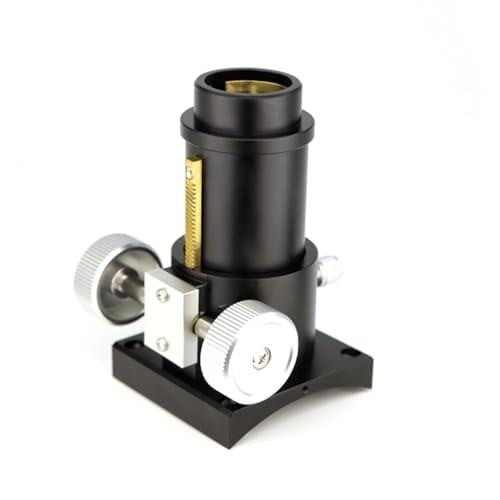
- Full-metal rack-and-pinion construction
- Fits listed 150mm to 203mm Newtonians
- Threaded interior and dust cover included
Best For: 6- to 8-inch Newtonian reflector telescopes
Best for Guide Scopes
Astromania 1.25-Inch Helical Focuser

- 0.05mm scale with 10mm focusing stroke
- Fixed orientation limits camera rotation
- All-metal design for guide-scope use
Best For: Guide scopes, finder scopes, and autoguider cameras
Vibration-Free Upgrade

- Motorized focusing with pushbutton control
- Adjustable coarse-to-fine speed control
- Includes brackets and installation hardware
Best For: Beginners seeking smooth electronic focusing
Adjustable Manual Control

- Tension adjustment accommodates accessory weights
- Side screw helps secure the eyepiece
- Standard 1.25-inch interface for common accessories
Best For: DIY reflector telescope upgrades
Compact Motorized Option

- Pushbutton motorized focusing without vibration
- Adjustable coarse-to-fine speed control
- Fits listed single-speed 60–127 mm telescopes
Best For: Compatible single-speed refractors and reflectors
Best Precision Upgrade
Smooth-Operation Helical Focuser

- Double-helical design minimizes lateral movement
- 10mm stroke for fine focusing adjustments
- Aluminum alloy with IPX4 water resistance
Best For: Beginners seeking stable, precise focusing for astrophotography
Best DIY Reflector Option

- Fits reflectors up to 117mm inner diameter
- Secures 1.25-inch eyepieces with a side screw
- Treated internal threads reduce reflections
Best For: DIY builders using compatible reflector telescopes
Best Rack-and-Pinion Upgrade – SV181 1.25-Inch Reflector Focuser
For beginners comparing telescope focusers for beginners, the SVBONY SV181 is a practical manual upgrade for compatible Newtonian reflectors. Its rack-and-pinion mechanism, 65mm of travel, and fine-adjustment gear make focusing easier while the internal brass ring helps protect eyepiece barrels.
Best For: Owners of 114mm or 150mm Newtonian reflector telescopes using 1.25-inch eyepieces.
Pros:
- 65mm focusing travel with gear-based fine adjustment.
- Brass retaining ring helps avoid marks on eyepiece barrels.
- Fully threaded interior helps minimize internal reflections.
- Includes a 1.25-inch dust cover.
Cons:
- Manual focusing does not provide electronic or remote control.
- Designed for 1.25-inch accessories rather than larger formats.
The SV181 offers useful beginner-friendly control without adding electronic complexity. Confirm that your telescope is a compatible Newtonian reflector and that its mounting requirements match before buying.
Best Electronic Option – Celestron SCT and EdgeHD Focus Motor
The Celestron Focus Motor is aimed at beginners who want telescope focusers for beginners that support hands-free or computer-controlled operation. It fits a wide range of Celestron Schmidt-Cassegrain and EdgeHD optical tubes and provides multiple motor speeds, indexed positioning, and backlash compensation.
Best For: Celestron SCT, EdgeHD, and compatible Rowe-Ackermann Schmidt Astrograph owners who want electronic focusing.
Pros:
- Enables computer-controlled or mount-controller focusing.
- Can receive power from a compatible computerized mount or USB connection.
- Offers multiple speeds, indexed focuser positions, and backlash compensation.
- Includes a two-year US warranty and unlimited support.
Cons:
- Compatibility is limited to specified Celestron telescope systems.
- More specialized than a basic manual focuser.
This is a strong choice for remote observing and setups where touching the telescope could introduce focus vibration. Check the full compatibility list carefully before ordering.
Best Full-Metal Value – 1.25-Inch Newtonian Focuser
This all-metal rack-and-pinion unit is a straightforward option for shoppers evaluating telescope focusers for beginners. It accepts 1.25-inch accessories and is listed as suitable for 150mm to 203mm Newtonian reflector telescopes, with a curved base plate intended to support installation on compatible optical tubes.
Best For: 6- to 8-inch Newtonian reflector owners seeking a manual 1.25-inch replacement or upgrade.
Pros:
- Full-metal construction.
- Rack-and-pinion design provides familiar manual adjustment.
- Fully threaded interior helps minimize reflections.
- Includes a 1.25-inch dust cover and curved base plate.
Cons:
- Compatibility is specified for particular Newtonian reflector sizes.
- Manual focusing lacks electronic control.
- Installation fit should be confirmed because telescope mounting details vary.
Its simple design and metal construction make it a practical candidate for a compatible Newtonian reflector. Measure the existing focuser and verify the telescope aperture range before purchasing.
Best for Guide Scopes – Astromania 1.25-Inch Helical Focuser
For beginners exploring telescope focusers for beginners with guide-scope or astrophotography needs, the Astromania double helical focuser provides compact, precise manual adjustment. Its 10mm stroke, 0.05mm scale, and fixed orientation are designed to help maintain a stable guide-star view while focusing.
Best For: Guide scopes, finder scopes, autoguider cameras, and compact visual or long-exposure setups.
Pros:
- Provides 0.05mm focusing accuracy and a 10mm stroke.
- Fixed orientation helps prevent camera or eyepiece rotation.
- All-metal construction is intended to minimize flexure and thermal expansion.
- Supports 1.25-inch accessories and includes M42x0.75 and M31x0.5 interface features.
Cons:
- Its 10mm travel may be insufficient for some telescope configurations.
- The required M42x0.75 female-to-female adapter for one upgrade path is not included.
- More specialized for guide scopes than general telescope focusing.
This focuser is most compelling when repeatable, rotation-free adjustment matters more than long travel. Verify your guide scope threads and available back focus before buying.
Vibration-Free Upgrade – AccuFocus Electronic Focuser
For beginners comparing telescope focusers for beginners, the AccuFocus Electronic Telescope Focuser is a practical choice when smooth, low-vibration adjustments matter. Its pushbutton controller and adjustable speed knob help you move from coarse positioning to fine focusing, while the included mounting hardware supports installation on compatible telescopes.
Best For: Beginners who want motorized, vibration-reduced focusing and straightforward speed control.
Pros:
- Pushbutton hand controller enables smooth, precise adjustments without vibration.
- Adjustable speed control ranges from coarse to very fine focusing.
- Includes brackets, shaft coupler, cable, hardware, tools, and an installation guide.
- Compatible with both listed Crayford and rack-and-pinion focuser brackets.
Cons:
- Requires one 9-volt battery, which is not included.
- Compatibility depends on the telescope’s focuser and installation setup.
With its simple controls and included mounting parts, this AccuFocus model is a beginner-friendly electronic upgrade for observers who find manual focusing shaky or difficult.
Adjustable Manual Control – Reflector Telescope Focuser
For telescope focusers for beginners, this manual reflector focuser emphasizes simple mechanical control and flexible adjustment. Its tension knob lets you tailor resistance for different accessory weights, while the standard 1.25-inch interface accommodates common astronomical accessories.
Best For: Beginners modifying a DIY reflector telescope who want adjustable tension and a secure 1.25-inch eyepiece fit.
Pros:
- Focus tension adjustment and locking knob support controlled, stable operation.
- Side fixing screw helps prevent eyepiece wobble or slipping.
- Standard 1.25-inch interface works with common astronomical accessories.
- Designed for external tube diameters from 80 mm upward.
Cons:
- Manual focusing requires hands-on adjustment rather than motorized control.
- Compatibility is most clearly suited to DIY reflective telescope projects.
- Warranty description lists only 90 days.
This focuser is a sensible hands-on upgrade for builders who value tension control and a secure eyepiece connection over electronic operation.
Compact Motorized Option – Astromania AccuFocus Focuser
When reviewing telescope focusers for beginners, the Astromania AccuFocus offers motorized focusing with a pushbutton controller and adjustable speed selection. It is intended for single-speed focusing systems, including many refractors and reflectors in the 60–127 mm range, and runs from a standard 9-volt battery.
Best For: Beginners with compatible single-speed refractors or reflectors who want convenient, vibration-reduced electronic focusing.
Pros:
- DC motor makes sharp focusing easier without manually turning the focus knob.
- Pushbutton control supports smooth, precise adjustments without vibration.
- Adjustable speed knob allows coarse through very fine focusing.
- Includes brackets, hardware, coil cables, and other installation parts.
Cons:
- Requires a standard 9-volt battery.
- Not designed for telescopes with APO two-speed focusing.
- Manual focusing requires loosening the shaft-coupler set screws first.
Its clear compatibility limitation is important to check before purchase, but for a suitable single-speed telescope, this Astromania focuser provides an accessible motorized focusing upgrade.
Best Precision Upgrade – Smooth-Operation Helical Focuser
For beginners comparing telescope focusers for beginners, this aluminum-alloy helical model emphasizes smooth, fine adjustments without noticeable shift. Its double-helical design, 10mm focusing stroke, and straightforward installation make it a practical option for compatible telescope setups and entry-level astrophotography.
Best For: Beginners and astrophotography users who want fine, stable focusing adjustments.
Pros:
- Double-helical design helps minimize lateral movement during focusing.
- 10mm focusing stroke supports meticulous adjustments.
- Aluminum-alloy construction with IPX4 water resistance.
- Designed for straightforward installation and smooth operation.
Cons:
- Compatibility with a specific telescope setup should be confirmed before purchase.
- The 10mm travel may not suit users needing a longer focusing range.
This focuser is a strong choice when stability and controlled adjustments matter more than extensive travel. Verify fitment first, then consider it a useful beginner-friendly upgrade for visual observing or astrophotography.
Best DIY Reflector Option – 80mm Toothed Focusing Seat
Among telescope focusers for beginners, this 80mm focusing seat is aimed at DIY reflector projects using a 1.25-inch eyepiece interface. It supports reflectors with an inner diameter of up to 117mm, includes a side mounting screw, and uses a toothed focusing mechanism for practical adjustment.
Best For: DIY enthusiasts building or upgrading compatible reflector telescopes.
Pros:
- Designed for reflectors with inner diameters up to 117mm.
- Side screw helps secure a 1.25-inch eyepiece.
- Internal threads are treated to reduce unwanted reflections.
- ABS plastic construction is lightweight and intended for repeated use.
Cons:
- Its 1.25-inch interface limits compatibility with other eyepiece sizes.
- Installation is better suited to DIY users than those seeking a universal replacement.
This model makes the most sense for a compatible homemade reflector rather than a general-purpose focuser upgrade. Check the tube diameter and eyepiece interface carefully before ordering.
Best Size-Range Choice – Beginner-Friendly Precision Focuser
For shoppers exploring telescope focusers for beginners, this ABS focuser offers several size options for different refractor tube diameters and eyepiece interfaces. Its precision steel-shaft gears are designed for smooth, stable adjustment, while the lightweight construction supports a simple telescope upgrade.
Best For: Beginners who need a lightweight replacement matched to a specific tube and eyepiece size.
Pros:
- Available in 60mm, 67mm, 80mm, 90mm, and 102mm options.
- Supports 0.965-inch and 1.25-inch eyepiece interfaces.
- Steel-shaft gearing is designed for precise, smooth focusing.
- Lightweight ABS construction and simple installation.
Cons:
- Only one size is included, so careful measurement is essential.
- The product notes specifically advise checking the size chart before purchase.
- Compatibility varies by refractor tube and eyepiece interface.
This is a flexible option on paper, but the range of sizes makes fit verification especially important. Choose the correct diameter and interface, and it can provide a straightforward focusing upgrade for beginner or experienced users.
How We Picked the Best Telescope Focusers for Beginners
We focused on the features that matter most when upgrading or replacing a telescope focuser: compatibility, focusing control, construction, installation demands, and everyday ease of use. The selection includes options for Newtonian and reflector telescopes, guide scopes, Schmidt-Cassegrain and EdgeHD systems, and common 1.25-inch eyepieces.
Because focuser fit is highly telescope-specific, we treated stated size ranges and mounting requirements as essential rather than assuming one model will work universally. Manual units generally offer the simplest setup, while electronic focusers can help reduce vibration during imaging.
Quick Comparison
| Focuser type | Best suited to | Main advantage | Watch for |
|---|---|---|---|
| Rack-and-pinion | Reflector and Newtonian scopes | Familiar, controlled adjustment | Tube and mounting compatibility |
| Helical | Guide scopes and fine adjustments | Precise incremental focusing | Limited travel or load capacity |
| Electronic | Astrophotography and remote use | Reduced hand movement and vibration | Power, controller, and model compatibility |
| Gear or extension focusers | Basic replacement or upgrade projects | Simple operation and low cost | Material quality and exact interface size |
Key Buying Factors for Telescope Focusers for Beginners
Compatibility and Mounting Size
Start with your telescope model, optical design, focuser cutout, mounting holes, drawtube travel, and eyepiece interface. A focuser advertised for a 1.25-inch eyepiece may still require a particular tube diameter or adapter. Measure the existing assembly before ordering.
Adjustment Style
Rack-and-pinion focusers are straightforward and well suited to general visual observing. Helical focusers offer fine control, particularly on guide scopes. Tension adjustment is useful for reducing backlash or preventing an eyepiece from slipping, while electronic focusing is valuable when touching the telescope would disturb a long exposure.
Build and Load Capacity
Metal construction is typically preferable for heavier eyepieces, cameras, and accessories, but it can add weight. Plastic or ABS units may be appropriate for lightweight beginner setups. Confirm that the focuser can support your intended accessory train without flexing.
Travel, Smoothness, and Backlash
Enough drawtube travel is necessary to reach focus with your eyepieces and camera. Look for smooth movement, secure locking, and minimal play. Fine adjustment matters more for high magnification and imaging than for low-power wide-field viewing.
Who Should Buy Which Telescope Focusers for Beginners?
Choose a rack-and-pinion model if you want an uncomplicated replacement for a reflector telescope. A helical focuser is a sensible choice for guide-scope work or precise manual adjustments. Consider an electronic model if you regularly image planets or deep-sky targets and want to limit vibration. Gear-style or compact extension focusers make sense for budget repairs, provided the dimensions match exactly.
For most first-time buyers, compatibility should outweigh extra features. Verify the telescope model, tube opening, eyepiece size, and required adapters before comparing finish, controls, or automation.