The best science experiment sets for homeschool turn abstract concepts into hands-on lessons children can see, measure, and discuss. The right kit can add structure to science time while keeping experiments engaging.
We selected 10 options spanning chemistry, earth science, volcanoes, science magic, and broad STEM activities, with choices for different ages, interests, and learning styles.
Best 10 Science Experiment Sets for Homeschool Picks for 2026
Best Earth Science Kit
National Geographic Earth Science

- 15+ hands-on Earth science activities
- Includes a full-color learning guide
- Suitable for sharing with a group
Best For: Earth science homeschool units for ages 8 and up
Best Large Experiment Collection

- Includes 150 mixed-topic experiments
- Covers chemistry, physics, earth science, and more
- Illustrated manual and lab-style tools included
Best For: Ongoing, varied science practice for ages 8 and up
Best Chemistry Kit
National Geographic Amazing Chemistry

- 100+ chemistry experiments and activities
- 15 experiments include kit materials
- Uses test tubes, beakers, and pipettes
Best For: Hands-on chemistry units for ages 8 and up
Best Beginner Lab Set

- Includes 80 guided science experiments
- Comes with goggles, gloves, and lab tools
- Guidance cards progress from simple to challenging
Best For: Beginner hands-on science activities for ages 6 and up
Best Starter Chemistry Lab
National Geographic Junior Chemistry Set

- 50 hands-on chemistry experiments
- 20+ child-safe lab tools included
- Illustrated directions for ages 4+
Best For: Young homeschool beginners exploring basic chemistry
Best Guided STEM Variety
Doctor Jupiter Ultimate Science Experiments Kit

- More than 50 science experiments
- Illustrated step-by-step manual
- Science explanations accompany projects
Best For: Structured STEM learning for ages 8 and up
Best Broad Experiment Mix
UNGLINGA 70 Lab Experiments Set

- Includes 70 varied experiments
- Covers volcanoes, crystals, circuits, and rockets
- Illustrated manual explains the activities
Best For: Ages 8+ wanting a wide-ranging STEM activity set
Classic Volcano Lab
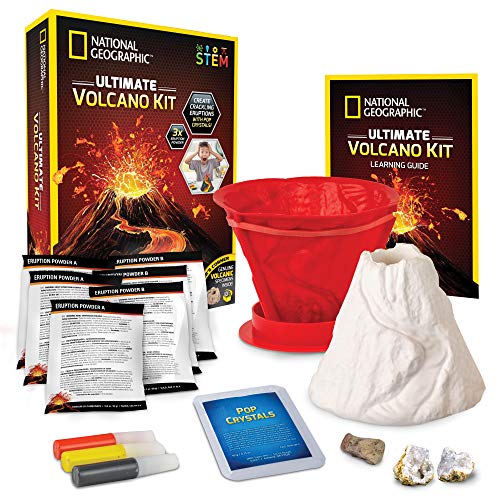
- 3x eruption powder plus pop crystals
- Reusable mold with paint and instructions
- Includes pumice, geode, and volcano guide
Best For: Focused homeschool lessons in volcanoes, geology, and earth science
At-Home Lab Builder

- 50+ Earth, chemistry, and magic activities
- Guide explains the science behind experiments
- Many activities use common household items
Best For: Varied at-home STEM practice for kids ages 8 and up
Science Magic Collection

- 20 included magic experiments
- Bonus booklet with 85+ activities
- Combines chemistry, magic, and STEM learning
Best For: Magic-motivated learners ages 8 and up
Best Earth Science Kit – National Geographic Earth Science
For families comparing science experiment sets for homeschool, this National Geographic kit offers a broad Earth science focus for children ages 8 and up. It includes more than 15 hands-on activities, plus a learning guide that explains the science behind them.
Best For: Homeschool lessons covering volcanoes, crystals, rocks, water movement, and other Earth science topics.
Pros:
- Includes activities such as water tornadoes, an erupting volcano, crystal growing, and geologic dig kits.
- Detailed, full-color learning guide connects experiments to Earth science concepts.
- Designed for multiple children to share with family, friends, or classmates.
- Clear instructions support independent exploration and confidence-building.
Cons:
- The kit centers on Earth science rather than offering equal coverage of chemistry and physics.
- It is recommended for ages 8 and up, so it may not suit younger homeschool learners.
This is a strong choice when you want a structured Earth science unit with varied activities and enough materials for group learning. Its included guide also makes it easier to connect the projects to a homeschool lesson plan.
Best Large Experiment Collection – UNGLINGA 150 Experiments
For homeschoolers seeking science experiment sets for homeschool with plenty of variety, the UNGLINGA kit provides 150 projects across earth science, surface tension, chemistry, physics, and more. The illustrated manual and included tools make it a flexible option for hands-on learning at home.
Best For: Families wanting a large, mixed-topic experiment collection for ongoing science activities and shared parent-child learning.
Pros:
- Offers 150 experiments across several science topics.
- Step-by-step, illustrated instructions make projects easier to follow.
- Includes child-friendly materials and lab-style tools such as goggles.
- Many projects use ordinary household items alongside the included supplies.
Cons:
- The broad topic range may provide less depth in any one science subject.
- Some experiments still require household materials not included in the kit.
- The recommended age is 8 and up.
The main appeal is quantity: this set can support repeated science sessions rather than a single afternoon of activities. It is especially practical for homeschool families that want flexibility across several introductory STEM topics.
Best Chemistry Kit – National Geographic Amazing Chemistry
For chemistry-focused science experiment sets for homeschool, this National Geographic kit combines 15 supplied-material experiments with a guide for 85 additional household-item projects. It introduces reactions and laboratory tools through activities designed for children ages 8 and up.
Best For: Homeschool chemistry lessons involving reactions, color changes, crystals, and introductory lab equipment.
Pros:
- Includes more than 100 experiments in total.
- Supplies materials for 15 featured chemistry experiments.
- Provides 85 bonus activities using common household items.
- Uses hands-on tools including test tubes, beakers, and pipettes.
Cons:
- Only 15 of the experiments include the kit’s dedicated materials; the bonus projects require household items.
- Its chemistry emphasis may be less suitable for families seeking broad Earth science coverage.
- Recommended for ages 8 and up.
This is a particularly useful pick for a chemistry unit because it combines memorable demonstrations with explanations and real lab-style tools. The bonus guide can extend the kit’s usefulness beyond the supplied materials.
Best Beginner Lab Set – 80-Experiment Science Kit
For families looking for approachable science experiment sets for homeschool, this 80-experiment kit combines simple projects with a broad assortment of tools and materials. Its guidance cards introduce each activity’s steps and scientific principles, making it suitable for guided learning with children ages 6 and up.
Best For: Beginner homeschool science sessions involving colorful demonstrations, simple reactions, and scientist role play.
Pros:
- Includes 80 experiments ranging from rainbow rain and fountains to volcanoes and bottle-blowing balloons.
- Guidance cards move from simpler to more challenging activities.
- Includes goggles, gloves, test tubes, droppers, measuring tools, petri dishes, and other accessories.
- Chemical materials are stored in separate, tightly closed bottles for reuse.
Cons:
- The supplied age information is broad, so adult guidance may be useful for younger children.
- The product details do not specify a dedicated subject-focused lesson guide beyond the experiment cards.
- Some projects may require careful organization because the kit contains many small components.
This set works well when the goal is active exploration rather than a narrow science curriculum. Its large tool assortment and step-by-step cards give beginners a practical way to build confidence through repeated experiments.
Best Starter Chemistry Lab – National Geographic Junior Chemistry Set
For families comparing science experiment sets for homeschool, this National Geographic Junior Chemistry Set offers an approachable introduction to hands-on chemistry. It includes 50 experiments, more than 20 child-safe lab tools, and illustrated instructions designed for children ages 4 and up. Several activities use familiar household items such as baking soda and vinegar.
Best For: Young homeschool learners ages 4 and up who need a simple, guided introduction to chemistry and STEM.
Pros:
- Includes 50 hands-on chemistry experiments.
- Provides more than 20 child-safe lab tools, including test tubes and goggles.
- Illustrated, step-by-step directions support independent participation.
- Requires no batteries and can use common household ingredients.
Cons:
- Its stated age range makes it better suited to early learners than older students seeking advanced experiments.
- Some activities rely on household items in addition to the included tools.
This is a practical pick for introducing young children to scientific routines, observation, and basic chemistry concepts. The broad experiment count and included equipment make it especially useful for recurring homeschool activities.
Best Guided STEM Variety – Doctor Jupiter Ultimate Science Experiments Kit
Among science experiment sets for homeschool, the Doctor Jupiter Ultimate Science Experiments Kit stands out for its mix of guided projects and science explanations. Designed for children ages 8 and up, it includes more than 50 experiments, such as color-changing volcanoes and rainbow crystals, with illustrated, step-by-step instructions.
Best For: Homeschool students ages 8 and up who benefit from structured projects and explanations of the science behind each activity.
Pros:
- Offers more than 50 experiments for extended project-based learning.
- Includes illustrated instructions that are designed for children and adults to follow.
- Explains the science behind the activities to support deeper learning.
- Includes materials such as baking soda, citric acid, Epsom salt, crystal powder, and glow powder.
Cons:
- Recommended for ages 8 and up, so it may not fit preschool or early-elementary learners.
- The listed included materials may not cover every item needed for every experiment.
With its high experiment count and explanatory manual, this kit can provide a ready-made series of STEM lessons over many days. It is a strong match for families wanting guided activities that connect each project to a scientific concept.
Best Broad Experiment Mix – UNGLINGA 70 Lab Experiments Set
For homeschool families seeking a wide range of science experiment sets for homeschool, the UNGLINGA kit includes 70 activities spanning chemistry and basic STEM concepts. Projects include volcanoes, crystal growing, balloon rockets, fruit circuits, and chemical reactions, supported by an illustrated manual with explanations of the reactions involved.
Best For: Children ages 8 and up who want varied, repeatable science projects involving chemistry, simple circuits, and physical science activities.
Pros:
- Provides a broad selection of 70 experiments.
- Covers varied activities, including volcanoes, crystals, balloon rockets, and fruit circuits.
- Manual includes illustrated steps and background on the chemical reactions.
- Supports practice with scientific process, problem-solving, and basic science and math skills.
Cons:
- Recommended for ages 8 and up, limiting its fit for younger homeschoolers.
- The notes do not specify included components, so families may need to verify material contents before buying.
This set is appealing when variety matters more than a narrow focus on chemistry. Its combination of experiments and learning guidance can help families build a flexible homeschool science rotation, though checking the included materials is sensible before purchase.
Classic Volcano Lab – Reusable Eruption Science Kit
For families comparing science experiment sets for homeschool, this volcano kit offers a focused, hands-on introduction to chemistry, geology, and earth science. Kids assemble and paint a reusable volcano, then conduct multiple eruptions with included powder and pop crystals.
Best For: Homeschoolers who want a memorable volcano project with real rock specimens and a guided learning component.
Pros:
- Includes 3x the eruption powder plus pop crystals for repeated, more dramatic eruptions.
- Reusable volcano mold, updated instructions, and realistic paint colors support an engaging project.
- Includes pumice and a geode, along with a full-color guide covering volcano science.
Cons:
- Its main focus is volcano science rather than a broad range of experiments.
- Some eruption activities use common household items, which are not all included.
This is a strong choice when you want one substantial STEM activity that combines making, observing, and learning. The reusable mold and extra eruption materials add value for repeat homeschool demonstrations.
At-Home Lab Builder – 50+ STEM Experiments
Among science experiment sets for homeschool, this UNGLINGA kit is designed for variety. It offers 50+ Earth, chemistry, and magic-themed activities, with many experiments using common household items alongside the included materials.
Best For: Families seeking a broad at-home lab experience for children ages 8 and up, with activities that encourage problem-solving and STEM practice.
Pros:
- Provides 50+ experiments, including volcanoes, gemstones, color-changing flowers, and rainbow rain.
- Detailed instructions explain the science behind the activities.
- Supports critical thinking, problem-solving, science, and math skills.
- Activities can be shared with family, friends, or classmates.
Cons:
- Many experiments require common household liquids and other supplies beyond the included materials.
- The wide mix of Earth, chemistry, and magic activities may feel less focused than a single-topic kit.
This kit is a practical pick for homeschool schedules that benefit from frequent, shorter activities. Its large experiment count provides flexibility, while the manual helps connect each activity to a science concept.
Science Magic Collection – 100+ Hands-On Experiments
For homeschoolers who enjoy demonstrations with a magic theme, this National Geographic set combines 20 included magic experiments with a bonus booklet containing 85+ additional activities. It offers hands-on chemistry and STEM learning without requiring batteries.
Best For: Kids ages 8 and up who are motivated by magic tricks and want a large collection of science-themed activities.
Pros:
- Offers 100+ tricks and experiments in total.
- Includes materials for 20 magic experiments plus a bonus booklet with 85+ more.
- Combines magic tricks, chemistry activities, hands-on experiments, and STEM projects.
- No batteries are required, making setup straightforward.
Cons:
- The supplied notes do not specify the full materials list for the 85+ bonus activities.
- Its science content is presented through a science-magic theme, which may not suit topic-focused lessons.
This is a good fit when entertainment helps maintain interest in homeschool science. The large activity count supports repeat use, while the included experiments provide a concrete starting point.
How We Picked These Science Experiment Sets for Homeschool
We focused on kits that offer clear educational value alongside practical, repeatable activities. Our selection considers the number and variety of experiments, recommended age range, subject coverage, apparent suitability for supervised home learning, and how well each kit can support discussion or follow-up research.
Because activity counts can include variations on a central experiment, parents should review the included manual and materials list before buying. Adult supervision is essential, particularly for chemistry activities, heat, glassware, powders, or any experiment involving liquids that should not be ingested.
Quick Comparison
| Best For | Recommended Options |
|---|---|
| Earth science and geology | National Geographic Earth Science Kit; National Geographic Ultimate Volcano Science Kit |
| Broad chemistry practice | UNGLINGA 150 Experiments; National Geographic Amazing Chemistry Set |
| Entry-level chemistry | National Geographic Junior Chemistry Set |
| Large activity variety | Doctor Jupiter Ultimate Science Experiments Kit; Science Kit with 80 Lab Experiments |
| Science demonstrations and novelty | National Geographic Science Magic Kit |
Key Buying Factors for Science Experiment Sets for Homeschool
Age and Supervision
Match the kit to the child’s reading ability, attention span, and previous experience—not just the printed age range. Younger learners usually benefit from short, highly visual activities, while older children may be ready for recording observations, comparing variables, and explaining results. Plan to supervise every session and store materials securely.
Subject Coverage
Choose a focused kit if you are reinforcing a current unit, such as volcanoes, geology, or chemistry. A broad kit is more useful when you want flexible enrichment throughout the year. Chemistry-heavy sets may provide stronger practice with reactions, solutions, and laboratory procedure, whereas earth-science kits often offer more tangible specimens and model-building.
Materials and Lesson Quality
Check whether the kit includes most required supplies or expects you to provide household items. A well-organized manual should explain setup, safety, expected observations, and the underlying concept. Experiment quantity matters less than instructions children can follow and activities that produce meaningful results.
Storage and Repeat Use
Consider container quality, replacement materials, cleanup, and whether experiments can be repeated. Consumable-heavy kits may deliver many first-time activities but require replenishment, while demonstration-focused sets may be easier to revisit as review lessons.
Who Should Buy Which Science Experiment Sets for Homeschool?
Choose the National Geographic Earth Science Kit for geology-focused learning, or the Ultimate Volcano Science Kit for a narrower, visually engaging unit. Families seeking extensive chemistry practice should compare the UNGLINGA 150 Experiments kit with the National Geographic Amazing Chemistry Set. The Junior Chemistry Set is a more approachable starting point for younger learners.
For families wanting maximum variety, Doctor Jupiter’s Ultimate kit, the 80-experiment science kit, and UNGLINGA’s 70- or 50-plus-experiment sets offer broad activity menus. The Science Magic Kit is a good fit when demonstrations and presentation appeal to a child more than traditional lab work. Whichever option you choose, use the experiments as conversation starters: have children predict outcomes, record observations, and explain what changed.