The best advanced science experiment sets turn abstract concepts into hands-on discoveries. This roundup compares 10 options spanning chemistry, physics, genetics, earth science, electricity, and renewable energy.
Whether you are shopping for a serious young learner, a homeschool lab, or a classroom supplement, use the guide below to match the kit’s depth, age range, supervision needs, and experiment variety to your goals.
Best 10 Advanced Science Experiment Sets Picks for 2026
Advanced Chemistry Lab

- 333+ experiments across 27 chemistry chapters
- Authentic lab equipment and chemicals included
- Ages 12+ with adult supervision
Best For: Serious young scientists and homeschool chemistry students
Three-in-One Explorer
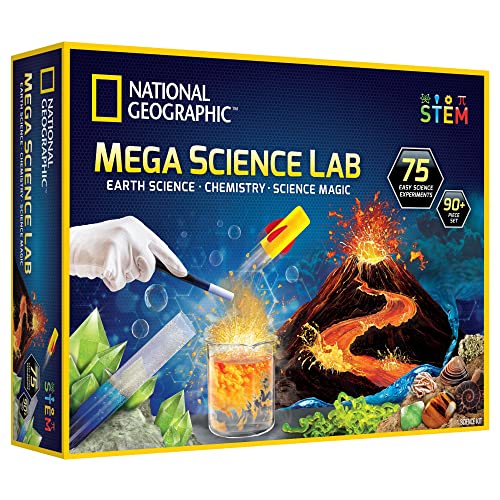
- 75 activities across three science themes
- Includes rocks, minerals, crystals, and a fossil
- Designed for ages 8–12
Best For: Curious kids who want varied STEM activities
Hands-On Physics Builder
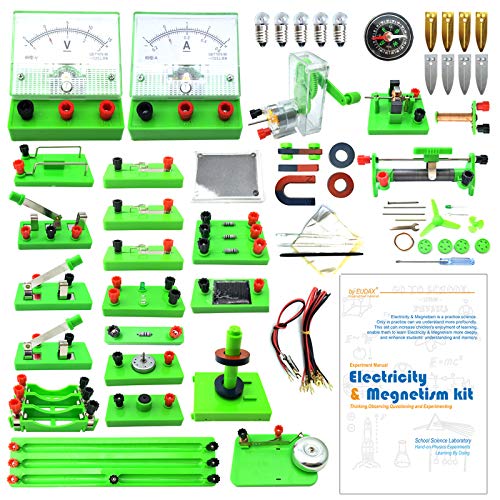
- Builds circuits, electromagnets, and generators
- Includes 79 listed items and a color manual
- Batteries are required but not included
Best For: Students exploring electricity and magnetism
Introductory Chemistry Starter

- Includes 28 guided chemistry experiments
- Covers acids, bases, gases, and invisible ink
- Includes basic lab tools and a 48-page guide
Best For: Beginning chemistry learners ages 10–15
Best Chemistry Starter
National Geographic Chemistry Set

- 45 hands-on chemistry experiments
- Includes volcano, geyser, and rocket activities
- Illustrated guide covers reactions and safety
Best For: Kids ages 8 and up beginning chemistry and STEM
Best Renewable Energy Lab
Thames & Kosmos Sustainable Energy Set

- 24 NGSS-aligned renewable-energy experiments
- Build solar, wind, and electric models
- Includes a voltage/current meter
Best For: Ages 8–14, classrooms, and sustainable-energy projects
Best Variety Pack
UNGLINGA 272-Experiment Science Kit

- Offers 272 guided STEM experiments
- Covers chemistry, physics, crystals, and optics
- Includes child-sized plastic lab equipment
Best For: Ages 8 and up seeking maximum activity variety
Best for Genetics

- Covers DNA, chromosomes, cells, and inheritance
- Includes tools for hands-on plant DNA activities
- Guides 20 experiments with a 48-page manual
Best For: Ages 10–16 seeking focused biology and genetics activities
Best Earth Science Variety

- Includes 15+ activities across Earth science topics
- Features volcanoes, crystals, tornadoes, and geologic digs
- Full-color guide explains the science behind experiments
Best For: Ages 8+ and groups wanting varied Earth science projects
Best for Experiment Variety
Ultimate Science Experiments Kit

- Offers 135+ experiments and bonus activities
- Includes child-friendly lab tools and experiment ingredients
- Step-by-step guides support parent-child activities
Best For: Ages 8+ seeking extensive, repeatable science exploration
Advanced Chemistry Lab – CHEM C3000
For shoppers seeking advanced science experiment sets, the Thames & Kosmos CHEM C3000 is the most comprehensive chemistry option here. It combines more than 333 experiments with authentic lab equipment, a broad chemical inventory, and a detailed 192-page manual covering inorganic, organic, and electrochemistry.
Best For: Students ages 12 and up, homeschoolers, and aspiring chemists who want a serious home chemistry laboratory with adult supervision.
Pros:
- Offers more than 333 experiments across 27 chapters.
- Includes realistic equipment such as beakers, an Erlenmeyer flask, an alcohol burner, electrodes, and safety goggles.
- Explains advanced topics including chemical equations, electrolysis, redox reactions, and organic chemistry.
- Includes safety, first-aid, labeling, and waste-disposal guidance.
Cons:
- Requires continuous adult supervision.
- Some experiments need additional common household materials.
- Its advanced scope may be more than younger or beginning learners need.
Among advanced science experiment sets, this is the strongest choice for depth and long-term study. Its extensive manual and authentic materials make it closer to a structured home laboratory than a basic novelty kit.
Three-in-One Explorer – Mega Science Lab
The National Geographic Mega Science Lab is a versatile pick among advanced science experiment sets for children ages 8 to 12. It brings together Earth science, chemistry, and science magic, with 45 hands-on activities in the kit and 30 additional ideas using common household items.
Best For: Kids who want variety across geology, chemistry, and entertaining science demonstrations rather than a single-subject laboratory.
Pros:
- Combines three science themes in one kit.
- Includes 75 total experiment ideas, including household-material activities.
- Features real rock, mineral, crystal, and fossil specimens.
- Offers engaging projects such as volcanoes, crystals, water tornadoes, bubbling reactions, and floating coins.
Cons:
- The experiments are broader and more introductory than a dedicated advanced chemistry or physics kit.
- Some bonus activities require household items.
- Its broad format may provide less depth in any one science subject.
This kit is a practical choice when variety and approachability matter most. It gives children multiple ways to explore STEM while keeping the activities accessible and visually engaging.
Hands-On Physics Builder – Electricity & Magnetism Lab
For learners focused on physics, this EUDAX kit is one of the more specialized advanced science experiment sets. It provides electricity and magnetism components, repair tools, storage, and a color manual for building circuits and investigating electromagnetism through practical projects.
Best For: Students in grades 9–11 or learners ages 8 to 18 who want hands-on practice with circuits, resistance, electromagnets, and generators.
Pros:
- Supports series and parallel circuits, fruit batteries, Ohm’s law, and electromagnet projects.
- Covers both electricity and magnetism with 79 listed items.
- Includes a color-page manual and storage bag.
- Encourages model building and exploratory STEM learning.
Cons:
- Three AA batteries are required but not included.
- It is concentrated on electricity and magnetism rather than covering multiple science disciplines.
- The broad recommended age range may require choosing projects carefully for younger users.
This is a good fit for buyers who want focused physics practice instead of a general science sampler. Its project list gives students a concrete route from simple circuits to electromagnetism and generator concepts.
Introductory Chemistry Starter – Chem C500
The Thames & Kosmos Chem C500 offers a gentler entry into advanced science experiment sets for learners who are not ready for a large laboratory kit. Its 28 guided experiments introduce acids and bases, visible reactions, invisible ink, and interactions between solids, liquids, and gases.
Best For: Beginners ages 10 to 15 who want a structured introduction to chemistry with familiar, visually engaging experiments.
Pros:
- Includes 28 classic chemistry experiments.
- Covers acids, bases, solids, liquids, gases, and invisible ink.
- Provides beakers, test tubes, chemicals, pipettes, and stoppers.
- The 48-page full-color guide explains both procedures and results.
Cons:
- Offers substantially fewer experiments and less depth than the CHEM C3000.
- Its introductory scope may not satisfy advanced chemistry students.
- The product details indicate a battery requirement without specifying the battery type.
Choose the Chem C500 when clear guidance and a manageable experiment count are more important than maximum breadth. It is a sensible stepping stone into chemistry before moving to a larger, more advanced set.
Best Chemistry Starter – National Geographic Chemistry Set
For families seeking advanced science experiment sets with a chemistry focus, this National Geographic kit offers 45 hands-on activities for children ages 8 and up. The illustrated guide introduces chemical reactions and basic lab safety through projects such as volcanoes, geysers, and rockets.
Best For: Kids ages 8 and up who want an engaging introduction to chemistry and STEM concepts.
Pros:
- Includes 45 experiments with fizzing, bubbling, and other hands-on reactions.
- Features volcano, geyser, and rocket activities.
- Uses illustrated, kid-friendly instructions with explanations of the reactions.
- Introduces the scientific process and safe experiment practices.
Cons:
- Its primary focus is chemistry rather than a broad range of science disciplines.
- The recommended age range begins at 8 years, so it may not suit younger children.
This is a practical choice for a budding scientist who wants structured chemistry activities and recognizable lab-style projects in one compact kit.
Best Renewable Energy Lab – Thames & Kosmos Sustainable Energy Set
Among advanced science experiment sets, this Thames & Kosmos lab stands out for its focused exploration of renewable energy. Children build and test models involving solar power, wind energy, generators, and electric vehicles while working through 24 NGSS-aligned experiments.
Best For: Kids ages 8–14, classrooms, and families exploring sustainable energy through project-based STEM activities.
Pros:
- Includes a solar panel, wind turbine parts, motor/generator, and voltage/current meter.
- Supports multiple builds, including a windmill, solar car, electric car, and LED buzzer.
- Modular parts can be swapped, combined, and reconfigured for experimentation.
- Offers 24 experiments aligned with several Next Generation Science Standards.
Cons:
- The kit’s subject matter is specialized around renewable energy rather than general science.
- Micro:bit compatibility requires the separately sold micro:bit.
- Some learners may need the included manual or additional classroom resources for guidance.
Choose this set when you want children to build working models and connect clean-energy concepts with measurable, curriculum-linked experiments.
Best Variety Pack – UNGLINGA 272-Experiment Science Kit
For shoppers comparing advanced science experiment sets by activity count, the UNGLINGA kit offers an unusually broad selection of 272 experiments for children ages 8 and up. It combines chemistry, physics, crystals, holographic projection, and visual activities with child-sized plastic lab tools.
Best For: Kids who want a large variety of guided STEM activities to share with family, friends, or classmates.
Pros:
- Provides 272 experiments covering chemistry, physics, crystals, and optical activities.
- Includes plastic test tubes, a measuring spoon, beaker, and conical flask.
- Features accessible projects such as volcanoes, crystal growing, and rainbow walking water.
- Clear illustrated instructions support independent or supervised exploration.
Cons:
- The extensive activity count may require adult help with setup and organization.
- The included lab tools are made from plastic.
- The kit is recommended for ages 8 and up, limiting use for younger children.
This kit is strongest when variety matters most, giving families many short projects to revisit during weekends, school breaks, or group activities.
Best for Genetics – Genetics & DNA Lab
For older children interested in biology, this advanced science experiment set offers a focused introduction to genetics and DNA. It combines hands-on activities—including isolating plant DNA and assembling a DNA model—with a 48-page manual covering 20 experiments.
Best For: Children ages 10–16 who want a deeper, biology-focused STEM activity.
Pros:
- Explores DNA, chromosomes, cells, and biological inheritance.
- Includes equipment such as test tubes, a funnel, pipette, petri dish, and DNA model.
- Full-color instructions guide children through 20 experiments.
Cons:
- Its genetics focus may be narrower than broad, multi-topic science kits.
- Recommended for ages 10 and up, so it is not aimed at younger children.
This is a strong choice when the goal is a structured introduction to molecular biology rather than a collection of unrelated demonstrations. The included lab-style components and detailed manual give the set an especially focused, classroom-inspired feel.
Best Earth Science Variety – Earth Science Kit
This advanced science experiment set is designed for children who enjoy visible, varied demonstrations. It includes more than 15 activities, from water tornadoes and an erupting volcano to crystal growing and geologic dig kits, with a full-color guide explaining the underlying Earth science.
Best For: Children ages 8 and up who want hands-on Earth science activities to share with siblings, friends, or classmates.
Pros:
- Offers a broad mix of volcano, crystal, rock, and water-based activities.
- Includes two geologic dig kits and a rock collection activity.
- Clear instructions and a detailed learning guide support independent exploration.
- Designed for group use, with multiple activities to share.
Cons:
- It contains more than 15 experiment activities, rather than the 100+ activities suggested by the product highlight.
- Its subject matter centers on Earth sciences rather than biology, chemistry, or physics.
Choose this kit for variety and visual appeal. It is particularly suitable for families or groups wanting several accessible projects, while the learning guide helps connect each activity to the science behind it.
Best for Experiment Variety – Ultimate Science Experiments Kit
Among these advanced science experiment sets, the Doctor Jupiter kit emphasizes quantity and repeatable, kid-friendly exploration. It combines more than 135 experiments with supplies such as food colors, glow powder, baking soda, citric acid, a measuring cylinder, and a conical flask, plus bonus activities using household items.
Best For: Children ages 8 and up who want a large menu of colorful, chemistry-inspired projects and extended activity time.
Pros:
- Provides more than 135 experiments across the main guide and bonus booklet.
- Includes lab-style tools such as a measuring cylinder, conical flask, test tube stand, and funnel.
- Step-by-step instructions and illustrations are designed for children and parents to follow together.
- Separate leak-proof bottles are intended to help reduce mess and support multiple uses.
Cons:
- Many activities use consumable ingredients, so some supplies may need replenishing.
- The kit is recommended for ages 8 and up and may require adult participation for some projects.
- Its broad experiment count may appeal more to variety seekers than children wanting one deep science topic.
This kit stands out for families prioritizing a long activity runway. The extensive experiment count, bonus household-item projects, and approachable instructions make it a practical option for repeated parent-child science sessions.
How We Picked These Advanced Science Experiment Sets
We focused on kits that offer more than a few demonstrations, looking for meaningful experiment variety, clear instructions, reusable equipment, and coverage of recognizable science topics. The selection includes broad activity kits as well as more focused sets for chemistry, electromagnetism, genetics, renewable energy, and earth science.
We also considered practical buying factors: stated age range, likely adult supervision, guide quality, included tools, consumable materials, and whether the kit supports repeated learning rather than one-time assembly. Product claims such as awards or experiment counts are useful reference points, but the best choice depends on the learner’s interests and experience.
Quick Comparison
- Best for broad exploration: National Geographic Mega Science Lab, UNGLINGA 272 Experiments Kit, or Doctor Jupiter Ultimate Science Experiments Kit.
- Best for chemistry progression: Thames & Kosmos Chem C3000 for greater depth, or Chem C500 for a more compact guided introduction.
- Best for earth and environmental topics: National Geographic Earth Science Kit or Thames & Kosmos Renewable Energy Lab.
- Best for specialized science: Thames & Kosmos Genetics & DNA Lab for biology and the EUDAX kit for electricity, circuits, and magnetism.
- Best for a chemistry-focused younger learner: National Geographic Chemistry Set with 45 experiments.
Key Buying Factors for Advanced Science Experiment Sets
Subject Depth and Experiment Quality
A high experiment count does not automatically mean advanced content. Check whether activities build concepts progressively, explain the science behind each result, and provide enough equipment to investigate variables. Focused kits can be more educational than large collections of unrelated activities when a child already has a strong interest.
Age, Supervision, and Safety
Match the kit to the learner’s reading ability and patience, not just the printed age range. Chemistry, heating, glassware, electrical connections, and biological materials may require close adult supervision. Read the safety guidance before opening the set, provide protective eyewear where appropriate, and verify that replacement consumables are available.
Instructions and Included Materials
Look for clearly sequenced procedures, explanations of expected results, troubleshooting help, and suggestions for follow-up investigations. Confirm whether common household supplies, batteries, water, or additional chemicals are required. A kit with fewer experiments may deliver better value if its components are durable and reusable.
Learning Environment and Storage
Consider where experiments will happen and how materials will be organized afterward. A dedicated tray, labeled containers, and a washable work surface can make regular use much easier. Classroom buyers should also check whether the quantity of equipment supports individual or small-group work.
Who Should Buy Which Advanced Science Experiment Sets?
Choose a broad lab such as the National Geographic Mega Science Lab, UNGLINGA kit, or Doctor Jupiter set when the learner wants to sample many branches of science. These are practical starting points for families seeking variety.
Choose Thames & Kosmos Chem C3000 when chemistry is the main priority and the learner is ready for a more substantial, structured setup. The Chem C500 is a better fit when you want guided chemistry activities in a smaller format. For targeted interests, select the EUDAX physics kit for circuits and magnetism, the Genetics & DNA Lab for biology, or the Renewable Energy Lab for sustainability and engineering themes.
The National Geographic Earth Science Kit suits learners drawn to rocks, geology, weather, and planetary topics, while its Chemistry Set offers a narrower chemistry path for ages 8–12. Before purchasing, compare the required supervision, available workspace, replacement supplies, and the learner’s preferred subject—not just the number printed on the box.