The best beginner science experiment sets turn curiosity into hands-on learning with activities children can perform, observe, and explain. This roundup compares 10 popular kits across chemistry, physics, biology, and science-themed play.
Whether you are shopping for a first preschool-friendly kit or a more substantial lab set for ages 8 to 12, use the guide below to match experiment variety, supervision needs, and educational value to the child.
Best 10 Beginner Science Experiment Sets Picks for 2026
Best Magic-Themed Pick
National Geographic Science Magic Kit

- 20 included magic experiments
- 85-plus bonus activities
- Ages 8 and up; no batteries
Best For: Kids who like magic tricks and hands-on STEM learning
Best Variety Pack
UNGLINGA 150-Experiment Science Kit

- 150 activities across several science topics
- Illustrated step-by-step manual
- Tools, materials, and goggles included
Best For: Families planning repeated at-home science sessions
Best Chemistry Focus
National Geographic Amazing Chemistry Set

- Materials for 15 chemistry experiments
- 85 bonus household-item activities
- Includes test tubes, beakers, and pipettes
Best For: Children interested in reactions, crystals, and lab tools
Best for Younger Beginners

- 80 guided laboratory experiments
- Includes goggles, gloves, and lab tools
- Activities progress from simple to challenging
Best For: Young beginners who enjoy scientist role play
Best Introductory Chemistry Set
National Geographic Junior Chemistry

- 50 guided experiments for ages 4+
- 20+ child-safe lab tools included
- Illustrated instructions for beginners
Best For: Young children starting hands-on chemistry
Best Variety for Screen-Free Learning
Doctor Jupiter My First Science Experiments

- 50+ activities for extended play
- Playful projects like oobleck and volcanoes
- Illustrated instructions and supplies included
Best For: Ages 4–8 wanting varied STEM activities
Best for Older Kids
National Geographic Chemistry Set

- 45 chemistry experiments for ages 8+
- Includes volcano, geyser, and rocket activities
- Explains reactions and safe experiment practices
Best For: Older beginners ready for structured chemistry
Most Comprehensive Pick
Doctor Jupiter Ultimate Science Experiments Kit

- More than 135 experiments, plus 90+ bonus activities
- Illustrated instructions for beginner-friendly use
- Includes tools and separately bottled ingredients
Best For: Kids wanting the widest variety of beginner experiments
Best Three-in-One Set
National Geographic Mega Science Lab
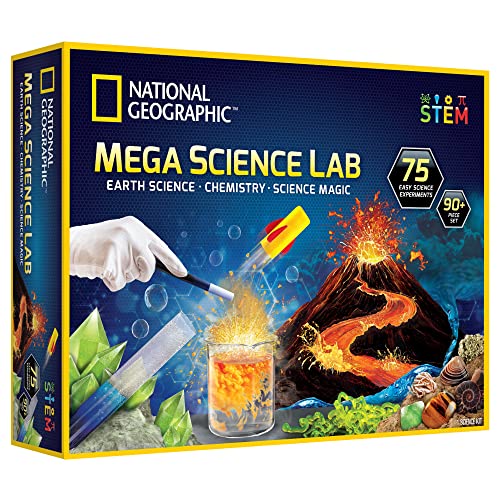
- Covers Earth science, chemistry, and science magic
- Includes 75 total experiments
- Adds fossil, rock, mineral, and crystal specimens
Best For: Kids who want variety across multiple science topics
Best Themed Starter
National Geographic Gross Science Kit

- Includes 45 gross-themed experiments
- Illustrated instructions explain the science
- Covers polymers, reactions, and pH concepts
Best For: Kids motivated by playful and gross-out science activities
Best Magic-Themed Pick – National Geographic Science Magic Kit
For families looking for beginner science experiment sets with an entertaining twist, this National Geographic kit combines 20 included magic experiments with a bonus guide featuring more than 85 additional activities. It is designed for children ages 8 and up and requires no batteries.
Best For: Kids who enjoy magic tricks alongside hands-on STEM activities and chemistry-based experiments.
Pros:
- Includes materials for 20 magic experiments.
- Bonus booklet adds 85-plus experiments using the included guide.
- Supports hands-on STEM learning without batteries.
Cons:
- The magic theme may be less suitable for children seeking a focused chemistry lab.
- Additional activities may require household materials.
This is a strong choice when presentation and entertainment matter as much as science practice. Its age recommendation and activity mix make it especially approachable for children starting with structured experiments.
Best Variety Pack – UNGLINGA 150-Experiment Science Kit
This UNGLINGA set is one of the more expansive beginner science experiment sets, offering 150 activities across chemistry, physics, earth science, and surface tension. A step-by-step illustrated manual helps children ages 8 and up work through the projects.
Best For: Families wanting a broad selection of experiments for weekends, school breaks, and extended at-home science time.
Pros:
- Offers 150 experiments covering multiple science topics.
- Includes kid-friendly tools, materials, and goggles.
- Illustrated instructions are organized in a step-by-step format.
Cons:
- Some projects require regular household items.
- The large activity count may require adult help with setup and organization.
Its main advantage is variety: children can move from volcanoes and crystals to physics activities without quickly exhausting the kit. It is a practical option for families planning repeated science sessions.
Best Chemistry Focus – National Geographic Amazing Chemistry Set
For children who want a more focused introduction to chemistry, this National Geographic set includes materials for 15 experiments and a guide with 85 additional activities using common household items. Projects include crystal growing, color-changing solutions, glowing test tubes, and other hands-on reactions.
Best For: Kids ages 8 and up who are especially interested in chemical reactions, crystals, and laboratory-style tools.
Pros:
- Includes materials for 15 chemistry experiments.
- Bonus guide provides 85 additional household-item activities.
- Uses tools such as test tubes, beakers, and pipettes.
Cons:
- The included materials cover 15 experiments, while the bonus activities use common household items.
- Its chemistry focus may be narrower than a general science kit.
This set is a good match for beginners who are drawn to visible reactions and lab equipment. The combination of ready-to-run projects and extra guide activities can extend its use beyond the initial experiments.
Best for Younger Beginners – 80-Experiment Science Lab Kit
This science lab kit offers 80 guided experiments, including rainbow rain, volcanoes, fountains, and balloon activities. Its supplies include goggles, gloves, test tubes, droppers, measuring tools, and chemical materials, while guidance cards explain the steps and scientific principles.
Best For: Children ages 6 and up who want scientist role play with a progression from simpler activities to more challenging projects.
Pros:
- Provides 80 experiments with guidance cards.
- Includes goggles, gloves, test tubes, petri dishes, droppers, and measuring tools.
- Activities are described as progressing from simple to challenging.
Cons:
- The product notes list a broad recommended age range, so adult supervision may be useful for younger children.
- Some projects use chemical materials and multiple small components.
The extensive accessory list makes this a convincing choice for role-play and hands-on exploration. Its guided progression can help beginners build confidence while giving families many activities to revisit.
Best Introductory Chemistry Set – National Geographic Junior Chemistry
The National Geographic Junior Chemistry Set is a strong starting point for families looking for beginner science experiment sets for children ages 4 and up. It combines 50 hands-on activities with more than 20 child-safe lab tools, while illustrated directions help young learners work through experiments using familiar items such as baking soda and vinegar.
Best For: Young beginners who want an early-learning chemistry kit with plenty of guided activities and lab-style tools.
Pros:
- Includes 50 hands-on chemistry experiments.
- Comes with 20+ durable, child-safe lab tools, including test tubes and goggles.
- Illustrated, step-by-step instructions are designed for young scientists.
- Requires no batteries and can use common household items.
Cons:
- Some activities depend on household ingredients beyond the included tools.
- The chemistry focus and age range may feel basic to older children.
With its broad activity count and approachable instructions, this set offers a practical way to introduce chemistry concepts without overwhelming younger children. It is especially appealing when hands-on structure and recognizable materials matter most.
Best Variety for Screen-Free Learning – Doctor Jupiter My First Science Experiments
Doctor Jupiter My First Science Experiments Kit stands out among beginner science experiment sets for its mix of more than 50 activities and playful themes. Designed for children ages 4–8, it supports guided exploration with illustrated instructions and included materials for projects such as oobleck, volcanoes, dinosaur squishies, perfumes, and face masks.
Best For: Families seeking extended, screen-free STEM play with varied experiments for children ages 4–8.
Pros:
- Offers 50+ experiments for multiple sessions of hands-on play.
- Includes engaging activities such as oobleck, volcanoes, and dinosaur squishies.
- Provides a range of tools, colors, ingredients, and food essences.
- Step-by-step illustrated instructions support children and adults.
Cons:
- Some listed experiments require adult guidance and preparation.
- Included ingredients and materials are finite and may not cover every repeat activity.
This kit is a good choice when variety is more important than a narrowly focused chemistry curriculum. Its playful projects can keep younger children engaged while encouraging observation, problem solving, and exploratory STEM skills.
Best for Older Kids – National Geographic Chemistry Set
The National Geographic Chemistry Set is a more advanced pick among beginner science experiment sets, recommended for children ages 8 and up. Its 45 activities introduce chemical reactions and the scientific process through projects such as volcanoes, geysers, rockets, and other fizzy or bubbly experiments.
Best For: Older children ready for more structured chemistry activities and an introduction to safe laboratory practice.
Pros:
- Includes 45 chemistry experiments with varied reaction-based projects.
- Features memorable activities such as a volcano, geyser, and rocket.
- Illustrated instructions explain each step and provide reaction insights.
- Introduces scientific-process fundamentals and safe experiment practices.
Cons:
- Recommended for ages 8 and up, so it may be unsuitable for preschoolers.
- The notes indicate that some experiments require materials or preparation beyond the kit.
Compared with the junior sets, this kit is better suited to children who can follow more involved directions and engage with basic chemistry explanations. It offers a useful bridge from simple demonstrations toward more intentional STEM learning.
Most Comprehensive Pick – Doctor Jupiter Ultimate Science Experiments Kit
For families seeking beginner science experiment sets with plenty of variety, the Doctor Jupiter Ultimate Science Kit offers more than 135 experiments for children ages 8 and up. The illustrated, step-by-step guide and included tools make it approachable for first-time experimenters, while the bonus booklet adds even more activities using household items.
Best For: Kids who want a broad mix of color, glow, chemistry, and volcano-themed experiments, with opportunities for parent-child participation.
Pros:
- Includes more than 135 experiments, including 90+ bonus activities using household items.
- Clear instructions and illustrations support beginner-friendly use.
- Includes practical tools such as a measuring cylinder, conical flask, test tube stand, funnel, and tray.
- Separate leak-proof ingredient bottles are designed to help reduce mess and allow repeat use.
Cons:
- Recommended for children ages 8 and up, so it is not intended for younger children.
- The large number of activities may require adult help with setup and supervision.
Choose this kit when experiment count and variety are your top priorities. Its structured instructions and included equipment make it a strong starting point for children who are new to hands-on STEM activities.
Best Three-in-One Set – National Geographic Mega Science Lab
The National Geographic Mega Science Lab is one of the more varied beginner science experiment sets for kids ages 8 to 12, combining Earth science, chemistry, and science magic. It includes 45 core experiments plus 30 additional household-item activities, giving children several ways to explore hands-on STEM concepts.
Best For: Children who enjoy switching between volcanoes, crystals, fossils, chemical reactions, and science-based magic tricks.
Pros:
- Combines three themes: Earth science, chemistry, and science magic.
- Includes 45 kit-based experiments and 30 bonus household-item activities.
- Features a real fossil and rock, mineral, and crystal specimens for collection.
- Explores engaging activities such as water tornadoes, glow-in-the-dark crystals, bubbling reactions, and color-changing water.
Cons:
- Recommended for children ages 8 and up rather than younger beginners.
- Some bonus experiments require common household items not included in the kit.
- The broad three-theme format may be less focused than a kit centered on one subject.
This is a practical choice for families who want one kit covering several branches of science. The mix of specimens, chemistry activities, and magic-style demonstrations can help maintain interest across repeated sessions.
Best Themed Starter – National Geographic Gross Science Kit
For children who learn best through playful themes, the National Geographic Gross Science Kit makes beginner science experiment sets especially engaging. Designed for ages 8 and up, it includes 15 supplied-material experiments and 30 additional activities using household products, with topics such as polymers, chemical reactions, and pH science.
Best For: Kids drawn to unusual, messy, or gross-out activities such as glowing worms, slime making, boiling boogers, and a test-tube vomit experiment.
Pros:
- Offers 45 gross science experiments in total, including 15 with included materials.
- Illustrated, kid-friendly instructions explain each step and the science behind it.
- Introduces STEM concepts including polymers, chemical reactions, and pH science.
- Bonus booklet uses common household products for additional experiments.
Cons:
- The gross-themed activities may not appeal to every child.
- Thirty experiments require household products beyond the included kit components.
- It is recommended for ages 8 and up.
This kit is a good fit when enthusiasm matters as much as subject coverage. Its deliberately gross theme can make introductory chemistry and STEM ideas memorable, especially for children who enjoy slime and unusual demonstrations.
How We Picked These Beginner Science Experiment Sets
We focused on kits that offer approachable, hands-on activities for children who are new to structured experiments. Our comparison considers the recommended age, number and variety of activities, clarity of instructions, included materials, opportunities for repeat use, and how well each kit supports observation and basic scientific reasoning.
Experiment counts can be marketed differently: some kits list every variation as a separate activity, while others describe a smaller number of broader projects. Treat the advertised count as a guide, then check the included components and experiment manual before buying.
Quick Comparison
- For younger beginners: Doctor Jupiter My First Science Experiments Kit is designed for ages 4 and up and emphasizes simple, guided activities.
- For broad variety: The UNGLINGA 150 Experiments kit and National Geographic Science Magic Kit offer large activity counts and varied formats.
- For chemistry-focused learning: National Geographic Amazing Chemistry Set, Junior Chemistry Set, and Chemistry Set concentrate on reactions and laboratory-style activities.
- For advanced variety: Doctor Jupiter Ultimate Science Experiments Kit and National Geographic Mega Science Lab are aimed at older children ready for more projects.
- For themed play: Science role-play and Gross Science kits may appeal to children who learn best through imaginative or novelty-based activities.
Key Buying Factors for Beginner Science Experiment Sets
Age and Supervision
Choose the kit’s stated age range as a starting point, not a guarantee of independent use. Younger children generally need an adult to measure materials, explain results, and manage cleanup. Older children may work more independently, but adult supervision remains important for any activity involving powders, liquids, heat, or small parts.
Experiment Type and Learning Goals
Chemistry kits are a good fit for children fascinated by color changes, reactions, and mixtures. Broader science labs can introduce physics, biology, magnetism, geology, and observation skills. If the child is easily discouraged, prioritize clear demonstrations and short activities over the largest possible experiment count.
Included Materials and Replenishment
Check whether the kit includes most specialty materials or mainly provides tools and instructions. Everyday household supplies may still be required. Also consider whether consumable ingredients can be replaced easily, since repeat use adds value and helps children learn through comparison.
Instructions, Safety, and Cleanup
Look for illustrated, step-by-step directions, safety guidance, and a practical storage solution. A kit that is exciting but difficult to reset may be used less often. Use protective eyewear where recommended, keep experiments away from food-preparation areas, and follow the manufacturer’s instructions.
Who Should Buy Which Beginner Science Experiment Sets?
Buy a first-experiment kit for a preschooler who needs simple demonstrations and close adult participation. Choose a chemistry-centered set for an elementary-age child specifically interested in reactions and laboratory tools. Select a larger 75-, 100-, or 150-experiment kit for families that want more variety and expect frequent use. A themed science-magic or gross-science kit is best when entertainment and engagement are the main priorities, while a broader science lab is more suitable for balanced STEM exploration.