A capable guide camera can make planetary viewing and entry-level astrophotography more convenient without pushing your setup beyond a modest budget. The best telescope guide cameras under $100 balance sensor quality, connection options, compatibility, and ease of use.
This roundup compares 10 affordable electronic eyepiece cameras, including USB, Wi-Fi, high-resolution, and screen-equipped models, so you can choose the right fit for your telescope and observing style.
Best 10 Telescope Guide Cameras Under 100 Picks for 2026
Beginner Planetary Pick
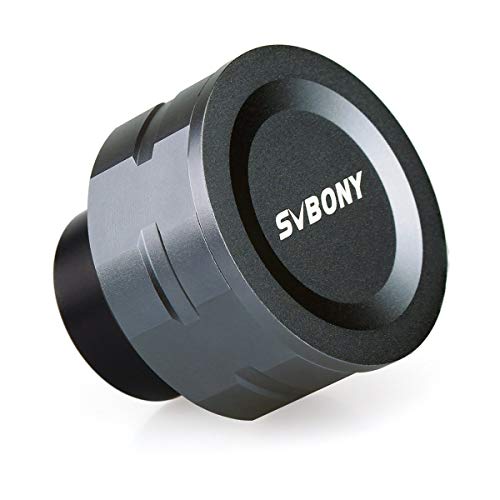
- 1/2.8-inch IMX307 color sensor
- 1080p video up to 30fps
- 1.25-inch plug-and-play design
Best For: Beginners capturing the Moon and bright planets
Higher-Resolution Choice

- 7.05MP IMX415 color sensor
- 2K video at up to 30fps
- Includes USB 3.0 cable and accessories
Best For: Lunar and planetary imaging with extra resolution
Flexible Beginner Setup

- 2MP 1080p video at 30fps
- Removable UV/IR cut filter
- UVC and optional ASCOM support
Best For: Beginners, classrooms, and basic EAA
Wireless Viewing Pick

- 1.5-inch IPS viewing screen
- 1080p video and 2MP photos
- 64GB storage with WiFi control
Best For: Remote observing, sharing, and multi-device use
Best 4K Lunar Camera

- 8MP sensor with up to 4K video
- 1.25-inch fit with removable IR-cut filter
- UVC viewing plus optional Windows ASCOM support
Best For: Computer-based lunar and planetary imaging
Best Portable Phone Camera

- 16MP photos and 1080p video
- App-based smartphone connection and sharing
- 1000mAh battery supports up to 150 minutes
Best For: Portable phone-based telescope photography
Best Simple USB Eyepiece
2MP Electronic Telescope Camera

- 2MP digital imaging element
- USB live viewing and recording
- Standard 1.25-inch fit with metal body
Best For: Beginner group observing and screen sharing
Versatile Wi-Fi Pick

- 4MP sensor with 1080p-class video recording
- Works with 28mm–50mm optical devices
- Wi-Fi phone viewing and USB-C charging
Best For: Flexible telescope, monocular, and microscope use
Portable 4K-Ready Option
Andoer Wi-Fi Electronic Eyepiece
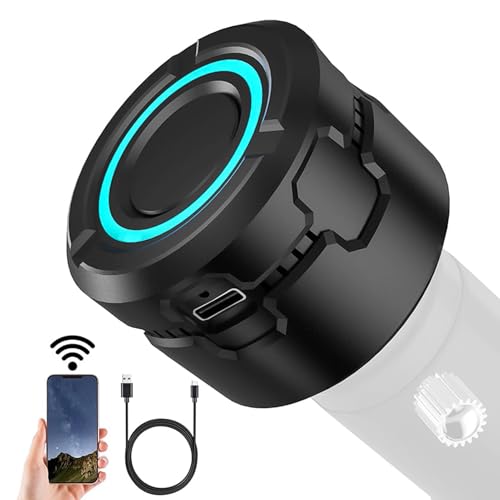
- Designed for 1.25-inch telescopes
- Wireless phone and tablet viewing
- Compact body with 1600mAh rechargeable battery
Best For: Travel-friendly beginner astrophotography
Beginner Planetary Pick – SVBONY SV105
If you are comparing telescope guide cameras under 100 for straightforward lunar and planetary imaging, the SVBONY SV105 is a practical entry point. Its 1/2.8-inch IMX307 color sensor records up to 30 frames per second at 1920×1080, while the standard 1.25-inch barrel connects directly to many telescopes.
Best For: Beginners who want to view and record the Moon, bright planets, and terrestrial targets on a computer.
Pros:
- Plug-and-play operation with Windows, Linux, Android, and compatible macOS laptops.
- Records 1080p video at up to 30fps.
- Standard 1.25-inch format with an M28.5×0.6 filter thread.
- Dark-light compensation helps improve clarity in low-light viewing.
Cons:
- Designed primarily for lunar and planetary imaging rather than deep-sky astrophotography.
- Requires separate capture software depending on the operating system.
- Not compatible with Apple phones or tablets.
The SV105 keeps the setup simple and approachable, making it a sensible choice for first-time planetary imaging and live telescope viewing.
Higher-Resolution Choice – SVBONY SV205
Among telescope guide cameras under 100, the SVBONY SV205 stands out for its higher-resolution 7.05MP IMX415 color sensor. It supports 2K video at up to 30fps in MJPG mode and can connect to a standard 1.25-inch telescope interface for lunar and planetary recording.
Best For: Users who want more resolution for lunar and planetary video while retaining a compact USB setup.
Pros:
- 7.05MP IMX415 color sensor provides a higher-resolution option.
- Supports 1920×1080 video at up to 30fps in MJPG format.
- Can capture up to 3264×2160 at 15fps in YUV mode.
- Includes a USB 3.0 cable, dust cover, and cleaning cloth.
Cons:
- Uses a 1.25-inch interface, so telescope compatibility should be checked first.
- Primarily suited to lunar and planetary imaging, not broad deep-sky work.
- Apple laptop use requires Astroamx Capture, and iPhones and iPads are unsupported.
The SV205 is a strong fit when resolution matters more than the simplest specification, offering flexible video modes for computer-based planetary imaging.
Flexible Beginner Setup – FIBONAX Nova200
The FIBONAX Nova200 is a useful option when shopping for telescope guide cameras under 100 with beginner-friendly software support. Its 2MP CMOS sensor records 1080p video at 30fps, and its UVC plug-and-play connection works with compatible Windows, macOS, and Linux systems.
Best For: Beginners, STEM demonstrations, and observers who want a removable filter and an optional ASCOM workflow.
Pros:
- Records 1920×1080 video at up to 30fps.
- UVC plug-and-play compatibility supports live viewing on major computer platforms.
- Includes a removable UV/IR cut filter for more flexible imaging.
- Optional Windows ASCOM driver supports compatible astronomy software.
Cons:
- Uses manual focus, so focusing remains a hands-on process.
- Its 2MP sensor offers less resolution than higher-megapixel alternatives.
- Designed mainly for lunar, planetary, and basic EAA use.
With its removable filter, lightweight aluminum body, and optional ASCOM upgrade path, the Nova200 offers a balanced starting point for learning digital astronomy.
Wireless Viewing Pick – Telonixium WiFi Eyepiece
For shoppers comparing telescope guide cameras under 100 who prioritize wireless viewing, this Telonixium electronic eyepiece combines a 1.5-inch IPS screen, WiFi control, and built-in storage. It fits optical devices with mounting sizes from 28mm to 50mm and records 1080p video or 2MP photos.
Best For: Remote observing, beginner astrophotography, bird watching, and sharing views without staying beside a computer.
Pros:
- Built-in 1.5-inch IPS screen provides direct image viewing.
- WiFi supports remote observation with up to two connected devices within a stated 49-foot range.
- Includes 64GB storage and supports cards up to 256GB.
- 1000mAh battery provides up to three hours of recording and can recharge by USB.
Cons:
- Its mounting system is different from a standard 1.25-inch telescope camera barrel.
- Manual focus requires user adjustment.
- Image specifications are limited to 1080p video and 2MP photos.
The Telonixium is less traditional than a USB astronomy camera, but its screen, battery, storage, and WiFi make it convenient for shared and remote observing across several optical devices.
Best 4K Lunar Camera – FIBONAX NOVA8M
For shoppers comparing telescope guide cameras under 100, the FIBONAX NOVA8M stands out with an 8MP sensor, up to 4K video, and a standard 1.25-inch telescope connection. It is designed for computer-based lunar and planetary imaging, with manual focusing handled through the telescope.
Best For: Beginners who want detailed Moon and bright-planet video on a Windows, macOS, or Linux computer.
Pros:
- 8MP sensor supports up to 4K video and high-frame-rate 1080p capture.
- UVC plug-and-play viewing works with compatible computer capture software.
- Includes a removable IR-cut filter and optional ASCOM support for Windows.
- Lightweight CNC aluminum body weighs approximately 110g.
Cons:
- Requires manual focusing through the telescope; it does not autofocus.
- Primarily intended for lunar and planetary imaging rather than long-exposure deep-sky photography.
- A telescope’s available focuser travel must be sufficient to achieve focus.
The NOVA8M is a practical choice when resolution and computer compatibility matter most. Its 1.25-inch fit is convenient, but buyers should confirm their telescope can reach focus before ordering.
Best Portable Phone Camera – ASHATA 1080P Eyepiece
Among telescope guide cameras under 100, this ASHATA electronic eyepiece emphasizes portability and smartphone use. It records 1080p video, captures 16MP photos, and includes a built-in battery for observing away from a computer.
Best For: Travelers and casual observers who want a compact camera for compatible 28mm-to-48mm telescopes and phone-based sharing.
Pros:
- Captures 16MP photos and 1080p video.
- Connects to a smartphone through its app for viewing, control, and sharing.
- Built-in 1000mAh battery provides up to 150 minutes of continuous shooting.
- Compact 0.2-pound design is easy to carry in a pocket or bag.
Cons:
- Designed for telescopes with approximately 28mm to 48mm optical compatibility, so fit should be checked carefully.
- Requires app connectivity and Internet permissions for smartphone use.
- Manual focus is required.
This camera makes sense for mobile observing and quick social sharing rather than a computer-centered setup. Its rechargeable battery is useful in the field, while the telescope compatibility range deserves attention before purchase.
Best Simple USB Eyepiece – 2MP Electronic Telescope Camera
For beginners comparing telescope guide cameras under 100, this 2MP electronic eyepiece offers a straightforward USB viewing setup. Its standard 1.25-inch format replaces a conventional eyepiece and supports live viewing on compatible computers, tablets, and Android phones.
Best For: Group observing, introductory astronomy, and users who want to display telescope views on a larger screen.
Pros:
- 2MP photosensitive element provides full-frame digital images.
- USB connection supports real-time viewing and recording.
- Standard 1.25-inch design fits many astronomical telescopes.
- Compact metal body weighs approximately 100g.
Cons:
- Its 2MP resolution is lower than the other cameras in this selection.
- The supplied notes do not specify operating software or a battery.
- Compatibility with phones and tablets may depend on the device and connection setup.
This is a sensible entry-level option for sharing live telescope views without looking through the eyepiece directly. Choose it for simple digital observing, but consider a higher-resolution model if detailed planetary imaging is the priority.
Versatile Wi-Fi Pick – VBESTLIFE 4MP Eyepiece Camera
For shoppers comparing telescope guide cameras under 100, this VBESTLIFE eyepiece stands out for its 4MP sensor, broad 28mm–50mm compatibility, and phone-friendly Wi-Fi viewing. It records 2304×1728 video at 30fps and supports photo capture for astronomy, wildlife, and microscopy.
Best For: Beginners who want flexible telescope compatibility and wireless viewing on a smartphone or tablet.
Pros:
- 4MP sensor with 2304×1728 video at 30fps
- Fits telescopes, monoculars, and microscopes from 28mm to 50mm
- Built-in Wi-Fi enables real-time viewing and recording
- USB-C charging and up to two hours of video recording
Cons:
- Memory card is not included
- Fixed-focus design may limit focusing flexibility
- Wi-Fi setup requires allowing local-network access in the app
Its wide device compatibility and higher-resolution sensor make it a practical all-purpose option, while the included 800mAh battery is better suited to shorter observing sessions.
Extended-Use Guide Camera – NEEWER LS-T22 1.25-Inch Eyepiece
Among telescope guide cameras under 100, the NEEWER LS-T22 is a focused 1.25-inch option with a 2MP sensor, 1080p video at up to 60fps, and app-based controls. Its integrated Wi-Fi hotspot supports live viewing, while the large battery is designed for longer recording sessions.
Best For: Telescope users who prioritize longer battery life, time-lapse recording, and adjustable image settings.
Pros:
- 1.25-inch telescope compatibility
- 1080p video at up to 60fps and time-lapse mode
- App controls include exposure, ISO, zoom, white balance, and contrast
- 1900mAh battery provides up to four hours of recording
Cons:
- Requires a telescope or spotting scope to form an image
- TF card is required and sold separately
- Phone internet access is unavailable while connected to the eyepiece hotspot
The LS-T22 is a strong choice for extended sessions and hands-on image adjustment, provided your telescope uses a 1.25-inch setup and you have separate TF-card storage.
Portable 4K-Ready Option – Andoer Wi-Fi Electronic Eyepiece
For buyers seeking telescope guide cameras under 100, the Andoer Wi-Fi electronic eyepiece offers a straightforward 1.25-inch design with wireless phone or tablet viewing and 4K video recording support. Its compact body and rechargeable battery make it convenient for travel and outdoor observing.
Best For: Beginners and travelers who want a lightweight wireless camera for a 1.25-inch telescope.
Pros:
- Compatible with 1.25-inch telescope barrels
- Connects directly to a smartphone or tablet over Wi-Fi
- Supports real-time viewing, image capture, and video recording
- 1600mAh battery and included Type-C charging cable
Cons:
- Supplied notes do not specify sensor resolution or recording frame rate
- Requires a compatible 1.25-inch telescope
- Image and video storage details are not specified
The Andoer keeps the setup simple and portable, making it appealing for casual astrophotography and bird watching when your telescope already uses a 1.25-inch eyepiece format.
How We Picked the Best Telescope Guide Cameras Under 100
We focused on the features that matter most at this price: sensor resolution, video output, connection method, eyepiece size, software or app access, and stated telescope compatibility. The selection includes 1.25-inch USB cameras, wireless electronic eyepieces, and models with integrated screens or recording functions.
Because specifications and included accessories can vary by seller, check the current listing for operating-system support, cable type, app compatibility, and whether adapters are included. Resolution alone does not determine image quality; sensor performance, exposure control, lighting conditions, and telescope optics also play important roles.
Quick Comparison
| Feature | What to look for | Best suited to |
|---|---|---|
| USB connection | Direct computer control and broad software compatibility | Guiding, recording, and desktop astrophotography |
| Wi-Fi connection | Wireless viewing through a phone or tablet | Casual observing and shared viewing |
| Integrated screen | Standalone viewing without a separate device | Portable, family-friendly observing |
| Higher resolution | More detail when optics and conditions support it | Planetary imaging and cropping |
Key Buying Factors for Telescope Guide Cameras Under 100
Sensor and Resolution
Look beyond the advertised megapixel count. A camera with a well-supported CMOS sensor and adjustable exposure can be more useful than a higher-resolution model with limited controls. For planets, frame rate and exposure flexibility are often more valuable than maximum still-image resolution.
Connection and Control
USB models are generally the safer choice for computer-based guiding and capture workflows. Wi-Fi models are more convenient for viewing from a mobile device, but they may depend on a dedicated app and can introduce connection or compatibility limitations. Confirm whether the camera records directly, streams only, or requires third-party software.
Fit and Compatibility
Most products here use a 1.25-inch telescope barrel, while some listings describe compatibility with a range of telescope or microscope openings. Measure your focuser, diagonal, or adapter before ordering. Also verify clearance, cable access, and whether your telescope can reach focus with the camera installed.
Use Case and Accessories
Consider the included USB cable, adapters, software, protective cap, and mounting hardware. A camera intended for guiding may not offer the same convenience as an electronic eyepiece designed for live viewing. For outdoor use, prioritize simple controls and reliable power over headline specifications.
Who Should Buy Which Telescope Guide Cameras Under 100?
- Choose a USB camera if you plan to connect a laptop, use astronomy software, or experiment with guiding and image capture.
- Choose a Wi-Fi eyepiece if you want to view the telescope feed on a phone or tablet and avoid a long cable.
- Choose a screen-equipped model for quick standalone observing, outreach, or family use.
- Choose a higher-resolution camera if your telescope, mount, and atmospheric conditions can support detailed planetary imaging.
- Choose a simpler 2MP or 1080p model if affordability, ease of setup, and live viewing matter more than maximum detail.
Before buying, match the camera’s barrel size and connection method to your equipment, then prioritize the controls and workflow you will actually use. That approach usually produces better results than choosing solely by resolution.