Bringing the night sky indoors can make astronomy lessons more visual, memorable, and accessible. The best classroom-friendly planetarium projectors help students explore stars, constellations, planets, and space concepts without requiring a dedicated dome.
This roundup includes educational astronomy kits alongside versatile star projectors, so teachers can match projection detail, lesson support, room size, and budget to their learning goals.
Best 10 Planetarium Projectors for Classrooms Picks for 2026
Versatile Classroom Explorer
Smithsonian Dual Projector Science Kit
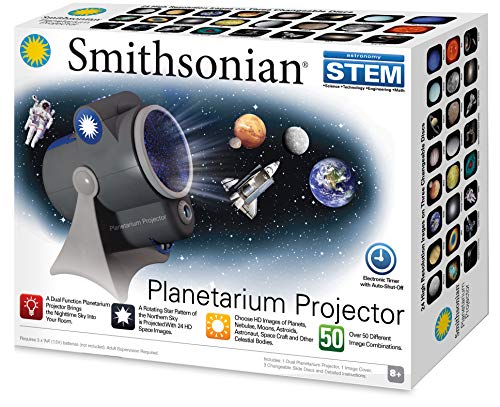
- Rotating Northern Sky star pattern
- 24 HD images with 50+ combinations
- Nightlight and auto-shutoff functions
Best For: Elementary and middle-school STEM lessons
Wide-View Star Study
Brainstorm Toys Night Sky Projector

- Projects images up to 12 feet wide
- Includes four space-themed discs
- Shows more than 20,000 stars
Best For: Small-group astronomy demonstrations
Hemisphere Learning Pick
T&K Essential STEM Planetarium

- Maps Northern and Southern Hemispheres
- Dual projection with JWST images
- 15-, 30-, and 60-minute timers
Best For: Structured constellation and STEM lessons
Large-Scene Space Showcase
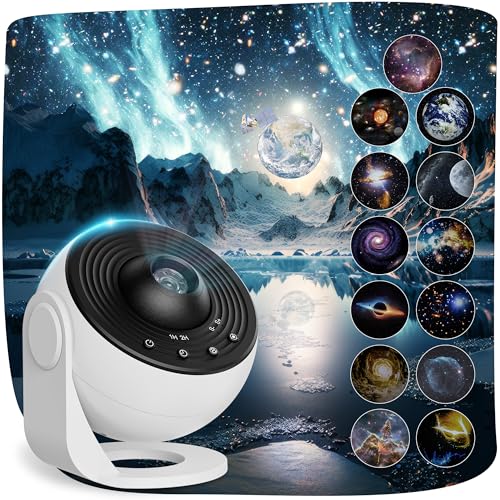
- Includes 13 astronomy projection discs
- Covers areas up to 754 square feet
- Focus, rotation, and timer controls
Best For: Large visual displays and astronomy events
Classroom Discovery Pick
LEXiBOOK NLJ180 Planetarium Projector
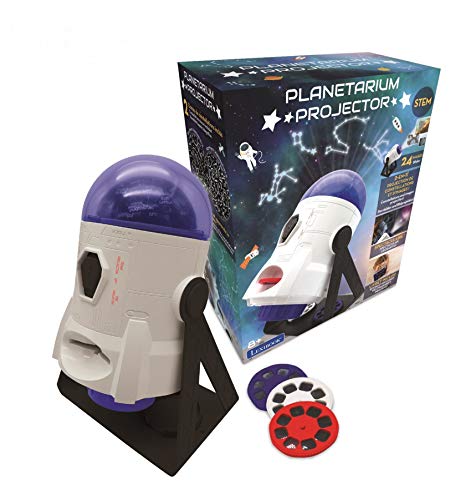
- Motorized 360-degree constellation projection
- Two constellation domes and three image discs
- Includes map, booklet, and focusing ring
Best For: Structured STEM lessons about constellations and space exploration
Wide-Projection Visual Pick
13-in-1 Galaxy Planetarium Projector

- Thirteen HD galaxy and space discs
- Projects up to 754 square feet
- USB-C powered with focus and timer controls
Best For: Large, darkened rooms needing varied space visuals
Simple Controls Pick
Compact 13-Disc Galaxy Projector

- Thirteen interchangeable space film discs
- Simple three-button operation
- Compact design with adjustable focus
Best For: Small-group demonstrations and easy classroom setup
Classroom Content Plus
25-in-1 Planetarium Projector Pro

- 25 projection discs with space and nature scenes
- Stated 4K HD maximum display resolution
- Flexible stand and one- or two-hour timer
Best For: Multi-topic science lessons and enrichment presentations
Brightened Cosmic Lessons
13-in-1 FlyLily Planetarium Projector

- Advertises twice the prior brightness
- 13 discs include galaxy introductions
- Two rotation speeds and multiple timer options
Best For: Vivid astronomy presentations on classroom walls or ceilings
Versatile Classroom Explorer – Smithsonian Dual Projector Science Kit
Smithsonian Optics Room Planetarium and Dual Projector Science Kit, Black/Blue, Age 8 and Up
Check Price On AmazonFor classrooms seeking planetarium projectors for classrooms, this Smithsonian kit combines a rotating Northern Sky star pattern with interchangeable space-image slides. Its dual-function design supports both astronomy lessons and visual exploration for children ages 8 and up.
Best For: Elementary and middle-school STEM activities focused on constellations, planets, and space imagery.
Pros:
- Projects a rotating Northern Sky star pattern.
- Includes 24 HD images across four changeable slide discs.
- Offers more than 50 image combinations and can function as a nightlight.
- Includes a 360-degree motorized rotation feature and auto shutoff timer.
Cons:
- Batteries are not included.
- It has no manufacturer warranty listed.
This is a flexible option when a classroom needs both star-pattern projection and themed celestial images in one compact kit. The age recommendation and STEM focus make it particularly suitable for guided activities with younger learners.
Wide-View Star Study – Brainstorm Toys Night Sky Projector
This Brainstorm Toys model is one of the more straightforward planetarium projectors for classrooms, using four discs to display the Solar System, constellations, starlight, and moonlight. Its rotating images can project up to 12 feet wide, making it useful for group viewing in a dim learning space.
Best For: Small-group astronomy demonstrations and classroom displays where a broad projection area is helpful.
Pros:
- Projects ultra-sharp rotating images up to 12 feet wide.
- Includes four discs covering multiple space themes.
- Designed for children ages 8 and up with a STEM educational objective.
- Projects more than 20,000 stars in its Hawaiian night-sky image.
Cons:
- The supplied notes do not specify a timer or automatic shutoff.
- The included set is limited to four discs.
Choose this projector if projection size and image clarity matter more than extensive controls or a large slide library. Its simple format can help teachers set up a focused visual activity without a complicated feature set.
Hemisphere Learning Pick – T&K Essential STEM Planetarium
Among planetarium projectors for classrooms, the T&K Essential STEM Tools model stands out for its accurate star maps and dual-projection setup. It covers both Northern and Southern Hemispheres while also offering James Webb Space Telescope image discs for additional lesson content.
Best For: Structured STEM instruction comparing hemispheres, constellations, and modern space imagery.
Pros:
- Includes star maps for both hemispheres and an accurate constellation map.
- Allows the star map and space-image projectors to operate simultaneously.
- Includes four authentic James Webb Space Telescope image discs.
- Offers 15-, 30-, and 60-minute timer settings plus reduced-brightness nightlight mode.
Cons:
- Requires USB-C power and does not use batteries.
- Its compact 6-inch design may suit smaller viewing areas better than large rooms.
This is the strongest teaching-oriented choice in the group for lessons that need geographic sky coverage and more than decorative projection. The tabletop or wall-hanging flexibility also gives instructors options for different classroom layouts.
Large-Scene Space Showcase – 13-in-1 Galaxy Projector
This 13-in-1 model gives planetarium projectors for classrooms a broad, presentation-friendly format, with discs covering subjects from the Solar System and Moon to galaxies, a black hole, and large-scale structures. Adjustable focus and projection up to 16.4 feet can help teachers create an immersive display when the room is darkened.
Best For: Visual space showcases, astronomy-themed events, and classrooms needing flexible wall or ceiling coverage.
Pros:
- Includes 13 projection discs with brief introductions to featured subjects.
- Projects to walls, ceilings, or floors from up to 16.4 feet away.
- Provides adjustable focus, 360-degree angle adjustment, and two rotation speeds.
- Offers one- or two-hour timers plus a default four-hour auto-off.
Cons:
- A 5V/2A power adapter is required but not included.
- Bright rooms can reduce image clarity.
- The supplied notes do not identify a specific age recommendation.
This projector is best treated as a flexible visual display rather than a dedicated star-map teaching instrument. Its extensive disc selection and large coverage area make it appealing for group presentations, provided the classroom can be sufficiently darkened.
Classroom Discovery Pick – LEXiBOOK NLJ180 Planetarium Projector
For classrooms seeking planetarium projectors for classrooms with a clear STEM focus, the LEXiBOOK NLJ180 combines rotating constellation projections with space-exploration images. Its included constellation domes, discs, booklet, and map support guided lessons as well as independent discovery.
Best For: Elementary and middle-grade classroom activities focused on constellations, planets, and space exploration.
Pros:
- Projects constellations with a motorized 360-degree rotation.
- Includes two constellation domes and three image discs.
- Comes with a constellation map, space booklet, and instruction manual.
- Built-in focal ring supports sharper projections on walls or ceilings.
Cons:
- Recommended age information varies between 3+ and 8+ in the supplied details.
- Its 24 space images are more focused on introductory exploration than an extensive astronomy library.
The NLJ180 is the most lesson-oriented option in this group, particularly when teachers want physical learning materials alongside the projection. It is a practical choice for structured constellation and space-themed demonstrations.
Wide-Projection Visual Pick – 13-in-1 Galaxy Planetarium Projector
For classrooms that need planetarium projectors for classrooms to cover larger walls or ceilings, this 13-in-1 model offers a broad collection of galaxy and solar-system scenes. Its USB power, rotating projection, adjustable focus, and timer make it flexible for demonstrations or quiet visual displays.
Best For: Larger, darkened classroom spaces where teachers want varied galaxy, solar-system, and constellation imagery.
Pros:
- Includes 13 HD projection discs covering subjects from the Solar System to black holes and superclusters.
- Projects across walls, floors, and ceilings with 360-degree rotation.
- Specified projection distance ranges from 1.5 to 16 feet, with coverage up to 754 square feet.
- Offers adjustable focus, USB-C power, and one- or two-hour timer settings.
Cons:
- Designed for dark indoor environments, which may limit use during bright classroom hours.
- Its decorative night-light features may be less useful than lesson-specific materials for guided instruction.
- The supplied details do not identify a classroom-focused age range or educational materials.
This projector stands out for visual variety and coverage rather than included teaching resources. It can support astronomy introductions effectively when the room can be darkened and an instructor provides the lesson context.
Simple Controls Pick – Compact 13-Disc Galaxy Projector
For classrooms looking for planetarium projectors for classrooms with straightforward operation, this compact galaxy projector uses a simple three-button layout and interchangeable film discs. It provides 13 space scenes, adjustable focus, and two rotation speeds without requiring a complicated setup.
Best For: Small-group astronomy demonstrations and classrooms that prioritize easy controls and compact storage.
Pros:
- Includes 13 film discs featuring the Solar System, Moon, Milky Way, galaxies, and nebulae.
- Three-button control handles power, rotation, and timer functions.
- Offers adjustable focus and two rotation speeds.
- Compact tabletop design includes a USB-C cable, cleaning cloth, and manual.
Cons:
- Its listed projection area is smaller than the other galaxy projector’s maximum coverage.
- Recommended use is in a dark indoor environment.
- The supplied details do not include constellation maps, lesson materials, or a stated educational objective.
This is a convenient choice when teachers want quick visual variety without a large unit or complex controls. Pairing it with teacher-provided diagrams or activities will make it more suitable for formal astronomy instruction.
Versatile Space Explorer – 13-in-1 Planetarium Projector
For classrooms comparing planetarium projectors for classrooms, this model offers 13 space-themed projection discs, including the Solar System, Earth, Moon, Milky Way, and several deep-space subjects. Its adjustable focus and 360-degree projection angle make it flexible for displaying visuals on ceilings, walls, or floors.
Best For: Small-group lessons and classroom demonstrations where a portable, quiet projector with varied astronomy topics is useful.
Pros:
- Includes 13 astronomy-focused display scenarios.
- Adjustable focus supports clearer images at different distances.
- Projects up to 16.4 feet and covers up to 754 square feet.
- Quiet operation and an auto-off timer suit extended learning sessions.
Cons:
- The supplied notes do not specify classroom mounting or a built-in speaker.
- Image rotation is intentionally slow, so it may not suit fast-paced visual effects.
- It is not waterproof and is intended for indoor use.
This is a practical choice when topic variety and broad indoor coverage matter more than specialized classroom controls. The included discs provide ready-made visual material, while the focus adjustment helps teachers adapt the display to the room.
Classroom Content Plus – 25-in-1 Planetarium Projector Pro
Among planetarium projectors for classrooms, this Pro model stands out for its 25 discs and stated 4K HD maximum display resolution. It combines astronomy subjects such as the Solar System, observable universe, and superclusters with additional animal and marine-life scenes, giving educators more flexibility for science and themed presentations.
Best For: Teachers who want a broad library of space and nature visuals for classroom activities, presentations, or enrichment sessions.
Pros:
- Includes 25 different projection discs.
- Offers astronomy topics alongside animal and marine-life imagery.
- Projects up to 16.4 feet, with a stated coverage range of 135 to 754 square feet.
- Includes a flexible stand, low operating noise, and one- or two-hour auto-off options.
Cons:
- USB power means a suitable power source is needed in the classroom.
- The large number of themed discs may be more than needed for a narrowly focused astronomy unit.
- The supplied notes do not confirm wall-mounting capability.
Its extensive disc selection makes this one of the more adaptable options for educators who use projected visuals across multiple topics. The adjustable stand and timer add practical flexibility, while the recommended viewing distance of 9.84 feet may need consideration when planning room setup.
Brightened Cosmic Lessons – 13-in-1 FlyLily Planetarium Projector
For buyers seeking planetarium projectors for classrooms, the FlyLily model emphasizes brighter, sharper displays and a wider projection range than its predecessor. Its 13 discs cover subjects from the Solar System and planets to black holes, nebulae, and superclusters, with a short galaxy introduction accompanying each projection card.
Best For: Astronomy lessons that benefit from vivid wall or ceiling visuals, guided topic introductions, and adjustable rotation effects.
Pros:
- Advertises twice the brightness and a 30% wider projection range than its predecessor.
- Includes 13 space-themed scenarios with galaxy introductions.
- Projects up to 16.4 feet and covers 135 to 754 square feet.
- Offers two rotation speeds, a one- or two-hour timer, and a four-hour default auto-off.
Cons:
- Only 13 projection discs are included, fewer than the 25-disc alternative.
- The supplied notes do not provide a specific brightness measurement.
- USB power requires access to a compatible power source.
This projector is appealing for teachers who prioritize clear, immersive visuals and built-in topic context. Its slower rotation design is intended to avoid dizziness, but classrooms needing rapid motion effects may find the available speeds limited.
How We Picked These Planetarium Projectors for Classrooms
We focused on products that can support group demonstrations, guided lessons, or hands-on astronomy activities. Selection criteria included the usefulness of included slides or discs, the clarity and scale of projected images, ease of setup, rotation or movement features, timer and brightness controls, and suitability for children. Educational kits received particular attention for their teaching materials and structured activities, while general-purpose galaxy projectors were considered for visual engagement and flexible classroom use.
Because classroom environments vary widely, no single model is ideal for every lesson. A compact projector may work well for a small group or reading corner, while a brighter unit with broad projection coverage is more useful for a full classroom.
Quick Comparison
| Best for | Look for | Most useful features |
|---|---|---|
| Structured astronomy lessons | Dedicated educational kit | Constellation content, activity materials, age guidance |
| Large-group demonstrations | Wide, bright projection | Adjustable focus, rotation, broad ceiling or wall coverage |
| Flexible classroom ambience | Multi-disc or multi-mode projector | Timers, brightness control, interchangeable scenes |
| Early learners | Simple controls and durable construction | Easy setup, clear visuals, child-appropriate content |
Key Buying Factors for Planetarium Projectors for Classrooms
Educational Content
Prioritize accurate constellation, solar-system, and moon imagery when the projector will be part of a science lesson. Models with dedicated astronomy discs or included activities can provide more instructional value than mood-lighting projectors with generic star effects.
Brightness, Focus, and Coverage
Check whether the image remains visible in a partially lit room and whether focus can be adjusted for the projection distance. A projector that covers a ceiling or wall evenly is more useful for group viewing than one with a narrow image area.
Controls and Classroom Management
Remote controls, timers, quiet operation, adjustable rotation, and brightness settings make transitions easier. Timers are especially useful when the projector is used during independent work, reading, or calm-down periods.
Safety and Durability
Choose stable placement, protected lenses, simple power requirements, and construction appropriate for the intended age group. Keep cords secured and position the unit where students cannot easily knock it over or look directly into a bright lens.
Who Should Buy Which Planetarium Projectors for Classrooms?
Teachers building a standards-aligned astronomy activity should favor the dedicated Smithsonian, Brainstorm Toys, T&K, or LEXiBOOK options, depending on the desired balance of lesson materials, age range, and simplicity. These are the strongest starting points when educational content matters more than decorative lighting.
For classrooms seeking an engaging visual introduction to space, the multi-mode galaxy projectors can be practical and economical. Models with 13-in-1 or 25-in-1 content offer variety for repeated use, while adjustable rotation and timers help them fit presentations, quiet reading, and themed activities. Before buying, verify image accuracy, included accessories, room coverage, and whether the product is intended primarily as an educational projector or a night-light-style device.