The right eyepiece can make a reflector telescope easier to use and far more rewarding, whether you are viewing the Moon, planets, or deep-sky objects.
This roundup compares 10 practical options, including zoom eyepieces, Plössls, wide-angle lenses, accessory kits, and Cheshire collimation tools for common 1.25-inch focusers.
Best 10 Telescope Eyepieces for Reflector Telescopes Picks for 2026
Versatile Zoom Pick
SVBONY SV135 7–21mm Zoom Eyepiece
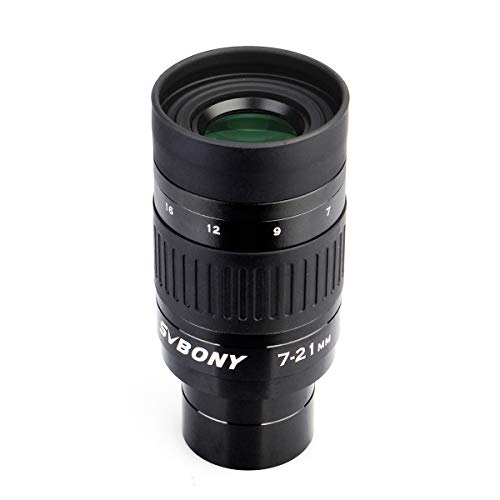
- Adjustable 7–21mm focal length
- Fully multi-coated six-element optics
- Comfortable eye relief and 1.25-inch fit
Best For: Flexible lunar, planetary, and deep-sky viewing
Complete Starter Kit
1.25-Inch Eyepiece Set with Barlow

- Three eyepiece focal lengths included
- 5x Barlow adds magnification
- Moon and polarizing filters included
Best For: Beginners building a versatile 1.25-inch kit
High-Power Planetary Option
SVBONY 4mm 62° Aspheric Eyepiece

- 4mm focal length for high magnification
- 62° wide-angle viewing
- Fully coated, lightweight aspheric optics
Best For: Detailed lunar and planetary observation
Reflector Alignment Tool
Astromania Long Cheshire Collimator
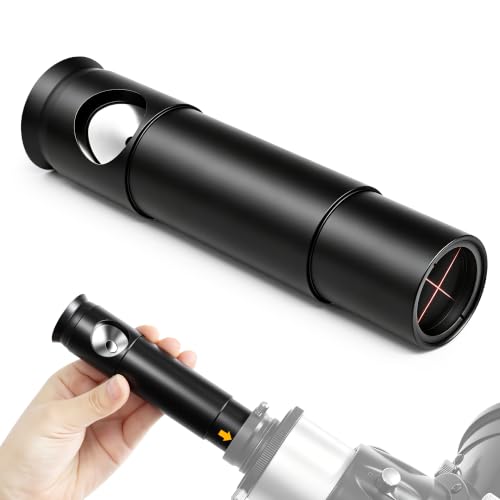
- 1.25-inch collimation eyepiece
- Long version for Newtonian telescopes
- Crosshair and angled plate aid alignment
Best For: Newtonian and Dobsonian mirror collimation
Best Multi-Focal Starter Set
Starboosa 4mm, 10mm & 20mm Eyepieces

- Three focal lengths for flexible observing
- Fully multi-coated optical glass
- Soft eyecups and 1.25-inch fit
Best For: Beginners building a versatile eyepiece collection
Best Wide-Field Set
SVBONY 68° Ultra-Wide Eyepieces
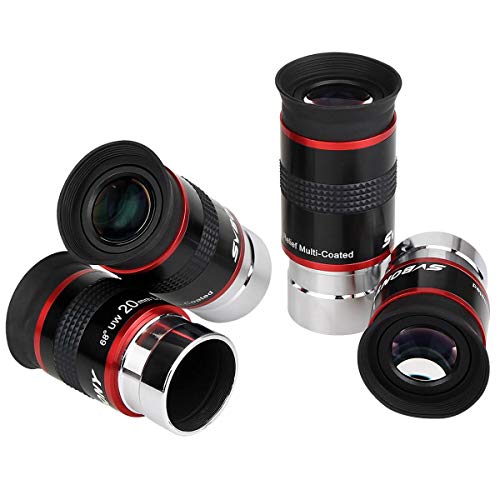
- Broad 68° apparent field of view
- Four focal lengths from 6mm to 20mm
- Fully multi-coated lenses with soft eye guards
Best For: Observers who prefer wide, flexible views
Best Single High-Power Plössl
Astromania 4mm Plössl Eyepiece

- 4mm focal length for high-power views
- Four-element, fully multi-coated optics
- 50° field with filter-threaded 1.25-inch barrel
Best For: Moon and planet observers adding high magnification
Precision Collimation Tool

- 1.25-inch Cheshire for reflector collimation
- Crosshairs and bright mirror show alignment
- No batteries; aluminum construction
Best For: Newtonian and SCT reflector alignment
Wide-Field Deep-Sky Viewing
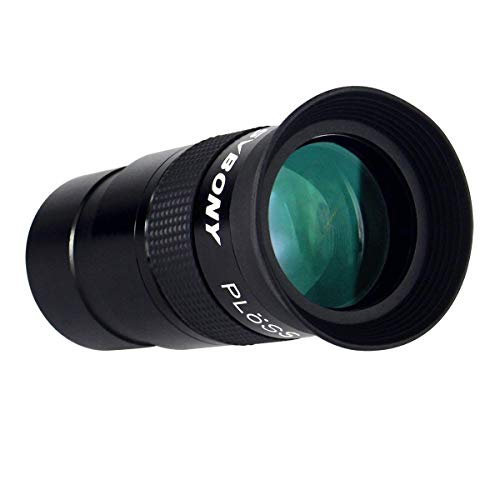
- 40mm focal length with a 40° field
- Four-element fully multi-coated optics
- Fold-down eye guard and filter thread
Best For: Lunar, cluster, nebula, and deep-sky viewing
Fast Reflector Alignment

- Short 1.25-inch collimation design
- 45-degree plate improves alignment visibility
- Made for fast Newtonian and Dobsonian scopes
Best For: Precise reflector and SCT collimation
Versatile Zoom Pick – SVBONY SV135 7–21mm Zoom Eyepiece
For reflector owners who want fewer eyepieces to carry, the SVBONY SV135 is a practical option among telescope eyepieces for reflector telescopes. Its 7–21mm zoom range lets you adjust magnification manually for lunar, planetary, nebula, and cluster viewing, while the standard 1.25-inch barrel fits compatible focusers.
Best For: Observers who want one adjustable eyepiece for varied astronomical targets and eyeglass-friendly viewing.
Pros:
- 7–21mm adjustable focal length can replace several fixed eyepieces.
- Fully multi-coated, six-element optical design supports contrast and edge sharpness.
- 18–16.3mm eye relief is comfortable, including for many eyeglass wearers.
- 40–57° field of view and a rubber eye guard improve viewing comfort.
Cons:
- It is limited to telescopes accepting 1.25-inch eyepieces.
- Manual zoom adjustment may not provide the same simplicity as a fixed focal-length eyepiece.
The SV135 is a flexible, cost-conscious choice when convenience matters more than building a large collection of fixed eyepieces. Its broad focal-length range makes it especially useful for switching between lower- and higher-magnification views.
Complete Starter Kit – 1.25-Inch Eyepiece Set with Barlow
This multi-piece kit gives reflector owners several focal lengths and accessories in one purchase. As a broad telescope eyepieces for reflector telescopes package, it includes 4mm, 10mm, and 20mm eyepieces, a 5x Barlow lens, and four filters for experimenting with different magnifications and viewing conditions.
Best For: Beginners who want a ready-to-use 1.25-inch accessory set for lunar, planetary, and general observing.
Pros:
- Includes 4mm, 10mm, and 20mm eyepieces for varied magnification.
- 5x Barlow lens provides an additional magnification option.
- Two moon filters and two polarizing filters can reduce glare and improve contrast.
- Soft eyecups and multi-coated optical glass support comfortable viewing.
Cons:
- The set is limited to telescopes with a 1.25-inch focuser.
- A 5x Barlow can produce very high magnification that may be difficult to use in some observing conditions.
- The supplied notes do not specify the individual eyepiece field-of-view measurements.
This kit emphasizes versatility and value rather than a single specialized eyepiece. It is a convenient way to expand a compatible reflector setup, particularly for beginners who need multiple focal lengths and basic filters together.
High-Power Planetary Option – SVBONY 4mm 62° Aspheric Eyepiece
The SVBONY 4mm eyepiece is designed for high-magnification observing, making it a focused choice among telescope eyepieces for reflector telescopes. Its 62° wide-angle design and fully coated optics are intended for detailed lunar and planetary views, while the 1.25-inch barrel suits compatible telescope focusers.
Best For: Viewers seeking a lightweight, high-power eyepiece for the Moon, planets, and selected deep-sky targets.
Pros:
- 4mm focal length is suited to high-magnification lunar and planetary viewing.
- 62° field of view provides a broad viewing area for a short-focal-length eyepiece.
- Fully coated optics support light transmission, contrast, and detail.
- Lightweight aspheric design weighs about 1.44 ounces.
Cons:
- Its fixed 4mm focal length offers less flexibility than a zoom or multi-eyepiece kit.
- High magnification can be more demanding of telescope alignment and observing conditions.
- It requires a compatible 1.25-inch focuser.
This is a targeted addition rather than an all-purpose eyepiece. It makes the most sense for reflector users who already have lower magnifications covered and want a lightweight 4mm option for close lunar and planetary examination.
Reflector Alignment Tool – Astromania Long Cheshire Collimator
The Astromania Cheshire is not an observing eyepiece, but it is an important maintenance tool for reflector owners. Among telescope eyepieces for reflector telescopes, this 1.25-inch collimating model helps align Newtonian or Dobsonian mirrors so high-power views can appear sharper and stars more pinpoint.
Best For: Newtonian and Dobsonian owners who need a manual tool for precise mirror alignment.
Pros:
- Designed for aligning Newtonian, Dobsonian, and compatible SCT reflector optics.
- Long version is intended for Newtonian telescopes and longer focusers.
- Crosshair and 45-degree plate help provide visual alignment references.
- Metal construction supports repeated use and durability.
Cons:
- It is a collimation tool, not an eyepiece for viewing celestial objects.
- The long version may not be the ideal choice for every telescope configuration.
- Manual alignment requires learning and careful adjustment.
For reflector users, accurate collimation can be as important as selecting the right viewing eyepiece. This long Cheshire is a practical accessory for tuning mirror alignment and helping a telescope deliver clearer high-power lunar and planetary views.
Best Multi-Focal Starter Set – Starboosa 4mm, 10mm & 20mm Eyepieces
If you want versatile telescope eyepieces for reflector telescopes, this Starboosa set covers three focal lengths in a standard 1.25-inch format. The 4mm, 10mm, and 20mm options let you switch between higher-power and wider-view observing for the Moon, planets, and star clusters.
Best For: Beginners and observers who want a basic multi-focal eyepiece kit for compatible 1.25-inch telescopes.
Pros:
- Includes 4mm, 10mm, and 20mm focal lengths for flexible magnification choices.
- Fully multi-coated optical glass is designed to provide clear images and contrast.
- Soft eyecups add comfort during viewing, while the eyepieces support reflector and refractor telescopes.
Cons:
- The set uses a standard 1.25-inch fit, so compatibility with your focuser should be confirmed.
- Supplied information does not specify individual apparent fields of view for each focal length.
This is a practical all-purpose set when you want several focal lengths without buying separate eyepieces. Its straightforward manual-focus design and beginner-friendly format make it a sensible starting point for visual astronomy.
Best Wide-Field Set – SVBONY 68° Ultra-Wide Eyepieces
For observers comparing telescope eyepieces for reflector telescopes, this SVBONY set stands out with a 68-degree apparent field of view. Its 6mm, 9mm, 15mm, and 20mm focal lengths provide several viewing options, while the standard 1.25-inch mount suits telescopes with a compatible eyepiece holder.
Best For: Deep-sky and general visual observers who prioritize a broad apparent field of view and multiple focal lengths.
Pros:
- 68-degree apparent field of view provides a broad observing experience.
- Four focal lengths—6mm, 9mm, 15mm, and 20mm—offer useful magnification flexibility.
- Fully multi-coated lenses, internal blackening, and soft fold-down eye guards support contrast and viewing comfort.
Cons:
- It is compatible with telescopes using a standard 1.25-inch eyepiece mount, so larger or nonstandard focusers may require an adapter.
- The supplied specifications identify the lens design as Kellner rather than a more advanced optical layout.
The wide apparent field and four focal lengths make this a flexible set for sweeping the sky and changing magnification as needed. It is especially appealing if broad framing and comfortable eye placement matter more than assembling a specialized premium collection.
Best Single High-Power Plössl – Astromania 4mm Plössl Eyepiece
This Astromania 4mm Plössl is a focused option for shoppers seeking telescope eyepieces for reflector telescopes when high magnification is the priority. Its standard 1.25-inch barrel fits compatible focusers, and the fully multi-coated, four-element design is intended for sharp, well-corrected views of the Moon and planets.
Best For: Lunar and planetary observers who already have lower-power eyepieces and want a dedicated 4mm option.
Pros:
- 4mm focal length is suited to high-power viewing when atmospheric and telescope conditions allow.
- Four-element Plössl optics and full multi-coating are designed for bright, sharp images and color correction.
- 50-degree field of view, fold-down rubber eyeguard, and standard filter threads add practical versatility.
Cons:
- A 4mm eyepiece can be demanding at high magnification, depending on the telescope and observing conditions.
- This is a single focal length rather than a complete eyepiece set.
- The supplied notes describe eye relief as approximately two-thirds to three-quarters of the focal length, which may feel short for some users.
Choose this model when you specifically need a compact, filter-compatible 4mm eyepiece rather than a range of magnifications. Its Plössl layout and protective dust caps make it a straightforward addition to an existing astronomy kit.
Precision Collimation Tool – SV197 Cheshire Eyepiece
For anyone comparing telescope eyepieces for reflector telescopes, the SVBONY SV197 is a collimation tool rather than a viewing eyepiece. Its Cheshire design helps you check and align Newtonian reflector mirrors, with compatibility also listed for SCT reflectors.
Best For: Newtonian and SCT reflector owners who want a straightforward daytime mirror-alignment tool.
Pros:
- Designed for accurate Newtonian reflector mirror alignment.
- Fine crosshairs, a bright mirror, and a sighting hole make the calibration result visible.
- Precision-machined aluminum construction with no batteries required.
- Can also assist with aligning refractor optics.
Cons:
- It is intended for collimation, not normal astronomical viewing.
- Use is limited to daytime collimation.
- Its 1.25-inch format may not suit focusers requiring another size.
The SV197 is a practical accessory for maintaining optical alignment, especially if your reflector needs regular adjustment. Choose it when accurate, visible collimation matters more than adding magnification or field of view.
Wide-Field Deep-Sky Viewing – SVBONY 40mm Plossl
The SVBONY 40mm Plossl is a conventional viewing eyepiece for telescope eyepieces for reflector telescopes, offering a 40-degree apparent field of view through a 1.25-inch barrel. Its long focal length is suited to broad lunar views, star clusters, nebulae, and other deep-sky targets.
Best For: Observers seeking a low-magnification, wide-field eyepiece for lunar and deep-sky viewing.
Pros:
- Four-element, fully multi-coated optical design.
- 40mm focal length and 40-degree apparent field of view support broad views.
- Fold-down rubber eye guard accommodates eyeglass wearers and helps block stray light.
- Standard 1.25-inch barrel includes an M28.5 x 0.6 filter thread.
Cons:
- The fixed 40mm focal length does not provide magnification flexibility.
- It is designed for visual observation rather than interchangeable-lens photography.
- A 1.25-inch barrel is not compatible with larger focuser formats without suitable accessories.
This Plossl makes sense as a relaxed, wide-view companion to higher-power eyepieces. Its metal body, included case, and comfortable eye guard add practical value for routine observing sessions.
Fast Reflector Alignment – Astromania Short Cheshire
The Astromania short Cheshire is a dedicated collimation accessory for telescope eyepieces for reflector telescopes. It fits 1.25-inch focusers and uses a crosshair and angled plate to help align Newtonian, Dobsonian, and Schmidt-Cassegrain optics.
Best For: Owners of fast Newtonian or Dobsonian telescopes who want easier, more precise mirror collimation.
Pros:
- Short barrel design provides clearance and easier handling on fast focal-ratio telescopes.
- 45-degree plate helps show the crosshair and primary-mirror reflection together.
- Aluminum body and fine crosshair support repeatable alignment.
- Proper collimation can improve pinpoint stars and crisp planetary and lunar detail.
Cons:
- This is a collimation tool, not an eyepiece for viewing celestial targets.
- It requires a 1.25-inch focuser or compatible adapter.
- It is primarily useful when aligning compatible reflector or SCT optics.
Choose this short version if clearance and viewing angle are priorities, particularly on fast Newtonian or Dobsonian designs. It is a focused toolkit upgrade for observers who want consistent high-power performance after alignment.
How We Picked the Best Telescope Eyepieces for Reflector Telescopes
We focused on useful focal lengths, common 1.25-inch compatibility, field of view, optical coatings, and the needs of reflector-telescope owners. The selection includes individual eyepieces for targeted upgrades, multi-piece kits for building a basic collection, zoom models for flexible observing, and Cheshire tools for maintaining Newtonian alignment.
Because specifications and included accessories can vary by listing, confirm the exact focal lengths, barrel size, field of view, and package contents before buying. A collimation eyepiece is not an observing eyepiece; it helps align the telescope’s mirrors.
Quick Comparison
- Most flexible: A 7–21mm zoom eyepiece covers several useful magnifications without changing lenses.
- Best for building a set: A multi-eyepiece kit can provide several focal lengths, filters, and sometimes a Barlow lens.
- Best for wide views: Ultra-wide-angle models are useful for larger lunar views, star fields, and locating deep-sky targets.
- Best for high power: Short focal lengths such as 4mm or 6mm can reveal planetary detail when atmospheric conditions and telescope tracking allow.
- Best for alignment: Cheshire eyepieces help collimate Newtonian reflector telescopes and should be treated as maintenance accessories.
Key Buying Factors for Telescope Eyepieces for Reflector Telescopes
Focal Length and Magnification
Magnification equals the telescope’s focal length divided by the eyepiece focal length. Longer focal lengths produce lower power and wider views, while shorter focal lengths produce higher power. A practical collection often starts with low, medium, and high magnification rather than several closely spaced short focal lengths.
Field of View
Apparent field of view affects how expansive the view feels and how easily you can find or follow an object. Wider-angle designs can be especially helpful with manual Dobsonian telescopes, although edge performance, eye relief, and price may vary.
Barrel Size, Eye Relief, and Coatings
Most options here use a 1.25-inch barrel, but check your focuser or adapter first. Eye relief matters if you wear glasses; a longer, comfortable eye position is generally easier to use. Fully coated or multi-coated optics can improve light transmission and contrast, but coatings do not replace sound optical design.
Reflector Compatibility and Collimation
Fast Newtonian reflectors can be demanding near the edge of the field, so prioritize reviews and specifications that address edge sharpness if your telescope has a low focal ratio. Also keep collimation tools separate from viewing eyepieces: accurate alignment is essential for sharp planetary and deep-sky images.
Who Should Buy Which Telescope Eyepieces for Reflector Telescopes?
New observers may prefer a kit with several focal lengths and accessories, provided the included pieces match the telescope’s barrel size. Travelers and casual users can benefit from a zoom eyepiece because it reduces the number of accessories to carry. Planetary observers should consider a 4mm–6mm option only if their telescope, mount, and local seeing support high magnification. Deep-sky observers should prioritize longer focal lengths and wider apparent fields for finding and framing larger targets. Newtonian owners seeking sharper views should add a Cheshire collimation eyepiece and use it regularly, especially after transporting the telescope.