The best laser engravers for artists make it easier to turn digital designs into detailed work on wood, leather, acrylic, coated metal, and other creative materials. The right machine depends on more than laser power: work area, camera alignment, enclosure design, software, and ventilation all affect the experience.
We selected 10 machines spanning compact hobby models, portable engravers, enclosed craft systems, and larger cutters so you can match features and capability to your studio, materials, and production goals.
Best 10 Laser Engravers for Artists Picks for 2026
Powerhouse Pick

- 40W laser and large 23.93-by-15.16-inch bed
- Rotary engraving and AutoPassthrough support
- Enclosed Class 1 safety design
Best For: Large artwork, batch projects, and curved-object engraving
Large-Format Value
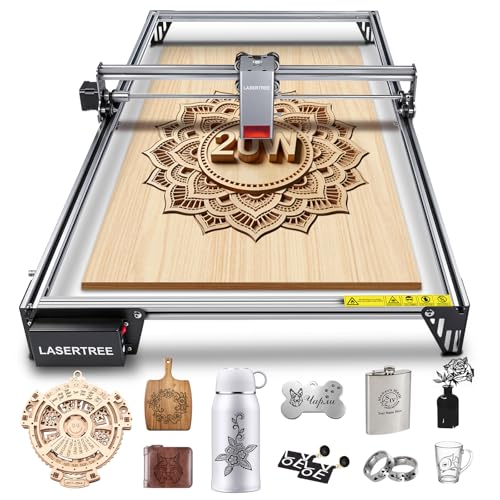
- 400-by-800mm workspace for large creations
- 20W laser cuts plywood and acrylic in one pass
- LightBurn and LaserGRBL compatibility
Best For: Large signs, murals, and small-batch production
Portable Precision
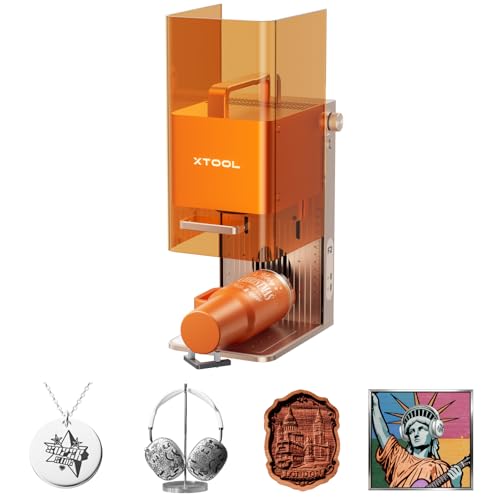
- 15W diode plus 5W IR laser versatility
- 50MP camera with precise small-item alignment
- Compact, enclosed, and ready for on-site use
Best For: Mobile personalization and metal marking
Beginner-Friendly Enclosure

- Pre-assembled with camera positioning
- Fully enclosed Class 1 safety design
- 600mm/s speed and 0.05mm accuracy
Best For: Beginners making gifts, wood art, and small projects
Best for Detailed DIY Projects

- True 12W laser handles engraving and cutting
- Fine 0.01mm positioning accuracy
- 300 × 300mm workspace with expansion options
Best For: Detailed artwork, signs, ornaments, and larger DIY projects
Best Enclosed Creative Workstation

- Enclosed Class 1 design for home crafting
- Dual cameras simplify material placement
- Optional modules expand printing and material options
Best For: Home artists who want guided setup and safer enclosed operation
Best Portable Option
LaserPecker LP2 Handheld Laser Engraver

- About 1 kg with no assembly required
- Fast engraving up to 36,000 mm/min
- 0.05mm micro-spot for detailed work
Best For: Mobile engraving, coated metal, wood, leather, and personalized items
Best Precision Pick

- 0.08mm laser spot and stated 0.01mm accuracy
- Spacious 400 x 400mm work area
- USB, TF card, Wi-Fi, and app control
Best For: Detailed artwork and flexible home-studio projects
Best for Power and Production

- 20W output for stronger wood-cutting performance
- Up to 20,000mm/min operating speed
- Enclosed design with multiple safety protections
Best For: Thicker materials, batch work, and small businesses
Best Beginner-Friendly Compact Pick

- Quick assembly with starter tools and materials
- A4 work area with 0.01mm precision
- Offline, app, LightBurn, and LaserGRBL control
Best For: Beginners and compact craft or small-business projects
Powerhouse Pick – xTool S1 40W Rotary Bundle
For artists seeking laser engravers for artists that can handle ambitious work, the xTool S1 combines a powerful 40W laser with a spacious 23.93-by-15.16-inch bed. Its rotary bundle, high speed, and enclosed design make it suited to both detailed artwork and larger creative projects.
Best For: Artists making large signs, batch-produced pieces, and engravings on curved objects.
Pros:
- 40W output can cut up to 18mm cherry wood in a single pass.
- Large bed, 600mm/s speed, and AutoPassthrough support oversized or batch projects.
- Auto-focus, material presets, AI-assisted design tools, and tutorials make setup approachable.
- Enclosed Class 1 design includes flame sensors, lid-open protection, and an emergency stop.
Cons:
- At 86.8 pounds, it is substantially less portable than desktop alternatives.
- Its larger footprint and powerful feature set may be more than needed for small projects.
The S1 is the strongest choice here for artists who prioritize cutting power, workspace, and expansion into rotary or long-format work. It is particularly compelling for studios producing larger or repeated pieces.
Large-Format Value – LASER TREE 20W Engraver
The LASER TREE 20W is a practical option among laser engravers for artists who need a generous work area without stepping up to a more complex production machine. Its 400-by-800mm workspace supports large signs, murals, and batches of smaller crafts.
Best For: Artists and small businesses creating oversized wood signs, murals, and repeatable craft products.
Pros:
- Large 400-by-800mm work area accommodates oversized creations.
- 20W compressed-spot laser is rated for one-pass cuts through 10mm plywood and 8mm acrylic.
- Up to 10,000mm/min engraving speed supports efficient production.
- Works with LightBurn and LaserGRBL on Windows and Mac, with broad file-format support.
Cons:
- The open-style machine does not offer the enclosed Class 1 safety features described for some competing models.
- Fixed focal length simplifies focusing but offers less flexibility than autofocus systems.
- Its large working area requires considerable workspace.
Choose the LASER TREE when canvas size and throughput matter most. It offers a strong balance for artists who are comfortable managing an open-frame workflow and want compatibility with established design software.
Portable Precision – xTool F2 Dual-Laser Engraver
For artists who personalize small objects or work at events, the xTool F2 stands out among laser engravers for artists with its compact dual-laser setup. A 15W diode laser handles cutting and embossing, while the 5W IR laser adds dark, vivid color marking on metal.
Best For: Artists offering on-site personalization, metal marking, and small-batch work on compact items.
Pros:
- Dual diode and IR lasers expand work across more than 300 materials.
- Built-in 50MP camera provides up to 0.1mm alignment accuracy for small pieces.
- Up to 6000mm/s speed is designed for rapid engraving and batch processing.
- Fully enclosed, fully assembled, and lightweight enough for fairs, pop-ups, and markets.
Cons:
- The compact format is better suited to small items than large artwork.
- Slide Extension, rotary, and purifier capabilities require optional accessories where applicable.
- It is a Class 4 laser, so users should follow the manufacturer’s operating and safety requirements.
The F2 is the most mobile and specialized option in this group. Its camera alignment, metal-marking capability, and very high speed make it a strong fit for artists selling customized goods directly to customers.
Beginner-Friendly Enclosure – Creality Falcon A1 10W
The Creality Falcon A1 is a straightforward choice for artists comparing laser engravers for artists and wanting minimal setup. It arrives pre-assembled, combines camera-assisted positioning with material recognition, and offers a fully enclosed workspace for quieter, more contained crafting.
Best For: Beginners and established makers creating detailed wood projects, gifts, and occasional tumbler or bottle designs.
Pros:
- Pre-assembled design and dedicated Falcon Design Space software enable a quick start.
- HD camera supports auto positioning and smart material recognition.
- Up to 600mm/s speed and 0.05mm engraving accuracy support detailed work.
- Fully enclosed Class 1 construction includes lid-open pausing and an emergency stop.
Cons:
- The 10W model is less powerful than the 20W and 40W machines in this roundup.
- It is limited to 460-by-346mm honeycomb panels.
- Highly reflective materials, including mirror-finished metals and mirrored acrylic, are prohibited.
The Falcon A1 makes the most sense for artists who value convenience and safety over maximum cutting capacity. Its camera features, included software, and pre-assembled design reduce the learning curve for everyday creative projects.
Best for Detailed DIY Projects – ACMER S2 12W Laser Engraver
The ACMER S2 is a versatile option for artists seeking laser engravers for artists with a generous 300 × 300mm workspace. Its 12W laser, fine positioning accuracy, and compatibility with ACMER Studio, LightBurn, and LaserGRBL make it suitable for detailed artwork, signs, ornaments, and small-business projects.
Best For: Artists and makers who need detailed engraving, deeper cutting, and room for larger flat projects.
Pros:
- True 12W power supports engraving and cutting across 100+ materials.
- 0.01mm positioning accuracy helps reproduce fine text, photos, and intricate designs.
- 300 × 300mm workspace accommodates signs, layered art, and multi-piece layouts.
- Supports ACMER Studio, LightBurn, and LaserGRBL on Windows, macOS, and Linux.
Cons:
- Deeper cuts may require multiple passes.
- Rotary modules, risers, and air assist are optional accessories.
- As an open-style machine, setup and workspace safety require attention despite the protective shield and included goggles.
The S2 offers a strong balance of precision, workspace, and upgrade potential. It is especially appealing for artists whose projects extend beyond small engravings into signs, layered pieces, and occasional cutting.
Best Enclosed Creative Workstation – xTool M2 10W Laser Engraver
The enclosed xTool M2 is a polished choice for artists comparing laser engravers for artists for home crafting. Built-in dual cameras, Class 1 safety, and xTool Studio templates simplify placement and operation, while the 10W laser handles engraving and cutting on materials such as wood, leather, felt, fabric, paper, and cardstock.
Best For: Home crafters and artists who prioritize enclosed operation, guided setup, and versatile creative workflows.
Pros:
- Fully enclosed Class 1 design includes real-time safety monitoring.
- Dual cameras support real-time previews and accurate “Place & Go” positioning.
- xTool Studio provides templates and an integrated AI image generator.
- Optional modules can add CMYK printing or fine engraving on metal and plastic.
Cons:
- The CMYK inkjet module and 3W IR laser are sold separately.
- The RA3 Lite Rotary is not included with this standalone model.
- At 36.2 pounds, it is less portable than compact or handheld alternatives.
The M2 is a convenient, safety-focused choice for artists who want a streamlined creative setup. Its modular design adds flexibility, but the most advanced print and material capabilities require separate purchases.
Best Portable Option – LaserPecker LP2 Handheld Laser Engraver
The LaserPecker LP2 stands out among laser engravers for artists who need portability and fast setup. Weighing about 1 kg and requiring no assembly, it offers handheld, multi-angle engraving on wood, leather, and coated metal, with app-based controls and speeds up to 36,000 mm/min.
Best For: Mobile artists, pop-up sellers, and creators engraving smaller or irregularly positioned items.
Pros:
- Lightweight design with a built-in handle supports engraving almost anywhere.
- Fixed-focus cover eliminates manual focusing and the need for a dedicated workspace.
- 0.05mm micro-spot and up to 2K resolution deliver detailed results.
- App control, motion sensors, overheat protection, and included goggles support beginner-friendly use.
Cons:
- Pure or highly reflective metals require surface treatment.
- The basic set does not include the expanded Suit Version accessories for cylindrical or oversized work.
- Its compact format is less suited to large flat artwork than a full 300 × 300mm work area.
The LP2 is a practical pick when convenience matters more than a large work envelope. Its portability, speed, and fixed-focus operation make it well suited to mobile engraving and detailed personalization.
Best Precision Pick – LONGER Ray5 5W
For artists comparing laser engravers for artists, the LONGER Ray5 5W stands out for its fine 0.08mm laser spot, 0.01mm engraving accuracy, and roomy 400 x 400mm work area. It also supports USB, TF card, Wi-Fi, and app-based control, making it adaptable for both connected and offline projects.
Best For: Artists who prioritize detailed engraving, a generous work area, and flexible connectivity.
Pros:
- Fine 0.08mm laser spot and stated 0.01mm engraving accuracy
- Large 400 x 400mm working area for varied project sizes
- Supports LaserGRBL, LightBurn, USB, TF card, Wi-Fi, and app control
- Includes emergency shutdown, motion protection, overheating detection, and protective equipment
Cons:
- Its 5W power may be less suited to demanding cutting than higher-powered options
- Setup and operation still require learning laser-engraving software and safety procedures
The Ray5 is a versatile choice for detailed wood, leather, acrylic, glass, and compatible metal work. Its combination of precision, workspace, and offline options makes it especially appealing for artists building a flexible home studio.
Best for Power and Production – 20W Enclosed Laser Cutter
Artists and makers seeking laser engravers for artists with more cutting power may prefer this 20W machine. It combines a 300 x 300mm work area, 0.01mm focus precision, speeds up to 20,000mm/min, and a fully enclosed design for creative workspaces.
Best For: Artists, makers, and small businesses handling thicker wood, detailed designs, or repeat orders.
Pros:
- 20W power is designed for stronger cutting performance on materials such as oak and plywood
- Reaches speeds up to 20,000mm/min for faster workflows
- 0.01mm square focus supports crisp logos, text, patterns, and artwork
- Fully enclosed operation includes flame detection, tilt protection, automatic shutdown, and emergency stop
Cons:
- Its 300 x 300mm work area is smaller than the Ray5’s 400 x 400mm area
- At 16 pounds, it is less convenient to move between workspaces
- Higher power and enclosure may be more machine than occasional hobby projects require
This model is a strong fit when cutting capability and throughput matter as much as artistic detail. The enclosure and broad control options also make it practical for a dedicated home workshop or small custom-product operation.
Best Beginner-Friendly Compact Pick – K15 Pro 10W
For newcomers choosing laser engravers for artists, the K15 Pro emphasizes simple setup and approachable control. It assembles with six screws, includes starter materials and tools, offers one-touch smart focus, and provides an A4-sized 11.8 x 7.9-inch work area for common craft projects.
Best For: Beginners, home crafters, and small businesses making coasters, tags, gifts, jewelry blanks, and branded items.
Pros:
- Assembles quickly and includes safety glasses, materials, and tools
- Verified 10.36–10.58W output with dual-fan cooling for longer jobs
- 0.01mm precision, up to 15,000mm/min speed, and one-touch focus
- Supports CutLabX, LightBurn, LaserGRBL, wireless control, and offline TF-card jobs
Cons:
- The A4 work area is more limited than larger 300 x 300mm or 400 x 400mm machines
- Bare-metal engraving requires the optional 1W IR laser head
- Some capabilities depend on optional accessories such as a rotary roller or air purifier
The K15 Pro offers a useful balance of compact size, guided setup, and creative flexibility. Its upgrade path and included support make it a practical starting point for artists who expect their projects to grow over time.
How We Picked the Best Laser Engravers for Artists
We evaluated these machines according to the features that matter most in an art and craft workflow: laser type and power, usable work area, engraving speed, cutting capability, positioning accuracy, camera assistance, enclosure and safety design, portability, offline controls, and overall versatility. We also considered how well each model suits common artistic materials such as wood, leather, paper, acrylic, felt, slate, and coated metals.
Power ratings are not directly comparable across every laser design, so treat advertised wattage as one part of the decision rather than a guaranteed result. Material thickness, focus, air assistance, passes, and machine calibration can substantially change performance.
Quick Comparison
| Best For | What to Prioritize |
|---|---|
| Detailed craft work | Fine spot size, camera alignment, and reliable focus |
| Cutting thicker materials | Higher optical power, air assist, and a rigid frame |
| Large artwork | A generous work area and dependable gantry movement |
| Metal personalization | IR or compatible marking capability and material support |
| Small studios | An enclosed design, filtration or ventilation plan, and manageable footprint |
| Mobile or on-site work | Low weight, quick setup, and simple positioning controls |
Key Buying Factors for Laser Engravers for Artists
Laser Type and Material Range
Diode lasers are popular for wood, leather, paper, and many coated surfaces. IR lasers can expand options for marking some metals and plastics, while CO2 systems are generally better suited to cutting and engraving a broader range of nonmetal materials. Confirm compatibility before buying, especially for clear acrylic, glass, and unknown plastics.
Work Area and Accuracy
Choose a bed large enough for your typical artwork without making the machine unnecessarily difficult to house. Camera positioning can simplify alignment for irregular blanks, but a camera is most useful when its software is accurate and easy to calibrate. A smaller, precise machine may be better for jewelry and small signs than a larger model with a less convenient workflow.
Safety, Ventilation, and Software
An enclosure can reduce exposure to the beam and help contain smoke, but it does not eliminate the need for proper ventilation. Never engrave materials that release hazardous fumes, and use the recommended protective equipment and safeguards. Also check whether the machine works with your preferred design software, supports offline operation, and offers useful presets or material testing.
Speed, Cutting Depth, and Repeatability
Maximum speed figures are typically best-case specifications. For art production, consistent results, stable motion, autofocus or easy focusing, and repeatable placement often matter more than the highest advertised speed. If you plan to sell finished goods, consider air assist, rotary compatibility, batch positioning, and maintenance requirements.
Who Should Buy Which Laser Engravers for Artists?
Choose a compact enclosed machine if you work in a home studio and value a cleaner, more controlled setup. A higher-powered diode model is a better fit for artists who regularly cut thicker wood, leather, or craft sheet materials. For metal personalization, prioritize a machine with a suitable IR or metal-marking system rather than relying only on a high diode wattage.
Artists creating large signs or batches should favor a generous work area and strong motion system. Beginners may prefer pre-assembled equipment with camera-assisted alignment and straightforward software, while experienced makers can often save money with an open-frame model if they already have suitable ventilation, safety practices, and calibration experience. Portable units make the most sense for demonstrations, markets, and on-site personalization where convenience outweighs maximum bed size.