The best laser engravers can turn wood, leather, acrylic, glass, and metal into personalized products, signs, gifts, and small-business inventory. The right model depends on more than laser power: enclosure design, work area, software, material compatibility, and safety features all matter.
We compare 10 standout machines across beginner-friendly, portable, enclosed, high-speed, and dual-laser categories so you can choose a capable engraver without paying for features you will not use.
Best 10 Laser Engravers Picks for 2026
Best Overall

- 40W power cuts up to 18mm cherry wood
- Large bed with 600mm/s engraving speed
- Enclosed Class 1 design with rotary bundle
Best For: Large projects, rotary work, and beginners seeking strong cutting capacity
Best for Production

- 20W fiber and 20W diode lasers
- Up to 10,000mm/s engraving speed
- Supports metal work and 3D embossing
Best For: Commercial batch engraving and in-store customization
Best Budget Maker Pick

- 5.5W laser for common maker materials
- 300-by-300mm working area
- Supports LightBurn, LaserGRBL, and Wi-Fi control
Best For: Hobby projects and small-business engraving on a budget
Best Portable Option
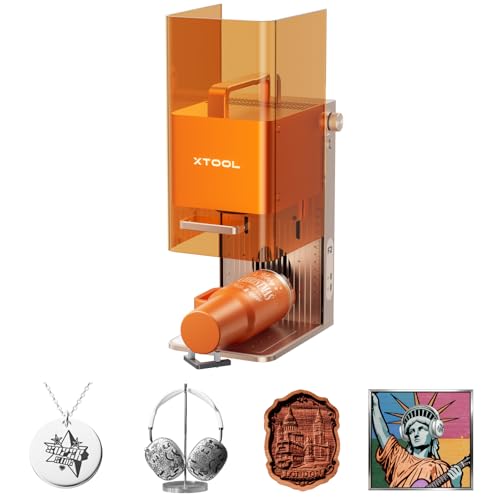
- 15W diode plus 5W IR laser
- 50MP camera for precise alignment
- 10-pound enclosed design with 6,000mm/s speed
Best For: On-site personalization and small-batch desktop engraving
Best for Power and Precision
Creality Falcon 10W Laser Engraver

- 15.7-by-16.3-inch working area
- Precise 0.06 mm compressed laser spot
- Supports LightBurn, LaserGRBL, and SD-card use
Best For: Larger engraving projects and wood or acrylic cutting
Best Enclosed Crafting System

- Class 1 enclosed design for home crafting
- Dual cameras simplify material placement
- Optional modules expand printing and engraving
Best For: Personalized gifts, home decor, and guided DIY crafting
Best for Precision and Larger Projects
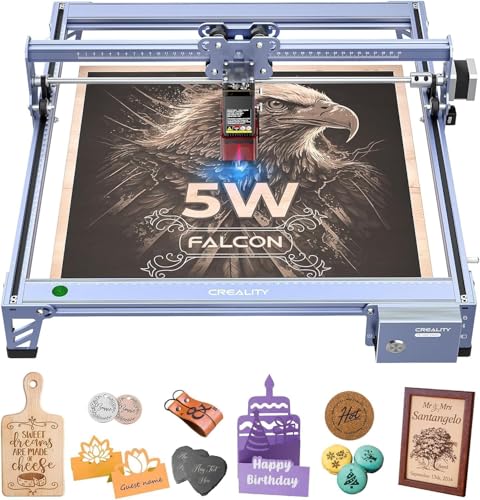
- Fine 0.06mm compression spot for detailed work
- Fast 10,000mm/min engraving speed
- Large 400 x 415mm work area
Best For: Makers working on detailed designs and larger materials
Best Beginner-Friendly Enclosed Kit

- Includes enclosure, honeycomb bed, tools, and materials
- Class 1 safety rating with automatic-stop sensors
- Compatible with major engraving software
Best For: Beginners and hobbyists wanting a ready-to-use desktop setup
Best for Flexible Connectivity

- USB, TF card, Wi-Fi, app, and touchscreen control
- 10,000mm/min speed with a 0.06mm laser spot
- 400 x 400mm work area for varied projects
Best For: Makers seeking flexible online and offline operation
Best Overall – xTool S1 40W Rotary Bundle
The xTool S1 40W is a powerful enclosed option for shoppers comparing laser engravers for larger projects, faster production, and rotary work. Its spacious bed, 600mm/s speed, autofocus, and included rotary bundle make it especially capable for signs, tumblers, and batches of smaller items.
Best For: Large projects, rotary engraving, and makers who want an enclosed, beginner-friendly machine.
Pros:
- 40W laser can cut up to 18mm cherry wood in a single pass.
- Large 23.93-by-15.16-inch bed and speeds up to 600mm/s support productive workflows.
- Enclosed Class 1 design includes flame sensors, emergency stop, and lid-open protection.
- Autofocus, material presets, tutorials, and AI-assisted design simplify setup.
Cons:
- At 86.8 pounds, it is considerably less portable than desktop alternatives.
- The feature-rich system may be more machine than casual users need.
Choose the S1 when cutting capacity, workspace, and safety are higher priorities than portability. The rotary bundle and passthrough capability also give it room to grow with more ambitious projects.
Best for Production – xTool F1 Ultra Dual Laser
The xTool F1 Ultra combines 20W fiber and 20W diode lasers for shoppers seeking versatile laser engravers that can move between metal and nonmetal materials. With speeds up to 10,000mm/s, a 16MP camera, and support for 3D embossing, it is designed around high-throughput customization.
Best For: Businesses and workshops engraving metal, wood, acrylic, and other materials in batches.
Pros:
- Fiber laser handles metals while the diode laser works with wood, acrylic, leather, glass, and more.
- Up to 10,000mm/s speed and a 220-by-220mm work area support fast production.
- Supports deep engraving and multi-level 3D embossing.
- 16MP camera, enclosure, smoke extraction, fire alarm, and emergency stop support commercial use.
Cons:
- The Auto Conveyor for expanded batch production is sold separately.
- It is a Class 4 laser, so users must follow the required safety practices.
- Its business-oriented capabilities may exceed the needs of occasional hobbyists.
This is the strongest fit for users who need one machine to cover metal marking and diode-compatible materials. The high speed and camera-assisted workflow are particularly compelling for repeat orders and in-store personalization.
Best Budget Maker Pick – Twotrees TTS-55 Pro
The Twotrees TTS-55 Pro is a compact, lower-power choice among laser engravers for hobbyists and small businesses. Its 5.5W laser, 300-by-300mm work area, air-assist-ready nozzle, and compatibility with LaserGRBL and LightBurn cover common maker projects without the bulk of larger machines.
Best For: Hobbyists and small businesses engraving wood, leather, acrylic, paper, and select metals.
Pros:
- 5.5W laser can cut up to 5mm plywood, 3mm acrylic, and 0.7mm leather.
- Fine 0.08-by-0.46mm spot focus supports detailed engraving.
- Works with LaserGRBL and LightBurn across supported operating systems.
- Offers Wi-Fi, TF-card offline engraving, and speeds up to 30,000mm/min.
Cons:
- Its 5.5W output has less cutting power than higher-wattage models.
- The listed air-assist support may require adding a separate air-assist system.
- The 300-by-300mm work area is better suited to small and medium projects.
The TTS-55 Pro makes sense when affordability, software flexibility, and a manageable footprint matter most. It is a practical entry point, provided your projects stay within its more modest cutting limits.
Best Portable Option – xTool F2 Dual Laser
The xTool F2 is a compact dual-laser choice for shoppers comparing laser engravers for on-site personalization and small-batch work. Its 15W diode and 5W IR lasers, built-in 50MP camera, enclosed design, and 6,000mm/s speed make it suited to quick, precise engraving on a broad range of materials.
Best For: Portable customization services, small items, pop-ups, workshops, and retail settings.
Pros:
- Dual lasers cover more than 300 materials, including metal and thicker nonmetal materials.
- 50MP camera provides workspace visualization and up to 0.1mm alignment accuracy.
- Speeds up to 6,000mm/s can complete a card engraving in about three seconds.
- Fully enclosed, fully assembled design weighs 10 pounds for easier transport.
Cons:
- The compact format is aimed at small pieces rather than large-bed projects.
- Optional accessories, including the purifier, RA3, and Slide Extension, expand functionality at additional cost.
- It is a Class 4 laser and requires appropriate safety precautions.
The F2 stands out when portability and fast, accurate personalization are more important than maximum work area. Its camera and dual-laser setup reduce alignment guesswork while leaving room to scale with optional accessories.
Best for Easy Setup – LP1 Plus Mini Laser Engraver
The LaserPecker LP1 Plus is a practical choice for beginners who want a compact laser engraver for small DIY projects. It starts quickly, runs from a power bank, and supports materials such as wood, leather, acrylic, and paper.
Best For: Beginners, portable crafting, and personalizing small non-metal items.
Pros:
- Pocket-sized, lightweight 2.4-pound design for easy travel.
- Adjustable stand supports 360° multi-angle engraving.
- Simple cross-platform app accepts photos and doodles.
- Can start engraving in under two minutes using a power bank.
Cons:
- Metal engraving is not supported.
- Requires a precise 200 mm distance between the lens and material surface.
- Its compact format is better suited to smaller projects.
Choose this laser engraver if portability and beginner-friendly operation matter more than cutting power or a large work area. The included ruler and adjustable stand help make setup straightforward.
Best for Power and Precision – Creality Falcon 10W Laser Engraver
The Creality Falcon 10W is a strong option for shoppers seeking a laser engraver with a larger workspace and cutting capability. Its 0.06 mm compressed spot, 15.7-by-16.3-inch work area, and 10,000 mm/min speed support detailed engraving and larger projects.
Best For: Makers who need a larger work area, precise engraving, and wood or acrylic cutting.
Pros:
- Large 15.7-by-16.3-inch workspace for bigger materials.
- Advertised effective 72W power can cut 12 mm wood and 5 mm black acrylic in one pass.
- 0.06-by-0.06 mm compressed spot supports detailed work.
- Compatible with LightBurn and LaserGRBL, with offline SD-card operation.
Cons:
- At 10.93 pounds, it is less portable than compact models.
- Software compatibility varies by operating system.
- The supplied notes describe protective features but do not indicate a fully enclosed design.
This laser engraver is a better fit than a pocket model when project size, speed, and cutting performance are priorities. Its software support also gives experienced users more workflow flexibility.
Best Enclosed Crafting System – xTool M2 10W Laser Engraver
The xTool M2 is a home-friendly laser engraver built around an enclosed Class 1 design and dual-camera positioning. It is suited to crafters who want guided placement, templates, and the option to expand into color printing or specialized metal and plastic engraving.
Best For: Home crafters, personalized gifts, and users who value enclosed operation and camera-assisted setup.
Pros:
- Fully enclosed Class 1 design with real-time monitoring.
- Dual cameras provide workspace previews and support “Place & Go” positioning.
- xTool Studio includes templates and an integrated AI image generator.
- 10W diode laser works with materials including wood, leather, felt, fabric, paper, and cardstock.
Cons:
- The machine weighs 36.2 pounds and has a large package size.
- CMYK printing and 3W IR laser capabilities require separately sold modules.
- The RA3 Lite Rotary is not included.
Consider this laser engraver if ease of placement and a more contained home-crafting setup are important. Remember that the standalone M2 does not include the optional CMYK, IR, or rotary accessories.
Best for Precision and Larger Projects – Creality Falcon 5W
The Creality Falcon 5W is one of the more practical laser engravers for detailed designs and larger workpieces. Its 400 x 415mm work area, 10,000mm/min speed, and fine 0.06 x 0.06mm compression spot support both careful engraving and higher-volume projects.
Best For: Makers who need a relatively large work area, repeatable detail, and compatibility with a broad range of materials.
Pros:
- 0.06 x 0.06mm compression spot supports intricate engraving and precise cuts.
- 10,000mm/min maximum speed helps reduce production time.
- 400 x 415mm working area accommodates larger projects.
- Eye-protective cover and active-stop function add useful safety measures.
Cons:
- Rotary roller and risers are optional upgrades rather than included accessories.
- The open machine’s Class 4 laser designation means careful setup and operation are important.
The Falcon 5W makes a strong case for users who value precision and workspace over a compact starter bundle. It is especially appealing for wood, leather, acrylic, glass, and other varied projects, provided you are prepared to purchase optional accessories when needed.
Best Beginner-Friendly Enclosed Kit – BlazeX M3 10W
The BlazeX M3 10W is a convenient entry point for shoppers comparing laser engravers because it includes an enclosure, honeycomb bed, tools, and sample materials. Its 0.01mm stated precision, Class 1 safety rating, and broad software compatibility make it suited to home workshops, classrooms, and hobby projects.
Best For: Beginners who want an enclosed, ready-to-start package for desktop DIY, personalized items, and small-batch work.
Pros:
- Starter bundle includes a protective enclosure, honeycomb bed, tool kit, and 13 materials.
- Class 1 safety design includes lid and tilt sensors with automatic stopping.
- Works with LightBurn, LaserGRBL, and CutLabX across several operating systems.
- Supports engraving on more than 300 materials, including wood, leather, glass, and coated metal.
Cons:
- Rotary, air-assist, and purifier accessories require additional purchases.
- Its desktop-oriented design is better suited to smaller projects than large-format work.
For first-time users, the M3’s included accessories remove several common setup hurdles. The enclosure, smoke-exhaust fan, safety features, and tutorial support make it a particularly approachable choice, while optional upgrades leave room to expand later.
Best for Flexible Connectivity – LONGER Ray5 10W
The LONGER Ray5 10W stands out among laser engravers for its flexible control options and integrated touchscreen. USB, TF card, Wi-Fi, and app connectivity support both online and offline workflows, while its 400 x 400mm area and 10,000mm/min speed suit a wide variety of DIY projects.
Best For: Users who want multiple control methods, offline operation, and a spacious work area for wood, acrylic, leather, glass, and metal projects.
Pros:
- 3.5-inch touchscreen and USB, TF card, Wi-Fi, and app control provide flexible operation.
- 10W module, dual-beam design, and 0.06mm spot support detailed engraving and cutting.
- 400 x 400mm working area handles a broad range of project sizes.
- Motion protection, emergency stop, heat protection, and active cooling add safety and durability features.
Cons:
- The stated cutting capacities vary by material, so users should confirm settings for each project.
- Its range of connectivity and software options may require more setup than a basic plug-and-play machine.
The Ray5 is a versatile pick for makers who do not want to be tied to a single control method. Its combination of offline capability, touchscreen control, broad software support, and a generous work area gives it flexibility for both casual and more involved projects.
How We Picked These Laser Engravers
We evaluated these machines by looking at laser type and output, usable work area, advertised speed and precision, material compatibility, camera or alignment features, enclosure and safety design, software workflow, expandability, and overall fit for different users. Because specifications can vary by configuration, always confirm the included accessories, regional safety certification, and supported materials before ordering.
The selection includes enclosed machines for cleaner, more controlled home use; open-frame diode engravers for larger DIY projects; compact units for gifts and small objects; and advanced fiber, infrared, or dual-laser systems for specialized metal marking and production work.
Quick Comparison of the 10 Best Laser Engravers
| Best for | Look for | Recommended type |
|---|---|---|
| Beginners and casual crafting | Simple setup, guided software, and strong safety features | Enclosed diode or compact desktop engraver |
| Large wood and leather projects | Generous bed size, air assist, and expandable framing | Open-frame diode engraver |
| Metal marking | Fiber or infrared capability, suitable optics, and rotary support | Fiber, IR, or dual-laser machine |
| Fast production | High movement speed, camera positioning, and reliable workflow | High-speed enclosed or dual-laser model |
| Portable personalization | Compact footprint, adjustable positioning, and simple controls | Mini laser engraver |
Key Buying Factors for Laser Engravers
Laser Type and Power
Diode lasers are versatile for wood, leather, cardboard, and some coated or dark acrylic. Fiber lasers are better suited to direct metal marking, while infrared lasers can expand compatibility with certain metals and plastics. Higher wattage can improve cutting depth and speed, but it does not automatically produce better engraving on every material.
Work Area and Machine Format
Measure the projects you actually plan to make. A larger bed is valuable for signs and batch production, while a compact engraver may be easier to store and position. Enclosed machines generally offer a more controlled workspace and can simplify ventilation and safety management.
Safety and Ventilation
Laser engraving creates smoke, odors, and potentially hazardous fumes. Prioritize a protective enclosure, lid sensors, emergency stop controls, suitable ventilation, and appropriate eyewear when required. Never engrave unknown plastics or materials that may release toxic gases.
Precision, Alignment, and Software
Camera-assisted positioning can reduce setup time and help place artwork accurately. Check whether the machine works with the design software you already use, supports common file formats, and offers practical controls for speed, power, focus, and material tests.
Accessories and Expansion
Air assist, honeycomb panels, rotary attachments, risers, exhaust systems, and replacement lenses can significantly affect real-world usefulness. Include these costs when comparing machines, especially if you plan to engrave tumblers, cylindrical items, or thicker stock.
Who Should Buy Which Laser Engravers?
Choose a compact beginner model if you mainly want names, small gifts, and simple decorations with minimal setup. Choose an enclosed desktop machine if you value cleaner operation, camera alignment, and a more contained workspace for home crafting.
Choose an open-frame diode engraver for larger wood, leather, and acrylic projects or when you want a flexible platform that can grow with accessories. Choose a fiber, infrared, or dual-laser model if direct metal marking, color marking, or mixed-material production is central to your work.
Whichever machine you select, start with manufacturer-recommended test files, verify focus and material settings, use active ventilation, and supervise every job. The best laser engraver is the one whose work area, laser type, safety setup, and workflow match the projects you will make most often.