Choosing a 3D printer with heated chamber can make a big difference if you print with engineering materials, want better layer adhesion, or need more stable results on large parts.
This roundup focuses on the best enclosed and active-heated models for 2026, with picks for speed, multi-color workflows, large build volumes, and more demanding filaments.
Best 10 3d Printer with Heated Chamber Picks for 2026
High-Heat CoreXY Pick
QIDI PLUS4 3D Printer, 65℃ Chamber Heating

- 65℃ active chamber heating
- 370℃ nozzle for high-temp filaments
- 12 x 12 x 11 inch build volume
Best For: High-temp, large-format printing with remote monitoring
Multi-Color Heated Chamber Choice

- Actively heated chamber for advanced materials
- Up to 16-color printing with CFS
- Dual AI cameras and auto-leveling
Best For: Multi-color printing with heated-chamber material support
Toolhead Efficiency Pick
Flashforge Creator 5 Pro Active Heating

- 65℃ active chamber heating
- 4 independent toolheads with no flushing
- HEPA13 filter and remote management
Best For: Multi-material printing with cleaner tool changes
Large Format Industrial Pick
QIDI Max4 Combo 65℃ Heated Chamber
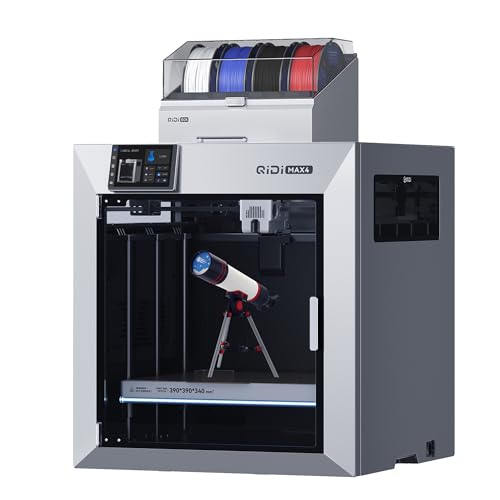
- 390 x 390 x 340mm build volume
- 65℃ active heated chamber
- AI camera and multi-color expansion
Best For: Oversized industrial parts and high-temp filaments
Enclosed High-Speed Precision

- Active-heated chamber for PLA through Nylon
- CoreXY speed with accurate, repeatable output
- All-steel frame with auto calibration and support
Best For: Dependable enclosed printing for mixed materials and daily production
Multi-Color Heated Chamber Power
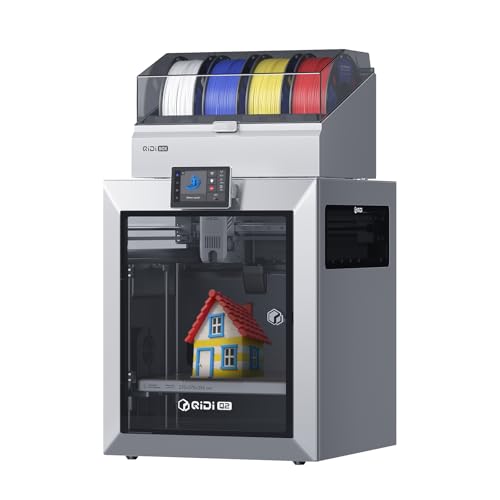
- 65 0C heated chamber for better adhesion and less warping
- Up to 16-color multi-material printing support
- 370 0C nozzle plus monitoring and recovery features
Best For: Advanced users who want multi-color capability and high-temp material support
Large-Format Heated Build

- 11.8×11.8×12.99 in build volume for large parts
- Actively heated 60b0C chamber for advanced filaments
- CoreXY frame with fast, accurate printing
Best For: Large enclosed prints like helmets, models, and engineering parts
Industrial High-Temp Multicolor Workhorse

- 65°C active chamber heating for ABS, ASA, PC, and Nylon
- Four independent extruders for true multicolor and multi-material printing
- HEPA13 filtration and sealed enclosure for cleaner indoor use
Best For: High-temp engineering prints and efficient multicolor jobs
Advanced Enclosed Multi-Material Choice
- 2nd-gen 65°C heated chamber for better adhesion and less warping
- 370°C nozzle supports engineering plastics and composites
- Up to 16-color printing with the QIDI BOX and dry-while-print handling
Best For: Users who need multi-color printing and high-temp material support
Fast Ready-to-Print Compact Option
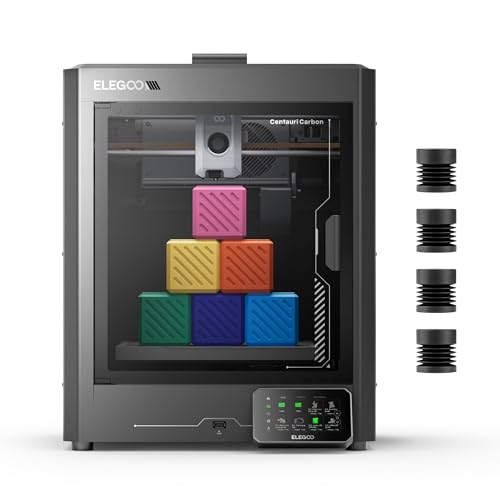
- Fully assembled and pre-calibrated for quick setup
- 500mm/s CoreXY motion with 20,000mm/s² acceleration
- 320°C nozzle and enclosed chamber support advanced materials
Best For: Users who want speed and advanced-material support without chamber heating focus
High-Heat CoreXY Pick – QIDI PLUS4 3D Printer, 65℃ Chamber Heating
If you want a 3d printer with heated chamber support for engineering filaments, the QIDI PLUS4 is built around temperature stability and speed. Its 65℃ active chamber heating, 370℃ nozzle, and large CoreXY format make it a strong fit for users who need to reduce warping while printing ABS, ASA, PA, PC, and CF-filled materials.
Best For: Users who want a fast, large-format enclosed printer for high-temp materials and more automated control.
Pros:
- 65℃ active chamber heating with air circulation and dual-layer insulation helps keep temperatures more even.
- 370℃ high-temp nozzle expands compatibility to materials like PPS-CF, PPA-CF/GF, ABS, ASA, PC, and PA.
- Large 12 x 12 x 11 inch build area supports bigger parts or multiple models at once.
- Remote printing, camera monitoring, filament break detection, and rapid unbox-to-print setup add convenience.
Cons:
- The multi-color QIDI BOX accessory is not included and is listed for a later launch.
- At 59.4 pounds, it is a substantial machine to move and place.
This is a compelling option if your priority is a heated chamber printer that balances speed, build size, and high-temperature material support.
Multi-Color Heated Chamber Choice – Creality K2 Plus Combo
The Creality K2 Plus Combo stands out if you are shopping for a 3d printer with heated chamber support and want multi-material capability in the same machine. Its actively heated chamber and high-temp nozzle open the door to filaments such as ABS, PETG, PA-CF, PLA-CF, PET, ASA, and PPA-CF, while the CFS system adds up to 16-color printing.
Best For: Makers who want heated-chamber performance plus multi-color printing and automated filament handling.
Pros:
- Actively heated chamber helps improve results with higher-temperature materials.
- Supports up to 16 colors when paired with as many as four CFS units.
- Step-servo motor system and 30,000mm/s² acceleration are designed for fast printing.
- Dual AI cameras, auto-leveling compensation, and a filament cutter add automation and monitoring.
Cons:
- Multi-color printing depends on the CFS setup, which adds system complexity.
- The large-format machine is hefty at 27.5 pounds and takes significant space.
Overall, this is a feature-rich pick for users who want an enclosed machine that combines heated-chamber capability with serious color and material flexibility.
Toolhead Efficiency Pick – Flashforge Creator 5 Pro Active Heating
If you need a 3d printer with heated chamber control and want less waste in multi-material jobs, the Flashforge Creator 5 Pro is a specialized option. Its active chamber heating reaches 65℃ to help reduce warping on ABS, ASA, and PA, while the four independent toolheads are designed to avoid flushing and color bleed.
Best For: Users who print mixed-material or multi-tool projects and want an enclosed, heated chamber setup.
Pros:
- 65℃ active chamber heating helps stabilize high-temp materials and reduce warping.
- Four independent toolheads eliminate flushing and avoid color bleed between materials.
- HEPA13 filtration captures 99.97% of particles for safer indoor use.
- CoreXY frame, vibration compensation, and 600mm/s speed target production-style printing.
Cons:
- The 256x256x256mm build volume is smaller than some large-format competitors.
- It is a more specialized system, so it may be more printer than casual users need.
This model makes the most sense when tool changing efficiency and chamber heating matter more than raw build size.
Large Format Industrial Pick – QIDI Max4 Combo 65℃ Heated Chamber
The QIDI Max4 Combo is aimed at buyers who want a 3d printer with heated chamber support and a much larger build area for industrial-style parts. Its 65℃ active heated chamber, 390 x 390 x 340mm volume, and high-flow hotend are intended to improve print conditions for materials like ABS-CF, PC, and PPS-CF.
Best For: Large prototypes, industrial parts, and users who need high-temperature material support in an oversized enclosure.
Pros:
- Huge 390 x 390 x 340mm build volume handles large parts in one print.
- 65℃ active heated chamber supports demanding materials and helps reduce warping.
- 800mm/s max speed and 30,000mm/s² acceleration are built for productivity.
- AI camera monitoring and QIDI BOX compatibility add automation and future expansion.
Cons:
- The Polar Cooler is not included and must be purchased separately.
- At 120 pounds, this is a very heavy machine that is not easy to relocate.
For users who need maximum size and high-temp capability, this is the most industrial-minded option in the group.
Enclosed High-Speed Precision – Original Prusa CORE One+
If you want a 3d printer with heated chamber performance that still feels practical for everyday use, the Original Prusa CORE One+ is built around speed, stability, and material flexibility. Its fully enclosed active-heated chamber helps reduce warping and supports stronger layer adhesion for materials like PLA, PETG, ASA, PC, and Nylon, while the CoreXY motion system aims for accurate, repeatable output.
Best For: Users who want a dependable enclosed printer for mixed-material prototyping, workshop work, and long-term use.
Pros:
- Fully enclosed active-heated chamber supports a wide range of materials.
- High-speed CoreXY motion system is designed for precision and reliability.
- Automatic top vent and Easy Flex Loading simplify daily operation.
- Rigid all-steel exoskeleton is built for long-term durability.
Cons:
- Large, heavy machine may take more space than compact desktop printers.
- Premium feature set may be more than casual hobbyists need.
Overall, this is a strong pick if you want a heated-enclosure printer that emphasizes consistency, professional support, and a ready-to-print setup. The open Prusa ecosystem and included support make it especially appealing for users planning to print regularly.
Multi-Color Heated Chamber Power – QIDI Q2 Combo
The QIDI Q2 Combo is a serious 3d printer with heated chamber features for users who want multi-color output and advanced material support in one system. Its 65 0C heated chamber is designed to reduce warping and improve adhesion, while the 370 0C nozzle and CoreXY motion platform expand compatibility to demanding materials and high-speed work.
Best For: Makers who want multi-color printing, high-temperature capability, and enclosed stability for advanced filaments.
Pros:
- 65 0C heated chamber helps with warping reduction and stronger layer bonding.
- Supports up to 16-color multi-material printing with the QIDI BOX.
- 370 0C nozzle opens the door to advanced and composite materials.
- Includes auto-leveling, AI camera monitoring, and power-loss recovery.
Cons:
- Multi-color and drying features add complexity beyond basic printers.
- Larger footprint and feature set may be excessive for simple PLA-only use.
For buyers focused on capability, the Q2 Combo stands out as a feature-rich enclosed machine that combines heated-chamber control with advanced extrusion and safety systems. It is especially compelling if you want professional-grade printing without giving up multi-material flexibility.
Large-Format Heated Build – Original Prusa CORE One L
If your priority is a 3d printer with heated chamber space for bigger parts, the Original Prusa CORE One L is built around a large enclosed build volume and stable thermal control. Its actively heated 60b0C chamber is meant to improve layer adhesion and reduce warping for advanced materials such as ASA, ABS, PC, and Nylon, while the CoreXY platform focuses on high-speed precision.
Best For: Users who need a larger enclosed printer for full-scale parts, helmets, and engineering materials.
Pros:
- Large 11.8d711.8d712.99 in build volume handles oversized prints.
- Actively heated 60b0C chamber supports advanced materials and better adhesion.
- Rigid CoreXY frame is designed for high-speed, accurate output.
- Unpack-and-print setup with automated sensors simplifies startup.
Cons:
- Large-format design takes up substantial desk or shop space.
- Weight and size may make it less convenient to move.
This model makes the most sense when you need both enclosure and scale. It combines Prusa’s support ecosystem with a chamber-heated large-format platform, making it a practical option for bigger functional parts and professional projects.
Industrial High-Temp Multicolor Workhorse – FLASHFORGE Creator 5 Pro
If you want a 3d printer with heated chamber for engineering-grade parts, the FLASHFORGE Creator 5 Pro is built around stability. Its active chamber heating reaches up to 65°C, helping reduce warping and improve layer adhesion on ABS, ASA, PC, and Nylon while the sealed enclosure and HEPA13 filtration make it more suitable for offices, schools, and home workshops.
Best For: Users who need high-temperature material support, cleaner indoor operation, and fast multicolor production.
Pros:
- 65°C active chamber heating supports tougher materials and more consistent results.
- Four independent extruders enable true multicolor and multi-material printing without nozzle purging.
- 600mm/s print speed and 30,000mm/s² acceleration suit high-throughput jobs.
- HEPA13 recirculation filtering and a fully sealed enclosure help control particles and odors.
Cons:
- Industrial feature set may be more than casual users need.
- Large, advanced system can take more planning than a basic desktop printer.
Overall, this is a strong pick if your priority is a heated-chamber 3d printer that balances material capability, speed, and safer enclosed operation. The independent toolheads also make it stand out for serious multicolor work.
Advanced Enclosed Multi-Material Choice – QIDI Q2 Combo
The QIDI Q2 Combo is a compelling 3d printer with heated chamber if you want a machine tuned for demanding materials and controlled indoor printing. Its 2nd-generation 65°C heated chamber helps minimize warping, while the 370°C nozzle and CoreXY motion system are designed to keep high-speed prints stable and precise.
Best For: Makers who want multi-color capability, high-temp material support, and a safety-focused enclosed printer.
Pros:
- 65°C heated chamber improves layer adhesion and reduces warping on tougher materials.
- 370°C nozzle supports engineering plastics and composites.
- QIDI BOX enables up to 16-color printing and dry-while-print filament handling.
- Triple filtration, closed-loop temperature controls, and flame-retardant chamber add peace of mind.
Cons:
- Multi-system setup is more specialized than a basic single-material printer.
- Large, advanced feature set may be overkill for simple PLA-only projects.
In practical terms, the Q2 Combo is aimed at users who want a heated chamber printer with broad material support and modern automation. It combines speed, safety, and multi-color flexibility in one enclosed platform.
Fast Ready-to-Print Compact Option – ELEGOO Centauri Carbon
The ELEGOO Centauri Carbon is a practical choice if you want an enclosed high-speed printer, but it is not a true 3d printer with heated chamber in the same way as the other models here. Instead, it focuses on a rigid CoreXY frame, a 320°C nozzle, and enhanced cooling to support carbon fiber reinforced filament and other advanced materials.
Best For: Buyers who want a ready-to-print, high-speed enclosed machine for strong, detailed parts.
Pros:
- Fully assembled and pre-calibrated for fast setup right out of the box.
- CoreXY design reaches up to 500mm/s with 20,000mm/s² acceleration.
- 320°C brass-hardened steel nozzle supports advanced filaments like carbon fiber reinforced material.
- Built-in chamber camera and dual LED lighting make monitoring easier.
Cons:
- Does not list an active heated chamber, so it is less focused on chamber temperature control.
- Build volume is more compact than some larger industrial options.
If your priority is speed, easy setup, and strong material support rather than chamber heating specifically, the Centauri Carbon is an appealing option. It offers a lot of performance in a compact, ready-to-run package.
How We Picked the Best 3d Printer with Heated Chamber
We focused on printers that offer real thermal control, not just a fully enclosed frame. Priority went to chamber-heated models, high nozzle temperatures, strong motion systems, useful automation, and features that improve repeatability. Build size, multi-material support, and filtration also mattered for buyers comparing a 3d Printer with Heated Chamber for home, studio, or small-shop use.
Quick Comparison
Use chamber heat as a starting point, then compare the features that match your workload. Some models are better for high-temp functional parts, while others are more appealing for multicolor convenience, larger builds, or simpler out-of-the-box operation. In this group, look especially at chamber temperature, nozzle capability, and whether the machine is tuned for speed or precision.
Key Buying Factors for a 3d Printer with Heated Chamber
Chamber Temperature
Higher chamber temperatures help reduce warping and improve layer bonding on ABS, ASA, nylon blends, and other demanding materials. For most serious users, a true heated chamber is more valuable than passive enclosure alone.
Nozzle and Hotend Capability
If you plan to print high-temp polymers or reinforced filaments, check the maximum nozzle temperature and whether the toolhead is designed for sustained heat. A 370°C-class system gives more flexibility than a standard desktop setup.
Build Volume
Larger machines are useful for functional enclosures, jigs, and batch production, but they also need stronger thermal consistency. Make sure the chamber can support the full build area evenly, not just the center of the plate.
Speed, Automation, and Material Handling
High-speed CoreXY systems can be excellent, but only if the chamber and motion system stay stable. Auto calibration, camera monitoring, and enclosed filament paths can save time and reduce failed prints. For multi-color buyers, verify how the feeding system affects purge waste and maintenance.
Who Should Buy Which 3d Printer with Heated Chamber?
Choose a compact heated-chamber model if you want better results with engineering filaments in a smaller footprint. Pick a large-format option if your work is size-driven and you need room for functional parts. Go for a multicolor system if presentation, prototyping, or parts labeling matter more than ultimate simplicity. If you want the easiest upgrade from a basic printer, prioritize strong automation and a well-supported ecosystem over the highest chamber temperature alone.