Choosing the right programmable laboratory power supply can make testing faster, safer, and far more repeatable. Whether you need multi-channel flexibility, USB/PC control, or clean low-ripple output, the right bench PSU saves time on every project.
Below, we focus on the most useful features for lab, repair, and development work so you can quickly narrow the field and choose with confidence.
Best 10 Programmable Laboratory Power Supply Picks for 2026
Best for Multi-Rail Testing
UNI-T UDP3305S-E 4-Channel Lab Supply

- Four channels with CH1/CH2 series-parallel support
- 328W total output with 10mV/1mA resolution
- USB, RS232, LAN, and digital I/O for remote control
Best For: Engineers and makers who need a flexible multi-output bench supply for automated testing.
Best for Programmable Control
Kiprim DC Power Supply 0-60V 0-5A

- 0-60V / 0-5A output with fine adjustment
- 4 memory presets and 10-point waveform editing
- Color LCD plus multiple protection features
Best For: Users who want programmable presets, basic waveform control, and PC-connected bench testing.
Best for Multi-Channel Precision
UNI-T UDP3305S 4-Channel Lab PSU

- 4 channels for flexible bench testing
- 1mV/1mA resolution for fine adjustment
- 328W total output with strong accuracy
Best For: Engineers and hobbyists who need a precise multi-output bench supply.
Best for High-Power Workbenches
OWON SPE8205 80V 20A Programmable DC Supply
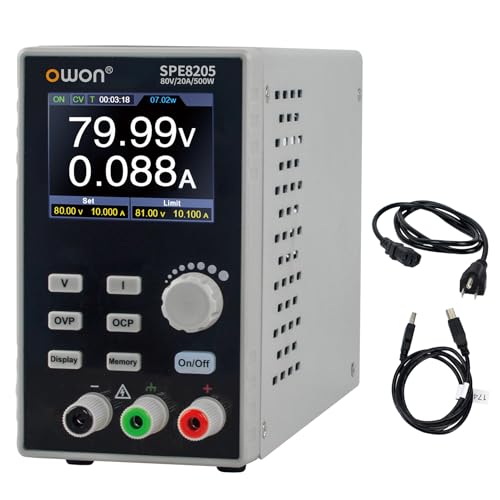
- 0-80V / 0-20A output with up to 500W capability
- Programmable presets, waveform editing, and timing output
- LCD readout plus multiple protection features
Best For: Users who need a compact high-power programmable supply for bench testing, repair, and prototyping.
Best for Easy Setup
Korad KA3005P 30V 5A Bench Supply

- Fine/coarse knobs and 4 memory presets speed up repeat setups.
- 0.001V/0.001A resolution with a bright 4-digit display.
- USB and RS232 remote control for programmable bench use.
Best For: Bench users who want an easy-to-use programmable supply with solid accuracy and remote-control options.
Best for PC-Controlled Testing
32V 10A Programmable Bench PSU

- USB-C PC control for software-based adjustments and logging
- Dual display shows set and actual values simultaneously
- Fine 1mV / 1mA encoder control with OCP protection
Best For: Electronics repairers and lab users who want software control, precise adjustment, and a modern bench layout.
Best for Programmable Presets
FNIRSI DPS-150 30V 5A DC Supply

- 30V/5A, 150W output with fine adjustment
- PC programmable with 6 saved output presets
- Low ripple, CC/CV control, and 8 safety protections
Best For: Makers and technicians who want a compact bench supply with preset control and flexible inputs.
Best for PC Control
NICE-POWER 300V 1A Programmable Bench Supply
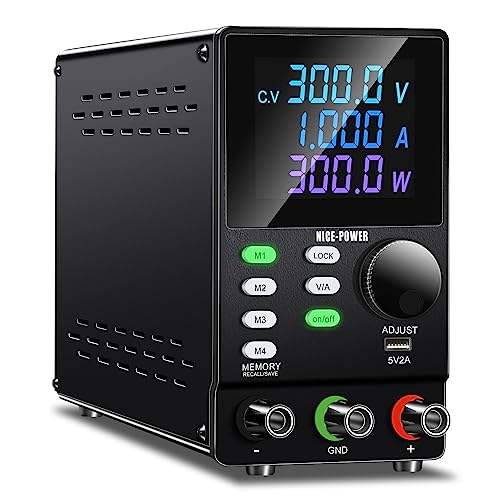
- RS232/USB PC control with Windows software
- 300V/1A regulated output for higher-voltage testing
- 4 memory presets, encoder knob, and lock button
Best For: Users who want computer-controlled output, saved presets, and a regulated high-voltage bench supply.
Best for PC-Programmable Output
FNIRSI DPS-150 0-30V 0-5A Supply

- PC-programmable with 6 preset output groups
- 0-30V, 0-5A adjustable output with CC/CV control
- Low ripple plus multiple safety protections
Best For: Makers, repair techs, and hobbyists who want a compact programmable bench supply with PC control.
Best for PC-Controlled Precision
DC Power Supply 32V 10A USB-C Programmable

- PC control for more flexible bench workflow
- 32V 10A output covers common lab tasks
- OCP, lock, and dual display improve usability
Best For: Electronics hobbyists and repair users who want adjustable output with PC connectivity and extra convenience features.
Best for Multi-Rail Testing – UNI-T UDP3305S-E 4-Channel Lab Supply
If you need a programmable laboratory power supply for bench work, the UNI-T UDP3305S-E stands out with four channels, fine 10mV/1mA resolution, and enough output flexibility for small electronics projects, repair tasks, and burn-in testing. It combines solid output accuracy with remote control options and a clear front-panel display for easier day-to-day use.
Best For: Engineers, technicians, and hobbyists who want a flexible multi-output bench supply for prototyping, testing, and automated cycle runs.
Pros:
- Four channels with CH1/CH2 series-parallel support for more versatile setups
- 328W total output with fine 10mV/1mA adjustment resolution
- List, delay, and waveform template functions for repeatable test sequences
- USB, RS232, LAN, and digital I/O for remote control and integration
Cons:
- Higher cost and complexity than basic single-channel supplies
- CH4 is limited to a fixed 5V/2A output
- May be more power supply than casual bench users need
The UDP3305S-E is a strong fit if you want a programmable laboratory power supply that can handle multiple rails, automation, and repeatable test routines without relying on external wiring tricks. It is especially appealing for labs and serious makers who value control, connectivity, and clean channel management.
Best for Programmable Control – Kiprim DC Power Supply 0-60V 0-5A
If you want a programmable laboratory power supply with saved presets, editable waveforms, and PC control, the Kiprim DC605S is built for bench work that needs repeatable settings and a bit more automation than a basic bench supply.
Best For: Makers, repair techs, and electronics hobbyists who want programmable outputs, USB connectivity, and solid protection in a compact lab supply.
Pros:
- 0-60V / 0-5A output range with fine 10mV and 1mA resolution
- Stores 4 memory presets and supports 10-point waveform editing
- Color LCD shows set and actual values, power, time, and output status
- Multiple protections plus intelligent fan cooling for safer operation
Cons:
- 110V input only, so it may not suit all regions without proper power compatibility
- Front USB port is limited to 5V/1A charging, not a high-power charger
- Software and driver setup may take extra effort for some users
This Kiprim unit is a strong fit if you need a programmable laboratory power supply for routine testing, saved setups, and simple waveform work without jumping to a higher-end bench instrument.
Best for Multi-Channel Precision – UNI-T UDP3305S 4-Channel Lab PSU
If you need a programmable laboratory power supply for bench testing, repair work, or education, the UNI-T UDP3305S stands out for its four channels, fine 1mV/1mA resolution, and strong output accuracy. It’s a practical fit when you want more control than a basic bench supply without jumping to a higher-end instrument class.
Best For: Engineers, technicians, and electronics hobbyists who want a multi-output programmable bench supply with precise adjustment and solid power headroom.
Pros:
- Four channels give you more flexibility for mixed-voltage projects and test setups.
- 1mV/1mA resolution supports fine tuning during calibration and debugging.
- 328W total output is strong for a wide range of lab and repair tasks.
- Good voltage and current accuracy for repeatable measurements.
Cons:
- Larger, heavier design than a compact single-output supply.
- May be more capability than casual DIY users need.
Overall, the UDP3305S is a strong programmable laboratory power supply if you value multiple channels and precise control in one bench unit. It is especially appealing for users who regularly test several circuits at once or need tighter adjustment than entry-level supplies provide.
Best for High-Power Workbenches – OWON SPE8205 80V 20A Programmable DC Supply
If you need a programmable laboratory power supply with serious output headroom, the OWON SPE8205 is built for bench work that demands both voltage range and current flexibility. Its constant-power design, LCD readout, and memory presets make it a practical fit for testing, prototyping, and repair tasks.
Best For: Electronics hobbyists, repair techs, and lab users who want a compact programmable supply with high voltage/current capability and quick preset recall.
Pros:
- Wide 0-80V and 0-20A range with up to 500W output for demanding projects
- Programmable features include memory presets, waveform editing, and timing output
- 2.8-inch LCD shows set vs actual voltage/current, power, runtime, and status
- Built-in protections and USB communication help with safer operation and PC control
Cons:
- Higher capability may be more than casual bench users need
- Single-channel design limits use for dual-output setups
- Feature set can feel advanced if you only need basic adjustable DC output
Overall, the OWON SPE8205 stands out as a programmable laboratory power supply for users who want more than a basic adjustable bench unit, especially when high output range, preset control, and protection features matter.
Best for Easy Setup – Korad KA3005P 30V 5A Bench Supply
If you want a programmable laboratory power supply that is easy to learn and practical for everyday bench work, the KORAD KA3005P is a strong fit. It combines fine/coarse controls, clear 4-digit readouts, and remote programming in a compact linear design that suits hobbyists, repair benches, and small labs.
Best For: Users who want straightforward manual control plus USB/RS232 programmability for testing, prototyping, and light lab use.
Pros:
- Fine/coarse adjustment and memory recall make setup fast and repeatable.
- 4-digit LED display with 0.001V and 0.001A resolution is easy to read.
- Built-in protections, load on/off control, and a quiet fan improve daily usability.
- USB and RS232 support adds remote control options for automation.
Cons:
- Single-output 30V/5A capacity may be limiting for higher-power projects.
- Programming software and interface features may be more than casual users need.
Overall, the KA3005P offers a balanced mix of control, accuracy, and safety for anyone shopping for a programmable laboratory power supply without moving into a much more expensive bench platform.
Best for PC-Controlled Testing – 32V 10A Programmable Bench PSU
If you want a programmable laboratory power supply that feels modern and practical, this SKY TOPPOWER unit stands out with USB-C PC control, dual output/actual displays, and fine encoder-based adjustment. It’s a strong fit for electronics work where repeatable settings, current limiting, and real-time monitoring matter more than basic bench supply features.
Best For: Electronics repair, test benches, battery charging, and lab setups that benefit from software control and precise tuning.
Pros:
- USB-C PC communication supports software control and parameter logging
- Dual display shows set values and actual output at the same time
- 1mV / 1mA encoder adjustments help with precise voltage and current tuning
- 18W Type-C charging port adds extra utility on a crowded bench
Cons:
- Not the simplest pick if you only need a basic manual bench supply
- PC-control features may be unnecessary for casual hobby use
- White finish may show bench wear more easily over time
For buyers who want a programmable laboratory power supply with modern connectivity and tight control, this model offers a useful mix of accuracy, convenience, and protection features. It makes the most sense when repeatable testing and safer output management are more important than keeping the interface minimal.
Best for Programmable Presets – FNIRSI DPS-150 30V 5A DC Supply
The FNIRSI DPS-150 is a practical programmable laboratory power supply for bench work that needs decent precision, low ripple, and quick recall of saved settings. With 30V/5A output, CC/CV control, and multiple input options, it fits electronics testing, light DIY repair, and small CNC or module projects.
Best For: Makers and technicians who want a compact bench supply with preset outputs, PC programmability, and flexible power input options.
Pros:
- 30V, 5A, 150W output with fine 0.01V and 0.001A adjustment
- PC programmable with 6 preset parameter groups for faster workflow
- <20mV ripple, CC/CV mode, and 8 protection features for safer testing
- 2.8-inch IPS display with flip support and clear numeric/curve readouts
Cons:
- No power adapter included
- Battery charging requires added reverse-current protection
- Best suited to light-to-moderate bench use rather than heavy lab loads
Overall, the DPS-150 stands out if you want a compact programmable laboratory power supply with preset convenience and low-noise output. It is especially appealing for hobbyists and bench testers who value control, flexibility, and a modern display in a small footprint.
Best for PC Control – NICE-POWER 300V 1A Programmable Bench Supply
If you want a programmable laboratory power supply with computer control, this NICE-POWER model stands out for its RS232/USB connectivity, Windows software, and high-voltage 300V/1A output range. It is a practical fit for bench testing, stored presets, and repeated adjustments where precision matters more than simple analog control.
Best For: Engineers, hobbyists, and lab users who want PC-based control, memory presets, and a regulated high-voltage bench supply.
Pros:
- RS232/USB support with Windows software for computer-based control and data logging
- Encoder knob makes fine voltage and current adjustments easier
- 4 memory presets plus output switch and lock button improve repeatability and safety
- Color display and multiple protection features add everyday usability
Cons:
- Software is Windows only, which limits compatibility
- 300V output may be more than many basic bench users need
- Higher-spec features can add complexity for first-time buyers
As a programmable laboratory power supply, this unit is strongest when you need flexible digital control, saved settings, and safer workflow controls for testing or development work. It is less about simplicity and more about giving you the tools to adjust, store, and monitor output with confidence.
Best for PC-Programmable Output – FNIRSI DPS-150 0-30V 0-5A Supply
If you want a programmable laboratory power supply that can be adjusted quickly for bench work, the FNIRSI DPS-150 stands out for its PC-programmable output, preset memory, and low ripple design. It’s a practical fit for electronics testing, CNC projects, and general repair tasks where stable voltage and current control matter.
Best For: Makers, repair techs, and hobbyists who want a compact programmable bench supply with PC control and multiple input options.
Pros:
- 0-30V, 0-5A output with CC/CV switching and fine digital adjustment
- PC-programmable with 6 preset output groups for faster repeat use
- <20 mV ripple and multiple safety protections for sensitive electronics
- 2.8-inch IPS display with 90° flip for easier reading at different angles
Cons:
- 150W capacity may be limiting for higher-power bench applications
- Best features depend on using the programmable workflow, which adds setup steps
Overall, the DPS-150 is a strong choice if you want a programmable laboratory power supply that balances flexibility, protection, and convenient preset control without moving into a larger lab-grade unit.
Best for PC-Controlled Precision – DC Power Supply 32V 10A USB-C Programmable
If you want a programmable laboratory power supply that handles bench testing, repair work, and battery charging without taking up much space, this 32V 10A model is a practical all-around pick. It adds PC control, USB-C quick charging, OCP protection, a lock function, and a clear dual display for more controlled everyday use.
Best For: Electronics hobbyists and repair users who want adjustable output with PC connectivity and extra convenience features.
Pros:
- PC control plus USB-C support adds flexibility for modern lab setups
- 32V 10A output range suits a wide mix of testing and charging tasks
- OCP and lock features help protect gear and reduce accidental changes
- Dual display and encoder knob make adjustments quick and readable
Cons:
- Not the choice if you need higher voltage than 32V
- Feature set may be more than casual users actually need
This programmable laboratory power supply stands out most for users who value control and convenience over bare-minimum simplicity. For bench work where precision, protection, and easy adjustments matter, it offers a strong mix of modern features and useful output capability.
How We Picked These Programmable Laboratory Power Supply Options
We prioritized output range, resolution, regulation quality, protection features, and control convenience. For a Programmable Laboratory Power Supply, the most important question is not just peak voltage or current, but whether the unit can deliver stable, repeatable output for your actual workload.
We also favored models with clear displays, reliable adjustment methods, PC or USB control where useful, and enough channel or output flexibility to support electronics repair, prototyping, battery work, and bench validation.
Quick Comparison
In broad terms, the group splits into three practical categories: compact single-output models for everyday bench use, higher-current or higher-voltage units for more demanding loads, and multi-channel supplies for mixed-voltage setups. If you need convenience and portability, a simpler adjustable PSU may be enough. If you need automation or test scripting, PC software and remote control matter more.
Key Buying Factors for a Programmable Laboratory Power Supply
Output Range and Channels
Match the voltage and current range to your real applications. A 30V/5A supply is often enough for hobby electronics and small boards, while higher-voltage or higher-current units are better for motors, LED strings, or specialized test gear. Multi-channel models are useful when you need simultaneous rails.
Resolution, Accuracy, and Ripple
Fine voltage/current resolution helps with sensitive circuits and calibration work. Accuracy and low ripple matter when you are powering analog devices, RF-related circuits, or noise-sensitive prototypes. A Programmable Laboratory Power Supply should be stable under load, not just flexible on paper.
Protection and Safety
Look for over-current protection, short-circuit protection, output enable controls, and lock features if the supply will be shared or used in a busy workspace. These features reduce mistakes and protect both the device and your project.
Controls and Automation
Knobs, encoder inputs, saved presets, USB-C, and PC software all improve workflow. If you often repeat tests or need logging and remote adjustment, programmability is a major advantage. If you just need occasional bench power, simpler controls may be perfectly adequate.
Who Should Buy Which Programmable Laboratory Power Supply?
Choose a compact single-output model if you need a dependable everyday bench supply for prototyping, board repair, and general electronics work.
Choose a multi-channel programmable unit if you work on systems that need more than one rail at once, such as mixed digital and analog circuits.
Choose a higher-voltage or higher-current model if your projects involve bigger loads, power electronics, or broader test coverage.
Choose a PC-controllable supply if you value automation, repeatable test sequences, and tighter workflow integration in the lab.
In short, the best Programmable Laboratory Power Supply is the one that matches your voltage, current, control, and safety needs without paying for capabilities you will not use.