Choosing the right balance matters when every milligram counts. The best benchtop precision balances combine stable readings, reliable calibration, and the right capacity for your workflow.
This roundup focuses on practical options for laboratories, schools, quality control, jewelry, compounding, and reloading, so you can match accuracy to real-world use.
Best 10 Benchtop Precision Balances Picks for 2026
Budget Pick
U.S. Solid 2000g x 0.01g Precision Balance

- 0.01 g readability up to 2000 g
- Runs on AC power or batteries
- Includes piece counting and tare
Best For: Budget-minded precision weighing for labs, jewelry, and kitchens
Value Lab Scale

- 3000 g capacity with 0.1 g readability
- Piece counting with selectable references
- Auto lighting and battery indicator
Best For: Routine lab and school weighing with simple counting needs
Professional Choice
Adam Luna LTB 3602e Precision Balance

- 3600 g capacity with 0.01 g readability
- Backlit LCD with level indicator
- Includes 5-year warranty and adapter
Best For: Professional lab, manufacturing, and quality-control weighing
Advanced Lab Model
Ohaus Adventurer AX423 Precision Balance

- 420 g capacity with 1 mg readability
- Color touchscreen and dual USB ports
- Draft shield supports controlled weighing
Best For: High-resolution lab work with data tracking and repeatability
Portable Lab Balance
A&D Weighing Newton Portable Balance, 1200g x 0.01g

- 1-second response time
- 0.01 g readability, 1200 g capacity
- Comparator, specific gravity, and counting modes
Best For: Portable laboratory and scientific weighing
Compact Multi-Unit Scale
Bonvoisin Digital Gram Scale 6000g x 0.1g

- 6 kg capacity with 0.1 g readability
- Six switchable units, including carat and tl
- Tare, counting, and dual power included
Best For: Jewelry, lab, and small-parts weighing
Advanced Touchscreen Precision Balance
Ohaus AX2202 Adventurer AX Precision Balance
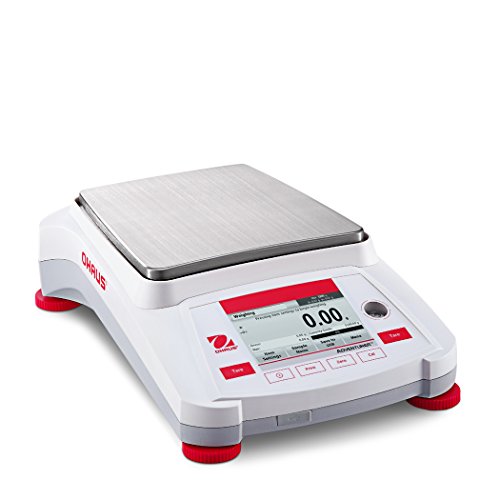
- 2200 g capacity with 0.01 g readability
- Nine lab modes and AutoCal internal calibration
- Color touchscreen with dual USB connectivity
Best For: Feature-rich laboratory precision weighing
Ultra-Fine Lab Pick
Hanchen 0.1mg Analytical Balance

- 0.0001 g readability with 120 g capacity
- 3-sided draftshield helps reduce airflow effects
- USB and RS232 data output with PC software
Best For: Compact lab, pharmacy, jewelry, and chemical bench work
Pro Bench Balance

- 122 g capacity with 0.001 g readability
- Fast, stable results for repeated weighing
- Includes 100 g calibration weight and AC adapter
Best For: Professional users needing a compact lab or reloading balance
Research-Ready Choice
U.S. Solid 120g Analytical Balance
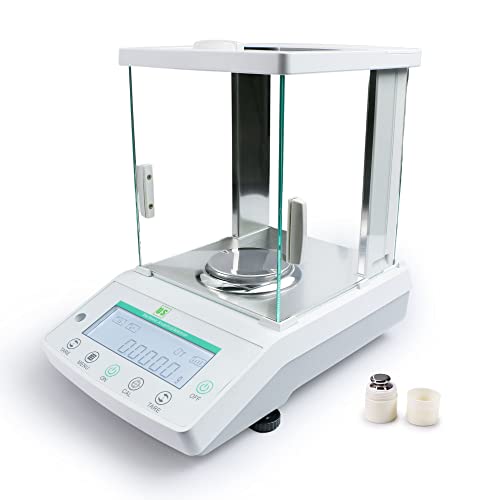
- 0.1 mg readability and 0.2 mg repeatability
- RS-232 interface plus backlit LCD display
- Underhook weighing for liquids and density work
Best For: Controlled lab, compounding, and precision measurement tasks
Budget Pick – U.S. Solid 2000g x 0.01g Precision Balance
If you need benchtop precision balances for everyday lab, jewelry, or kitchen work, this U.S. Solid model delivers fine 0.01 g resolution without adding much to the budget. It covers a useful 0.1 g minimum to 2000 g range, includes piece counting, and gives you g, ct, oz, and lb modes for common weighing tasks.
Best For: Budget-conscious users who want 0.01 g accuracy for small parts, ingredients, and jewelry.
Pros:
- 0.01 g readability with ±0.02 g repeatability
- Dual power: AC adapter or 4 x 1.5V batteries
- Piece counting, tare, manual calibration, and overload protection
- Stainless steel pan and easy-to-read LED display
Cons:
- Battery and AC adapter flexibility is useful, but batteries are not included
- Accuracy is good for general precision work, not ultra-micro weighing
For classrooms, small labs, and maker benches, this balance covers the core features most buyers need at a value price. It is a straightforward option when you want practical precision rather than advanced lab-only functionality.
Value Lab Scale – PCE-BS 3000 Precision Balance
Among benchtop precision balances, the PCE-BS 3000 is built for straightforward lab, school, and industrial weighing where 0.1 g readability is enough. It adds piece counting, middle-of-range taring, and automatic display lighting, making it a practical choice for routine sample checks and counting tasks.
Best For: Schools, labs, and workplaces that need reliable 0.1 g weighing with simple counting functions.
Pros:
- 3000 g capacity with 0.1 g readability
- Piece counting with selectable reference piece counts
- Taring can be used several times within the range
- Automatic display lighting and battery indicator
Cons:
- Lower resolution than 0.01 g precision balances
- Feature set is basic compared with premium lab models
This is a sensible fit if your workflow values durability and routine accuracy over high-resolution measurements. It keeps the controls practical and the functions focused on everyday weighing tasks.
Professional Choice – Adam Luna LTB 3602e Precision Balance
If you are comparing benchtop precision balances for professional lab or quality-control work, the Adam Luna LTB 3602e stands out with 3600 g capacity and 0.01 g readability. It is designed for demanding weighing tasks and adds practical setup aids like a level indicator, adjustable feet, and a backlit LCD.
Best For: Professional users who need a higher-capacity precision balance for labs, manufacturing, or QC workflows.
Pros:
- 3600 g capacity with 0.01 g readability
- Backlit LCD for visibility in different lighting
- Level indicator and adjustable feet help with setup
- Includes power adapter, manual, and a 5-year warranty
Cons:
- Heavier and more substantial than compact entry-level balances
- Advanced use cases may still require workflow-specific accessories
For buyers who want a serious bench scale with professional positioning, this model offers a strong mix of capacity, precision, and usability. It is especially appealing when stable setup and dependable readability matter day after day.
Advanced Lab Model – Ohaus Adventurer AX423 Precision Balance
For buyers evaluating benchtop precision balances with advanced lab features, the Ohaus Adventurer AX423 is positioned for fast, repeatable weighing and data handling. Its 420 g capacity and 1 mg readability suit smaller samples, while the color touchscreen, dual USB ports, and draft shield design support more controlled laboratory workflows.
Best For: Labs that want an advanced, high-resolution balance for repeatable measurements and data tracking.
Pros:
- 420 g capacity with 1 mg readability
- Fast stabilization for repeatable weighing
- Color touchscreen with access to applications
- Dual USB ports with GLP/GMP tracking capabilities
Cons:
- Much lower capacity than higher-load benchtop balances
- Advanced features may be more than casual users need
This is the most feature-rich option in the group and makes sense when workflow, reporting, and measurement consistency matter as much as raw readability. It is best suited to users who can benefit from its lab-oriented interface and tracking tools.
Portable Lab Balance – A&D Weighing Newton Portable Balance, 1200g x 0.01g
If you need benchtop precision balances for a lab setup that also has to move around, this A&D Newton gives you a fast 1-second response time and 0.01 g readability in a compact portable form. It’s a practical pick for users who want quick measurements, basic lab functions, and the option to run on AC power or batteries.
Best For: Laboratory and scientific users who want a portable precision balance with quick readings and simple advanced functions.
Pros:
- Fast one-second response time for quicker weighing workflows
- 0.01 g readability with up to 1200 g capacity
- Comparator, specific gravity, percentage weighing, and parts counting functions
- AC or battery operation adds flexibility
Cons:
- Handheld form factor is less like a traditional fixed benchtop balance
- No calibration or touchscreen features listed
This is a solid choice if portability matters as much as precision. It’s not the most feature-heavy lab balance here, but it covers the key functions many scientific users need in a straightforward package.
Compact Multi-Unit Scale – Bonvoisin Digital Gram Scale 6000g x 0.1g
For shoppers comparing benchtop precision balances, this Bonvoisin model is a compact, space-saving option with 0.1 g readability and a 6 kg capacity. It’s geared toward general lab, jewelry, and small-parts weighing where tare and counting features matter more than high-end analytical balance features.
Best For: Jewelry, small parts, and general-purpose weighing where portability and simple functions are the priority.
Pros:
- 6 kg capacity with 0.1 g readability
- Six switchable units, including gram, ounce, pound, kilogram, tl, and carat
- Tare and counting functions help with containers and inventory tasks
- Adapter and 2 AA batteries included for dual-power use
Cons:
- Designed to be smaller than standard analytical balances
- Minimum start weight of 1 g limits ultra-light measurements
- Less precise than true 0.01 g precision balances
This is a useful everyday scale if you need a compact balance with multi-unit support and basic productivity features. It’s best viewed as a practical general-use weighing tool rather than a high-precision lab instrument.
Advanced Touchscreen Precision Balance – Ohaus AX2202 Adventurer AX Precision Balance
If you want benchtop precision balances with more advanced lab features, the Ohaus AX2202 stands out with 0.01 g readability, a 2200 g capacity, and a color touchscreen. It’s built for workflows that benefit from application modes, internal calibration, and better data handling.
Best For: Laboratory users who need a feature-rich precision balance with touchscreen control and automatic internal calibration.
Pros:
- 2200 g capacity with 0.01 g readability
- Nine application modes, including density determination, parts counting, and check weighing
- Color touchscreen and dual USB ports for modern lab workflows
- AutoCal automatic internal calibration helps maintain accuracy
Cons:
- Heavier and less portable than compact balances
- No warranty listed in the supplied details
This model is the most full-featured option in the group and is clearly aimed at serious lab use. If your priority is advanced functionality and routine calibration convenience, it’s the strongest precision balance here.
Ultra-Fine Lab Pick – Hanchen 0.1mg Analytical Balance
If you need benchtop precision balances for lab, pharmacy, jewelry, or chemical work, this Hanchen model is built around 0.1 mg readability and a 120 g capacity. Its 3-sided glass draftshield, stable base, and temperature compensation are designed to reduce airflow, vibration, and temperature-related drift so you can get more repeatable results.
Best For: Users who need a compact analytical balance with fast readouts, enclosure protection, and basic data connectivity.
Pros:
- 0.0001 g readability with a 120 g maximum capacity
- 3-sided glass draftshield and stable base for better repeatability
- USB and RS232 connectivity with matching PC software
- Backlit LCD and 8 unit conversions for everyday bench use
Cons:
- Best suited to fine measurements rather than heavier sample loads
- Space-saving footprint, but still needs a stable bench setup
Overall, this is a practical choice if you want a feature-packed analytical balance that prioritizes repeatability and data handling in a small footprint. It fits well in settings where precise measurements and easy computer communication matter.
Pro Bench Balance – A&D FX-123 Precision Scale
Among benchtop precision balances, the A&D FX-123 is aimed at users who want milligram-level accuracy in a compact workspace. It offers 122 g capacity with 0.001 g readability, plus fast, stable results for repeated weighing tasks in labs, jewelry work, hobby use, reloading, and small-parts measurement.
Best For: Buyers who want a professional-grade compact balance with solid accuracy and a calibration weight included.
Pros:
- 0.001 g readability with a 122 g weighing capacity
- Fast and stable performance for repeated measurements
- Includes AC adapter, weighing pan, manual, and 100 g calibration weight
- Compact benchtop design with an easy-to-read LCD
Cons:
- Maximum capacity is still limited to small loads
- Designed for precision use, so it is not a general-purpose top-loading scale
This model stands out if you want a compact precision balance with professional build quality and a complete starter package. The included calibration weight is especially useful for getting set up quickly.
Research-Ready Choice – U.S. Solid 120g Analytical Balance
If you are comparing benchtop precision balances for laboratory or compounding use, this U.S. Solid analytical balance focuses on accuracy and measurement flexibility. It provides 0.1 mg readability, a four-sided glass draft shield, and underhook weighing for samples that are difficult to place on the pan.
Best For: Laboratory users who want strong measurement features, including underhook weighing and RS-232 connectivity.
Pros:
- 0.1 mg readability with repeatability of 0.2 mg
- Four-sided glass draft shield helps block wind interference
- RS-232 interface for printer or computer connection
- Underhook weighing supports liquids and density calculations
Cons:
- 120 g capacity is limited to smaller samples
- Analytical balance design is best for controlled bench environments
For precise lab work, this model offers a strong mix of measurement tools and connectivity features. Its underhook capability and multi-function display make it especially useful when samples are awkward or calculations are part of the workflow.
How We Picked These Benchtop Precision Balances
We focused on the factors that matter most in daily weighing: readability, maximum capacity, repeatability, calibration features, weighing pan size, and build quality. We also considered whether each balance fits common buyer needs such as sample counting, density work, analytical weighing, or general lab tasks.
Because Benchtop Precision Balances are used in very different settings, we favored models with clear spec sheets and practical capacities rather than chasing one metric alone. The right choice depends on whether you need faster workflow, finer resolution, or more usable weighing range.
Quick Comparison
Use capacity and readability as your first filters. Higher-capacity precision balances are better for bulk samples, parts counting, and general lab use, while analytical balances with 0.1 mg readability are better for jewelry, compounding, chemistry, and small samples. If you work in a shared lab or production environment, features like automatic internal calibration, draft shielding, and stable feet can save time and reduce weighing errors.
Key Buying Factors for Benchtop Precision Balances
Readability Vs. Capacity
Readability tells you the smallest weight change the balance can show. A 0.01 g model is ideal for many lab and industrial tasks, while 0.001 g and 0.0001 g options are better when tiny differences matter. Make sure the capacity is high enough for your largest routine samples.
Calibration and Stability
Calibration is essential for trustworthy results. Internal or auto-calibration is convenient for busy labs, while external calibration can still work well if your process includes regular checks. Stable warm-up performance, anti-vibration design, and consistent environmental conditions help maintain accuracy.
Pan Size and Sample Handling
A larger pan makes it easier to weigh containers, beakers, or bulk materials. Smaller analytical pans are fine for fine powders, jewelry, and research samples, but they are less forgiving with larger vessels.
Power, Interfaces, and Functions
Consider AC power, battery options, counting modes, unit conversions, and data output if your workflow needs them. For Benchtop Precision Balances used in production or QA, these features can improve throughput and reduce handling mistakes.
Who Should Buy Which Benchtop Precision Balances?
If you need a versatile everyday lab balance, choose a mid-range precision model with solid capacity and 0.01 g readability. For chemistry, pharmacy, and jewelry work, pick an analytical balance with 0.1 mg readability and strong calibration support. For schools, QC stations, and industrial counting tasks, prioritize capacity, durability, and easy operation over ultra-fine resolution.
In short, the best balance is the one that matches your smallest required increment without sacrificing the working capacity you need. That balance keeps measurements accurate, efficient, and practical from the first sample to the last.