If you want sharper Milky Way shots, cleaner long exposures, and better time-lapses, the right tracker can make a huge difference.
This roundup of star trackers for night photography focuses on portability, alignment ease, payload support, and real-world value for DSLR and mirrorless shooters.
Best 10 Star Trackers for Night Photography Picks for 2026
Portable Wi-Fi Tracker
Sky-Watcher Star Adventurer 2i Pro Pack
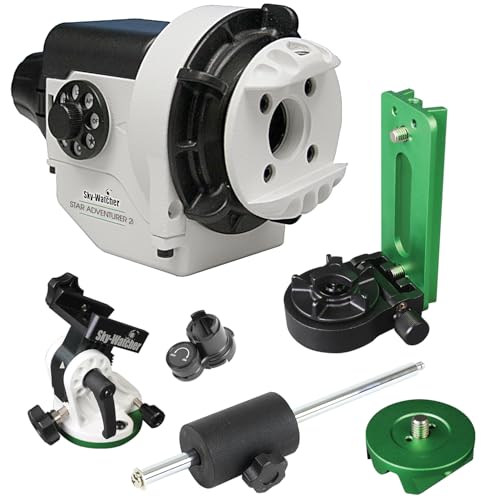
- Motorized portable tracking platform
- Wi-Fi smartphone control with SAM Console
- Deluxe equatorial base for alignment
Best For: Nightscape photographers wanting portable motorized tracking
Mechanical Minimalist
Omegon MiniTrack LX3 Essentials

- Purely mechanical, no charging needed
- Works with wide-angle and light telephoto lenses
- Supports camera loads up to 3 kg
Best For: Travel shooters wanting a battery-free tracker
Portable DSLR Tracker
Sky-Watcher Star Adventurer 2i Astro Pack

- Illuminated polar finderscope included
- Up to 72 hours from AA batteries
- Lightweight 2.4 lb portable design
Best For: DSLR nightscape shooters needing easy alignment
Simple Tracker Bundle
Omegon MiniTrack LX3 with Ball Head

- Bundle includes tracker and OM8 ball head
- Compact 950 g package
- 3 kg maximum weight recommendation
Best For: Northern-hemisphere shooters wanting an all-in-one bundle
Guidebook Pick
Night Photography Techniques Made Simple

- Step-by-step night shooting advice
- Covers Milky Way and star trails
- Explains gear, settings, and editing
Best For: Beginners learning the basics of night and astrophotography
Portable Tracking Mount

- Compact full GoTo equatorial mount
- Built-in WiFi and polar scope
- Includes counterweight and CW bar
Best For: Travel astrophotographers using DSLR or mirrorless cameras
Smart Telescope Pick
App-Controlled Seestar S30 Pro
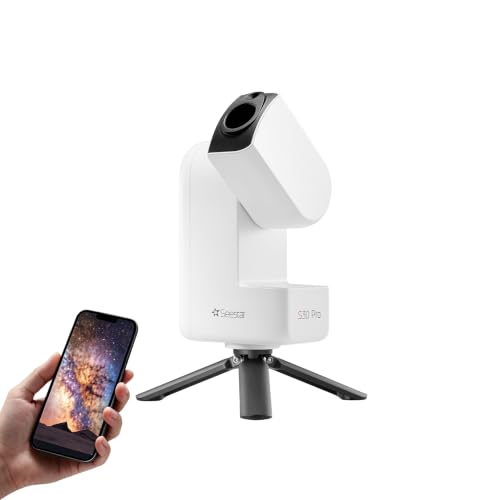
- Automatic GOTO targeting and tracking
- One-tap Milky Way and star trail modes
- Compact design with light pollution filters
Best For: New users who want easy app-controlled night sky imaging
Open-Source All-Rounder

- Stellar, moon, and custom rotation speeds
- Switches between northern and southern hemispheres
- USB-powered with no app required
Best For: Users who want a versatile, app-free tracker for astrophotography and time-lapse work
Low-Latitude Alignment Base

- Designed for low-latitude polar alignment
- CNC-machined aluminum for rigidity
- Built for SkyGuider Pro compatibility
Best For: SkyGuider Pro owners shooting near the equator or in southern regions
Beginner-Friendly Portable Tracker
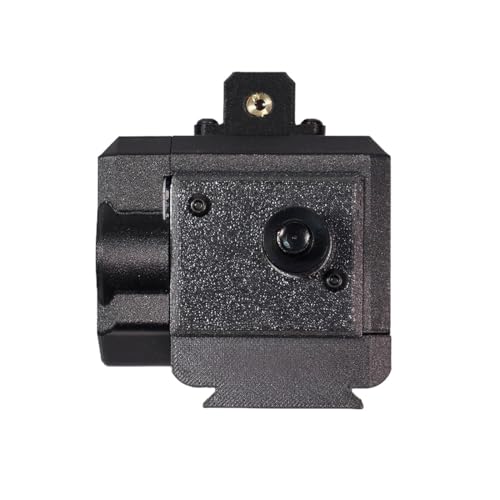
- Supports DSLR and mirrorless setups up to 4kg
- High-brightness pointer aids polar alignment
- Runs on 5V power banks for portability
Best For: Beginners who want a compact, easy-to-power tracker for long exposures
Portable Wi-Fi Tracker – Sky-Watcher Star Adventurer 2i Pro Pack
If you want star trackers for night photography that can travel easily and still handle serious wide-field work, the Sky-Watcher Star Adventurer 2i Pro Pack is built for exactly that kind of use. It combines motorized tracking, a modular setup for tripod integration, and smartphone control for photographers who want a flexible portable platform.
Best For: Nightscape shooters who want a lightweight, motorized tracker with Wi-Fi control and broad compatibility.
Pros:
- Motorized portable tracking platform for Milky Way, eclipses, and other astronomical objects
- Modular design integrates with existing photographic tripods
- Wi-Fi support with Sky-Watcher’s SAM Console app for smartphone control
- Deluxe equatorial base helps with polar alignment setup
Cons:
- Requires setup and polar alignment before shooting
- At 7 pounds, it is less minimal than some ultra-compact mechanical options
This is a strong all-around choice if you want a feature-rich tracker that stays portable while offering more control than a purely mechanical mount. The included equatorial base and app support make it especially appealing for photographers who value convenience and flexibility.
Mechanical Minimalist – Omegon MiniTrack LX3 Essentials
Among star trackers for night photography, the Omegon MiniTrack LX3 Essentials stands out for simplicity and battery-free operation. It is a compact mechanical mount designed for wide-angle and lightweight telephoto work, making it a practical option if you want to shoot the night sky without relying on power.
Best For: Travelers and budget-minded astrophotographers who want a compact, purely mechanical tracker.
Pros:
- Purely mechanical design never needs charging or batteries
- Compact mount is suited to wide-angle and lightweight telephoto lenses up to about 300mm
- Improved precision over the predecessor with a 60% increase in precision
- Supports cameras and equipment up to 3 kg
Cons:
- Uses a simple polar finder tube instead of an optical polar finder
- Limited to the northern hemisphere
This is a smart pick if you value portability and low maintenance over electronic features. Its mechanical clockwork operation and modest load rating make it best suited to simpler night-sky setups rather than heavier camera rigs.
Portable DSLR Tracker – Sky-Watcher Star Adventurer 2i Astro Pack
If you are comparing star trackers for night photography and want one with more built-in guidance, the Sky-Watcher Star Adventurer 2i Astro Pack is a practical portable option. It adds an illuminated polar finderscope, rugged gearing, and battery power for mobile use, while still supporting wide-field astrophotography and time-lapse work.
Best For: DSLR shooters who want a lightweight tracker with built-in polar alignment help and long battery life.
Pros:
- Built-in illuminated polar finderscope for easier alignment with Polaris
- Lightweight at 2.4 lbs and easy to pack for astrophotography on the go
- AA battery compartment offers up to 72 hours of mobile power
- 11 pound payload capacity supports most DSLR cameras
Cons:
- Still requires setup and careful polar alignment before use
- More advanced than a purely mechanical tracker if you want the simplest possible option
This pack is a solid middle ground for portable nightscape work because it keeps the system lightweight without giving up key usability features. The illuminated polar scope and long battery runtime make it a convenient choice for longer sessions away from power.
Simple Tracker Bundle – Omegon MiniTrack LX3 with Ball Head
For buyers looking at star trackers for night photography, the Omegon MiniTrack LX3 Bundle with Tripod Ball-Head Pro OM8 is a straightforward camera-ready package. It combines the MiniTrack LX3’s mechanical tracking with a ball head and a stated 60-second shutter speed window, keeping the setup focused on simple wide-field night-sky shooting.
Best For: Photographers who want a compact northern-hemisphere tracker bundle with a ball head included.
Pros:
- Bundle includes the MiniTrack LX3 and OM8 ball head
- Compact and relatively light at 950 g
- Maximum weight recommendation of 3 kg
- Designed for camera use with a 60-second shutter speed setting
Cons:
- Limited to the northern hemisphere version shown in the notes
- Load capacity is modest compared with heavier motorized systems
This bundle is appealing if you want a simple, compact tracker package without assembling the pieces separately. It is best viewed as a lightweight solution for modest camera setups rather than a platform for heavier gear or highly complex use.
Guidebook Pick – Night Photography Techniques Made Simple
If you’re researching star trackers for night photography, this book is a smart place to start because it focuses on the real-world skills that make tracking gear worthwhile. The Night Photography Book explains planning, camera settings, focus in the dark, and post-processing for Milky Way scenes, star trails, and other low-light work in a clear, approachable way.
Best For: Beginners and hobbyists who want a practical, step-by-step guide to better night skies, star trails, and astrophotography results.
Pros:
- Covers planning, settings, focus, and editing for night shoots.
- Explains which gear matters and which accessories to avoid.
- Includes techniques for Milky Way, star trails, and light painting.
- Written in a casual, easy-to-follow style.
Cons:
- It is a book, not tracking hardware.
- Doesn’t include a star tracker mount or tripod.
For buyers who want to understand how to get the most out of night photography equipment, this is a useful educational pick. It helps you make better decisions before investing in more advanced astrophotography gear.
Portable Tracking Mount – Star Adventurer GTi EQ Kit
When comparing star trackers for night photography, the Sky-Watcher Star Adventurer GTi stands out as a compact GoTo equatorial mount built for portable astrophotography. This kit adds a counterweight and CW bar, plus built-in WiFi and a polar scope with illuminator, making it a strong option for DSLR or mirrorless users who want tracking support in a lightweight package.
Best For: Travel-friendly astrophotographers who want a full GoTo tracking mount head with built-in alignment tools.
Pros:
- Full GoTo performance in a compact mount head.
- Built-in WiFi for convenient control.
- Polar scope with illuminator helps with setup.
- Includes counterweight bar and 5 lb. counterweight.
Cons:
- Camera is not included.
- Requires manual setup and alignment.
- Designed for portable use rather than a full observatory rig.
This is the most traditional tracking option in the group, aimed at users who want better long-exposure results without giving up portability. It is a strong match if you want a dedicated mount head for tracked night sky imaging.
Smart Telescope Pick – App-Controlled Seestar S30 Pro
If you want a simpler alternative to traditional star trackers for night photography, the ZWO Seestar S30 Pro is built around automation. It uses app control, auto tracking, and one-tap imaging for Milky Way scenes, star trails, planets, and galaxies, so it can be a very approachable way to capture the night sky without a complicated setup.
Best For: Beginners and travelers who want app-controlled astrophotography with automatic tracking and quick setup.
Pros:
- App-controlled with automatic GOTO targeting and tracking.
- One-tap imaging modes for Milky Way, star trails, and more.
- Built-in light pollution filters for urban skies.
- Compact and lightweight for travel and outdoor use.
Cons:
- Uses a very different workflow than a standard DSLR star tracker.
- Best results still depend on keeping the device stationary during deep-sky imaging.
- Less hands-on control than a traditional mount-based setup.
This is a strong pick if you want the easiest route into tracked night-sky imaging. It trades manual control for convenience, which will appeal to users who value portability and simplicity over a more technical setup.
Open-Source All-Rounder – Equatorial Mount Star Tracker
If you want star trackers for night photography that double as a flexible camera support, this equatorial mount is built around a practical, ready-to-use design. It runs on USB power, supports stellar, moon, and custom rotation speeds, and can switch between northern and southern hemispheres without needing an app.
Best For: Astrophotographers and time-lapse shooters who want a versatile, power-bank-friendly tracker with manual setup and hemisphere switching.
Pros:
- Supports stellar speed, moon speed, and custom rotation speed
- Switches between northern and southern hemispheres
- Can be used as a gimbal head for time-lapse photography
- Powered via USB Type-C from a power bank, with no built-in battery
Cons:
- Requires a USB A to C cable for power; USB-C to USB-C is not allowed
- Camera connection needs a ball head, and a 1/4 to 3/8 sleeve may be needed separately
- All screws are coated with threadlocker, so disassembly is not meant for casual tinkering
This is a strong pick if you value flexibility over a closed ecosystem. The open-source-inspired build, quick-release compatibility, and simple power setup make it a practical tracker for field use.
Low-Latitude Alignment Base – SkyGuider Pro Mount
For star trackers for night photography in low-latitude locations, this base mount is designed to give the SkyGuider Pro a more suitable adjustment range for polar alignment. Its CNC-machined aluminum construction is aimed at adding rigidity and reducing vibration during long-exposure sessions.
Best For: SkyGuider Pro users shooting from low-latitude regions who need a more precise polar alignment base.
Pros:
- Engineered specifically for low-latitude star tracking
- Helps improve polar alignment accuracy and tracking smoothness
- CNC-machined aluminum build for solid stability
- Designed for secure, wobble-free compatibility with iOptron SkyGuider Pro systems
Cons:
- Made for SkyGuider Pro systems, so compatibility is specialized
- It is a base mount rather than a complete star tracker
- Best value depends on whether you actually need low-latitude adjustment range
If your shooting location makes polar alignment difficult, this mount is focused on solving that specific problem. It is a niche accessory, but the stability and adjustment emphasis make it useful for serious field setups.
Beginner-Friendly Portable Tracker – OrionU Single-Axis Mount
Among star trackers for night photography, this portable single-axis mount is aimed at beginners who want simple alignment and dependable field use. It combines a reinforced steel axis, a bright alignment pointer, and an ESP32 dual-core control system that runs from 5V power banks.
Best For: Beginner astrophotographers with DSLR or mirrorless cameras who want a compact, portable tracker for long-exposure work.
Pros:
- Supports up to 4kg axial loads for DSLR and mirrorless setups
- Built-in high-brightness alignment pointer helps with polar alignment
- Runs from 5V power banks for portable night sessions
- Carbon-reinforced PETG body keeps the unit lightweight
Cons:
- Single-axis design is less flexible than more advanced equatorial systems
- Not water resistant
- Best suited to camera setups rather than heavier telescope rigs
This model keeps the essentials focused and portable, which is appealing if you are learning the basics of tracking. The calibrated, hand-tested build and simple power needs make it an approachable field option.
How We Picked the Best Star Trackers for Night Photography
We prioritized practical Star Trackers for Night Photography that balance portability, accuracy, setup speed, and compatibility with common camera rigs. We also favored models with solid mounting options, useful accessories, and enough payload headroom for typical DSLR or mirrorless setups.
Quick Comparison
Broadly, the choices split into three camps: ultra-portable single-axis trackers for wide-field Milky Way work, more capable equatorial options for longer exposures and heavier rigs, and smart telescope systems for users who want app-driven astrophotography with minimal manual setup.
Key Buying Factors for Star Trackers for Night Photography
Payload and Balance
Check the maximum load with your camera, lens, ball head, and any counterweights. A tracker that is technically compatible can still perform poorly if it is overloaded or poorly balanced.
Tracking Accuracy and Polar Alignment
For Star Trackers for Night Photography, accurate polar alignment matters more than almost anything else. Look for clear alignment aids, stable adjustment hardware, and accessories that make setup easier in the dark.
Portability and Setup Time
If you hike to your shooting location, weight and pack size are critical. If you mostly shoot from a driveway or campsite, a slightly larger tracker may be worth it for improved stability and features.
Power, Controls, and Workflow
Some trackers use simple manual controls, while others add motorized slews, app control, or GoTo functions. Choose based on whether you want a straightforward tracking platform or a more automated imaging experience.
Compatibility with Your Gear
Make sure the mount accepts your camera plate, ball head, and any specialized base or wedge you may need. Compatibility is especially important if you plan to use telephoto lenses or add a second axis later.
Who Should Buy Which Star Trackers for Night Photography?
Beginners usually benefit most from lightweight, easy-to-learn trackers that get them shooting quickly. Travel photographers should prioritize compact designs and fast alignment. More advanced users, or anyone pairing a tracker with heavier optics, may prefer a sturdier equatorial mount or a system with better automation.
If your goal is simple, sharp night-sky images, a small tracker is often enough. If you want longer focal lengths, longer sessions, or a more guided workflow, move up to a more capable platform that matches your shooting style.