Choosing the right electronic load can make DC power testing faster, safer, and far more repeatable. Whether you’re validating power supplies, checking battery capacity, or tuning a lab setup, the best model depends on voltage, current, power, and control features.
In this roundup, we focus on practical options for engineers, technicians, and serious hobbyists who want reliable performance without paying for features they won’t use.
Best 10 Electronic Loads Picks for 2026
USB Smart Load Tester
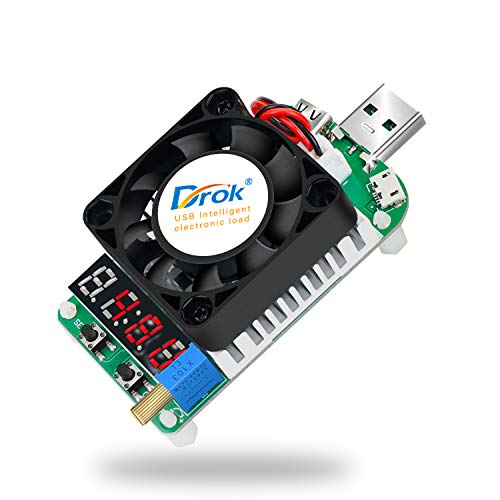
- 0.25A to 4A adjustable constant current
- Shows voltage, current, and power
- Built-in fan and protection features
Best For: USB charger and cable testing
Programmable Bench Load

- Up to 150V, 30A, and 200W
- CC, CV, CR, and CP modes
- Dynamic testing with 100-step list support
Best For: Bench testing of DC supplies and batteries
Programmable DC Load

- USB PC interface with included software
- CC, CP, and CR modes
- Protection for voltage, current, power, heat, and polarity
Best For: General DC testing with software control
Automated Lab Tester
OWON OEL3020 Programmable DC Electronic Load

- 300W, 0-300V, 0-20A range
- CC/CV/CR/CP modes with SCPI control
- 5kHz dynamic testing and battery cycling
Best For: Automated bench testing and battery discharge analysis
Bench-Friendly Midrange
UNI-T UTL1020S-E 200W Programmable DC Load

- 200W programmable load for common tests
- CC/CV/CR/CP modes plus dynamic loading
- USB and RS-232 with list/sequence control
Best For: General-purpose bench and automated discharge testing
Value Test Platform
120W Programmable DC Electronic Load

- CC, CV, CR, CP, and short-circuit modes
- WH and AH timing for battery tests
- 0-150V, 0-20A range with front-panel controls
Best For: Simple manual testing and battery discharge checks
Rigol Precision Load
Precision bench load for fast dynamic testing

- CC, CV, CR, and CP modes cover common test needs.
- 15kHz dynamic mode suits transient and regulator testing.
- LAN, USB, and RS232 enable automated bench control.
Best For: Engineers needing accurate battery and power supply testing
ET5410A+ Versatile Tester
High-capacity load tester with broad test modes

- 0-150V, 0-40A, 400W range covers many DC tests.
- Multiple modes include battery, LED, dynamic, scanning, and list.
- USB connectivity and built-in protections support safe use.
Best For: Anyone needing a flexible load tester for chargers and batteries
ET5410A+ Practical Pick
Budget-friendly programmable load with core test modes
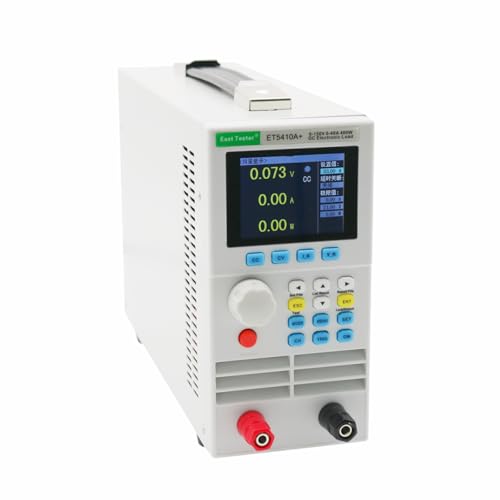
- Six measurement modes include CC, CV, CR, and CP.
- Battery, LED, and internal resistance tests add flexibility.
- USB connectivity and multiple safety functions aid bench use.
Best For: Shoppers wanting core programmable load features at a practical level
USB Smart Load Tester – DROK 25W Electronic Load
If you need compact electronic loads for USB and Type-C cable or charger testing, this DROK module focuses on simple discharge work with adjustable constant current output. It adds a 4-digit LED display, temperature-controlled cooling fan, and built-in protection features, making it practical for bench checks where quick readings matter more than advanced lab programming.
Best For: USB charger, cable, and small-device discharge testing.
Pros:
- Adjustable constant current from 0.25A to 4A
- Displays voltage, current, and power on a 4-digit LED screen
- Includes over-voltage, over-power, and over-temperature protection
- Cooling fan uses intelligent temperature control
Cons:
- No reverse connection protection
- Limited to 25W, 25V, and 4A maximums
- Not intended for higher-power bench testing
This is a straightforward choice if your electronic loads needs are centered on USB-source validation and small discharge tasks. Its protections and simple interface make it easy to use, but the compact power limits mean it is best suited to lighter-duty testing.
Programmable Bench Load – Siglent SDL1020X-E 200W
Siglent Technologies SDL1020X-E Programmable DC Electronic Load,1 Channel,150 V/30 A, 200 W
Check Price On AmazonFor buyers comparing electronic loads for bench and lab use, the Siglent SDL1020X-E stands out as a programmable single-channel DC load with substantial voltage, current, and power headroom. It supports multiple operating modes, dynamic testing, and a list function with up to 100 steps, which makes it a better fit for more structured DC supply evaluation.
Best For: Programmable DC power supply and battery testing on the bench.
Pros:
- Single-channel load rated up to 150V, 30A, and 200W
- Supports CC, CV, CR, and CP modes
- Includes dynamic mode and list editing up to 100 steps
- Adjustable current rise time for finer test control
Cons:
- Large and heavy compared with compact load modules
- More than many users need for simple USB testing
- Higher-end bench instrument rather than a portable tool
This model is best when you need more control, more range, and more repeatability than a small load module can provide. It is built for serious testing workflows where programmable behavior and higher power handling are important.
Battery Test Load – 150W 20A TFT Electronic Load
If your electronic loads shopping is centered on battery capacity and discharge testing, this 150W unit offers a useful mix of power, monitoring, and mode selection. The 2.4-inch TFT color display shows key values such as voltage, current, power, capacity, internal resistance, and discharge status, which makes it practical for observing battery behavior during a test run.
Best For: Battery capacity testing and adjustable discharge work.
Pros:
- Maximum load rating of 150W and 20A
- Four modes: constant current, voltage, power, and resistance
- TFT screen shows voltage, current, power, capacity, and internal resistance
- Supports settable stop voltage and discharge time
Cons:
- Requires a 12V DC minimum operating input
- Battery-powered design may not suit every bench setup
- Best suited to discharge testing rather than broader lab use
This is a solid mid-range option for users who want more display data and mode flexibility than a basic load module. The monitoring features are especially helpful when testing lithium batteries or checking discharge capacity over time.
Programmable DC Load – Tekpower TP3710A 150W
Among electronic loads for general DC testing, the Tekpower TP3710A is a programmable 150W unit designed for use with power supplies, batteries, solar panels, and other DC sources. It combines USB PC control, an LCD with backlight, and several protection functions, so it fits users who want a more traditional bench instrument with software support.
Best For: General-purpose DC source testing with PC programmability.
Pros:
- Programmable DC electronic load with USB PC interface and software
- Supports constant current, constant power, and constant resistance modes
- Rated up to 360V DC, 30A, and 150W
- Includes over-voltage, over-current, over-power, over-heat, and polarity reversal protection
Cons:
- Heavier at 10 pounds
- Uses AC power, so it is not a portable module
- Higher-voltage capability may be more than needed for simple tasks
This model is a practical pick when you want a bench-style load that handles a wide range of DC testing jobs. The software interface and protection set make it a strong fit for users who value control and measurement over compact size.
Automated Lab Tester – OWON OEL3020 Programmable DC Electronic Load
If you need one of the more capable electronic loads for bench testing, the OWON OEL3020 is built for controlled power-supply, battery, and component evaluation. Its 300W rating, wide 0-300V / 0-20A range, and four operating modes make it a flexible choice for labs that need repeatable results and remote automation.
Best For: Automated R&D testing, production-line checks, and battery charge/discharge analysis.
Pros:
- Supports CC, CV, CR, and CP modes for broad test coverage.
- USB, RS232, and RS485 connectivity with full SCPI support for automation.
- 5kHz dynamic switching with adjustable current rise rate for transient testing.
- Built-in protection includes OCP, OVP, OPP, OTP, and reverse polarity protection.
Cons:
- 300W ceiling may be limiting for higher-power DUTs.
- Battery testing is PC-software dependent for full automation.
Overall, this OWON unit stands out if your priority is precise control and remote operation in an electronic load. The color display and high-resolution readouts also make day-to-day bench use easier when you want fast setup and clear feedback.
Bench-Friendly Midrange – UNI-T UTL1020S-E 200W Programmable DC Load
The UNI-T UTL1020S-E is a practical pick among electronic loads when you want programmable testing without moving into a high-end lab setup. With 200W capacity, CC/CV/CR/CP operation, and dynamic loading support, it covers common power-supply, charger, battery, and DC-DC converter tests.
Best For: General-purpose bench testing, automated discharge profiling, and production routines.
Pros:
- Four standard modes: CC, CV, CR, and CP.
- List mode and sequence programming for automated test routines.
- USB and RS-232 connectivity for remote control.
- Includes over-voltage, over-current, over-power, and over-temperature protection.
Cons:
- 200W output is less suitable for heavier-duty loads.
- Fewer advanced specs are listed compared with more feature-rich models.
This model makes sense if you want a straightforward programmable electronic load with automation features and safety protections built in. The included power cord and long warranty add practical value for a bench tool that may see regular use.
Value Test Platform – 120W Programmable DC Electronic Load
This 120W programmable electronic load is a compact option for routine bench work, especially if you want basic control over battery and power-supply testing. It offers CC, CV, CR, CP, and short-circuit modes, plus a wide 0-150V and 0-20A range for many low- to mid-power applications.
Best For: Hands-on testing, simple battery discharge checks, and quick power-supply verification.
Pros:
- Multiple operating modes including CC, CV, CR, CP, and short-circuit testing.
- Built-in watt-hour and amp-hour timing measurements for battery work.
- Wide voltage and current ranges for a 120W unit.
- Front-panel controls with mode buttons, adjustment knobs, and LED readout.
Cons:
- 120W maximum power is best for lighter-duty testing.
- No connectivity or remote automation features are listed.
For users who mainly need a simple, manual electronic load, this model covers the core test modes without much complexity. It is a sensible fit for straightforward measurements where the front-panel controls and timing functions matter more than software integration.
Rigol Precision Load – Precision bench load for fast dynamic testing
If you need electronic loads for battery discharge work, PSU validation, or lab bench automation, the Rigol DL3021 is built for precise DC testing with CC, CV, CR, and CP modes. Its 15kHz dynamic mode and adjustable rise rate make it a strong fit when transient response and regulator stability matter.
Best For: Engineers and lab users who need accurate battery testing, dynamic load testing, and remote-controlled bench workflows.
Pros:
- Supports CC, CV, CR, and CP modes for flexible testing.
- 15kHz dynamic mode with adjustable rising speed for transient response work.
- 4.3-inch TFT LCD shows multiple parameters and real-time curves.
- LAN, USB, and RS232 support SCPI-based remote control.
Cons:
- Higher-end capability may be more than casual users need.
- Designed as a corded bench unit, not a portable tester.
Overall, this is a serious electronic load for users who care about speed, accuracy, and automation. The protection features and visual interface make it a practical choice for long bench sessions and prototype validation.
ET5410A+ Versatile Tester – High-capacity load tester with broad test modes
For buyers comparing electronic loads for chargers, power supplies, and battery checks, the ET5410A+ offers a wide 0-150V, 0-40A, 400W range with high-resolution measurement. It combines multiple test modes with a simple 2.8-inch TFT screen, making it useful for routine lab testing and troubleshooting.
Best For: Users who want a versatile programmable load tester for chargers, batteries, and general DC power testing.
Pros:
- High-resolution measurement with 1mV/10mV and 1mA/10mA detail.
- Includes battery, LED, dynamic, scanning, list, and short circuit tests.
- 2.8-inch TFT display keeps operation straightforward.
- Over-voltage, over-current, over-power, and over-temperature protections add safety.
Cons:
- The 2.8-inch screen is smaller than some competing bench units.
- Best suited to bench use rather than field work.
This model is a solid all-around programmable load tester if you want a broad feature set without a complicated setup. The included protections and test modes make it especially practical for everyday power-supply and battery evaluation.
ET5410A+ Practical Pick – Budget-friendly programmable load with core test modes
If you’re shopping for electronic loads that cover the basics well, this 400W programmable DC tester gives you a practical mix of measurement modes and function tests. Its 2.8-inch TFT screen, USB port, and broad compatibility make it a straightforward option for charger, power supply, and battery testing.
Best For: Buyers who want an affordable programmable load tester for everyday DC load and battery checks.
Pros:
- Offers six basic measurement modes, including CC, CV, CR, and CP.
- Supports battery, LED, dynamic, scanning, list, and internal resistance tests.
- USB port adds a simple communication option.
- CE, ETL, and NIST specifications support confidence in bench use.
Cons:
- No included accessories are listed in the supplied details.
- Battery-powered listing may be less convenient for some bench setups than corded units.
As a practical load tester, this unit focuses on the functions most users need without overcomplicating the workflow. It is a sensible pick when you want broad compatibility and essential test features in a compact format.
How We Picked These Electronic Loads
We prioritized models that cover real-world testing needs: enough wattage for common bench work, broad voltage and current ranges, and stable operating modes such as CC, CV, CR, and CP. We also favored units with useful displays, remote connectivity, and programmable control for repeatable testing.
Quick Comparison
The right choice usually comes down to power and precision. Lower-wattage USB-style units are best for basic device checks and small battery packs, while 150W to 400W programmable units are better for power supplies, automotive accessories, and deeper battery discharge testing. If you need automation or logging, look for USB or RS232 support and dynamic loading capability.
Key Buying Factors for Electronic Loads
Voltage, Current, and Power Rating
Start with the maximum voltage, current, and wattage you expect to test. A load that is under-rated can shut down early or overheat, while an oversized model gives you more headroom for future projects.
Operating Modes
Constant current is the most common choice, but constant voltage, constant resistance, and constant power add flexibility. For battery work, capacity testing and cutoff behavior matter just as much as raw load capacity.
Control, Display, and Connectivity
A clear front panel makes setup easier, especially on a crowded bench. Programmable Electronic Loads with USB or serial control are better for automated workflows, data capture, and test repeatability.
Cooling and Duty Cycle
Higher-power Electronic Loads generate heat quickly. Check for fan cooling, thermal protection, and any limits on continuous operation so the unit matches your testing pace.
Who Should Buy Which Electronic Loads?
If you mainly test USB devices or small batteries, a compact 25W to 120W unit is often enough. For general bench electronics and moderate power supplies, 150W to 200W programmable loads offer the best balance of capability and value. If you regularly test larger supplies, high-current battery systems, or need automation, step up to a 300W to 400W model for more headroom and control.
For most buyers, the best Electronic Loads are the ones that match the test job first and the spec sheet second. Focus on usable power, stable modes, and the interfaces you’ll actually use.