Choosing the right vibration meter can make pump troubleshooting faster, safer, and far more accurate. The best options help you spot imbalance, misalignment, bearing wear, and looseness before they become costly failures.
Below, we’ve narrowed the field to 10 strong picks for industrial use, with a focus on usability, measurement range, and the features that matter most in real maintenance work.
Best 10 Vibration Meters for Pumps Picks for 2026
Precision Condition Monitoring
PM633C Digital Vibration Meter
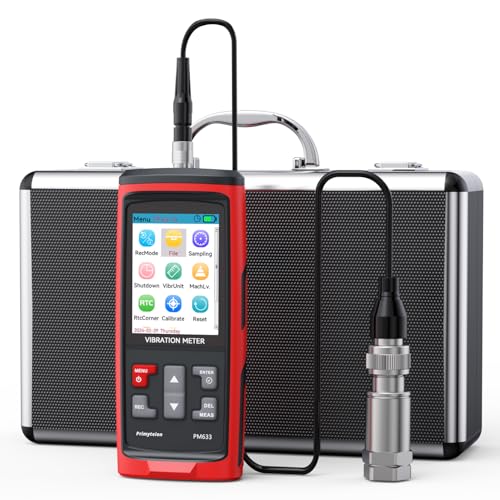
- Measures acceleration, velocity, displacement, and temperature
- Stores up to 397,000 readings with PC transfer
- TFT display with ISO severity rating and graphing
Best For: teams needing detailed pump and machinery condition checks
Portable Shop Floor Checker
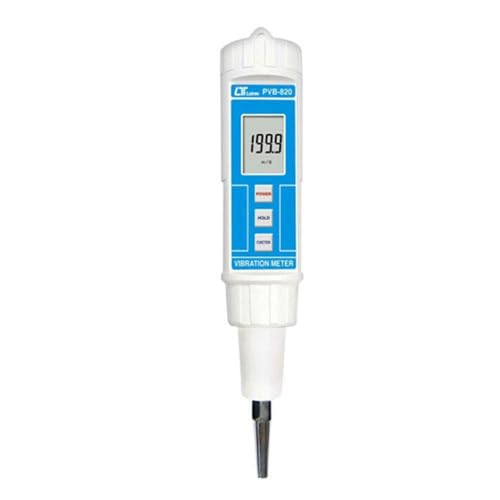
- Built-in sensor with acceleration and velocity RMS readings
- Compact, lightweight body for fast inspections
- Includes magnetic base and soft carrying case
Best For: quick pump, motor, and gearbox screening
ISO-Style Rotating Machinery Meter
VM-6320 Vibration Analysis Meter

- Measures acceleration, velocity, and displacement
- 10Hz to 10kHz acceleration frequency range
- Built for periodic rotating machinery checks
Best For: periodic pump and machine fault detection
Pen-Style Field Inspector

- Pocket-size pen design for daily inspections
- Waveform display plus data storage
- Measures acceleration, velocity, and displacement
Best For: portable pump and bearing inspections
Portable 3-in-1 Inspector
Digital Vibration Meter, 3 Probes
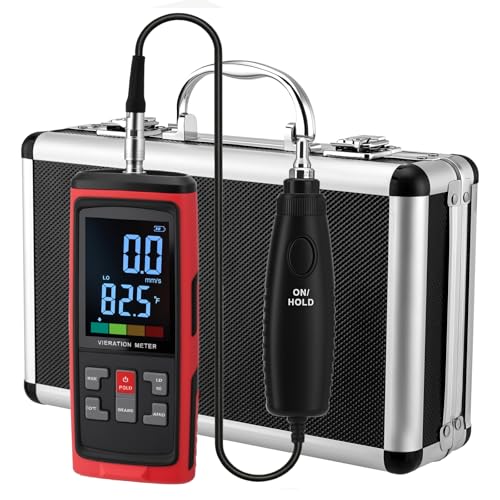
- Measures acceleration, velocity, displacement, and temperature
- Includes magnetic, long, and standard probes
- USB-C charging with up to 20-hour runtime
Best For: Daily pump inspections and general rotating-equipment checks
Remote-Probe Plant Checker
VM-424 Industrial Vibration Meter

- Remote probe reaches narrow pump measurement points
- Measures acceleration, velocity, and displacement
- Backlit LCD with data hold and max hold
Best For: Pump inspections where direct handheld placement is difficult
Pocket Field Tester
AS63D Digital Pen Vibration Meter

- Compact pen-style body for portable use
- Includes long and short probe heads
- Uses a piezoelectric acceleration transducer
Best For: Portable basic vibration checks on pumps and industrial equipment
Memory-Tracking Vibrometer
Industrial Vibration Meter with Data Memory

- Measures acceleration, velocity, and displacement
- Stores up to 500 readings in 5 groups
- 10Hz to 4kHz modes for inspection work
Best For: Routine pump diagnostics with on-device storage
5-in-1 Remote Sensor Analyzer
SWANSOFT Industrial Vibration Meter

- Measures five parameters including temperature
- Remote magnetic sensor improves access and stability
- 8 MB storage with CSV/BMP PC export
Best For: Broad pump and machine checks with logging
Professional Analyzer
VM-428 Industrial Vibration Meter with PC Software
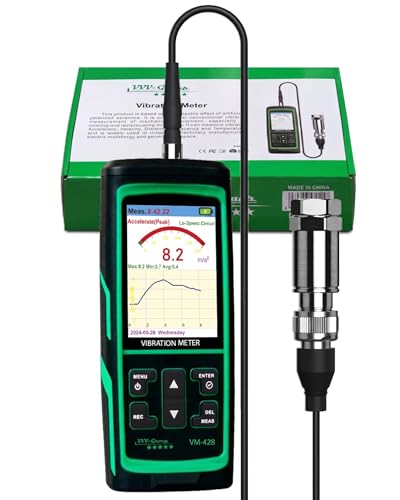
- Measures five diagnostic parameters
- External magnetic probe supports stable readings
- USB export and PC software for trend review
Best For: Documented pump inspections and PC-based analysis
Precision Condition Monitoring – PM633C Digital Vibration Meter
If you need vibration meters for pumps that can do more than a basic spot check, the PM633C is built for broader condition monitoring. It measures acceleration, velocity, displacement, and temperature, and adds frequency, ISO severity rating display, graphing, and data storage for more detailed inspections.
Best For: Maintenance teams that want a multifunction meter for pumps, motors, HVAC systems, and other rotating equipment.
Pros:
- Measures acceleration, velocity, displacement, temperature, and frequency.
- Wide frequency coverage with selectable high/low ranges.
- Stores up to 397,000 readings and supports PC data transfer.
- Includes TFT color display, Max/Min/Ave, and ISO vibration severity rating.
Cons:
- More feature-rich than a simple on-the-go checker.
- Accuracy and setup may be more than casual users need.
Overall, this is the most analysis-focused option in the group, with enough measurement depth to support predictive maintenance programs. For pump inspections that need trend tracking and documentation, it offers a strong mix of range and reporting tools.
Portable Shop Floor Checker – PVB-820 Vibrometer
For quick vibration meters for pumps and other industrial machines, the PVB-820 keeps things straightforward. It offers built-in sensing, acceleration and velocity RMS readings, a compact body, and a fast sampling time that suits routine walkaround inspections.
Best For: Technicians who want a simple, lightweight vibrometer for fast pump and gearbox checks.
Pros:
- Built-in vibration sensor for straightforward use.
- Measures acceleration and velocity in RMS values.
- Compact and light with a magnetic base and carrying case.
- Easy-to-read LCD and about 1-second sampling time.
Cons:
- Limited to acceleration and velocity, with no displacement reading noted.
- Narrower frequency range than more advanced analyzers.
This model is a practical choice when speed and portability matter more than deep analysis. It fits routine plant use well, especially for basic pump condition checks and quick screening.
ISO-Style Rotating Machinery Meter – VM-6320 Vibration Analysis Meter
HOJILA Digital Vibration Meter VM-6320 Vibration Analysis Meter Mechanical Vibration Meters
Check Price On AmazonThe VM-6320 is a solid pick if you want vibration meters for pumps that focus on rotating machinery diagnostics. It measures acceleration, velocity, and displacement, and its wide acceleration frequency range is suited to periodic checks, fault detection, and predictive maintenance work.
Best For: Users who need a straightforward vibration analysis meter for rotating machinery and pump maintenance.
Pros:
- Measures acceleration, velocity, and displacement.
- Wide 10Hz to 10kHz frequency range in acceleration mode.
- Designed for periodic measurements and predictive maintenance.
- Uses a dedicated high-quality accelerometer for repeatable readings.
Cons:
- No display or storage features are called out in the supplied notes.
- Less feature-rich than models with waveform or PC connectivity.
For buyers focused on measurement basics and rotating equipment checks, this model stays on task. It is especially appealing when you want ISO-oriented periodic readings without extra complexity.
Pen-Style Field Inspector – GOYOJO GVB-2 Vibrometer
If you want vibration meters for pumps in a tool that is easy to carry and read on the spot, the GOYOJO GVB-2 is designed for field inspection. It measures acceleration, velocity, and displacement, adds waveform displays, and supports storage and USB export for keeping maintenance records.
Best For: Maintenance teams that need a pocket-size vibrometer for daily pump, bearing, and fan inspections.
Pros:
- Pen-style, lightweight body for easy daily carrying.
- Shows acceleration, velocity, and displacement readings.
- Waveform display helps visualize vibration behavior.
- Includes data storage and USB PC export.
Cons:
- Shorter frequency range in the main mode than some larger analyzers.
- Pen-style format may be less comfortable for users who prefer a full-size meter.
This is a strong field-first option for teams that want visual feedback and simple recordkeeping. For routine pump checks, it balances portability, detail, and usable data export well.
Portable 3-in-1 Inspector – Digital Vibration Meter, 3 Probes
If you need vibration meters for pumps that can handle routine field checks, this 3-in-1 unit gives you acceleration, velocity, displacement, and temperature in one handheld tool. The dual frequency ranges help with general screening and higher-frequency fault spotting, while the three interchangeable probes make it easier to reach metal surfaces, tight gaps, and confined spaces.
Best For: Technicians who want a compact, all-around pump and rotating-equipment checker for daily inspections.
Pros:
- Measures acceleration, velocity, displacement, and temperature in one device
- Includes magnetic, long, and standard probes for different access needs
- Dual frequency modes cover general vibration checks and early fault screening
- USB-C charging and up to 20-hour runtime support long inspection sessions
Cons:
- Uses contact probes, so awkward pump locations may still be challenging
- Designed for screening and assessment, not full diagnostic analysis
This is a practical pick if you want a straightforward vibration meter for pumps, motors, fans, compressors, and bearings without extra setup. The included aluminum case and shockproof body add convenience for on-site use.
Remote-Probe Plant Checker – VM-424 Industrial Vibration Meter
For vibration meters for pumps where the measurement point is hard to reach, the VM-424 stands out thanks to its remote sensor probe. It measures the core vibration values used in condition checks and preventive maintenance, and the external probe lets you place the sensor on pump casings or bearing housings while keeping the display easy to view.
Best For: Maintenance teams that need a safer, easier way to measure pumps and other hard-to-access machinery.
Pros:
- Remote sensor probe helps reach narrow measurement points on pumps and motors
- Measures acceleration, velocity, and displacement for routine machine screening
- Includes magnetic, short, and long contact tips for different surfaces
- Backlit LCD, data hold, and max hold support on-the-spot checks
Cons:
- Contact meter only; it does not offer FFT spectrum analysis
- Not meant to replace permanent online monitoring systems
This model is a strong fit when accessibility matters more than advanced analytics. It’s built for periodic inspection workflows, making it useful for comparing pump vibration levels over time.
Pocket Field Tester – AS63D Digital Pen Vibration Meter
If you want vibration meters for pumps in a compact form, this pen-style AS63D is designed for portable field use. It uses a piezoelectric acceleration transducer, supports long and short probe heads, and is built for a wide range of industrial settings where basic vibration measurement is needed.
Best For: Users who want a lightweight, easy-to-carry vibration tester for pumps and other equipment.
Pros:
- Compact pen-style body is easy to carry between inspection points
- Includes long and short probe heads for different measurement scenarios
- Uses a piezoelectric transducer for vibration sensing and analysis
- Suitable for many industrial environments, including HVAC and petrochemical work
Cons:
- Less feature-rich than larger multi-function vibration meters
- Primarily aimed at basic portable vibration measurement
This is a simple, space-saving choice for teams that value portability over extras. It should work well as a quick-check tool for pumps and similar machinery across routine rounds.
Memory-Tracking Vibrometer – Industrial Vibration Meter with Data Memory
If you need vibration meters for pumps that support routine checks and trend tracking, the VM-422 is built for handheld industrial diagnostics. It measures acceleration, velocity, and displacement, and its 500-reading memory makes it practical for comparing pump readings over time during preventive maintenance routes.
Best For: Technicians who want a compact vibration meter for pumps and other rotating equipment with on-device data storage.
Pros:
- 3-in-1 measurement: acceleration, velocity, and displacement.
- Stores up to 500 readings in 5 groups for comparison.
- 10Hz to 4kHz frequency selection for low- and high-frequency checks.
- Integrated piezoelectric sensor is suited to handheld use on pump housings.
Cons:
- Not a replacement for laboratory multi-channel FFT analyzers.
- Not designed as a permanently installed monitoring system.
Overall, the VM-422 is a sensible fit for teams that want straightforward pump vibration checks with built-in memory for review later. It focuses on practical field diagnostics rather than advanced spectrum analysis.
5-in-1 Remote Sensor Analyzer – SWANSOFT Industrial Vibration Meter
For vibration meters for pumps that need more than basic readings, this SWANSOFT unit adds temperature and frequency measurement alongside acceleration, velocity, and displacement. The remote sensor with magnetic base helps you take stable readings on pump housings and other hard-to-reach metal surfaces during maintenance inspections.
Best For: Maintenance teams and beginners who want a versatile pump vibration checker with data storage and PC export.
Pros:
- 5-in-1 measurement includes acceleration, velocity, displacement, frequency, and temperature.
- Remote probe with magnetic sensor helps with stable readings on metal equipment.
- Large 8 MB memory supports long-term logging and CSV/BMP export via Windows PC software.
- Backlit display shows line graphs plus max, min, and average values.
Cons:
- PC software compatibility is limited to Windows systems.
- Not a permanent online monitoring system or full-spectrum FFT tool.
This model stands out when you want a broader condition-checking tool for pumps, motors, fans, and compressors. It balances extra measurement modes with easy field use and solid storage capacity.
Professional Analyzer – VM-428 Industrial Vibration Meter with PC Software
If you are comparing vibration meters for pumps and want a more advanced handheld option, the VM-428 adds PC connectivity and a remote magnetic sensor. It measures acceleration, velocity, displacement, frequency, and temperature, making it a strong fit for periodic pump condition checks where documented results matter.
Best For: Technicians who need a more professional pump vibration meter with external sensing and PC-based review.
Pros:
- 5-parameter diagnostics: acceleration, velocity, displacement, frequency, and temperature.
- External piezoelectric sensor with magnetic base supports stable metal-surface measurements.
- Internal memory and USB PC software help with documentation and trend comparison.
- ISO-based severity scale gives a quick visual machine condition reference.
Cons:
- Still a handheld periodic diagnostic tool, not a permanently installed monitor.
- Not intended to replace a multi-channel laboratory spectrum analyzer.
The VM-428 is the most feature-rich option here for users who want logged pump inspections and a clearer path to analysis on a computer. Its combination of remote sensing, display graphics, and PC export makes it well suited to structured maintenance programs.
How We Picked These Vibration Meters for Pumps
We focused on features that matter in field diagnostics: measurement modes, usable ranges for pump monitoring, sensor flexibility, display clarity, and whether the tool is practical for routine plant maintenance. We also favored models that look suited to industrial environments rather than general hobby use.
Quick Comparison: What Matters Most
When comparing Vibration Meters for Pumps, the most useful differences usually come down to form factor and data handling. Pen-style meters are quick for spot checks and tight spaces. Units with remote or external sensors are easier to use on awkward pump housings. Models with memory or PC software are better when you need to track trends over time.
Key Buying Factors for Vibration Meters for Pumps
Measurement Types
Most maintenance teams want acceleration, velocity, and displacement. Velocity is often the go-to for general machine condition checks, while acceleration can be helpful for detecting higher-frequency bearing issues. Displacement is useful for understanding shaft and structural movement.
Sensor and Probe Design
A remote probe or external sensor can improve access on crowded pump skids, while a pen-style body is convenient for quick checks. If you inspect multiple pump types, flexibility in sensor placement can save time and improve repeatability.
Range and Resolution
Look for a meter with enough range for your operating environment, plus fine enough resolution to catch small changes before they become obvious failures. For industrial pumping systems, a wider usable range is often more valuable than extra features you will not use.
Data Storage and Reporting
If your team documents readings, memory and PC software can be a major advantage. These features make it easier to compare baseline readings, trend deterioration, and share findings across maintenance staff.
Who Should Buy Which Vibration Meters for Pumps?
If you want fast, routine checks on a small number of pumps, a simple handheld or pen-type meter is usually enough. If you work in a plant with crowded machinery, choose a model with a remote or external sensor. For predictive maintenance programs, a meter with memory, software, and broader measurement capability will be the most useful long-term investment.
For most buyers, the best choice is the one that matches your inspection workflow, not just the biggest spec sheet. The right vibration meter should make pump diagnostics quicker, more repeatable, and easier to document.