Moisture on an objective lens or camera filter can end an observing session quickly. The best telescope dew heaters with temperature controllers help prevent condensation without wasting power or overheating sensitive optics.
This roundup compares USB heater straps, 12V models, and intelligent multi-channel controllers across different lengths and telescope setups, so you can choose a practical match for your gear.
Best 10 Telescope Dew Heaters with Temperature Controllers Picks for 2026
Best USB Lens Warmer

- Three adjustable heat levels with five-second warm-up
- USB-powered from common 5V sources
- Fits optics up to 4.3 inches in diameter
Best For: Portable single-optic astrophotography setups
Best Automatic Controller
R-Sky Dual-Channel Dew Management

- Six ports with automatic and manual power modes
- Supports dual telescopes and multiple optical accessories
- Includes sensors and low-battery protection
Best For: Multi-heater telescope systems
Best Universal Strip

- Strong, medium, and weak heating modes
- 400mm strip fits optics below 127mm
- Includes a 1.8m USB cable
Best For: USB-powered telescope and camera lenses
Best 12V Smart Heater
Intelligent Telescope Dew Control

- Intelligent temperature control for consistent heating
- 430 × 50mm size with other lengths available
- Designed for telescope and camera lenses
Best For: 12V-powered outdoor imaging setups
Compact 480 mm Protection
SVBONY SV192 480 mm Dew Heater
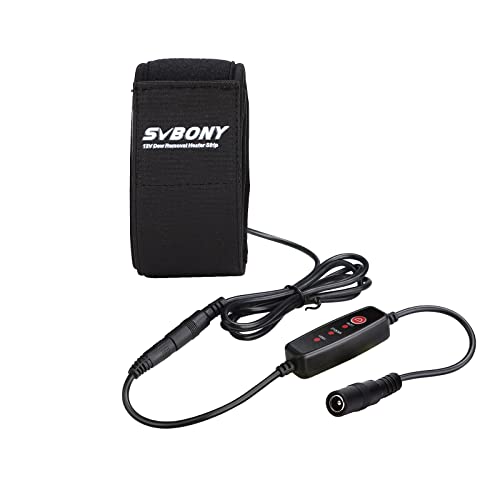
- Three adjustable heating modes
- Compatible with optics below 152 mm OD
- 5.5 x 2.1 interface for 12V inputs
Best For: Smaller telescope mirrors and camera lenses
Smart Temperature Control
12V Intelligent 730 mm Dew Heater

- Intelligent temperature control
- Works with telescopes and camera lenses
- 730 x 50 mm size with other lengths available
Best For: Multi-purpose outdoor imaging and viewing equipment
Wide Lens Coverage
SVBONY SV192 560 mm Dew Heater

- 560 mm heating length for larger optics
- Three adjustable heating modes
- 50 mm width helps preserve focusing clearance
Best For: Large lenses and telescopes below 178 mm OD
12V Intelligent Dew Strap

- Fast, even warming with intelligent control
- 12V DC5521 power connection
- Measure optics before selecting size
Best For: Remote telescope and camera observing with a 12V power setup
Three-Mode USB Warmer

- Three adjustable heating modes
- USB-powered with a 1.8m cable
- Fits external diameters below 76mm
Best For: Smaller telescope and camera lenses using USB power
Graphene USB Anti-Fog Belt

- Graphene element starts heating quickly
- Three adjustable temperature settings
- Fits barrels up to 4.3 inches
Best For: Larger telescope, finder-scope, and camera lens barrels
Best USB Lens Warmer – 3-Gear Telescope Dew Heater
For a lightweight setup using telescope dew heaters with temperature controllers, this USB-powered strip offers three heat levels and a quick five-second warm-up. It fits optics up to 4.3 inches in diameter and works from common 5V USB power sources.
Best For: Astrophotographers and camera users who want a portable heater without a dedicated 12V controller.
Pros:
- Strong, medium, and weak temperature settings
- USB power works with power banks, car chargers, laptops, and portable stations
- Adjustable band fits telescope lenses, finder scopes, eyepieces, and DSLR lenses up to 4.3 inches
- Uniform heating and a 59-inch cable support flexible field setups
Cons:
- Designed for optical equipment only
- Not water resistant
- Requires a separate 5V USB power source
This is a practical choice when portability and simple manual temperature control matter more than multi-channel automation. Its compact design also makes it useful across several types of optics.
Best Automatic Controller – R-Sky Dual-Channel Dew Management
R-Sky Automatic Dew Controller – Intelligent Dual-Channel Heater Management for Telescopes
Check Price On AmazonFor users comparing telescope dew heaters with temperature controllers for a larger observing setup, the R-Sky controller provides automatic power adjustment across multiple heater ports. PWM control, dual-telescope support, and manual adjustment make it suited to more involved field systems.
Best For: Observers running multiple heaters, telescopes, finders, or mirrors from one 12V control unit.
Pros:
- Six heater ports with automatic, medium, and full-power options
- Automatic mode adjusts power to help prevent dew and frost
- Manual output control is adjustable from 0–100%
- Includes air and telescope sensors, reverse-polarity protection, and a low-battery alert
Cons:
- More involved than a single USB heater strip
- The supplied notes do not specify heater-strip compatibility details
- Designed as a controller rather than a standalone heater band
The R-Sky stands out for centralized, energy-conscious dew management. Its automatic and manual modes give advanced users flexibility while the sensor package supports more responsive control.
Best Universal Strip – SVBONY SV172 USB Dew Heater
The SVBONY SV172 is a straightforward option among telescope dew heaters with temperature controllers, combining USB power with strong, medium, and weak heat settings. Its 400mm length and 50mm width are intended for lenses and telescope optics below 127mm in outside diameter.
Best For: Telescope and camera users seeking a broad, USB-powered heater strip with adjustable heat.
Pros:
- Three adjustable heating modes
- 1.8m USB cable connects to power banks and other USB sources
- Fits lens outer diameters below 127mm
- Aluminum construction and insulated layers support even, fast heating
Cons:
- Requires a separate USB power source
- The supplied notes do not state a specific operating temperature range
- Its 50mm width may not suit every mounting preference
This model offers broad compatibility without adding a dedicated controller box. It is a good fit for users who want adjustable heat and a long cable in a simple field-ready format.
Best 12V Smart Heater – Intelligent Telescope Dew Control
For observers who prefer 12V telescope dew heaters with temperature controllers, this 430 × 50mm heater uses intelligent temperature control to maintain consistent warming. It is designed for telescope lenses, camera lenses, and bird-watching mirrors, with additional sizes available for different diameters.
Best For: Outdoor imaging users with a 12V mobile power supply and optics needing a 430mm heater band.
Pros:
- Intelligent temperature control supports consistent heating
- Designed for telescope lenses, camera lenses, and bird-watching mirrors
- Available in multiple sizes from 330mm to 1080mm
- 12V operation suits mobile outdoor power setups
Cons:
- 12V mobile power supply is not included
- The supplied notes do not provide specific temperature settings
- The 430mm version may not fit every lens diameter
This heater is worth considering when your setup already uses 12V power and you want automatic temperature management rather than manually selected heat levels. Check the required band size before ordering.
Compact 480 mm Protection – SVBONY SV192 480 mm Dew Heater
For users comparing telescope dew heaters with temperature controllers, the SVBONY SV192 offers a practical 480 mm strip with three adjustable heating levels. It is designed for astronomical telescopes and helps protect compatible optics from fogging or freezing.
Best For: Telescope primary mirrors or camera lenses with an outside diameter below 152 mm.
Pros:
- Three-speed regulator with strong, medium, and weak heating modes.
- 5.5 x 2.1 female interface works with various 12V power inputs.
- Three-layer insulation helps reduce heat loss and resists wrinkling when bent.
Cons:
- Its stated compatibility is limited to optics below 152 mm in outside diameter.
- A 12V power source is required.
The adjustable output makes this a straightforward choice when you need controlled heat rather than a single fixed setting. Check your optic’s diameter and power setup before buying.
Smart Temperature Control – 12V Intelligent 730 mm Dew Heater
This 730 x 50 mm heater is a useful option for shoppers seeking telescope dew heaters with temperature controllers and broad equipment compatibility. Its intelligent temperature control is intended to maintain consistent heating while helping combat condensation during outdoor use.
Best For: Telescope lenses, camera lenses, and bird-watching mirrors requiring a 730 mm heater size.
Pros:
- Intelligent temperature control provides consistent heating.
- Designed for telescopes, camera lenses, and bird-watching mirrors.
- Available in multiple sizes from 330 mm to 1080 mm.
Cons:
- The 12V mobile power supply is not included.
- This listing is the 730 x 50 mm version, so sizing should be checked before purchase.
Its automatic temperature-control approach makes it appealing when you want less manual adjustment. Confirm both the required heater length and your available 12V power source for the best fit.
Wide Lens Coverage – SVBONY SV192 560 mm Dew Heater
For larger optics, the SVBONY SV192 560 mm is a telescope dew heater with temperature controller functionality through its strong, medium, and weak settings. Its narrow 50 mm design is intended to provide coverage without interfering with focusing or creating dark corners in the field.
Best For: Large-aperture camera lenses and telescopes with an outside diameter below 178 mm.
Pros:
- 560 mm heating length accommodates larger lenses and telescopes.
- Three adjustable heating modes support different conditions.
- 12V input, 120 cm cable, and 5.5 x 2.1 DC interface.
- Aluminum and alloy-fiber heating components promote fast, even heating.
Cons:
- Compatibility is specified for lenses below 178 mm outside diameter.
- A separate 12V power source is needed.
This model balances broader coverage with a relatively narrow strip, making it a sensible choice for larger optics where accessory clearance matters. Verify the optic diameter and power connection before ordering.
12V Intelligent Dew Strap – Telescope Lens Heater
For observers comparing telescope dew heaters with temperature controllers, this 12V strap is a practical option for lenses, guide scopes, spotting scopes, and telescope optics. Its intelligent control, fast heating, and DC5521 connection suit remote observing with a compatible 12V power source.
Best For: Telescope and camera users who need a 12V dew heater for remote observing.
Pros:
- Intelligent control helps provide fast, even warming.
- 12V DC5521 connection works with compatible power supplies and battery packs.
- Polyester construction and plastic fittings are designed for field handling.
- Suitable for telescope lenses, camera lenses, spotting scopes, and guide scopes.
Cons:
- Requires a compatible 12V DC5521 power source.
- Correct sizing depends on measuring your scope or lens rather than relying on the marketplace size chart.
This heater stands out for users who already carry a 12V observing battery and want controlled, uniform heat. Measure the lens or scope first to select the appropriate strap length.
Three-Mode USB Warmer – SVBONY SV172 Dew Heater
The SVBONY SV172 is a compact choice among telescope dew heaters with temperature controllers, offering three heating modes and USB power. Its 240mm length fits external diameters below 76mm, making it suitable for many smaller telescope and camera lenses.
Best For: Users who want adjustable heating and convenient USB power for smaller optics.
Pros:
- Three heating settings—strong, medium, and weak—allow adjustment for conditions.
- USB port and 1.8m cable connect to a power bank or other USB source.
- 50mm width is designed not to interfere with focusing or create dark corners.
- Aluminum construction and alloy fiber heating wire support fast, even heating.
Cons:
- Fits external diameters below 76mm, limiting compatibility with larger optics.
- Requires a USB power source and draws approximately 1.9A to 2.0A at 5V.
With simple three-level adjustment and a long USB cable, the SV172 is convenient for portable setups. Confirm your lens diameter and available USB power before buying.
Graphene USB Anti-Fog Belt – Haida Lens Dew Heater
The Haida Lens Dew Heater combines USB power, graphene heating, and three temperature settings for users seeking telescope dew heaters with temperature controllers. Its adjustable fastener strap fits lens barrels up to 4.3 inches in diameter and is designed for quick installation without tools.
Best For: Telescope, finder-scope, and camera users needing adjustable anti-fog heating for larger lens barrels.
Pros:
- Graphene heating provides fast startup and even heat distribution.
- Three settings cover low, medium, and high heating levels.
- USB connection and 1.5m cable support use with power banks and other USB sources.
- Adjustable touch-fastener strap fits barrels up to 4.3 inches in diameter.
Cons:
- Requires a USB power source.
- The listed temperature ranges reach up to 55–65°C on the high setting, so users should select settings carefully for their equipment.
This is a flexible option for changing humidity and condensation conditions, especially when a longer strap and adjustable heat are useful. Its tool-free fastening also makes setup and removal straightforward in the field.
How We Picked These Telescope Dew Heaters with Temperature Controllers
We focused on heater systems that address the main causes of dew: changing humidity, exposed optical surfaces, and insufficient power control. The selection includes compact USB strips for portable setups, longer straps for larger lenses and telescope tubes, and controller-based options for users who need adjustable or multi-channel heating.
We also considered heater length, power connection, temperature adjustment, compatibility with cameras and telescopes, and how easily each model can be integrated into an observing rig. Because fit varies substantially, measure the circumference or diameter of the surface you want to protect before ordering.
Quick Comparison
| Type | Best For | What to Check |
|---|---|---|
| USB heater strip | Portable cameras, small refractors, and travel setups | USB power-bank compatibility and heat settings |
| 12V intelligent heater | Astro rigs with field batteries or power stations | Connector type, strap length, and controller range |
| Dual-channel controller | Multiple optics or larger imaging systems | Channel capacity, output limits, and cable layout |
| Long heater strap | Large lenses and wide telescope tubes | Length, fastening method, and even contact |
Key Buying Factors
Size and Fit
A heater should sit securely around the lens, dew shield, or optical tube without slipping. A strap that is too short will not make consistent contact, while excess length can create uneven heating. The listed 240mm, 400mm, 480mm, 560mm, and 730mm options suit different equipment sizes, but dimensions should be treated as a starting point rather than a guaranteed fit.
Power and Connections
USB models are convenient with power banks and portable battery packs. Twelve-volt versions are often better suited to dedicated astronomy power systems, but verify the plug and required supply before buying. Controller compatibility matters just as much as heater compatibility.
Temperature Control
Multiple heat settings are useful when ambient conditions change or when conserving battery life. Intelligent controllers can provide more precise management than a simple on-off switch, while dual-channel designs can operate separate heaters. Use the lowest effective setting to limit unnecessary heat near the optics.
Construction and Use
Look for flexible straps, secure fasteners, durable wiring, and a design that can be removed without disturbing alignment. Keep connections protected from moisture, and avoid placing the hottest section directly against delicate optical components unless the manufacturer specifies that placement.
Who Should Buy Which Telescope Dew Heaters with Temperature Controllers?
Choose a USB strip if you use a mirrorless camera, small telescope, or lightweight travel rig and want simple power-bank operation. Choose a 12V intelligent model if your setup already uses a field battery or astronomy power distribution system. Choose a longer strap for large lenses, wide dew shields, or larger optical tubes, but confirm the measurement first. Choose a dual-channel controller if you regularly protect two optics or need more independent control over a complex imaging setup.
For occasional visual observing, prioritize straightforward installation and low power demand. For long astrophotography sessions, prioritize precise temperature control, reliable connectors, and enough output capacity for every heater in the system.