Dew can end an astrophotography session quickly, coating optics just when the sky is at its clearest. The right heater keeps moisture away without adding excessive heat, power draw, or cable clutter.
We’ve gathered 10 telescope dew heaters for astrophotography, from long 480mm and 600mm bands to purpose-built heater rings and compact USB lens warmers. Use the guide below to match the heater’s size, connector, and control method to your setup.
Best 10 Telescope Dew Heaters for Astrophotography Picks for 2026
Best 12V Adjustable Strip
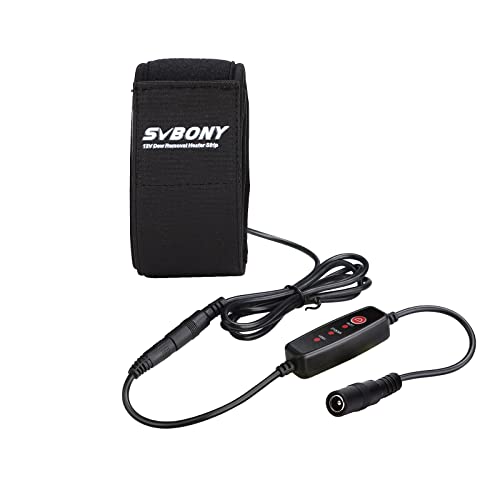
- Three adjustable heating levels
- For optics under 152 mm OD
- Insulated 12V heater strip
Best For: Longer telescope and camera-lens coverage
Best Integrated Fit
Celestron 8-inch Dew Heater Ring

- Dedicated 8-inch Celestron fit
- Lightweight aluminum construction
- Integrated sensor and cable clip
Best For: Compatible Celestron SCT, EdgeHD, and RASA systems
Best USB Option

- Convenient 5V USB power
- Three adjustable heat modes
- Narrow 50 mm profile
Best For: Portable setups using USB power sources
Best Cold-Weather Cord

- Uniform heating for dew prevention
- Flexible sub-zero RCA cable
- Hand-assembled construction
Best For: 6-inch optics in cold or humid conditions
Flexible USB Dew Control

- Flexible to -25°C with neoprene insulation
- Three incremental temperature settings
- USB powered for portable setups
Best For: Small telescope and camera-lens setups using a power bank
Fine-Adjustment Dew Protection

- Stepless temperature regulation
- Fits optics under 3.15 inches
- DC port connects to compatible power sources
Best For: Smaller optics where precise heat adjustment is useful
Wide-Coverage USB Heating
NEEWER HW-23B 600mm Dew Heater

- Covers optics up to 150mm in diameter
- Three temperature settings from low to high
- USB powered with a 1.5m cable
Best For: Large telescope, camera, and binocular optics
Compact USB Pick

- Three heat settings for changing conditions
- USB-powered for portable field use
- Fits optics under 80mm in diameter
Best For: Small telescope optics and lightweight astrophotography kits
Long-Band Option
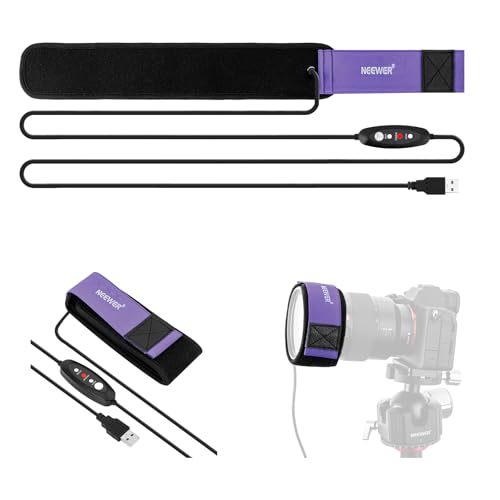
- 400mm strip fits optics up to 86mm
- Three adjustable temperature levels
- Includes a 1.5m USB cable
Best For: Mid-size telescope, binocular, and camera optics
Wide-Fit Choice

- Fits optics up to 110mm in diameter
- Three heat modes with quick warm-up
- Uses common 5V USB power sources
Best For: Larger and mixed astrophotography optics
Best 12V Adjustable Strip – SV192 480 mm Dew Heater
For telescope dew heaters for astrophotography, the SVBONY SV192 offers broad coverage and adjustable output for optical equipment vulnerable to fogging or freezing. Its 12V connection and three heating levels make it practical for different observing conditions.
Best For: Astronomical telescopes and camera lenses requiring a longer 480 mm heater strip and adjustable 12V heat.
Pros:
- Designed for astronomical telescopes and compatible with primary mirrors or camera lenses under 152 mm outside diameter.
- Three-speed regulator provides weak, medium, and strong heating options.
- Three-layer insulating construction helps reduce heat loss and remains smooth when bent.
- 5.5 x 2.1 female interface connects with various 12V power inputs.
Cons:
- Requires a 12V power source rather than a standard USB connection.
- The stated compatibility limit may not suit larger optical assemblies.
The SV192 is a flexible choice when you want adjustable heat and a relatively long strip. Confirm the optical diameter and available 12V connection before buying.
Best Integrated Fit – Celestron 8-inch Dew Heater Ring
Among telescope dew heaters for astrophotography, this Celestron ring is designed for a precise fit around compatible 8-inch Schmidt corrector lenses. Its rigid aluminum construction delivers direct heat while providing built-in cable-management features.
Best For: Owners of compatible 8-inch Celestron Schmidt-Cassegrain, EdgeHD, or RASA optical systems.
Pros:
- Designed to fit 8-inch Celestron Schmidt-Cassegrain, EdgeHD, and RASA corrector lenses.
- Rigid, lightweight aluminum construction supports the cable circuitry.
- Integrated temperature sensor helps support consistent dew prevention.
- Includes a cable-management clip and a 2-year US warranty with unlimited support.
Cons:
- Compatibility is more specialized than a universal wraparound strip.
- Requires an external 12V DC power source.
This ring is a strong system-specific option for compatible Celestron 8-inch instruments. Its dedicated fit can simplify installation, but buyers should verify the exact telescope model first.
Best USB Option – SV172 320 mm Dew Heater Strip
The SVBONY SV172 is a practical pick for telescope dew heaters for astrophotography when USB power is more convenient than a dedicated 12V setup. Its narrow 50 mm profile is designed to reduce interference with focusing and other lens-barrel accessories.
Best For: Telescope and optical setups using a USB power bank, computer, car charger, or other 5V USB source.
Pros:
- USB connection works with power banks, car chargers, laptops, and desktop computers.
- Three heating modes—strong, medium, and weak—allow output adjustment.
- Built-in aluminum film helps provide an even heating surface.
- Narrow 50 mm width is designed to avoid interfering with focusing or creating dark corners.
Cons:
- Uses 5V USB power rather than a 12V telescope power system.
- The 320 mm length may provide less coverage than longer heater strips.
Choose the SV172 if accessible USB power and a compact profile are priorities. Its adjustable output and silicone-insulated heating wire add useful flexibility for portable observing.
Best Cold-Weather Cord – R-Sky 6-inch RCA Dew Heater
For telescope dew heaters for astrophotography in cold or humid conditions, the R-Sky 6-inch strip emphasizes even heating and a flexible RCA power cable. It is hand-assembled and part of a size range intended for different optical formats.
Best For: 6-inch telescope tubes and users who need a cold-resistant, flexible 12V RCA power cord.
Pros:
- Designed to help prevent fogging, condensation, and frost on optics.
- Special construction provides uniform heat distribution.
- Cold-resistant RCA cable remains flexible in sub-zero temperatures and resists tangling.
- Available in multiple sizes for eyepieces, SCTs, Maksutovs, refractors, and RASA models.
Cons:
- This listing is specifically the 6-inch size, so larger or smaller optics require another size.
- Its RCA power connection may require a compatible 12V supply.
The R-Sky strip stands out for cold-weather cable handling and broad size availability. Verify the required circumference or optical size before selecting the 6-inch version.
Flexible USB Dew Control – 350mm Neoprene Lens Warmer
For astrophotographers who need telescope dew heaters for astrophotography, this 350mm USB strip combines a flexible neoprene design with adjustable warming. It wraps around lenses or compatible telescope equipment up to 4.26 inches in diameter and connects to a power bank or other 5V USB source.
Best For: Backyard astrophotographers using smaller telescopes, camera lenses, or setups powered by USB power banks.
Pros:
- Flexible neoprene construction remains usable down to -25°C.
- Three incremental temperature settings support different conditions.
- USB power and a 60.23-inch cable suit portable observing setups.
- Hook-and-loop fastening makes installation and removal straightforward.
Cons:
- Maximum stated diameter is 4.26 inches, limiting use on larger optics.
- Requires a separate USB power source.
This is a practical, lightweight option when portability and cable flexibility matter. Its neoprene insulation and adjustable heat make it well suited to preventing condensation during cold-night imaging.
Fine-Adjustment Dew Protection – 250mm DC Lens Warmer
This 250mm DC lens warmer is a straightforward choice among telescope dew heaters for astrophotography, especially when precise heat adjustment is important. Its adjustable strap fits lenses and telescope optics measuring less than 3.15 inches in diameter, while the DC connection works with a compatible power bank or power source.
Best For: Astrophotographers using smaller finder scopes, camera lenses, or telescopes that need stepless temperature control.
Pros:
- Stepless controller allows more precise temperature adjustment than fixed settings.
- Designed for lenses and optics under 3.15 inches in diameter.
- DC port supports connection to a compatible power bank or other source.
- Lightweight design weighs 4.23 ounces.
Cons:
- Smaller 3.15-inch diameter limit restricts compatibility with larger optics.
- Uses a DC port rather than the more widely listed USB connection.
The main advantage here is control: the stepless regulator lets you tailor warmth to the conditions instead of choosing among preset levels. Confirm your optical diameter and power-source connector before buying.
Wide-Coverage USB Heating – NEEWER HW-23B 600mm Dew Heater
For larger lenses and optical equipment, the NEEWER HW-23B is one of the more broadly sized telescope dew heaters for astrophotography. Its 600mm strip has a 500mm effective length, fits equipment up to 18.7 inches in circumference, and uses USB power with three temperature levels.
Best For: Larger telescopes, camera lenses, and binoculars that need wide wraparound coverage from a portable USB heater.
Pros:
- Large 600mm length supports equipment up to 150mm in diameter.
- Three temperature ranges provide low, medium, and high settings.
- Works with 5V USB power sources, including portable chargers and adapters.
- A 1.5m cable and touch fasteners simplify positioning and fitting.
Cons:
- Its larger size may be unnecessary for compact optics.
- Temperature control is limited to three preset levels rather than stepless adjustment.
This model stands out when coverage is the priority. The long strip and broad compatibility make it a strong match for larger optical tubes, while USB power keeps it convenient for field use.
Compact USB Pick – KIWIFOTOS Lens Dew Heater
For astrophotography setups using smaller optics, this USB lens warmer provides adjustable heat to help prevent dew and condensation. It fits telescope lenses, finder lenses, camera lenses, and eyepieces measuring less than 80mm in diameter, making it a practical option for lightweight field kits.
Best For: Smaller telescope objectives, eyepieces, finder scopes, and camera lenses under 80mm.
Pros:
- Three adjustable temperature modes—low, medium, and high.
- USB power works with power banks and other USB sources.
- Adjustable design installs and removes quickly.
- Low-temperature wiring is designed to withstand conditions as cold as -40°C.
Cons:
- Limited to optics under 80mm in diameter.
- Controller versions may vary because old and updated appearances are shipped randomly.
This is a straightforward choice among telescope dew heaters for astrophotography when portability and USB compatibility matter more than covering large-diameter optics.
Long-Band Option – NEEWER HW-29B USB Lens Heater
The NEEWER HW-29B is a 16-inch USB dew heater strip designed for telescopes, binoculars, and camera lenses up to 86mm in diameter. Its three heat levels and 1.5m cable make it convenient for astrophotography sessions where flexible placement and portable power are important.
Best For: Telescopes, binoculars, and camera lenses up to 86mm that need a longer wraparound heater.
Pros:
- Three temperature levels range from low to high for different conditions.
- Supports any 5V USB power source, including power banks and laptops.
- Touch fasteners provide a secure, adjustable fit.
- Lightweight design adds minimal bulk to outdoor equipment.
Cons:
- Diameter compatibility is limited to optics up to 86mm.
- Its listed heat settings reach relatively high temperatures, so careful adjustment is important.
With its longer 400mm strip, flexible fastening, and USB operation, this NEEWER model is a versatile mid-size option for photographers sharing one heater across several compatible optics.
Wide-Fit Choice – LOSHARP USB Dew Heater Strip
For larger lenses and mixed astrophotography equipment, the LOSHARP USB dew heater wraps around optics up to 110mm in diameter. It offers three heat modes, a 5-second warm-up claim, and a 59-inch cable for connecting to a power bank or other 5V USB source in the field.
Best For: Larger telescope objectives, finder scopes, guide scopes, eyepieces, and camera lenses up to 110mm.
Pros:
- Wide 110mm compatibility covers more optics than the other listed models.
- Strong, medium, and weak modes provide adjustable heating.
- Runs from common 5V USB sources without requiring a dedicated 12V controller.
- Composite heating fiber is designed for even warmth without hot spots.
Cons:
- It is not water resistant.
- USB power requires a compatible 5V, 1–2A source.
- The heater is intended for lenses and optical equipment only.
This is the most accommodating pick for users comparing telescope dew heaters for astrophotography across a varied optical kit, particularly when larger lens barrels need coverage.
How We Picked These Telescope Dew Heaters for Astrophotography
We focused on heater dimensions, power compatibility, temperature-control options, and likely use cases across visual observing, DSLR or mirrorless imaging, and dedicated telescope rigs. The selection includes 12V RCA-style strips, USB-powered warmers, a purpose-built Celestron ring, and several lengths for different optical assemblies.
Because performance depends on ambient humidity, wind, insulation, and the specific optic, no single heater is best for every setup. A correctly sized strip operated at the lowest effective setting is generally preferable to an oversized heater running continuously at full power.
Quick Comparison
- Long optical tubes: Consider the 480mm SVBONY SV192 or 600mm NEEWER warmer when you need broad coverage.
- Medium-size accessories: The 320mm, 350mm, and 400mm options suit many camera lenses, guide scopes, and smaller telescope components.
- Compact optics: A 250mm strip can work well around small lenses, eyepieces, or guide-camera assemblies.
- Compatible Celestron systems: The 8-inch Schmidt, EdgeHD, and RASA heater ring offers a dedicated fit for listed optical tubes.
- Portable setups: USB models are convenient with power banks, while 12V RCA heaters integrate more naturally with astronomy battery systems.
Key Buying Factors
Measure the Optic First
Check the circumference or manufacturer’s recommended diameter rather than choosing solely by strip length. A heater should sit securely around the dew shield, lens barrel, or correct optical section, with the heating element positioned evenly around the optic.
Match the Power Connection
12V RCA heaters are common in astronomy power-management systems and field batteries. USB heaters are easier to run from power banks but may offer less integration with dedicated dew controllers. Confirm voltage, connector type, and available output before buying.
Choose Controllable Heat
Multiple temperature levels or a separate dew controller provide better control than an always-on heater. Start low and increase gradually; excessive heat can increase energy use and may create local air currents that affect high-magnification views or images.
Plan for Your Power Budget
Heaters can run for hours, especially on overnight imaging sessions. Estimate total consumption alongside your camera, mount, computer, and other accessories. USB models may be convenient, but verify the power bank’s sustained output and runtime.
Who Should Buy Which Telescope Dew Heaters for Astrophotography?
Astrophotographers with a dedicated 12V setup should look first at the RCA-style heater strips and pair them with a compatible controller. Celestron 8-inch Schmidt, EdgeHD, or RASA owners may prefer the matching aluminum heater ring for a more tailored installation.
Traveling observers and casual camera users can benefit from USB warmers with temperature settings, particularly when operating from a portable power bank. Choose 350mm or 400mm models for many mid-size lenses and guide scopes, while larger 480mm or 600mm strips are better suited to long dew shields and larger assemblies.
Before purchasing, verify the product’s dimensions, connector, operating voltage, and controller arrangement. The best choice is the heater that fits evenly, connects directly to your power system, and supplies only as much warmth as needed to keep condensation away.