The best portable weather stations make it easier to monitor temperature, humidity, pressure, wind, and changing conditions without relying on a phone app or nearby forecast.
We compared 10 practical options, from connected home systems and large color displays to compact meters designed for fieldwork and fire-weather monitoring.
Best 10 Portable Weather Stations Picks for 2026
Best Smart-Home Pick
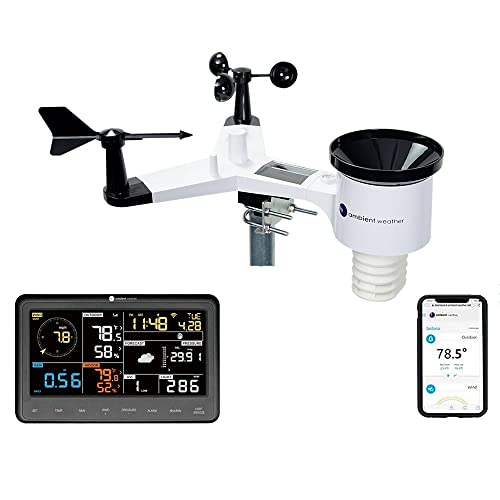
- Tracks wind, temperature, humidity, rain, UV, and solar radiation
- Wi-Fi monitoring with alerts and smart-home integrations
- Color LCD console with solar-powered sensor array
Best For: Connected home and backyard weather monitoring
Best Handheld Fire-Weather Meter

- Measures heat stress, wet bulb temperature, humidity, and wind
- IP67 waterproof and MIL-STD-810F drop-tested
- Compact, backlit handheld design that floats
Best For: Professional fire and field-weather applications
Best No-Wi-Fi Value
Sainlogic 12-in-1 Weather Station

- 12-in-1 local monitoring with rainfall history
- 6.5-inch color display with adjustable backlight
- Wireless range up to 443 feet in open conditions
Best For: Detailed home, garden, and farm monitoring without Wi-Fi
Best Advanced Display
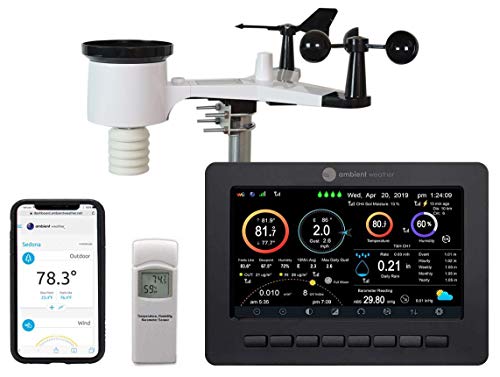
- Measures wind, temperature, humidity, rainfall, UV, and solar radiation
- High-definition TFT color console
- Supports metric and imperial units with calibration
Best For: Home and garden users wanting a detailed color display
Color-Display Favorite
Newentor Wireless Weather Station

- Large color LCD with weather and clock information
- Wall-powered always-on display with battery backup
- Supports up to three wireless sensors
Best For: Home users wanting a colorful, information-rich display
Long-Range Portable Pick
La Crosse Wireless Weather Station

- Battery-powered console and sensor
- 330-foot stated wireless range without obstructions
- Includes pressure graph and atomic time
Best For: Cord-free placement and long-range outdoor monitoring
Bright Atomic-Clock Choice
DreamSky Wireless Weather Station

- Large colorful display with five brightness levels
- Atomic clock with automatic daylight-saving adjustment
- Supports up to three sensors and includes one
Best For: Readable bedroom or home displays with automatic timekeeping
Best Custom-Alert Station

- Tracks indoor/outdoor temperature and humidity
- Custom high/low alerts plus dew point and heat index
- Large AC-powered display with adjustable brightness
Best For: Home users who want detailed readings and customizable alerts
Best Battery-Powered Pick
U UNNI Wireless Thermometer Hygrometer

- Battery-powered display and remote sensor
- 330-foot transmission range with 30-second updates
- Includes heat index, dew point, and mold index readings
Best For: Flexible indoor/outdoor monitoring across multiple locations
Best Atomic-Time Display

- Full-color forecast display with indoor/outdoor readings
- Atomic clock and calendar with daylight-saving reset
- Wireless sensor range up to 330 feet without obstructions
Best For: Home users wanting clear weather data and accurate timekeeping
Best Smart-Home Pick – Ambient Weather WS-2902
The Ambient Weather WS-2902 is a strong choice among portable weather stations for homeowners who want detailed backyard readings and Wi-Fi access. Its sensor array tracks wind, temperature, humidity, rainfall, UV intensity, and solar radiation, while the color LCD console provides an at-home overview.
Best For: Smart-home users who want remote monitoring, customizable alerts, and hyper-local outdoor data.
Pros:
- Measures wind, temperature, humidity, rainfall, UV, and solar radiation.
- Supports Wi-Fi remote monitoring, alerts, and integration with Alexa, Google Home, and IFTTT.
- Includes a color LCD display and solar-powered sensor array.
Cons:
- Temperature accuracy is listed as ±1°C.
- Requires three AAA batteries for the sensor array.
- Wi-Fi features may be more than needed for simple local monitoring.
Choose this model if connected features are a priority. It offers broad measurement coverage and useful automation options for home and garden monitoring.
Best Handheld Fire-Weather Meter – Kestrel 3500FW
The Kestrel 3500FW is a compact handheld option for specialized outdoor readings rather than whole-home monitoring. This portable weather station-style meter focuses on fire and heat measurements, including heat stress index, wet bulb temperature, humidity, and wind speed.
Best For: Firefighting, military, HAZMAT, agricultural, and field users who need rugged handheld readings.
Pros:
- Provides fire-specific measurements including PID and FDFM.
- Waterproof to IP67, drop-tested to MIL-STD-810F, and designed to float.
- Compact 3.68-ounce design with a large backlit LCD.
Cons:
- It is a handheld meter, not a multi-sensor home weather station with a separate console.
- The supplied notes do not specify the complete included-component list.
- Its specialized features may be unnecessary for casual backyard users.
This is the most purpose-built choice in the group. Its rugged construction and fire-weather measurements make it better suited to professional field work than general household forecasting.
Best No-Wi-Fi Value – Sainlogic 12-in-1 Weather Station
The Sainlogic 12-in-1 is a practical pick for shoppers who want broad local data without Wi-Fi. This portable weather station combines indoor and outdoor readings with rainfall records, a large adjustable-backlight display, and wireless transmission up to 443 feet in open conditions.
Best For: Homes, gardens, farms, and other users who prefer a detailed local display over app-based access.
Pros:
- Monitors temperature, humidity, pressure, wind, rainfall, dew point, feels-like temperature, and moon phase.
- 6.5-inch color display has three backlight levels.
- Records rainfall hourly, daily, weekly, monthly, and cumulatively.
- Advertises temperature accuracy of ±0.2°C and humidity accuracy of ±1.8% RH.
Cons:
- Does not include Wi-Fi connectivity.
- The 443-foot transmission range applies to open, unobstructed conditions.
- Requires three AA batteries.
For straightforward at-home monitoring, this model offers an extensive feature set without requiring a connected account or remote dashboard. Its large screen and rainfall history are especially useful for garden and property tracking.
Best Advanced Display – Ambient Weather WS-2000
The Ambient Weather WS-2000 suits buyers who want a more advanced visual console for backyard conditions. Its wireless integrated sensor array measures wind, temperature, humidity, rainfall, UV, and solar radiation, while the TFT color display supports imperial and metric units.
Best For: Garden and home users who value a detailed color console and optional Wi-Fi connectivity.
Pros:
- Tracks wind speed and direction, temperature, humidity, rain, UV, and solar radiation.
- High-definition TFT color display presents local readings clearly.
- Supports imperial and metric units with calibration capability.
- Offers an enhanced Wi-Fi option for remote monitoring and weather-network sharing.
Cons:
- Sensor-array batteries are not included.
- Temperature accuracy is listed as ±2°F.
- Wi-Fi connectivity is described as an option rather than a required feature.
This station is a good fit when the console experience matters as much as the measurements. It provides broad outdoor coverage and flexible unit settings, with Wi-Fi available for users who want connected features.
Color-Display Favorite – Newentor Wireless Weather Station
For shoppers comparing portable weather stations, the Newentor combines a large color display with indoor/outdoor temperature and humidity readings, forecast information, and an atomic clock. Its wall-powered design is well suited to a bedside table, living room, office, or other location where you want weather data visible at a glance.
Best For: Home users who want a colorful, always-on display with clock, forecast, and multi-sensor support.
Pros:
- Large color LCD shows temperature, humidity, forecast, moon phase, pressure, and time/date.
- Wall power supports a continuous display, while battery operation provides a quick-glance eco mode.
- Supports up to three wireless sensors and includes one sensor.
- Offers customizable alerts, dual alarms, and atomic time.
Cons:
- Batteries are not included.
- Battery-only operation dims the screen after approximately 15 seconds.
- The included sensor monitors one remote location; additional sensors are needed for more areas.
This is a feature-rich choice if an easy-to-read color screen matters more than fully portable, battery-only operation. The adjustable backlight and broad information display make it particularly practical for everyday indoor use.
Long-Range Portable Pick – La Crosse Wireless Weather Station
This La Crosse model stands out among portable weather stations for its battery-powered design and stated 330-foot wireless sensor range without obstructions. It tracks indoor and outdoor temperature, humidity, pressure history, and forecast trends while automatically setting the time through WWVB.
Best For: Users who prioritize battery operation, long sensor range, and barometric pressure history.
Pros:
- Battery-operated console and sensor support flexible placement.
- Weather-resistant sensor has a stated range of up to 330 feet without obstructions.
- Displays a 24-hour barometric pressure history graph and forecast tendency indicators.
- Includes atomic time, automatic daylight-saving adjustment, alerts, and minimum/maximum records.
Cons:
- Requires three AA batteries for the console and two AA batteries for the sensor, sold separately.
- Listed temperature accuracy is plus or minus 2°F.
- Its range may be reduced by walls or other obstructions.
Choose this station when flexible, cord-free placement is a priority. Its pressure graph and long stated transmission range add useful detail for users who want more than basic temperature readings.
Bright Atomic-Clock Choice – DreamSky Wireless Weather Station
The DreamSky is a practical option among portable weather stations when readability and automatic timekeeping are important. Its large colorful display shows indoor/outdoor conditions, forecast information, and calendar details, while five backlight levels let you adjust brightness for daytime viewing or nighttime use.
Best For: Bedrooms, offices, RVs, and other spaces needing a readable weather display with atomic time.
Pros:
- Large display shows weather information, temperature, atomic time, date, and calendar details.
- Supports up to three outdoor sensors and includes one sensor.
- Provides high/low temperature alerts, maximum/minimum records, and a 12–24-hour forecast.
- Offers five backlight levels, USB charging, and battery backup.
Cons:
- The adapter is the primary power source for continuous illumination.
- Battery-only use dims the display after about 10 seconds.
- Backup batteries are not included.
This model is a strong fit for readers who want weather and time information visible from across a room. Its adjustable illumination and USB port add everyday convenience, while multi-sensor support allows monitoring of additional locations.
Best Custom-Alert Station – La Crosse C85845-INT
For shoppers comparing portable weather stations, the La Crosse C85845-INT is a practical choice when you want a large, customizable display for indoor and outdoor conditions. It tracks temperature, humidity, dew point, and heat index, while its forecast icons require 7–10 days for barometric calibration.
Best For: Home users who want customizable climate alerts, comfort indicators, and an always-on display.
Pros:
- Monitors indoor and wireless outdoor temperature and humidity.
- Custom high/low alerts cover temperature and humidity.
- Includes dew point, heat index, comfort charts, and daily high/low records.
- Atomic clock, adjustable brightness, and multiple time-zone settings add convenience.
Cons:
- The main display uses AC power for its constant backlight.
- Backup batteries are not included, and the outdoor sensor requires two AA batteries.
- Forecast calibration takes 7–10 days.
Choose this model if alerts and detailed comfort information matter more than a fully battery-powered design. Its broad feature set makes it well suited to everyday home monitoring.
Best Battery-Powered Pick – U UNNI Wireless Thermometer Hygrometer
Among portable weather stations, the U UNNI wireless thermometer and hygrometer stands out for its battery-powered design, compact footprint, and broad sensor range. It provides indoor and outdoor temperature and humidity readings, plus heat index, dew point, and mold index information.
Best For: Users who need flexible placement, strong sensor accuracy, and readings from locations up to 330 feet away.
Pros:
- Uses a Swiss-made Sensirion sensor with stated temperature accuracy of ±0.5°F and humidity accuracy of ±2%.
- Wireless updates transmit every 30 seconds within a stated 330-foot radius.
- Displays heat index, dew point, and mold index data.
- Supports up to three sensors and can sit on a tabletop or mount on a wall.
Cons:
- The backlight stays on for only 10 seconds when activated.
- Three AAA batteries are required and are not included.
- Additional sensors are not included.
This is a versatile option for monitoring several areas, provided you are comfortable managing batteries and selecting separate channels for multiple sensors. Its compact, battery-powered setup is convenient for homes, offices, and similar spaces.
Best Atomic-Time Display – La Crosse 308-1414B
The La Crosse 308-1414B is one of the more straightforward portable weather stations for home use, combining a full-color LCD with wireless indoor/outdoor temperature and humidity readings. It also adds forecast icons, customizable alerts, atomic time, and a weather-resistant sensor with a stated range of up to 330 feet without obstructions.
Best For: Home users who want an easy-to-read color display with precise timekeeping and basic climate alerts.
Pros:
- Shows indoor/outdoor temperature, humidity, forecast icons, and minimum/maximum records.
- Includes customizable temperature and humidity alerts.
- Atomic time and calendar automatically account for daylight-saving changes.
- Backlight intensity can be set to high, low, or off when using the power adapter.
Cons:
- Full-feature display operation uses the included 5V power adapter.
- Backup batteries are optional but not included.
- The stated 330-foot sensor range applies without obstructions.
This model makes sense if you prefer a polished color display and reliable timekeeping alongside essential weather data. It offers useful alerts and records without focusing on more specialized indexes such as mold monitoring.
How We Picked the Best Portable Weather Stations
We evaluated these Portable Weather Stations by looking at the measurements they provide, sensor range, display readability, portability, power requirements, alert features, timekeeping, and overall use case. We also separated connected smart stations from simpler wireless models so shoppers can match features to their routines rather than pay for capabilities they will not use.
Because “portable” can mean different things, this list includes both compact handheld instruments and wireless home stations that are easy to relocate. Product selection also considered whether a model is better suited to general household monitoring, gardening, travel, outdoor recreation, or specialized fire-weather work.
Quick Comparison
| Best For | Recommended Type | Features to Prioritize |
|---|---|---|
| Connected home monitoring | Wi-Fi weather station | Remote access, sensor expansion, weather data uploads |
| Everyday indoor-outdoor use | Wireless console station | Clear display, forecast icons, temperature and humidity alerts |
| Travel and fieldwork | Handheld weather meter | Small size, rugged construction, fast readings, long battery life |
| Low-maintenance setup | Atomic-clock station | Automatic time updates, simple sensors, dependable range |
Key Buying Factors for Portable Weather Stations
Measurements and Accuracy
Start with the data you actually need. Temperature and humidity are sufficient for basic home use, while pressure, dew point, heat index, wind speed, and rainfall provide more useful information for gardening, outdoor planning, and serious weather observation. A fire-weather meter may emphasize fast wind and humidity readings rather than a large household display.
Range, Placement, and Portability
Check the stated wireless range, then account for walls, metal structures, trees, and elevation changes. Handheld meters are easiest to carry but typically do not provide a remote outdoor sensor. Console-based systems are more convenient at home, though their outdoor sensor still needs a suitable mounting location and periodic battery changes.
Connectivity and Power
Wi-Fi models can provide remote viewing and online data sharing, but they require network setup and usually depend more heavily on an outlet or reliable power plan. Non-Wi-Fi stations are often simpler and better for cabins, workshops, travel, or buyers who prefer a self-contained display.
Display and Alerts
Choose a large, high-contrast screen if you will read it from across a room. Customizable alerts are useful for freezing temperatures, high heat, humidity, or changing pressure. Atomic timekeeping is a convenience, not a measurement feature, but it can reduce routine setup.
Who Should Buy Which Portable Weather Stations?
Choose a Wi-Fi smart station if you want remote access, broader data tracking, or integration with a connected home. Pick a wireless console model for straightforward indoor-outdoor monitoring, clear forecast information, and family-friendly alerts. A compact handheld meter is the better choice for hikers, field technicians, campers, and fire-weather users who need immediate readings while moving. For a cabin, office, or bedroom, a basic atomic-clock station offers useful temperature and humidity information with minimal setup.
Before buying, decide where the station will live, how often you will move it, and whether you need wind or pressure data. Those three answers usually narrow the choices faster than comparing every available feature.