The best physics experiment sets for science fairs make it easier to move from a classroom concept to a testable question, repeatable trials, and a clear presentation. This roundup includes circuit, magnetism, motion, and optics kits for elementary, middle-school, and high-school learners.
Use the guide below to match a kit with the student’s age, project goals, available workspace, and need for reusable components or guided experiments.
Best 10 Physics Experiment Sets for Science Fairs Picks for 2026
Best Complete Electromagnetism Kit
Basic Electricity & Magnetism Lab
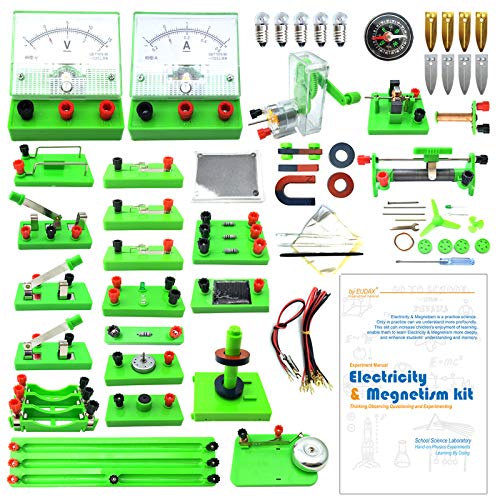
- 79 items for electricity and magnetism projects
- Includes a color manual, tools, and storage bag
- Batteries required but not included
Best For: Grades 9–11 students exploring circuits and electromagnetism
Best Physics Building Kit
Inertia, Friction & Circular Motion

- Builds six working physics models
- Covers inertia, friction, and circular motion
- Includes theory, quizzes, instructions, and a 3D app
Best For: Ages 9+ learning physics through construction
Best Beginner Magnetism Set
Junior Science Magnetism Experiments

- Includes 14 magnets and experiment accessories
- Features a compass, magnetic cars, and iron filings
- Uses common household items for added activities
Best For: Ages 8+ starting hands-on magnetism investigations
Best Magnetic Levitation Kit
Anti-Gravity Maglev Experiments

- Explores floating, levitation, and maglev concepts
- Includes experiment materials and instructions
- Recommended for ages 8–15
Best For: Young students creating visual magnetic-force demonstrations
Hands-On Magnetics

- 16-piece magnet and accessory kit
- Explores attraction, repulsion, and magnetic fields
- Recommended for ages 8 and up
Best For: Introductory magnetism projects and STEM activities
Electricity Explorers

- Includes materials for eight circuit experiments
- Explores series, parallel, fruit, and seawater circuits
- Step-by-step circuit diagram guide included
Best For: Guided electricity projects for ages 8 and up
Advanced Magnet Lab
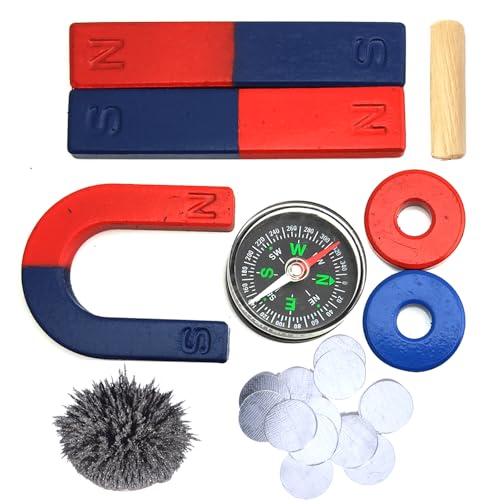
- 13-piece kit with multiple magnet shapes
- Includes compass, iron pieces, and iron powder
- English and Chinese manuals included
Best For: Detailed magnet-interaction and magnetic-field demonstrations
Best Complete Electricity & Magnetism Kit

- More than 50 hands-on experiments
- Covers circuits and electromagnetism
- Includes organized storage case
Best For: Older students building varied electricity and magnetism projects
Best Optics Science Fair Kit
Light Experiments for Ages 8–16

- 15-plus optics experiments
- Includes lenses, mirrors, and prism
- Color manual with step-by-step guidance
Best For: Students demonstrating reflection, refraction, and image formation
Best Basic Circuit Kit for School Projects

- Builds series and parallel circuits
- Designed for introductory electricity
- Includes English assembly instructions
Best For: Grades 7–9 and beginner circuit demonstrations
Best Complete Electromagnetism Kit – Basic Electricity & Magnetism Lab
For shoppers comparing physics experiment sets for science fairs, the EUDAX kit is a broad choice for students who want hands-on practice with both electricity and magnetism. It includes 79 items, a color manual, and components for projects such as series and parallel circuits, fruit batteries, electromagnets, and Ohm’s law investigations. Note that three AA batteries are required but not included.
Best For: Students in grades 9–11 who need a versatile electricity and magnetism foundation for classroom exploration or a science-fair project.
Pros:
- Covers both electricity and magnetism in one kit.
- Supports multiple project ideas, including circuits, electromagnets, and a hand-crank generator.
- Includes 79 items, repair tools, storage, and a color-page manual.
Cons:
- Requires three AA batteries, which are not included.
- The broad project range may require adult or teacher guidance for younger users.
Its wide topic coverage makes it a strong pick when a science-fair student wants several possible experiment directions rather than a single demonstration. The included manual and storage bag also make the set easier to organize between projects.
Best Physics Building Kit – Inertia, Friction & Circular Motion
Among physics experiment sets for science fairs, the Engino Physics Laws kit stands out for students who learn best by constructing working models. The set explores inertia, friction, and circular motion through six build options, including a rocket launcher, crash-test rig, and sharpening wheel, with theory, experiments, quizzes, and a 3D app included.
Best For: Kids ages 9 and up who want a structured, model-building introduction to motion-related physics.
Pros:
- Offers six working model options focused on three physics laws and concepts.
- Includes theory, experiments, quizzes, and easy-to-follow instructions.
- Interactive 3D app adds another way to engage with the builds.
Cons:
- Focuses primarily on inertia, friction, and circular motion rather than a broad range of physics topics.
- Plastic construction components may not suit students seeking electronics or magnetism experiments.
This is a practical choice for a science-fair learner who wants to demonstrate physics through visible, moving models. Its guided materials can help beginners connect construction activities with underlying concepts.
Best Beginner Magnetism Set – Junior Science Magnetism Experiments
For families seeking approachable physics experiment sets for science fairs, the Sntieecr Labs magnetism set offers a simple way to investigate magnetic forces. It includes bar, U-shaped, and ring magnets, a compass, magnetic cars, and an iron-filings box, while leaving room to add everyday items such as paper, rulers, and pens.
Best For: Students ages 8 and up beginning magnetism activities at home, in class, or as an introduction to a school project.
Pros:
- Includes several magnet types plus a compass and magnetic cars.
- Iron-filings box helps make magnetic effects easier to observe.
- Encourages students to develop experiment ideas using common household tools.
Cons:
- Some related experiments require additional everyday materials.
- Its focus is limited to introductory magnetism rather than electricity or broader physics.
The compact selection of magnets makes this a manageable starting point for younger students. It is especially useful when the goal is to observe, ask questions, and design simple magnetism investigations without a large or complex setup.
Best Magnetic Levitation Kit – Anti-Gravity Maglev Experiments
The 4M Anti Gravity kit is a focused option among physics experiment sets for science fairs, using magnetic force to create visually engaging demonstrations. Students can try floating a pencil, levitating a screw, and building a maglev, with the necessary experiment materials and instructions included.
Best For: Kids and teens ages 8–15 who want an accessible, demonstration-friendly introduction to magnetic levitation.
Pros:
- Centers on engaging magnetic-force experiments with visible results.
- Includes materials needed for the listed experiments.
- Detailed instructions support independent exploration.
Cons:
- Has a narrower focus than kits covering multiple physics topics.
- Recommended age range is 8–15, so it may be less suitable for advanced high-school investigations.
This kit is a good fit when presentation value matters: levitation and maglev activities can make a science-fair display easy to demonstrate and explain. Its focused scope also keeps the setup approachable for younger experimenters.
Hands-On Magnetics – Junior Science Magnet Set
For shoppers comparing physics experiment sets for science fairs, this 16-piece magnet kit offers a straightforward way to demonstrate attraction, repulsion, magnetic fields, and related concepts. Its mix of bar, ring, horseshoe, and compass magnets supports practical, observation-focused activities for children ages 8 and up.
Best For: Elementary and middle-school students exploring introductory magnetism through hands-on STEM activities.
Pros:
- Includes 16 magnets and accessories for several basic investigations.
- Supports activities such as testing attraction and repulsion, identifying magnetic materials, and observing fields.
- Recommended for children ages 8 and up and designed to reinforce physics learning.
Cons:
- The notes do not indicate that a detailed instruction manual is included.
- Its activities focus primarily on magnetism rather than a broad range of physics topics.
This is a practical choice when a science-fair project centers on clear, visual magnet experiments. The compact 16-piece format also makes it suitable for classroom demonstrations or supervised home exploration.
Electricity Explorers – STEM Electric Circuit Kit
Among physics experiment sets for science fairs, this circuit kit stands out for its structured approach to introductory electricity. It includes materials for eight experiments, with topics such as series and parallel circuits, fruit batteries, and seawater power generation; AA batteries are required separately.
Best For: Kids ages 8 and up who need guided circuit activities for a science fair, classroom project, or home learning.
Pros:
- Offers eight experiments and multiple ways to light a bulb.
- Covers series circuits, parallel circuits, fruit batteries, and seawater power generation.
- Includes a circuit diagram guide with step-by-step instructions.
- Supports critical thinking, problem solving, and exploratory learning.
Cons:
- AA batteries are required separately.
- The set is focused on basic electronics rather than a wide variety of physics subjects.
Its combination of repeatable experiments and illustrated guidance makes this a strong option for students who want a clearly organized electricity demonstration. It can work well for independent exploration, though younger children may benefit from adult support.
Advanced Magnet Lab – Physics Science Magnets Kit
For science-fair students seeking physics experiment sets for science fairs with more demonstration materials, this 13-piece magnet kit includes several magnet shapes, a compass, iron pieces, and iron powder. It is designed for exploring attraction, repulsion, magnetic fields, and interactive forces, with English and Chinese manuals included.
Best For: Older students and high-school physics learners investigating magnet interactions and magnetic-field demonstrations.
Pros:
- Includes horseshoe, bar, and ring magnets in multiple sizes.
- Provides a compass, iron pieces, and iron powder for varied demonstrations.
- Includes English and Chinese manuals.
- Supports hands-on exploration of magnet interaction and magnetic fields.
Cons:
- The magnets are hard and brittle and should not be dropped.
- The supplied notes identify the age range as adult, so younger users may need close supervision.
- Storage in the box is recommended when the kit is not in use.
This kit offers more visual materials than a basic magnet set, making it useful for a project that needs demonstrations with iron particles or compass movement. Its brittle magnets and adult-oriented listing make careful handling an important part of the buying decision.
Best Complete Electricity & Magnetism Kit – 55-Piece Physics Lab
For shoppers comparing physics experiment sets for science fairs, this Mysterystone kit offers broad coverage of electricity and magnetism in one portable package. It includes up to 55 components, more than 50 suggested experiments, and an illustrated manual that explains both the procedures and the underlying concepts.
Best For: Students ages 13–18 exploring circuits, electromagnets, magnetic switches, LEDs, and other electricity-and-magnetism projects.
Pros:
- Includes more than 50 DIY experiments and 55 total items.
- Covers circuits, electromagnetism, light control, magnetic switches, and Joule’s first law.
- Illustrated manual encourages students to understand why experiments work.
- Solid storage case keeps components organized and portable.
Cons:
- The manufacturer-recommended age range starts at 13, so younger children may need substantial supervision.
- The kit focuses on electricity and magnetism rather than a broad range of physics topics.
This is the strongest all-around choice here for students who want many electricity-focused projects and the flexibility to design additional experiments beyond the manual.
Best Optics Science Fair Kit – Light Experiments for Ages 8–16
Among physics experiment sets for science fairs, the Teenii kit stands out for students interested in light and optical effects. Its 25-plus components support more than 15 experiments involving reflection, refraction, lenses, mirrors, prisms, image formation, and color.
Best For: Children and teens ages 8–16 preparing optics demonstrations or learning how lenses, mirrors, prisms, and transparent materials affect light.
Pros:
- Includes lenses, mirrors, prisms, transparent blocks, screens, and light emitters.
- Supports more than 15 hands-on optics experiments.
- The 32-page full-color manual provides step-by-step instructions and explanations.
- Suitable for home learning, classroom demonstrations, and science projects.
Cons:
- Its subject coverage is concentrated on optics rather than electricity or mechanics.
- The light emitter and other components may require careful setup for clear demonstrations.
This is a focused, presentation-friendly option for a science fair project built around visible effects such as rainbows, refraction, reflection, and image projection.
Best Basic Circuit Kit for School Projects – Series and Parallel Circuits
For straightforward physics experiment sets for science fairs, the EUDAX Basic kit focuses on building and comparing simple electrical circuits. It is designed to reinforce textbook concepts through series and parallel circuit projects, with English instructions and a storage box for the included accessories.
Best For: Junior and senior high school students, especially grades 7–9, working on introductory electricity assignments, science fairs, clubs, or homeschool activities.
Pros:
- Concentrates on foundational current and circuit concepts.
- Supports both series and parallel circuit configurations.
- English instructions make assembly easier for beginners.
- Components come in a plastic storage box for organized keeping.
Cons:
- Two AA batteries are not included.
- The basic kit has a narrower project range than the larger Mysterystone set.
- It is primarily an electricity kit, without the optics components found in a dedicated light-experiment set.
This compact option makes sense when the project goal is to demonstrate core circuit rules clearly rather than perform a large collection of different physics experiments.
How We Picked These Physics Experiment Sets for Science Fairs
We selected kits that support practical, measurable investigations rather than demonstrations alone. The roundup covers electricity, magnetism, electromagnetism, optics, inertia, friction, circular motion, and magnetic levitation. We also considered age guidance, the variety of included components, the likelihood of repeating an experiment, and how easily a student could adapt a kit into a science-fair question.
Because project requirements vary, no single set is best for every student. Some kits are structured around basic circuits or magnets, while others offer broader physics concepts and more room for independent design.
Quick Comparison
| Project focus | Best suited to | What to look for |
|---|---|---|
| Electricity and circuits | Beginners through high-school students | Reliable connectors, switches, bulbs, motors, and clear diagrams |
| Magnetism and electromagnetism | Elementary and middle-school projects | Several magnet shapes, compass use, coils, and safe handling |
| Motion and mechanics | Students investigating forces | Repeatable setups for friction, inertia, or circular motion |
| Optics | Students studying light | Prisms, lenses, mirrors, and enough pieces to compare variables |
| Magnetic levitation | Visual demonstration projects | Stable components and a clear way to explain opposing forces |
Key Buying Factors for Physics Experiment Sets for Science Fairs
Age and Difficulty
Choose a set that matches the student’s ability to read diagrams, assemble parts, record measurements, and troubleshoot. Younger students often benefit from guided activities, while older students may need flexible components rather than a fixed project sequence.
Project Potential
A good science-fair kit should let the student change one variable at a time. Look for parts that support comparisons, such as different magnet shapes, circuit configurations, lens positions, surfaces, or loads. A kit with several related experiments is usually more useful than one built around a single trick.
Measurement and Documentation
Check whether the kit provides meaningful observations or measurable outcomes. Students may need to add a ruler, stopwatch, multimeter, graph paper, or other basic tools. The ability to repeat trials and record consistent results matters more than the number of parts in the box.
Safety and Durability
Review battery requirements, exposed wires, small parts, sharp edges, and supervision recommendations. Components should withstand repeated assembly, especially when the project will be practiced several times before the fair. Keep strong magnets away from sensitive electronics and supervise younger children.
Instructions and Compatibility
Clear diagrams can save time, but students should still understand the physics behind each activity. Confirm whether batteries, adhesives, measuring tools, or protective equipment are sold separately.
Who Should Buy Which Physics Experiment Sets for Science Fairs?
For a first circuit project, choose an electricity-focused set with labeled parts and straightforward wiring. For a project about magnetic fields or electromagnets, select a magnetism kit with varied magnets, a compass, and components that allow controlled comparisons. Students interested in light should choose an optics set containing prisms, lenses, and mirrors.
For younger children or guided classroom work, prioritize simple instructions and durable, easy-to-handle pieces. Older students preparing a more independent display may prefer a broader physics lab kit that supports multiple configurations. If the goal is a memorable demonstration with a strong visual element, magnetic levitation can work well, provided the student can explain the forces and document the setup clearly.