If you have boxes of prints, albums, or inherited photos to digitize, the right scanner can save hours of repetitive work. The best photo scanners with batch scanning combine fast feeding, decent image cleanup, and simple software so you can move through large collections efficiently.
This roundup focuses on models that help you scan more photos with less hands-on effort, whether you want top speed, better restoration features, or a compact desktop option.
Best 10 Photo Scanners with Batch Scanning Picks for 2026
Fast Archiving Pick

- Batch-scans up to 36 photos at once
- Scans as fast as 1 photo per second at 300 dpi
- Captures backs of photos with duplex scanning
Best For: High-volume family photo archiving with wireless sharing
Office Batch Scanner

- 25ppm color scanning with duplex capture
- 50-sheet feed supports batch jobs
- USB or Wi-Fi with PC and Mac support
Best For: Mixed document workflows with occasional photo scanning
High-Speed Photo Feeder
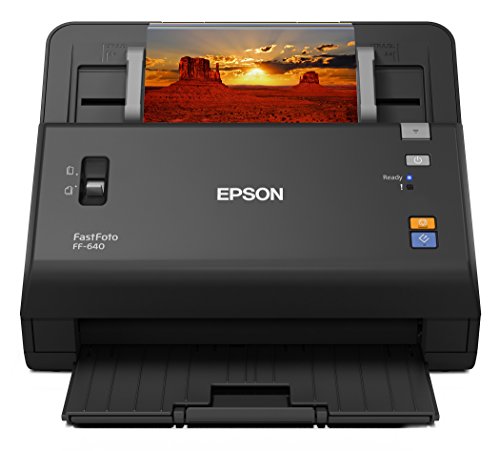
- Auto-feed tray holds 30 photos
- Scans up to 1 photo per second
- Up to 600 dpi for photo digitizing
Best For: Large photo collections that need fast auto-feeding
Simple Photo Digitizer

- Scans 4x6 photos in about 2 seconds
- Handles multiple print sizes up to 8x10
- Includes auto crop, deskew, and enhancement
Best For: Fast one-by-one scanning for home photo collections
Quick One-Touch USB Scanner
ScanSnap iX2400 High-Speed Document Scanner
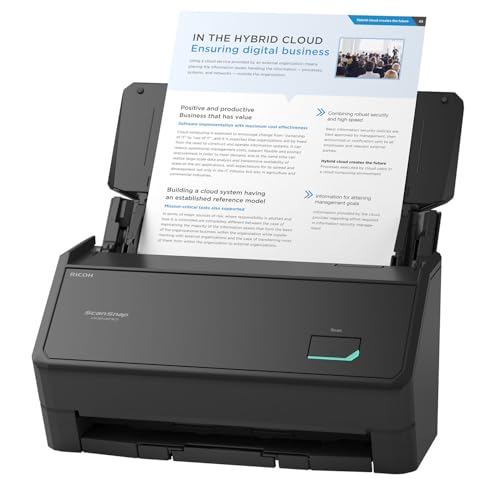
- Up to 45 ppm with one-touch operation
- 100-sheet feeder for large batch scans
- Auto cleanup features for photos and documents
Best For: Fast wired batch scanning of mixed photos and paperwork
Advanced Wireless Photo Batch Scanner

- Up to 100 photos per minute
- Wi-Fi 6, USB-C, and touchscreen profiles
- Includes carrier sheets for delicate prints
Best For: High-speed photo and document batch scanning with wireless sharing
Hybrid Flatbed ADF
Epson DS-1630 Flatbed Color Document Scanner

- 50-page ADF for fast batch scanning
- Flatbed for fragile items and IDs
- Auto-duplex and cloud export tools
Best For: mixed document workflows with occasional delicate originals
Photo Organizer
AMBIR Photo Scanner with Cleaning Kit

- 300/600 DPI scanning for printed photos
- Includes cleaning kit and carrier sheet
- Software helps restore and organize images
Best For: batch scanning and organizing printed photo collections
Portable Batch Scanner
HP Compact Desktop Duplex USB Mobile Scanner

- 25 ppm duplex scanning in a compact body
- Auto-feed tray supports batch jobs
- Handles photos, receipts, cards, and docs
Best For: small-to-medium batch scanning on the go
Fast Archiving Pick – Epson FastFoto FF-680W
If you want photo scanners with batch scanning for a large print archive, the Epson FastFoto FF-680W is built for speed and convenience. It can scan thousands of photos at up to 1 photo per second at 300 dpi, and it supports batch-scanning up to 36 photos at a time, making it a strong fit for digitizing family albums without turning the project into a marathon.
Best For: Families and home archivists who want fast batch photo scanning with wireless convenience and automatic image cleanup.
Pros:
- Batch-scans up to 36 photos at a time for high-volume projects
- Can capture both the front image and handwritten notes on the back in a single duplex scan
- Includes auto enhancement, color restoration, red-eye reduction, de-skew, crop, and rotate
- Offers Wi-Fi and USB connectivity plus app-based sharing and backup
Cons:
- Uses a carrier-sheet and careful handling for delicate photos
- Best known for photo work, so document scanning is secondary to the main use case
Overall, the FF-680W stands out when speed matters most and you still want useful photo cleanup features. If your priority is moving through stacks quickly while preserving details and notes, it is one of the most practical options in this category.
Office Batch Scanner – Fujitsu ScanSnap iX500
The Fujitsu ScanSnap iX500 is a document scanner first, but it still earns a place in a roundup of photo scanners with batch scanning if you want quick duplex feeding for mixed stacks. Its 25ppm color scanning, two-sided capture, and 50-sheet capacity make it useful for running through paperwork efficiently, especially when you need PC and Mac support in a compact desktop unit.
Best For: People who need a fast duplex sheet-fed scanner for documents and occasional photo batches in a home office.
Pros:
- Blazing 25ppm color scanning with two-sided capture
- 50-sheet capacity helps with batch-fed scanning jobs
- Supports USB or Wi-Fi connection to a computer
- Works with both PC and Mac
Cons:
- Designed as a document scanner rather than a dedicated photo scanner
- May be less ideal if your main goal is careful photo restoration
If your scanning workflow includes a lot of paper and only some photos, the iX500 is a practical speed tool. It is better viewed as a versatile feeder scanner than a dedicated archive solution for photo-heavy projects.
High-Speed Photo Feeder – Epson FastFoto FF-640
For buyers comparing photo scanners with batch scanning, the Epson FastFoto FF-640 focuses on turning stacks of prints into digital files quickly. It scans thousands of photos as fast as 1 photo per second, and the auto-feed tray holds 30 photos at a time, so it is designed for fast home archiving rather than one-by-one flatbed work.
Best For: People who want a dedicated auto-feeding photo scanner for large collections of prints.
Pros:
- Auto-feed tray accommodates 30 photos at a time
- Rated at up to 1 photo per second for very fast scanning
- Scans up to 600 dpi for better-quality image capture
- Built specifically for preserving, saving, organizing, and sharing photos
Cons:
- Best suited to Windows-based use according to the supplied notes
- Works as a photo-focused system, so it is less versatile than general document scanners
The FF-640 is a strong choice if speed and photo-specific design matter more than all-purpose flexibility. It is aimed at users who want a straightforward feeder-style system for getting through a large print collection quickly.
Simple Photo Digitizer – Plustek ePhoto Z300
If you are shopping for photo scanners with batch scanning but prefer a simpler approach, the Plustek ePhoto Z300 is built for quick individual feeding rather than stack feeding. It scans a 4×6 photo in about 2 seconds and can help you digitize around 1,000 photos in an afternoon, which makes it a practical pick for steady photo conversion without a bulky flatbed workflow.
Best For: Users who want a fast, compact photo scanner for one-by-one scanning of family prints.
Pros:
- Scans a 4×6 photo in about 2 seconds at 300 dpi
- Supports 3×5, 4×6, 5×7, 8×10, letter, and A4 sizes
- Includes auto crop and deskew with image enhancement tools
- Compatible with both Mac and PC
Cons:
- Uses a one-at-a-time feed instead of true multi-photo batch scanning
- Standard sheet capacity is 1, so it is less automated than feeder-based models
The ePhoto Z300 is a good fit when you want speed without the complexity of a large feeder scanner. It works best for people who are comfortable inserting photos individually to keep the process simple and consistent.
Quick One-Touch USB Scanner – ScanSnap iX2400 High-Speed Document Scanner
If you want photo scanners with batch scanning for mixed stacks of papers and prints, the ScanSnap iX2400 is built for simple one-touch workflows. It handles photos, business cards, receipts, envelopes, and documents through a 100-sheet feeder, then cleans up scans automatically with size detection, de-skewing, blank-page removal, and color-depth detection.
Best For: Users who want a fast, wired scanner for mixed document and photo batches with minimal setup.
Pros:
- One-touch scanning with speeds up to 45 pages per minute
- 100-sheet feeder supports large batch jobs
- Handles photos, receipts, business cards, and envelopes
- ScanSnap Home helps organize and manage scans in one place
Cons:
- USB-only connection, so it is not wireless
- Designed more for streamlined batch scanning than advanced photo editing
Overall, the iX2400 is a practical pick if your priority is getting a mixed paper-and-photo stack scanned quickly and consistently. It focuses on automation and reliability rather than extra connectivity features.
Photo Recovery Batch Scanner – Canon imageFORMULA RS40
For photo scanners with batch scanning, the Canon imageFORMULA RS40 is aimed at digitizing prints quickly while also handling documents in the same feeder. It scans both sides of items at up to 40 items per minute and supports old and new photos in varying sizes, making it a solid fit for people converting loose family photos and paper stacks at once.
Best For: Families and home users who want to batch-scan photos and documents with built-in photo enhancement tools.
Pros:
- Automatic feeder scans photos and documents at up to 40 items per minute
- Supports old and new photos in varying sizes
- Includes photo-enhancing software with red-eye correction and face smoothing
- Works with Windows and Mac and includes a TWAIN driver
Cons:
- Feeder capacity is 60 sheets, smaller than some high-capacity scanners
- Uses USB only, so there is no wireless option
The RS40 stands out when the job is scanning a batch of photos that need a little cleanup along with mixed paper documents. Its bundled software adds value if you want a more polished result without doing all the editing manually.
Advanced Wireless Photo Batch Scanner – ScanSnap iX2500 Photo Edition
If you are comparing photo scanners with batch scanning and want more speed plus wireless flexibility, the ScanSnap iX2500 Photo Edition is the most feature-rich option here. It includes photo carrier sheets, a touchscreen, Wi-Fi 6, USB-C, and an automatic feeder that holds up to 36 photos or 100 documents, with scan speeds up to 100 photos per minute.
Best For: Users who want a fast, customizable scanner for photos and documents with wireless and mobile-friendly sharing.
Pros:
- Scans up to 100 photos per minute
- Includes 3 photo carrier sheets for delicate prints
- Wi-Fi 6 and USB-C offer flexible connection options
- Touchscreen profiles make batch scanning easier to customize
Cons:
- Photo feeder capacity is limited to 36 photos at a time
- May be more scanner than needed if you only want basic photo digitizing
This model is the strongest choice if your scanning workflow spans photos, documents, mobile devices, and cloud services. It combines speed, automation, and connectivity in a way that suits heavier batch projects.
Hybrid Flatbed ADF – Epson DS-1630 Flatbed Color Document Scanner
If you want photo scanners with batch scanning that can also handle everyday paperwork, the Epson DS-1630 is built for mixed-use sorting. Its 50-page ADF speeds through stacks of documents, while the flatbed gives you a safer option for photo IDs, passports, and fragile originals.
Best For: Home or office users who need a flatbed scanner plus fast batch document scanning in one unit.
Pros:
- 50-page ADF supports stacks of documents up to 25 ppm.
- Flatbed accommodates fragile items, photo IDs, passports, and other delicate originals.
- Auto-duplex scanning helps capture both sides in one pass.
- Includes Epson software tools like auto crop, skew correction, blank-page removal, and cloud export.
Cons:
- Bulky compared with compact mobile scanners.
- Best suited to document workflows rather than dedicated photo archiving.
For buyers who need a scanner that handles both batch jobs and occasional photo-safe flatbed scanning, the DS-1630 is the most versatile option here. It is especially useful when you want speed for paper piles without giving up a flatbed for sensitive items.
Photo Organizer – AMBIR Photo Scanner with Cleaning Kit
Among photo scanners with batch scanning, this AMBIR model is aimed at quickly digitizing printed snapshots while keeping them in good shape. It supports multiple photo sizes, offers 300 or 600 DPI output, and includes software tools for restoration and organization.
Best For: People who want to batch scan printed photos and organize or restore them in one workflow.
Pros:
- Designed for photo scanning with support for multiple sizes, including panoramas up to 12″.
- Offers 300 DPI and 600 DPI options for higher-resolution archiving.
- Includes a cleaning kit, carrier sheet, and software for restoration and organization.
- USB-powered setup keeps installation simple on Mac or PC.
Cons:
- Focused on photos rather than general document scanning.
- No batch-feeding tray listed for large mixed paper stacks.
If your priority is preserving photo prints instead of processing office paperwork, this scanner is a strong fit. The included tools make it more than just a capture device, especially for cleaning, organizing, and lightly restoring older images.
Portable Batch Scanner – HP Compact Desktop Duplex USB Mobile Scanner
If you need photo scanners with batch scanning capability in a lightweight format, the HPPS200 focuses on speed, portability, and duplex convenience. Its auto-feed tray lets you stack pages for organized batch jobs, while the compact design makes it easy to move between home, office, or travel.
Best For: Portable users who want a fast duplex scanner that can handle small-to-medium batch jobs.
Pros:
- 25 ppm scanning with single-pass duplex support.
- Auto-feed rear tray handles stacked pages for batch scanning.
- Compact and lightweight enough for travel or shared workspaces.
- Works with documents, photos, receipts, cards, and more through HP WorkScan.
Cons:
- 25-sheet capacity is modest for larger batch jobs.
- Best suited to small- to medium-volume scanning rather than high-volume archival projects.
This is the practical pick if you want a mobile scanner that still feels efficient in daily use. It brings together duplex scanning, auto-feed batching, and broad file support without taking up much desk space.
How We Picked the Best Photo Scanners with Batch Scanning
We focused on scanners that make bulk photo digitizing practical, not just possible. Priority went to fast throughput, reliable automatic feeding, consistent image quality across mixed photo sizes, and software or hardware features that reduce manual cleanup such as auto crop, deskew, and color correction.
We also considered operating system support, ease of setup, and whether the scanner is better suited to loose prints, mixed archives, or occasional document use alongside photos.
Quick Comparison
For the fastest dedicated photo workflow, choose a scanner built for photos with a strong auto feeder and image-enhancement tools. For mixed home office use, a document scanner with good photo handling may be enough. Flatbeds are slower, but they can be the better choice for fragile prints, albums, or items that should not pass through a feeder.
Key Buying Factors for Photo Scanners with Batch Scanning
Feeder Design and Photo Size Support
Look for an auto photo feeder or ADF that can handle stacks cleanly and accommodate common print sizes like 4×6, as well as mixed-size collections. If your archive includes damaged, curled, or unusual prints, confirm that the scanner can still feed them without frequent jams.
Speed Versus Restoration Features
Fast scanning matters, but speed alone is not enough. The best Photo Scanners with Batch Scanning balance throughput with features like auto crop, deskew, red-eye reduction, and color restoration. Those tools can cut editing time significantly after the scans are complete.
Resolution and Output Quality
Higher DPI is helpful for preserving detail, but bigger files take longer to process and store. For everyday print archiving, moderate-to-high resolution is often sufficient. If you plan to enlarge, restore, or preserve older photos, prioritize image quality over raw speed.
Software, Workflow, and Compatibility
Good software can make or break a batch project. Check whether the scanner includes easy file naming, destination folders, multi-page or multi-image handling, and strong Windows or Mac support. Simple controls are especially useful when you are scanning hundreds of prints in one session.
Who Should Buy Which Photo Scanners with Batch Scanning?
If you have a large box of loose photos and want the fastest path to digital files, choose a purpose-built feeder scanner. If your collection includes fragile prints, old family photos, or mounted items, a flatter, gentler scanning approach may be safer even if it is slower. For users who also need document scanning, a versatile hybrid model can deliver the best overall value.
In short, match the scanner to your archive size, photo condition, and how much editing you are willing to do afterward.