If your bench space is limited, the right scope should be compact without feeling compromised. The best oscilloscopes for small workbenches balance size, channel count, bandwidth, and usability so you can test confidently without crowding your setup.
This roundup focuses on practical choices for hobby electronics, repair work, and light lab use, from bench scopes to portable and USB options.
Best 10 Oscilloscopes for Small Workbenches Picks for 2026
Bench-Ready Midrange
Siglent SDS1202X-E 200MHz 2-Channel Scope
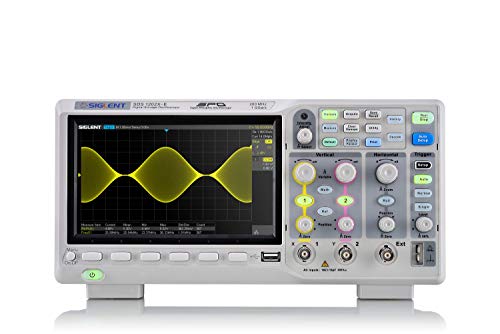
- 200 MHz bandwidth, 2 channels
- Up to 1 GSa/s and 14 Mpts memory
- Supports IIC, SPI, UART, RS232, CAN, LIN decode
Best For: small-bench users who want deep memory and broad serial decode
Budget Desktop Pick
Hantek DSO2D15 150MHz 2CH Scope

- Cost-effective 150 MHz, 2-channel scope
- Arbitrary waveform output included
- 14 trigger modes plus 5 protocol decode types
Best For: budget buyers who want a compact lab scope with extra triggering and waveform tools
Portable Touchscreen Choice
FNIRSI 1013D Plus 7-Inch Scope

- 7-inch touchscreen with gesture control
- 100 MHz, 2-channel scope with 1 GSa/s sampling
- 6000 mAh battery and waveform storage tools
Best For: portable bench and field users who want touch control and battery power
Top Desktop Performer
RIGOL DS1202Z-E 200MHz 2-Channel Scope

- 200 MHz, 2-channel scope with external trigger
- Up to 1 GSa/s and 24 Mpts deep memory
- 30,000 wfms/s capture plus USB/LAN connectivity
Best For: students and hobbyists who want the strongest small-bench desktop scope
Portable 3-in-1 Scope Meter

- 50MHz 2-channel scope with 250MSa/s sampling
- Includes 19999-count multimeter and 50kHz signal generator
- Battery-powered handheld design with waveform save/export
Best For: Compact bench and field diagnostics
Deep-Memory Bench Scope

- 100MHz, 2-channel bench oscilloscope with 1GSa/s sampling
- Up to 24Mpts deep memory for longer captures
- UART, I2C, and SPI decode plus LAN connectivity
Best For: Dedicated small benches needing deeper analysis
Compact Touchscreen Scope Combo
FNIRSI 2D15P 100MHz Touchscreen

- 100MHz 2-channel scope with 500MS/s sampling
- 4.3-inch IPS touchscreen and 19,999-count multimeter
- 5000mAh battery plus 10MHz DDS generator
Best For: Compact repair benches with touchscreen control
Compact USB Bench Scope
Hantek 6022BE 2-Channel 20 MHz PC Scope

- USB-powered PC scope with two channels
- Compact aluminum enclosure for tight benches
- FFT, math, X-Y display, and cursor tools
Best For: Small benches and users who want a low-footprint USB oscilloscope.
Portable All-in-One Scope

- 4-in-1 tool with scope, analyzer, FRA, and generator
- 350 MHz bandwidth with 1 GSa/s sampling
- 7-inch touchscreen plus 8000 mAh battery
Best For: Busy small benches that need maximum capability in one portable unit.
Portable Signal-Gen Scope

- Two-channel 50 MHz handheld scope
- Built-in DDS signal generator
- Compact IPS display with rechargeable battery
Best For: Small benches and mobile users who want a scope plus signal generator.
Bench-Ready Midrange – Siglent SDS1202X-E 200MHz 2-Channel Scope
If you’re comparing oscilloscopes for small workbenches, the Siglent SDS1202X-E is a practical desktop option with a compact footprint and a strong feature set for everyday troubleshooting. It offers 200 MHz bandwidth, 1 GSa/s real-time sampling, and deep 14 Mpts memory, which makes it useful when you need to capture longer events without giving up detail.
Best For: hobbyists and bench users who want a compact 2-channel scope with deep memory and serial decode support.
Pros:
- 200 MHz bandwidth with 2 channels for a broad range of bench tasks
- Up to 1 GSa/s sampling and 14 Mpts record length for longer captures
- Supports IIC, SPI, UART, RS232, CAN, and LIN serial triggering and decode
- Listed at 5.5 pounds, making it fairly manageable for a small bench
Cons:
- 2-channel design may be limiting if you need more simultaneous inputs
- No portability-focused features like battery power or touchscreen are listed
Overall, the SDS1202X-E looks like a solid fit for a small workbench where capture depth and protocol decoding matter more than portable convenience. Its feature set leans toward serious desktop debugging without appearing oversized.
Budget Desktop Pick – Hantek DSO2D15 150MHz 2CH Scope
For buyers looking at oscilloscopes for small workbenches, the Hantek DSO2D15 stands out as a cost-effective desktop instrument with a compact body and a feature list aimed at general lab use. It provides 150 MHz bandwidth, 2 channels, arbitrary waveform output, and multiple trigger and protocol options, so it covers a lot of everyday test work without taking up much space.
Best For: budget-conscious users who want a compact lab oscilloscope with trigger variety and built-in waveform output.
Pros:
- Cost-effective option for basic to intermediate bench work
- 150 MHz bandwidth with 2 channels for common electronics tasks
- Includes arbitrary waveform output for added lab flexibility
- Supports 14 trigger modes and 5 serial protocol triggers/decodes
Cons:
- Lower bandwidth than the 200 MHz models in this group
- Specifications do not highlight portability features like battery operation
In a small-workbench setup, this Hantek makes sense if you want an affordable scope with useful extras rather than the highest possible performance. It is aimed at practical commissioning and education use, which fits many home and light lab benches.
Portable Touchscreen Choice – FNIRSI 1013D Plus 7-Inch Scope
If you need oscilloscopes for small workbenches but also want something easy to move, the FNIRSI 1013D Plus is built around portability. It combines a 7-inch touchscreen, 100 MHz dual-channel bandwidth, 1 GSa/s sampling, and a built-in 6000 mAh battery, so it can work well when bench space is tight or when you need to carry it around.
Best For: users who want a lightweight, battery-powered scope with a touchscreen interface for casual bench and field work.
Pros:
- Portable 7-inch touchscreen design with capacitive touch and gesture control
- 100 MHz dual-channel bandwidth with 1 GSa/s sampling
- Built-in 6000 mAh battery for up to 4 hours of use
- Includes waveform storage, screenshot management, Lissajous display, and FFT viewing
Cons:
- 100 MHz bandwidth is below the 150 MHz and 200 MHz bench models here
- Storage is limited to 1 GB, which may be modest for heavy waveform archiving
This model makes the most sense when your small workbench needs flexibility more than a traditional desktop form factor. Its battery power and touch controls make it a convenient option for quick checks, portable troubleshooting, and light lab use.
Top Desktop Performer – RIGOL DS1202Z-E 200MHz 2-Channel Scope
Among oscilloscopes for small workbenches, the RIGOL DS1202Z-E is the most feature-heavy desktop choice in this group. It pairs 200 MHz bandwidth with 1 GSa/s sampling, deep 24 Mpts memory, and a 30,000 wfms/s capture rate, so it is designed to help you see both fast glitches and longer signal history on a compact bench.
Best For: students, hobbyists, and lab users who want a compact 2-channel scope with deep memory, fast capture, and LAN connectivity.
Pros:
- 200 MHz bandwidth with 2 analog channels and external trigger input
- Up to 1 GSa/s sampling and 24 Mpts memory depth for long captures
- 30,000 wfms/s waveform capture rate for spotting intermittent glitches
- USB Host, USB Device, and LAN connectivity for bench integration
Cons:
- Only 2 channels, so it may not suit more complex multi-signal setups
- It is a desktop instrument rather than a portable battery-powered model
For a small workbench, the DS1202Z-E offers the strongest combination of capture performance and connectivity in this set. If your priority is detailed debugging with room to grow into lab-style workflows, this is the most capable all-around pick here.
Portable 3-in-1 Scope Meter – FNIRSI 2C53T 50MHz Handheld
If you want oscilloscopes for small workbenches that still travel easily, the FNIRSI 2C53T packs a 2-channel 50MHz scope, a 19999-count multimeter, and a DDS signal generator into one handheld unit. It is a practical fit for quick bench checks, classroom use, and field troubleshooting where space is tight but you still need multiple test tools in one body.
Best For: Hobbyists, students, and repair users who want a compact all-in-one tester for light bench and portable diagnostics.
Pros:
- Combines a 50MHz oscilloscope, multimeter, and signal generator in one handheld device.
- Includes cursor measurement, math operation, persistence mode, and XY mode for added analysis.
- Built-in 3000mAh battery and Type-C charging support portable use on cramped benches.
- Can save waveform images and export them to a PC for comparison and review.
Cons:
- 2.8-inch display is compact compared with larger bench scopes.
- 1Kpts record depth is much smaller than full-size bench instruments.
- Best suited to general diagnostics rather than deep long-capture analysis.
This is a strong pick when bench space is limited and you value versatility over raw bench-class capture depth. It gives you a useful mix of scope, meter, and generator functions in a very small footprint.
Deep-Memory Bench Scope – RIGOL DS1102Z-E 100MHz
For oscilloscopes for small workbenches where you still want true bench performance, the RIGOL DS1102Z-E offers 100MHz bandwidth, 2 channels, and deep memory in a full-size scope. It is better suited to dedicated desk setups than portable repair work, especially when you need longer captures, higher waveform update visibility, and bus decoding on embedded projects.
Best For: Electronics learners, embedded troubleshooters, and bench users who want a serious digital oscilloscope with deeper capture tools.
Pros:
- 100MHz bandwidth with up to 1GSa/s real-time sampling for bench testing.
- Deep memory up to 24Mpts helps preserve longer captures at higher sample rates.
- 30,000 wfms/s capture rate improves visibility of intermittent glitches.
- Includes serial trigger and decode support for RS232/UART, I2C, and SPI.
Cons:
- 8.83-pound weight makes it less convenient for portable use or tight shelves.
- Full-size 7-inch display means it occupies more bench space than handheld units.
- More scope than you may need for simple meter-style troubleshooting.
This model makes sense when your small workbench is dedicated to electronics work and you care about capture quality more than portability. It brings bench-grade memory, display, and decoding features that are especially useful for embedded and lab troubleshooting.
Compact Touchscreen Scope Combo – FNIRSI 2D15P 100MHz Touchscreen
If you are shopping for oscilloscopes for small workbenches, the FNIRSI 2D15P is a compact 3-in-1 option with a 100MHz scope, a 19,999-count TRMS multimeter, and a 10MHz DDS generator. Its 4.3-inch IPS touchscreen and small footprint make it a good fit for fast electronics repair sessions where you want quick control without a bulky bench setup.
Best For: Repair-focused users who want a compact touchscreen instrument with scope, meter, and generator functions.
Pros:
- 100MHz bandwidth and 500MS/s sampling give it more headroom than many compact combo units.
- 4.3-inch IPS touchscreen makes operation faster and more intuitive.
- Includes afterglow, cursor measurement, and 13 parameters with 6 math functions.
- 5000mAh battery and Type-C charging support extended use away from the wall.
Cons:
- Despite the touchscreen, it is still a compact instrument rather than a full-size bench scope.
- 10MHz generator is useful, but not as flexible as a dedicated lab signal source.
- Quiet fan cooling is present, so it is not completely fanless.
This is a strong middle ground if you need a small-workbench tool that feels modern and responds quickly during repairs. It offers more bandwidth and sampling than many handheld combos while keeping the footprint manageable.
Compact USB Bench Scope – Hantek 6022BE 2-Channel 20 MHz PC Scope
If you want oscilloscopes for small workbenches, the Hantek 6022BE is a simple PC-based option that keeps the hardware footprint low. Its USB-only design powers the scope and handles communication through a single cable, while the compact aluminum enclosure is sized to fit a tight bench or field kit.
Best For: Budget-conscious users who want a compact two-channel USB scope for basic bench troubleshooting and computer-based analysis.
Pros:
- Two channels with 20 MHz bandwidth and up to 48 MSa/s sample rate
- USB 2.0 connection provides both power and computer communication
- Includes measurement tools like FFT, waveform math, X-Y display, and cursor measurements
- Compact anodized-aluminum enclosure suits small bench spaces
Cons:
- PC-based design depends on a connected computer for use
- Lower bandwidth than handheld options in this roundup
For basic electronics work, this is the most space-efficient choice here if you already prefer a computer-driven workflow. It focuses on core capture and analysis features without adding extra bulk to the bench.
Portable All-in-One Scope – FNIRSI DPOS350P 350MHz 4-in-1
For small workbenches that still need a lot of capability, the FNIRSI DPOS350P combines a handheld oscilloscope, spectrum analyzer, frequency response analyzer, and DDS signal generator in one unit. Its 7-inch touchscreen and built-in battery make it easy to move around the bench without giving up advanced test functions.
Best For: Users who want a portable, feature-packed instrument for bench testing, signal analysis, and generator tasks in one device.
Pros:
- 4-in-1 design with oscilloscope, spectrum analyzer, FRA, and DDS generator
- High 350 MHz bandwidth and 1 GSa/s sample rate
- 7-inch touchscreen with digital phosphor display and 50,000 wfms/s refresh
- 8000 mAh battery and USB-C charging for portable use
Cons:
- Larger and heavier than simpler bench scopes
- Feature depth may be more than needed for basic troubleshooting
This is a strong pick if your small bench needs versatility more than minimalism. It replaces several tools at once, which can help keep clutter down while expanding what you can test.
Portable Signal-Gen Scope – FNIRSI DS215H 50MHz 2-in-1
The FNIRSI DS215H is a compact choice for oscilloscopes for small workbenches when you want both a scope and a signal generator without a lot of desk space. It offers a 50 MHz two-channel scope in a lightweight handheld body, plus a built-in DDS generator for quick testing and setup.
Best For: Makers and technicians who need a portable two-channel oscilloscope with an integrated signal generator for quick bench checks.
Pros:
- 2-in-1 design combines a 50 MHz oscilloscope with a DDS signal generator
- Two channels, 250 MS/s sampling, and FFT support
- Compact 3.5-inch IPS display with dual knobs for quick adjustments
- Rechargeable 1500 mAh battery and Type-C charging support portability
Cons:
- 1 Kpts record length is relatively short compared with deeper-capture scopes
- Smaller screen may feel cramped for extended analysis sessions
This model makes sense when bench space is tight and you value fast setup over a larger interface. It packs the essentials into a compact handheld format that can also go mobile when needed.
How We Picked the Best Oscilloscopes for Small Workbenches
For Oscilloscopes for Small Workbenches, we prioritized compact footprints, useful bandwidth for common bench tasks, at least two channels for most users, and controls that are easy to live with in a tight space. We also looked for features that improve day-to-day usability, such as clear displays, signal generators, USB connectivity, and reasonable sampling performance for the class.
Quick Comparison
In general, the lineup breaks into four groups: traditional benchtop scopes for the best all-around experience, budget benchtop models for casual and learning use, USB scopes for ultra-small setups, and handheld or all-in-one units for portability. If you mostly work on audio, microcontrollers, and general troubleshooting, a 100 MHz to 200 MHz two-channel bench scope is the safest starting point. If desk space is extremely limited, a compact handheld or USB model may be the better fit.
Key Buying Factors for Oscilloscopes for Small Workbenches
Size Versus Usability
A smaller chassis can save valuable room, but don’t trade away screen readability or control layout. On a cramped bench, a scope with a usable front panel is often better than one that is tiny but awkward.
Bandwidth and Sampling
Match bandwidth to the signals you actually test. For most hobby and repair work, 50 MHz to 100 MHz is enough; 200 MHz gives more breathing room for faster digital signals and cleaner viewing margins. Sampling rate matters too, especially if you want more trustworthy waveform detail.
Channel Count
Two channels cover most troubleshooting jobs and remain the most practical choice for limited bench space. More channels are helpful for complex timing work, but they usually bring extra cost and complexity.
Special Features
Built-in signal generators, multimeters, USB control, and touchscreen interfaces can be genuinely useful on a small bench because they reduce the number of separate instruments you need.
Who Should Buy Which Oscilloscopes for Small Workbenches?
Choose a traditional benchtop model if you want the best balance of ergonomics and everyday use. Pick a USB oscilloscope if your desk is very tight and you are comfortable using a computer as the display. Go with a handheld or 3-in-1 unit if portability matters or you want one compact tool that can handle several basic test jobs. For learners and general-purpose makers, the best value usually comes from a two-channel model with enough bandwidth for current and future projects.