If you want faster shared storage without jumping straight to a full enterprise rack setup, NAS enclosures with M.2 cache are a smart middle ground. They combine bulk HDD or SSD capacity with NVMe acceleration for snappier file access, apps, and multitasking.
This roundup focuses on practical choices for homes, creators, and small teams that need better performance, easier expansion, and a clear upgrade path in 2026.
Best 10 Nas Enclosures with M2 Cache Picks for 2026
Hybrid 4-Bay NAS for Small Offices
Ubiquiti 4-Bay NAS with 2 M.2 NVMe Cache Slots
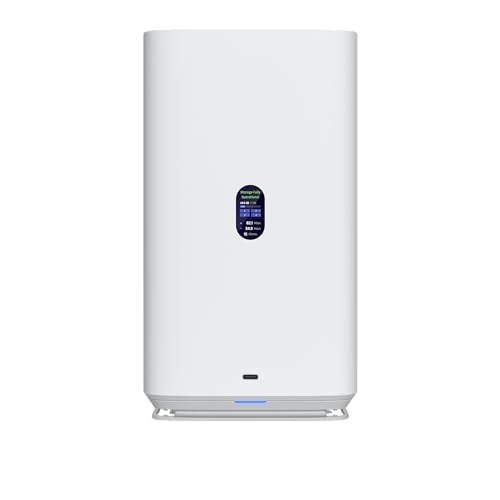
- 4 HDD bays for flexible capacity
- Dual M.2 NVMe cache slots
- 2.5GbE plus USB-C connectivity
Best For: Small teams or home users needing HDD storage with SSD cache acceleration
Compact 2-Bay NAS for Faster Networking
QNAP TS-264 Single Unit 8GB Memory

- M.2 2280 NVMe SSD support
- 8GB RAM for multitasking
- Port trunking up to 5Gbps
Best For: Home offices and small setups needing compact NAS storage with NVMe expansion
Pro Workhorse NAS

- Dual M.2 PCIe 4.0 cache or pool support
- Core i3-1315U with DDR5 memory
- 10GbE + 2.5GbE networking
Best For: Power users and small teams needing performance, virtualization, and fast cache support
High-Speed NVMe Expansion Enclosure
TERRAMASTER D4 SSD NVMe Enclosure 40Gbps

- Four M.2 NVMe 2280 slots
- 40Gbps transfer performance
- Active cooling with hot-swap support
Best For: Creators and power users needing very fast external NVMe storage
Creator-Grade 4-Bay NAS with M.2 Cache

- AMD Ryzen Embedded R2514 with expandable 8GB DDR4 RAM
- Dual 10GbE plus SSD and two M.2 SSD support
- UGOS Pro includes Docker, VMs, and surveillance tools
Best For: Creators and office teams needing fast, expandable network storage
Compact Hybrid NAS for NVMe Speed

- 4 M.2 NVMe slots plus 2 SATA bays in a compact metal enclosure
- Intel N100 with 16GB LPDDR5 and built-in 10GbE
- Includes Unraid OS Starter License for flexible storage setups
Best For: DIY builders and Plex users who want a compact hybrid NAS
Simple 2-Bay NAS with M.2 Caching

- Dual M.2 PCIe SSD slots for caching and Qtier auto-tiering
- Built-in 2.5GbE for responsive daily transfers
- Intel UHD Graphics supports hardware transcoding
Best For: Home users wanting a compact NAS with cache-boosted everyday speed
Creator Performance NAS
Asustor Lockerstor 6 Gen2+ 6 Bay NAS
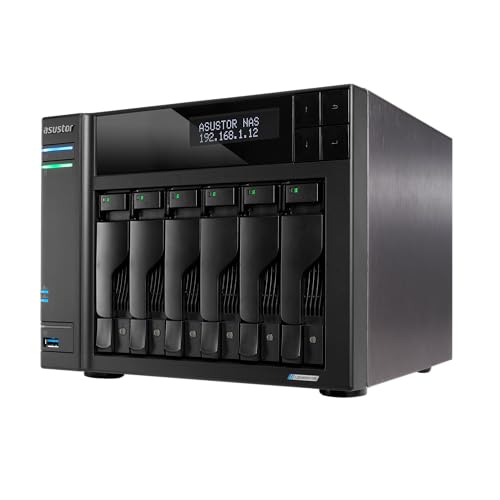
- Four M.2 NVMe slots for caching or acceleration
- Dual 5GbE ports with 10GbE upgrade potential
- 8GB DDR4 and 4K media server support
Best For: Video creators and small teams needing hybrid storage plus cache expansion
Expandable Cache NAS

- Two M.2 NVMe slots for caching and Qtier
- Dual 2.5GbE ports with trunking support
- Two PCIe Gen3 slots for add-on expansion
Best For: Advanced users who want upgrade flexibility and cache support
All-SSD Compact NAS

- Eight M.2 2280 NVMe bays for all-flash storage
- 10Gbps Ethernet rated up to 1024MB/s
- Quiet cooling design with standby noise below 19dB
Best For: Home or small-business buyers wanting compact, quiet all-SSD storage
Hybrid 4-Bay NAS for Small Offices – Ubiquiti 4-Bay NAS with 2 M.2 NVMe Cache Slots
Ubiquiti 4-Bay NAS with 2.5/3.5" HDD Slots & 2 M.2 NVMe SSD Cache Slots by Ubiquiti
Check Price On AmazonIf you want a NAS enclosure with M.2 cache and a simple hardware layout, this Ubiquiti 4-bay model is built around flexible storage expansion. It combines four HDD bays with dual M.2 NVMe SSD cache slots, plus 2.5GbE networking and USB-C connectivity for a straightforward shared-storage setup.
Best For: Small teams or home users who want HDD capacity with NVMe cache acceleration.
Pros:
- Four 2.5/3.5-inch HDD bays for mixed-capacity storage builds
- Dual M.2 NVMe SSD cache slots for faster access to hot data
- 2.5GbE Ethernet for quicker network transfers than standard gigabit
- USB-C connectivity adds another practical connection option
Cons:
- Drive details are focused on capacity rather than advanced software features
- M.2 slots are described as cache, not as a full NVMe storage pool
This is a good fit if you want a clean balance of HDD expansion and SSD cache support without moving into a more complex enterprise build. The 2.5GbE port and dual cache slots make it appealing for everyday file sharing and responsive access.
Compact 2-Bay NAS for Faster Networking – QNAP TS-264 Single Unit 8GB Memory
The QNAP TS-264 is a compact option to consider if you’re shopping for nas enclosures with m2 cache and want a balance of speed and everyday usability. It supports M.2 2280 NVMe PCIe SSDs sold separately, and its port-trunking support can push network speeds up to 5Gbps over existing CAT5e cabling.
Best For: Home offices and small setups that want a compact NAS with NVMe expansion and 8GB RAM.
Pros:
- Supports M.2 2280 NVMe PCIe SSDs for performance upgrades
- 8GB RAM helps with multitasking and general system responsiveness
- Port trunking can deliver up to 5Gbps over CAT5e cables
- Dual screen extensions support monitoring or 4K playback
Cons:
- M.2 SSDs are sold separately
- It is a two-bay system, so raw HDD capacity is limited versus larger units
For users who want a smaller NAS with practical upgrade paths, this model keeps the focus on networking and add-on NVMe performance. The included 8GB memory and dual-screen support make it a versatile desktop-friendly choice.
Pro Workhorse NAS – UGREEN DXP4800 Pro 4-Bay
If you’re comparing nas enclosures with m2 cache for heavier workloads, the UGREEN DXP4800 Pro stands out with dual M.2 PCIe 4.0 slots and strong core hardware. It pairs a Core i3-1315U processor, 8GB DDR5 RAM, and dual network ports for workloads like Docker, virtual machines, media management, and large file transfers.
Best For: Power users, developers, and small teams that need performance, virtualization, and fast cache options.
Pros:
- Dual M.2 PCIe 4.0 SSD slots can be used as cache or a storage pool
- Intel Core i3-1315U with 8GB DDR5 RAM supports demanding multitasking
- 10GbE + 2.5GbE networking enables very fast transfer potential
- Supports Docker, virtual machines, and on-device AI photo recognition
Cons:
- Advanced features may be more than casual users need
- High-performance networking and SSDs can raise the total system cost
This is the most feature-rich option in the group for users who want storage and compute in one box. With cache-capable M.2 slots, strong networking, and virtualization support, it is built for serious multi-purpose use.
High-Speed NVMe Expansion Enclosure – TERRAMASTER D4 SSD NVMe Enclosure 40Gbps
The TERRAMASTER D4 is different from a typical NAS, but it still belongs in a roundup of nas enclosures with m2 cache-style storage because it uses four M.2 NVMe slots for high-speed local expansion. With 40Gbps connectivity, active cooling, and support for up to 32TB, it is aimed at users who need very fast external SSD storage for demanding workflows.
Best For: Creators and power users who want a fast multi-SSD enclosure for editing, backups, or portable expansion.
Pros:
- Four M.2 NVMe 2280 slots support up to 32TB total capacity
- 40Gbps performance is suited to large transfers and 4K editing
- Active cooling and temperature sensors help maintain stable operation
- Tool-free, hot-swappable design makes drive changes easier
Cons:
- No built-in RAID, so any RAID setup depends on third-party tools
- It is an external enclosure, not a networked NAS appliance
If your priority is raw NVMe speed rather than network sharing, this enclosure is a practical fit. It offers a compact four-bay design, strong cooling, and plug-and-play compatibility for desktop and portable workflows.
Creator-Grade 4-Bay NAS with M.2 Cache – UGREEN DXP4800 GT
If you are comparing nas enclosures with m2 cache for heavy multitasking, the UGREEN DXP4800 GT is built for creators, small teams, and power users who need fast local storage and flexible expansion. Its dual 10GbE networking, SSD expansion, and support for up to two M.2 SSDs make it a strong fit for backups, media work, and responsive file access.
Best For: Creators, office teams, and enthusiasts who want fast network storage with broad app support and local security.
Pros:
- AMD Ryzen Embedded R2514 with 4 cores, 8 threads, and up to 3.70GHz for demanding multitasking
- Dual 10GbE and high-speed SSD expansion for fast transfers and local-like 4K/8K editing
- Supports up to 144TB total capacity with 4 bays plus up to 16TB via two M.2 SSD
- UGOS Pro adds Docker, virtual machines, SAN Manager, and easy guided setup
Cons:
- Drives are not included, so total cost depends on the storage you add
- Advanced features like surveillance and virtual machines may be more than casual home users need
- Best performance assumes compatible high-speed networking and SSD choices
This is a well-rounded option if you want a NAS that can handle storage, apps, and local media workflows without relying on cloud services. The combination of 10GbE, M.2 support, and a capable AMD platform makes it especially appealing for users who expect their enclosure to do more than simple file sharing.
Compact Hybrid NAS for NVMe Speed – LincStation N2
The LincStation N2 stands out among nas enclosures with m2 cache because it pairs 4 M.2 NVMe slots with 2 SATA bays in a compact chassis. If you want a flexible DIY NAS for Plex, Docker, or private cloud use, its Intel N100 processor, 10GbE port, and included Unraid Starter License give it a practical mix of speed and storage options.
Best For: DIY NAS builders, Plex users, and small-office setups that want a compact hybrid storage platform.
Pros:
- 4-core Intel N100 with 16GB LPDDR5 memory for smooth everyday NAS workloads
- 4 M.2 NVMe slots plus 2 SATA bays for a flexible storage mix
- Built-in 10GbE, USB-C 10G, USB 3.2 Gen2, and HDMI 2.0 for broad connectivity
- Unraid OS Starter License included for drive flexibility and community apps
Cons:
- Only two bays are SATA, so high-capacity spinning-drive storage is limited
- Diskless design means you still need to buy all storage separately
- DIY and Unraid-focused setup may be less plug-and-play than simpler NAS boxes
For users who want NVMe-heavy storage in a compact enclosure, the N2 offers an appealing balance of speed, flexibility, and app support. It is especially attractive if you plan to mix media serving, backups, and container workloads in one small system.
Simple 2-Bay NAS with M.2 Caching – QNAP TS-262A-4G
If you want a smaller NAS enclosure with m2 cache for everyday home or desk use, the QNAP TS-262A-4G focuses on practical speed upgrades without adding too much complexity. Its 2.5GbE connection, dual M.2 PCIe SSD slots, and Qtier auto-tiering are aimed at keeping backups, file access, and routine tasks responsive.
Best For: Home users and small deskside setups that want quick everyday performance in a compact 2-bay NAS.
Pros:
- Dual M.2 PCIe SSD slots for caching and Qtier auto-tiering
- Built-in 2.5GbE keeps daily tasks and backups responsive
- Intel UHD Graphics supports hardware transcoding for smoother media streaming
- Tool-less, hot-swappable 2-bay design fits small spaces
Cons:
- Only two SATA bays, so raw storage expansion is limited
- Not as fast on networking as 10GbE-equipped alternatives
- Best suited to compact household use rather than heavier multi-user workloads
The TS-262A-4G is a sensible pick if you want a compact NAS with caching features and straightforward everyday performance. It does not try to be a full-scale workstation NAS, but it does cover the essentials well for personal cloud, backups, and media streaming.
Creator Performance NAS – Asustor Lockerstor 6 Gen2+ 6 Bay NAS
If you want one of the more capable nas enclosures with m2 cache for editing, streaming, and fast team file access, the Asustor Lockerstor 6 Gen2+ is built for that workload. It combines a 6-bay hybrid design with four M.2 NVMe SSD slots, plus dual 5GbE networking, so it can handle both bulk storage and acceleration in a creator-focused setup.
Best For: Video creators, small teams, and users who want a hybrid NAS with strong cache expansion options.
Pros:
- Supports up to four M.2 NVMe SSD slots for caching or storage acceleration.
- Dual 5GbE ports support fast transfers and link aggregation, with 10GbE upgrade potential.
- 8GB DDR4 memory helps with multitasking across backup, syncing, and media apps.
- 4K media server support makes it a practical fit for Plex and creative workflows.
Cons:
- Diskless, so you still need to budget for drives and SSDs.
- Best suited to users who can take advantage of its higher-speed networking and cache slots.
This is a strong pick if you want a flexible creator NAS that balances HDD capacity with NVMe acceleration. The four-slot M.2 design gives it an edge for responsiveness, especially in workflows that benefit from caching.
Expandable Cache NAS – QNAP TS-673A-8G 6 Bay NAS
QNAP TS-673A-8G 6 Bay High-Performance NAS with 2 x 2.5GbE Ports and Two PCIe Gen3 Slots
Check Price On AmazonAmong nas enclosures with m2 cache, the QNAP TS-673A-8G stands out for expandability. It pairs two M.2 PCIe NVMe SSD slots for SSD caching and Qtier optimization with dual 2.5GbE ports and two PCIe Gen3 slots, giving you several ways to improve performance as your storage needs grow.
Best For: Users who want a flexible 6-bay NAS with room to add networking, cache, or GPU-related upgrades.
Pros:
- Two M.2 PCIe NVMe SSD slots support SSD caching and Qtier Technology.
- Two PCIe Gen3 slots add room for 10GbE, extra USB, wireless, or Fibre Channel cards.
- Dual 2.5GbE ports support port trunking for up to 5Gbps transfer speeds.
- Supports entry-level NVIDIA graphics cards for video processing or VM passthrough.
Cons:
- Rack-mount form factor may not suit every home setup.
- Needs add-on cards to reach some of its higher-end expansion options.
This is a practical choice if you want a NAS you can scale over time rather than a fixed configuration. Its mix of M.2 caching and PCIe expansion makes it especially versatile for advanced users.
All-SSD Compact NAS – TerraMaster F8 SSD 8-Bay NAS
If you want a fast all-flash option in the category of nas enclosures with m2 cache, the TerraMaster F8 SSD takes a different approach by using eight M.2 2280 NVMe SSD bays instead of mixing HDDs and SSDs. Its Intel N95 processor, 8GB DDR5 memory, and 10Gbps Ethernet make it a compact choice for users who care more about speed, silence, and density than traditional spinning-disk storage.
Best For: Home and small-business users who want a compact, all-SSD NAS with very quiet operation.
Pros:
- Supports eight M.2 2280 NVMe SSDs for up to 64TB of flash storage.
- 10Gbps Ethernet is rated for transfer speeds up to 1024MB/s.
- Tool-free installation makes SSD or memory expansion fast and simple.
- SSD-based design and cooling setup are built for quiet operation, with standby noise below 19dB.
Cons:
- It is diskless and requires buying SSDs separately.
- All-SSD designs can be a bigger upfront investment than hybrid NAS options.
The F8 SSD is best viewed as a high-density flash NAS rather than a cache-first hybrid box. That makes it a compelling fit when you want a small footprint and low noise without giving up serious SSD capacity.
How We Picked the Best Nas Enclosures with M2 Cache
We prioritized systems that balance real-world performance, storage flexibility, and long-term value. That means strong processor and memory options, enough drive bays for growth, and M.2 slots that can be used for caching, storage pools, or both depending on the model.
We also looked at networking, expansion potential, noise and power considerations, and how well each enclosure fits common workloads like media streaming, backups, Docker, photo libraries, and office file sharing.
Quick Comparison: What Matters Most
Before buying, compare five basics: bay count, M.2 count, network speed, CPU class, and RAM upgradeability. A 2-bay unit can be enough for simple backup and personal media, while 4-bay and 6-bay models are better if you expect growth or need more flexible RAID options.
For most buyers, 2.5GbE is the minimum worth considering, while 5GbE or 10GbE makes more sense if you edit large files, serve multiple users, or keep all-flash volumes. Also check whether the M.2 slots are strictly for cache or can be used as independent storage.
Key Buying Factors for NAS Enclosures with M.2 Cache
Cache Versus Full NVMe Storage
Some NAS enclosures with M.2 cache use NVMe slots only to accelerate HDD arrays, while others let you create SSD storage pools. Cache helps most with repeated reads, metadata-heavy workloads, and multi-user responsiveness; full NVMe storage is better when low latency matters across every task.
CPU and Memory Headroom
A stronger CPU and more RAM improve file indexing, app containers, virtual machines, transcoding, and simultaneous users. If you plan to run Plex, Docker, or backups together, avoid underpowered entry-level hardware.
Networking and Expansion
Fast cache is only useful if the rest of the system can keep up. Look for at least 2.5GbE, and consider dual-port or 10GbE systems if your workflow regularly pushes large transfers. PCIe expansion can also add network or storage flexibility later.
Drive Mix and RAID Strategy
Choose a chassis that matches your growth plan. HDD-based models usually offer better cost per terabyte, while all-SSD designs trade capacity economics for speed and silence. Make sure your preferred RAID level still leaves room for future expansion.
Who Should Buy Which Nas Enclosures with M2 Cache?
Choose a 2-bay NAS if you mainly want simple, compact storage for backups and personal media. Pick a 4-bay model if you want the best all-around balance of capacity, performance, and RAID flexibility. Go with a 6-bay or all-SSD enclosure if you expect heavier multitasking, larger libraries, or more demanding team and creator workloads.
If you are shopping specifically for NAS enclosures with M.2 cache, the best option is usually the one that matches your current workload while leaving enough CPU, RAM, and network overhead for the next two to three years of growth.