Choosing the right LCR meter can make electronics troubleshooting faster, cleaner, and far more accurate. Whether you repair boards, test passive parts, or sort SMD components, the right meter saves time and guesswork.
This roundup highlights 10 practical options for different repair workflows, from portable testers to higher-precision tools for bench use.
Best 10 Lcr Meters for Electronics Repair Picks for 2026
Bench-Top Precision
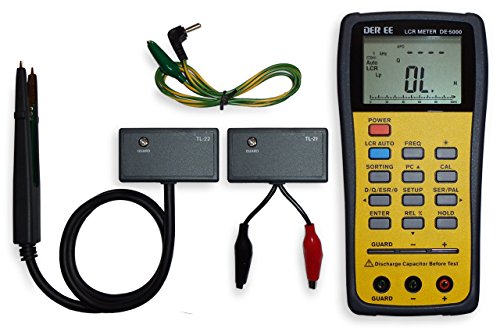
- AUTO-LCR mode measures L, C, and R directly.
- Shows D, Q, phase angle, and ESR/Rp.
- Supports 100Hz to 100kHz test frequencies.
Best For: Repair techs needing detailed handheld component measurement.
Budget Multimeter Hybrid
Pro'sKit MT-5211 Digital LCR Mustimeter

- Adds LCR functions to a digital multimeter.
- Large LCD includes back-light support.
- Battery powered for portable use.
Best For: Users wanting a simple multimeter with LCR capability.
Feature-Rich Component Tester
FNIRSI LC1020E 100kHz LCR Meter

- Dual display shows main and secondary parameters.
- Sorting mode checks parts against preset tolerance.
- Open/short calibration and adjustable test voltage.
Best For: Bench users who sort parts and need detailed readouts.
Classic Impedance Tool
Peak Atlas LCR45 LCR and Impedance Meter
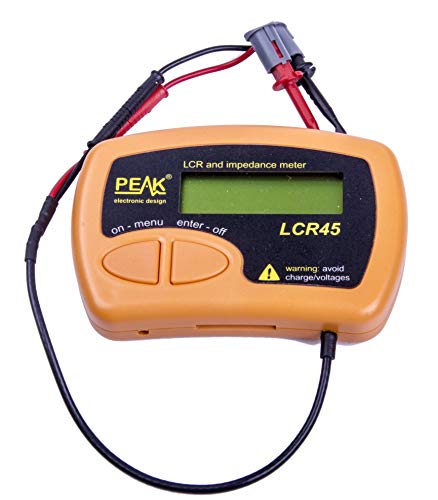
- Compact meter for LCR and impedance measurements.
- Manual or automatic frequency selection.
- High resolution down to 0.2uH, 0.2pF, and 0.2 Ohms.
Best For: Technicians wanting a compact impedance meter with simple controls.
Precision Tweezer Tester
FNIRSI LCR-ST2 100kHz LCR Meter
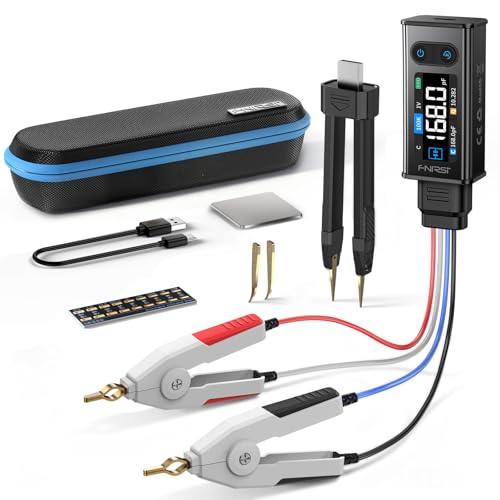
- Tests SMD and through-hole parts
- 100 Hz to 100 kHz scan range
- Includes Kelvin clips and tweezer tips
Best For: Portable component-level repair and diagnostics
Portable SMD Tester
FNIRSI LCR-ST1 10kHz LCR Meter Tweezers

- Measures R, C, L, diodes, and ESR
- Auto recognition with primary/secondary readouts
- Data export to PC via Excel
Best For: Fast SMD repair and board-level fault finding
High-Precision Handheld Bridge Tester

- Auto-identifies L/C/R with secondary readings
- 4-wire input improves measurement reliability
- 100Hz to 100KHz test frequencies
Best For: Compact repair work needing handheld bridge-style testing
Best Heavy-Duty Pick

- Tweezer design suits one-hand SMD testing
- 0.5% accuracy with user calibration
- Supports diode and continuity testing
Best For: Surface-mount repair and tiny component checks
Data-Logging Handheld Analyzer

- Measures C, L, R, Z, D, and Q
- USB logging supports thousands of readings
- Backlit display rotates 180 degrees
Best For: Repair work that needs computer logging and analysis
Bench-Top Precision – DE-5000 Handheld LCR Meter
If you want lcr meters for electronics repair that can do more than basic parts checks, the DE-5000 is built for detailed component work. It measures inductance, capacitance, and resistance in AUTO-LCR mode, and also shows secondary values like D, Q, phase angle, and ESR/Rp for more informed troubleshooting.
Best For: Repair techs who need a handheld meter with strong part identification, multiple test frequencies, and automatic serial/parallel measurement selection.
Pros:
- Measures L, C, and R with auto-ranging AC impedance and DC resistance support.
- Offers test frequencies of 100Hz, 120Hz, 1kHz, 10kHz, and 100kHz.
- Includes sorting mode for quickly screening component batches.
- Comes with alligator leads, SMD tweezers, guard line, battery, and manual.
Cons:
- Uses a 9V battery instead of rechargeable power.
- IR-to-USB cable is listed as an option and is not included.
The DE-5000 stands out as a practical repair bench tool when you need flexible measurement modes and deeper electrical readings than a simple component tester. Its automatic mode selection and multi-frequency support make it especially useful for comparing suspect parts and confirming replacements.
Budget Multimeter Hybrid – Pro'sKit MT-5211 Digital LCR Mustimeter
For basic lcr meters for electronics repair, the Pro’sKit MT-5211 is a straightforward digital multimeter with extra LCR meter functionality. It suits users who want a simple, battery-powered tool with a large backlit LCD and versatile everyday measurement use.
Best For: Hobbyists and repair users who want a simple multimeter with added LCR capability.
Pros:
- Combines multimeter use with extra LCR meter functions.
- Large LCD includes a back-light for easier viewing.
- Battery powered for portable repair work.
Cons:
- Supplied notes do not list detailed L/C/R ranges or test frequencies.
- Less feature information is provided than on dedicated LCR meters.
The MT-5211 makes sense if you want one meter for general electrical checks and occasional component testing. It is not as specialized as higher-end LCR meters, but its simplicity may be exactly what a light repair kit needs.
Feature-Rich Component Tester – FNIRSI LC1020E 100kHz LCR Meter
The FNIRSI LC1020E is one of the more feature-rich lcr meters for electronics repair, especially if you screen parts often. It supports automatic detection, dual-parameter display, multiple test frequencies, and sorting/comparison mode for checking whether components fall within a preset tolerance range.
Best For: Repair benches that need fast sorting, calibration support, and detailed readouts on capacitors, resistors, and inductors.
Pros:
- Displays main and secondary parameters together, including X, D, Q, theta, and ESR.
- Supports open/short calibration and adjustable test voltage.
- Includes sorting and comparison mode with audible and LED alerts.
- Uses 3-pin sockets and 5-slot jacks for four-terminal Kelvin-style measurements.
Cons:
- Requires open/short calibration before measurement.
- Notes warn not to test live circuits or uncharged components.
The LC1020E is a strong pick for users who need both accuracy and workflow speed. Its combination of dual-parameter display, tolerance checking, and calibration tools makes it especially useful for sorting parts and verifying replacements on the bench.
Classic Impedance Tool – Peak Atlas LCR45 LCR and Impedance Meter
The Peak Atlas LCR45 is a compact option for lcr meters for electronics repair when you want straightforward impedance and component measurements. It offers automatic or manual component type selection, manual or automatic test frequency control, and a hold function for capturing readings during troubleshooting.
Best For: Repair technicians who want a compact impedance meter with simple controls and selectable test frequencies.
Pros:
- Measures LCR and impedance with a hold function.
- Automatic or manual component type selection.
- Selectable test frequencies including DC, 1kHz, 15kHz, and 200kHz.
- High resolution down to 0.2uH, 0.2pF, and 0.2 Ohms.
Cons:
- Corded electric power may be less convenient for mobile work.
- Smaller feature set than some more advanced multi-parameter meters.
The LCR45 is a focused, no-nonsense meter for users who value compact size and clear measurement control. Its resolution and selectable frequencies make it a solid fit for bench troubleshooting where repeatability matters.
Precision Tweezer Tester – FNIRSI LCR-ST2 100kHz LCR Meter
If you need lcr meters for electronics repair that can handle both tiny SMD parts and through-hole components, the FNIRSI LCR-ST2 is built for that workflow. It supports auto sorting, primary and secondary parameter display, and a wide 100 Hz to 100 kHz scan range, making it practical for diagnosing a broad mix of parts from RF components to large electrolytics.
Best For: Repair work that needs portable tweezer-style testing with detailed component analysis.
Pros:
- Measures resistors, capacitors, inductors, diodes, continuity, and voltage
- Supports 100 Hz, 120 Hz, 1 kHz, 10 kHz, and 100 kHz testing
- Four RMS test levels and series/parallel mode help reduce parasitic effects
- Includes Kelvin clips, gold-plated tweezer tips, hooks, and storage pouch
Cons:
- Best suited to component-level testing rather than general multimeter use
- Rechargeable battery and compact display may feel limiting for some bench users
Overall, the LCR-ST2 is a strong pick if you want a compact tester that goes beyond basic go/no-go checks. Its broader frequency range and detailed readouts make it especially useful when component characterization matters during repair.
Budget Repair Multimeter – LCR600 LCR Meter Multimeter
For shoppers looking for lcr meters for electronics repair without a steep learning curve, the LCR600 is an easy entry point. It combines a 6000-count auto-ranging multimeter with LCR measurement for inductance, capacitance, and resistance, so you can cover common troubleshooting tasks with one simple tool.
Best For: DIY repairs and everyday troubleshooting when you want a straightforward all-in-one meter.
Pros:
- Measures AC/DC voltage, current, resistance, capacitance, inductance, frequency, and duty cycle
- Includes NCV, backlight, flashlight, data hold, and auto power-off
- Simple, quick, stable readings with no complicated setup
- Supplied with test leads, instruction manual, and temperature probe
Cons:
- Less specialized than dedicated tweezer-style LCR testers
- Not aimed at advanced component analysis features like ESR or parameter comparison
The LCR600 is a practical choice if you want one affordable meter that can do both basic multimeter duties and core LCR checks. It makes the most sense for home repair, DIY projects, and quick circuit troubleshooting.
Portable SMD Tester – FNIRSI LCR-ST1 10kHz LCR Meter Tweezers
If your focus is lcr meters for electronics repair on SMD boards, the FNIRSI LCR-ST1 is designed to make component checks fast and portable. It measures resistance, capacitance, inductance, and diodes, while also showing D, Z, Q, R, and ESR values with auto recognition and primary/secondary parameter display.
Best For: Quick SMD fault-finding and recovering parts from used circuit boards.
Pros:
- Supports 100 Hz, 1 kHz, and 10 kHz test frequencies
- Measures R, C, L, diodes, ESR, D, Z, and Q
- Auto saves test records and can export data to PC via Excel
- Includes pointed and hook tweezer heads plus carrying bag
Cons:
- Fixed screen design does not support flipping or rotating
- Fewer test voltage options than the ST2 model
This model is a good fit if you value portability and quick component identification over bench-style flexibility. Its data export feature also makes it more useful when you want to document repair results instead of just checking parts on the fly.
High-Precision Handheld Bridge Tester – LCR Meter ZT-DQ01
If you need lcr meters for electronics repair that balance portability with useful measurement depth, the ZT-DQ01 is a practical handheld option. It automatically identifies inductance, capacitance, and resistance, and adds secondary readings like ESR, Q, D, and theta for more complete component checks.
Best For: Technicians who want a compact handheld bridge meter with auto पहचानification and multiple test frequencies.
Pros:
- Auto-identifies L/C/R and displays main and secondary parameters.
- 4-wire measurement input helps improve accuracy and reliability.
- Multiple test frequencies from 100Hz to 100KHz support different parts.
- Compact, battery-powered design with a 2.8-inch TFT screen.
Cons:
- Auto power-off timing must be adjusted to suit your workflow.
- Manual range selection may be needed for some special impedance devices.
- Notes mention restarting the device if it lags or freezes.
Overall, this is a solid general-purpose repair meter if you want a compact bridge tester with broader frequency options and better visibility into component behavior.
Best Heavy-Duty Pick – DM103 LCR Meter Tweezer
For lcr meters for electronics repair focused on tiny parts, the DM103 stands out as a tweezer-style SMD tester. It automatically recognizes resistors, capacitors, and inductors, while also supporting diode and continuity testing for faster board-level troubleshooting.
Best For: SMD soldering, circuit repair, and one-hand testing of tiny components.
Pros:
- Tweezer form factor makes one-hand SMD testing fast and convenient.
- 0.5% basic accuracy with user-defined calibration for long-term precision.
- Selectable frequencies and voltages help adapt to different component checks.
- Shows main and secondary parameters together, reducing mode switching.
Cons:
- Best suited to SMD parts rather than larger bench-style workflows.
- Uses a rechargeable battery, so charging is part of regular use.
- Some features rely on calibration to maintain peak accuracy.
If your repair bench often handles small surface-mount parts, this meter is built to make fast, accurate checks easier without the clutter of test leads.
Data-Logging Handheld Analyzer – LCR-101A Meter
Among lcr meters for electronics repair, the LCR-101A is a strong pick if you want measurement data you can also review on a computer. It measures capacitance, inductance, resistance, impedance, and secondary values like D and Q, with auto component recognition and a readable backlit display.
Best For: Repair, inventory, and analysis work that benefits from PC data logging.
Pros:
- Measures C, L, R, Z, plus dissipation factor and quality factor.
- USB data logging supports thousands of readings for analysis.
- Three test frequencies help match different component types.
- 180-degree screen rotation adds flexibility for left- or right-handed use.
Cons:
- USB cable is not included for PC connectivity.
- Battery-powered design may be less convenient than a bench unit for long sessions.
- It is a handheld meter, so it may not replace a full lab bridge for every task.
This model makes sense if you want a repair meter that goes beyond quick checks and also helps with recordkeeping or deeper component analysis.
How We Picked the Best Lcr Meters for Electronics Repair
We focused on tools that are genuinely useful for repair work: stable readings, sensible test frequencies, clear displays, and component recognition that helps identify bad or out-of-spec parts quickly. We also favored models that balance accuracy with ease of use, since Lcr Meters for Electronics Repair need to work well in real troubleshooting situations, not just on paper.
Other priorities included portability, test lead or tweezer convenience, and whether the meter supports the components repair techs handle most often: resistors, capacitors, inductors, and small SMD parts.
Quick Comparison for Repair Work
If you want a general-purpose handheld meter, look for a model with auto-detection and a comfortable display. If you work heavily with surface-mount parts, tweezer-style testers can speed up in-circuit sorting and part identification. For more advanced bench use, consider a meter with higher test frequency and better impedance or ESR-related measurements.
Key Buying Factors for Lcr Meters for Electronics Repair
Measurement Range and Frequency
Higher test frequency can improve usefulness on real-world capacitors and inductors, especially when you are checking parts in-circuit or comparing similar components. Make sure the meter covers the values you actually service.
Accuracy and Consistency
Precision matters more than flashy features. A meter with repeatable readings and a clear accuracy spec is easier to trust when diagnosing marginal parts.
Auto Recognition and Extra Parameters
Auto component detection saves time, while measurements like ESR, Q, and dissipation factor can provide more context when evaluating caps and coils.
Form Factor
Handheld bridge-style meters are convenient for general repairs. Tweezer models are better for tiny SMD parts. Bench-oriented meters are usually the best choice if you spend more time on calibration, comparison testing, or deeper component analysis.
Display and Usability
A bright screen, fast response, and intuitive controls matter in the shop. If the interface slows you down, the meter is less useful no matter how good the specs look.
Who Should Buy Which Lcr Meters for Electronics Repair?
Buy a versatile handheld meter if you want one tool for general troubleshooting and component checks. Choose a tweezer-style tester if you mostly handle SMD parts and need speed on the board. If you are a more advanced technician or hobbyist working with precision passives, a higher-spec LCR meter with stronger test features will usually offer the best long-term value.
For most buyers, the best Lcr Meters for Electronics Repair are the ones that match your workload, not the ones with the longest spec sheet. Focus on the parts you test most often, the way you work, and how much speed versus precision you really need.