Choosing a laboratory wireless data logger is about more than recording numbers. The right model helps you track temperature, humidity, voltage, or other conditions with minimal downtime and clean reporting.
For labs, pharmacies, and cold-chain workflows, features like remote alerts, exportable logs, and sensor accuracy can matter as much as price.
Best 10 Laboratory Wireless Data Logger Picks for 2026
Best for Remote Alerts
Elitech RCW-800W-TDE WiFi Temp Logger
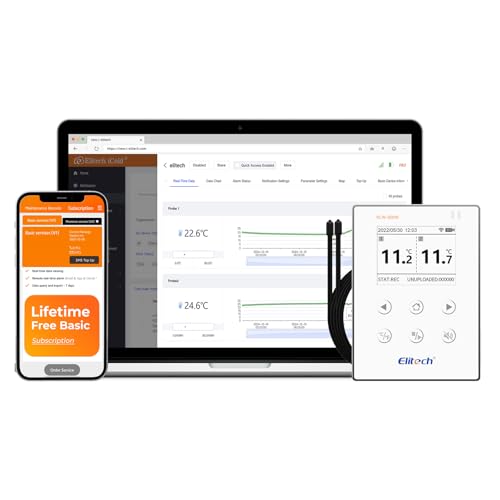
- WiFi and cloud access for remote monitoring
- Dual probes for tracking two temperature points
- Battery backup helps maintain logging during outages
Best For: Labs and cold-storage users who need remote temperature alerts and cloud logging.
Best Multi-Sensor Logging
USB Temp/Humidity/Pressure Logger

- Tracks temperature, humidity, and pressure together.
- Supports PDF and Excel/CSV reporting.
- Stores up to 16,000 readings with customizable alarms.
Best For: Labs and workspaces that want multi-parameter environmental logging with easy report exports.
Best for PC-Based Logging
Hantek 365D USB Wireless Data Logger

- Long-time recording for voltage, current, and resistance
- True RMS support for more dependable AC measurements
- USB plug-and-play setup for PC-based logging
Best For: Technicians and lab users who need long-duration electrical logging from a computer.
Best for Remote Cold-Chain Monitoring
Elitech Cellular + Wi‑Fi Temperature Logger

- Built-in LTE 4G and Wi‑Fi for remote access
- Logs up to 100,000 points offline with auto-sync
- App, SMS, email, and local alarms for fast alerts
Best For: Labs, pharmacies, and cold-chain teams that need remote monitoring and reliable alerting.
Best for Multi-Channel Logging
4-Channel K/J/T Thermocouple Logger

- 4-channel monitoring for simultaneous temperature checks
- Logs up to 5,000 readings with USB export
- Supports K, J, and T thermocouples with ADJ compensation
Best For: Users who need a multi-point thermocouple logger for lab, HVAC, or equipment testing.
Best for Long Cold-Chain Runs
Elitech 10-Pack Temp/Humidity Logger
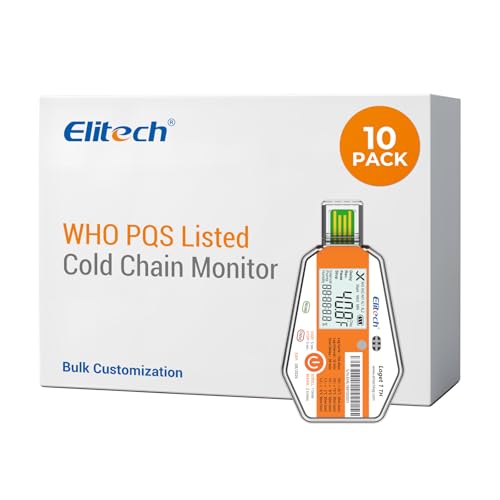
- 120-day logging for extended monitoring
- Temperature, humidity, and light sensing
- PDF report output for easy documentation
Best For: Labs and logistics teams needing disposable long-run cold-chain monitors.
Best for Large-Volume Logging
Elitech RC-51 USB Temp Data Logger

- 32,000-point temperature storage
- USB PDF reporting with no software
- LCD display plus alarm settings
Best For: Labs and storage users who need simple reusable temperature logging with easy USB reporting.
Best for Cold-Chain Compliance
Elitech GSP-6 Bluetooth Data Logger

- Bluetooth app support for easier setup and data export
- 100,000-point memory with PDF/CSV reporting
- Calibration certificate and compliance-oriented design
Best For: Pharmacies, vaccine storage, and regulated lab monitoring where audit-ready records are important.
Best for Long Cold-Chain Shipments
Elitech 10Pack USB Disposable Data Logger

- Instant PDF reports simplify compliance paperwork.
- Tracks temperatures for up to 120 days.
- IP67 waterproof build for shipping and warehouse use.
Best For: Labs and logistics teams needing simple single-use temperature logging for long shipments.
Best for Disposable Cold-Chain Shipments
Elitech 10-Pack USB Temp Logger

- Auto-generates password-protected PDF reports
- Records up to 16,000 temperature points
- IP67 waterproof design for transit use
Best For: Labs and shippers needing a disposable logger for temperature-controlled transport.
Best for Remote Alerts – Elitech RCW-800W-TDE WiFi Temp Logger
If you need a laboratory wireless data logger that can track temperatures remotely and push alerts fast, this Elitech model is built around convenience and visibility. It combines WiFi logging, dual external probes, cloud storage, and app/web/SMS/email alarms so you can monitor sensitive samples or storage areas without being on site.
Best For: Labs, cold-storage users, and facilities that need remote temperature monitoring with alarm notifications and cloud access.
Pros:
- Dual external probes help monitor more than one temperature point at once.
- WiFi, cloud storage, and app/web/SMS/email alarms make remote oversight easy.
- Rechargeable battery keeps logging and uploads going during power loss.
- Magnetic mounting simplifies setup on refrigerators or other metal surfaces.
Cons:
- Requires WiFi and cloud setup, so it’s less plug-and-play than a basic logger.
- Most useful for temperature monitoring; it is not a general-purpose lab data logger.
For buyers who want a laboratory wireless data logger focused on remote supervision rather than local-only recording, this Elitech unit offers a practical mix of alarms, cloud access, and backup power. It’s especially useful where quick notification matters as much as the temperature record itself.
Best Multi-Sensor Logging – USB Temp/Humidity/Pressure Logger
If you need a laboratory wireless data logger that tracks more than just temperature, this USB recorder is a practical pick for monitoring temperature, humidity, and barometric pressure in one device. It suits controlled environments where you want clear, exportable records without extra cables or a complicated setup.
Best For: Labs and workspaces that need simple Windows-based logging with PDF/CSV reporting and multi-parameter environmental tracking.
Pros:
- Measures temperature, humidity, and atmospheric pressure in real time.
- Stores up to 16,000 data groups for longer monitoring runs.
- Exports detailed reports in PDF and Excel/CSV formats.
- Customizable sampling, alarms, and measurement units add flexibility.
Cons:
- Requires a Windows computer for software and report access.
- Not a true wireless logger; it uses USB for data retrieval.
- Best suited to environmental monitoring rather than high-end lab systems.
For buyers comparing a laboratory wireless data logger, this model stands out for its combined sensing and reporting features, but it is really a USB download logger rather than a Wi-Fi or Bluetooth device. That makes it a strong fit when accuracy, storage, and straightforward report generation matter more than live wireless syncing.
Best for PC-Based Logging – Hantek 365D USB Wireless Data Logger
The Hantek 365D is a practical laboratory wireless data logger for users who need long-term voltage, current, and resistance recording with a PC-connected workflow. Its USB setup and True RMS support make it a straightforward choice for bench testing, diagnostics, and extended monitoring where accuracy and continuous capture matter.
Best For: Technicians and lab users who want a PC-driven wireless logging solution for long-duration electrical measurements.
Pros:
- Logs voltage, current, and resistance over long periods
- True RMS measurement helps with more reliable AC readings
- Plug-and-play USB design simplifies setup
- Useful for bench work and PC-based monitoring
Cons:
- Must be connected to a PC to start logging
- Less portable than fully standalone wireless loggers
- Best suited to desktop lab workflows rather than field use
Overall, the Hantek 365D fits buyers who want a laboratory wireless data logger that emphasizes long recording sessions and easy computer integration over standalone convenience. If your priority is dependable electrical monitoring at a workstation, it offers a focused and budget-friendly approach.
Best for Remote Cold-Chain Monitoring – Elitech Cellular + Wi‑Fi Temperature Logger
If you need a laboratory wireless data logger that can keep watch even when you are off-site, this Elitech unit stands out for its built-in LTE 4G, Wi‑Fi connectivity, and multi-channel alerts. It’s designed for continuous monitoring of temperature, humidity, and CO2, with local storage to protect data during outages.
Best For: Labs, pharmacies, cold-chain storage, and multi-user facilities that need remote access, automatic alerts, and backup logging.
Pros:
- Built-in cellular and Wi‑Fi connectivity for remote monitoring from anywhere
- Stores up to 100,000 points offline and syncs automatically after reconnection
- App, email, SMS, cloud, and onboard sound/light alarms for fast response
- Interchangeable probe support adds flexibility for different environments
Cons:
- Requires a subscription, even though 2 years are included upfront
- Probes are sold separately, which adds to the total cost
- More connectivity features than some users need for simple local logging
As a laboratory wireless data logger, this model is strongest where uptime, remote visibility, and alarm delivery matter more than basic on-device logging. It’s a practical fit if you want centralized oversight for regulated storage or shared environments.
Best for Multi-Channel Logging – 4-Channel K/J/T Thermocouple Logger
If you need a practical laboratory wireless data logger for monitoring multiple temperature points at once, this 4-channel thermocouple meter is a strong fit. It combines onboard logging, USB export, and broad K/J/T compatibility in a compact unit suited to labs, HVAC checks, and general troubleshooting.
Best For: Users who want a multi-channel thermocouple logger for lab, HVAC, or equipment testing with easy PC export.
Pros:
- 4-channel input supports simultaneous multi-point temperature monitoring
- Stores up to 5,000 readings and also supports USB export to PC software
- Wide temperature range covers demanding lab and HVAC applications
- ADJ compensation helps improve accuracy in challenging conditions
Cons:
- Not a true wireless unit; data transfer is via USB
- Thermocouple-based setup requires compatible probes and proper placement
- Interface is functional rather than especially modern
For buyers comparing a laboratory wireless data logger, this model stands out more for dependable multi-channel logging than for connectivity features. It is a solid choice when measurement flexibility, exportable records, and thermocouple compatibility matter more than wireless convenience.
Best for Long Cold-Chain Runs – Elitech 10-Pack Temp/Humidity Logger
If you need a laboratory wireless data logger for extended cold-chain monitoring, this Elitech 10-pack is built around long-duration logging, PDF reporting, and multi-parameter capture. It records temperature, humidity, and light exposure, making it useful for shipments and storage points where a simple single-sensor recorder may not be enough.
Best For: Labs, clinics, and logistics teams that want disposable, ready-to-deploy monitors for long temperature and humidity runs.
Pros:
- 120-day runtime is well suited to long monitoring windows
- Captures temperature, humidity, and light for broader tracking
- PDF report output makes review and sharing straightforward
- 10-pack format works well for repeat or high-volume use
Cons:
- Single-use design is less economical than reusable loggers
- Not a live wireless monitor for real-time remote viewing
- More specialized than needed for basic temperature-only checks
Overall, this is a practical laboratory wireless data logger option when you care more about dependable documentation and long deployment time than advanced connectivity. It fits best in cold-chain workflows where simple setup and clear reporting matter.
Best for Large-Volume Logging – Elitech RC-51 USB Temp Data Logger
The Elitech RC-51 is a practical laboratory wireless data logger alternative for teams that need simple temperature tracking, a reusable design, and a big memory buffer without complicated setup. It logs up to 32,000 points, includes an LCD for quick on-device checks, and can generate a PDF report by USB connection with no software required.
Best For: Labs, storage areas, and field users who want easy temperature logging with USB reporting and a reusable form factor.
Pros:
- Stores up to 32,000 temperature readings for longer monitoring runs.
- USB plug-and-play output can create PDF reports without extra software.
- LCD screen shows current temperature, min/max, date, and logging status.
- Reusable design with configurable start options and multiple alarm settings.
Cons:
- Not a true wireless unit; data is retrieved through USB.
- Temperature-only logging limits use for broader environmental monitoring.
For buyers focused on straightforward temperature compliance and recordkeeping, this laboratory wireless data logger-style device is a strong value pick as long as USB download fits the workflow. Its large storage, simple interface, and alarm options make it well suited to routine lab and cold-chain checks.
Best for Cold-Chain Compliance – Elitech GSP-6 Bluetooth Data Logger
If you need a laboratory wireless data logger for regulated temperature and humidity monitoring, the Elitech GSP-6 stands out for its Bluetooth transfer, large 100,000-point memory, and compliance-focused reporting tools. It’s built for vaccine storage, pharmacy use, and other cold-chain applications where audit-ready records matter.
Best For: Pharmacies, vaccine storage, and lab teams that need Bluetooth access, exportable reports, and calibration documentation.
Pros:
- Bluetooth connectivity makes setup, data review, and report export easier through the app.
- Stores up to 100,000 readings and supports PDF/CSV reporting for documentation.
- Includes a calibration certificate and is positioned for CDC/VFC and FDA 21 CFR Part 11 workflows.
- Dual power options help keep logging running even when the battery is depleted.
Cons:
- More compliance-oriented than a simple plug-and-play temperature monitor.
- Bluetooth and app-based features may be unnecessary for basic home or general-purpose use.
For teams that need a laboratory wireless data logger with strong compliance features, the GSP-6 is a practical fit. Its mix of Bluetooth access, long memory, and certificate-backed reporting makes it especially useful when records need to be clear, shareable, and audit-friendly.
Best for Long Cold-Chain Shipments – Elitech 10Pack USB Disposable Data Logger
If you need a laboratory wireless data logger for shipping, storage, or compliance checks, this disposable Elitech set is built for simple temperature tracking with no software setup. It records up to 120 days, exports instant PDF reports, and covers a wide -30°C to 70°C range for sensitive goods.
Best For: Labs, pharmacies, food logistics, and other buyers that need straightforward single-use temperature logging for long shipments.
Pros:
- Instant PDF reports make documentation fast and easy.
- 120-day runtime suits long-distance cold-chain transport.
- Accurate temperature range from -30°C to 70°C for sensitive items.
- IP67 waterproofing helps in harsh shipping and warehouse conditions.
Cons:
- Single-use design is less economical for frequent reuse.
- Not a true wireless logger with live remote monitoring.
- Best suited to temperature tracking, not multi-parameter lab sensing.
For teams that want a practical laboratory wireless data logger alternative for transport verification, this model focuses on reliability, reporting, and ease of use rather than app-based connectivity. It is a strong fit when compliance paperwork and long-duration temperature logging matter most.
Best for Disposable Cold-Chain Shipments – Elitech 10-Pack USB Temp Logger
If you need a laboratory wireless data logger alternative for one-way cold-chain shipping, this Elitech 10-pack is built for simple, compliant temperature tracking without any software setup. It records up to 16,000 points per unit, creates a password-protected PDF report automatically, and is designed for transit monitoring across refrigerated bags, trucks, and other controlled environments.
Best For: Labs, clinics, and shippers that need disposable temperature logging for single-use transport runs and easy handoff reporting.
Pros:
- Single-use design with auto-generated encrypted PDF reports
- High-capacity logging: up to 16,000 data points with adjustable intervals
- IP67 waterproofing and sealed bag design suit cold-chain transit conditions
- Flexible alarm and start settings for different shipment workflows
Cons:
- Not reusable, so ongoing use can be less economical than multi-use loggers
- USB/PDF workflow is simple, but it is not a true wireless transmitter
- Temperature range and accuracy are solid, but not for ultra-precise lab instrumentation
Overall, this is a practical pick when the priority is low-friction evidence of temperature control rather than live remote monitoring. For buyers comparing a laboratory wireless data logger to a disposable transit recorder, the Elitech RC-17 stands out for straightforward reporting, rugged packaging, and shipment-friendly operation.
How We Picked These Laboratory Wireless Data Loggers
We focused on practical lab and compliance needs: measurement accuracy, logging capacity, alert options, connectivity, export formats, and ease of deployment. We also favored models that fit real-world use cases such as cold storage monitoring, transportation, and long-term environmental tracking.
Quick Comparison
In general, wireless and cloud-connected units are best for remote oversight and instant alerts, while USB and disposable loggers are better for simple, lower-cost documentation. Multi-channel and specialty instrument loggers suit technical testing, while temperature and humidity models are the most common choice for storage and transit monitoring.
Key Buying Factors for a Laboratory Wireless Data Logger
Measurement Type
Start with what you need to measure. Temperature-only units are common, but many labs also need humidity, pressure, voltage, current, or multi-channel thermocouple support. Choose a device that matches the actual workflow rather than buying extra functions you will not use.
Connectivity and Alerts
If you need live oversight, look for Wi-Fi, Bluetooth, cellular, or app-based monitoring with SMS, email, or push alerts. If the logger is for periodic checks or audit records, USB export may be enough.
Data Capacity and Export
Logging depth matters when monitoring over days or weeks. Check whether the unit stores enough points for your interval and duration. Also confirm whether it exports to CSV, PDF, or platform-based reports for easier review and compliance documentation.
Compliance and Workflow Fit
For pharmacies, laboratories, and transit monitoring, single-use or certified cold-chain loggers may be the best fit. Reusable models make more sense for ongoing internal monitoring, while disposable units are ideal when you need a simple record for a shipment or one-way trip.
Who Should Buy Which Laboratory Wireless Data Logger?
Buy a connected cloud or cellular model if you need real-time alerts and remote visibility. Choose a Bluetooth or USB Laboratory Wireless Data Logger if you want straightforward logging with simple report generation. Select a multi-channel or thermocouple model for technical testing and instrument work. If your priority is shipment tracking or regulated cold-chain documentation, a disposable or single-use logger is often the most efficient option.
In short, the best choice depends on how often you need to check the data, how critical the conditions are, and whether your workflow demands live alerts or just a trustworthy record.