Choosing the right laboratory PAR light meter can make plant-light testing far more consistent, whether you are validating grow lights, checking greenhouse coverage, or comparing sun and LED performance.
Below, we focus on practical measurement features that matter most: spectral range, accuracy, ease of use, and whether the meter suits lab, indoor grow, reef, or field applications.
Best 10 Laboratory PAR Light Meter Picks for 2026
Best for PPFD Tracking
Quantum PAR Meter Full-Spectrum PPFD Tester

- 400–700 nm PAR range for plant-light measurements
- Stores up to 100 readings for basic logging
- Tripod socket supports steadier repeat testing
Best For: Growers and researchers who want portable PPFD readings with simple data storage.
Best Value PAR Meter
PHOTOBIO LGBQM2 Quantum Sensor
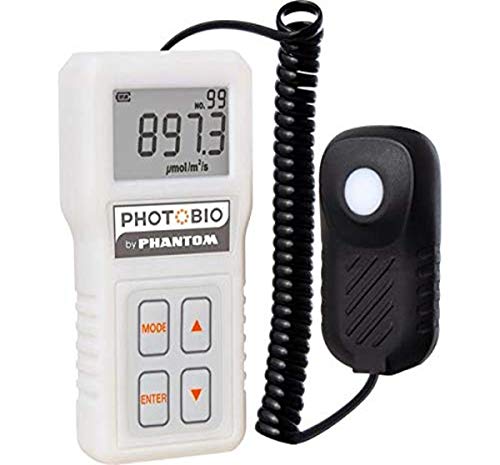
- Covers the 400 to 700nm PAR range
- Remote sensor and handheld operation
- Stores up to 99 readings for comparison
Best For: Indoor growers and lighting users who need a dependable, affordable PAR meter.
Best for Spectrum Analysis

- Measures PAR and UVA for broader grow-light checks
- Displays blue, green, and red PAR breakdown
- Stores up to 100 readings for mapping light distribution
Best For: Growers who want to analyze spectrum balance and light uniformity in detail.
Best for Reef Tanks
Apogee MQ-510 Full-Spectrum PAR Meter

- Immersion-corrected for underwater PAR accuracy
- Reads 400-700 nm light from LEDs and other sources
- Rugged waterproof sensor head with stable calibration
Best For: Reef tanks, aquariums, and underwater PAR measurements where accuracy matters.
Best Smartphone-Based PAR Meter
Lightray Mobile Light & PAR Meter

- App-based PPFD, DLI, and illuminance measurements
- Portable alternative to bulky dedicated meters
- Easy-to-read smartphone workflow with Photone
Best For: Growers and small labs that want a portable, app-driven PAR meter.
Best for Full-Spectrum Accuracy
Apogee MQ-500 Full-Spectrum PAR Meter

- Full-spectrum sensor handles LEDs and sunlight
- Digital PPFD readings are quick to capture
- Strong fit for growers and plant research
Best For: Indoor growers and lab users who need accurate full-spectrum PAR readings.
Best for Sunlight Research

- Measures PAR, DLI, and photoperiod
- Research-grade tool tuned for sunlight use
- Rugged IP65 design with USB-C download
Best For: Researchers and growers who need accurate sunlight PAR and DLI tracking.
Best for Split-Sensor Reach

- Split remote sensor with short and 12-foot cables
- Reads PAR/PPFD across 400–700nm up to 4,000 µmol/m²s
- Stores 99 measurements for tracking light changes
Best For: Growers and lab users measuring hard-to-reach lighting points with a portable split-sensor meter.
Best for DLI Tracking
Apogee DLI-500 PAR Light Meter

- Tracks PAR, DLI, and photoperiod
- Full-spectrum 400-700 nm measurement
- Great for plant-light monitoring over time
Best For: Growers and researchers who need daily light and photoperiod data, not just spot PAR readings.
Best for Reach Above Canopies
Apogee MQ-500 PAR Meter & AM-330 Wand
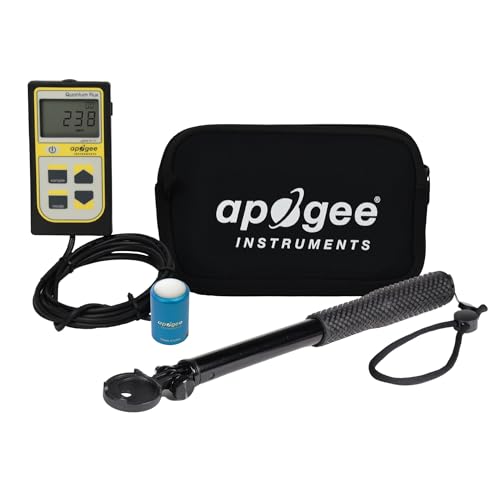
- Measures full-spectrum PAR from 400–700 nm
- Includes telescopic wand for hard-to-reach spots
- Rugged, waterproof sensor built for repeated use
Best For: Growers and lab users who need accurate PAR readings over tall or dense plant canopies.
Best for PPFD Tracking – Quantum PAR Meter Full-Spectrum PPFD Tester
If you need a laboratory PAR light meter for practical plant-light testing, this Quantum meter offers a focused 400–700 nm range with a 0–5000 μmol/m²/sec measurement window. It is aimed at growers, researchers, and indoor horticulture users who want straightforward PPFD readings, data logging, and a portable form factor for moving between rooms, tents, and greenhouses.
Best For: Growers, researchers, and indoor plant setups that need portable PPFD readings and basic measurement storage.
Pros:
- Measures PAR in the 400–700 nm range for photosynthesis-focused testing
- Stores up to 100 readings for quick review and light-trend tracking
- Tripod socket helps stabilize readings during repeat measurements
- Compact, lightweight design is easy to carry between locations
Cons:
- Tripod is not included, so stable setup requires extra hardware
- More of a practical field tool than a full lab-grade instrumentation package
- Best suited to PPFD/PAR use rather than broader light analysis
For buyers comparing a laboratory PAR light meter, this model stands out for its clear PAR range, on-device memory, and easy portability. It is a sensible choice when you want reliable plant-light readings without stepping up to a more complex or expensive research meter.
Best Value PAR Meter – PHOTOBIO LGBQM2 Quantum Sensor
If you need a reliable laboratory PAR light meter for horticulture testing without paying for a lab-grade data logger, the PHOTOBIO LGBQM2 is a practical choice. It measures photosynthetically active radiation across the 400 to 700nm range, making it useful for checking grow lights, fixture height, and intensity consistency in indoor setups.
Best For: Growers and indoor-lighting users who want a straightforward, accurate PAR meter for routine light checks.
Pros:
- Measures PAR across the full 400 to 700nm horticulture range
- Handheld design with remote sensor for easier fixture readings
- Stores up to 99 measurements for quick comparisons
- Includes two cables, AAA batteries, and a carrying case
Cons:
- Focused on PAR readings rather than advanced lab analytics
- Not a multi-channel spectral instrument
- Best suited to light checks, not detailed research workflows
Overall, this is a strong pick if your priority is dependable light-intensity measurement at a sensible price. For buyers comparing a laboratory PAR light meter to more expensive professional options, the PHOTOBIO LGBQM2 covers the core job well and is easy to use during day-to-day grow setup.
Best for Spectrum Analysis – AH-Quantuv PAR Meter
If you want a laboratory PAR light meter that goes beyond a single PPFD reading, the AH-Quantuv is built for deeper grow-light analysis. It measures PAR and UVA, separates blue, green, and red PAR contributions, and includes logging tools for mapping light distribution across a grow area.
Best For: Growers and testers who want a practical meter for checking spectrum balance, UVA output, and light uniformity in grow rooms or controlled plant setups.
Pros:
- Measures PAR and UVA, giving a broader view of grow-light output
- Shows blue, green, and red PAR breakdown for spectrum tuning
- Stores up to 100 readings for light distribution mapping
- Simple display modes and HOLD function make readings easier to capture
Cons:
- More specialized than a basic one-number PAR meter
- Best suited to grow-light analysis rather than general lighting use
- Recording capacity is useful, but still limited for larger surveys
This is a strong choice if your main goal is understanding spectrum, not just total intensity. For buyers seeking a laboratory PAR light meter with added UVA and color breakdowns, it offers useful diagnostic detail without making operation overly complex.
Best for Reef Tanks – Apogee MQ-510 Full-Spectrum PAR Meter
The Apogee MQ-510 is a practical choice if you need a laboratory PAR light meter for underwater or reef-tank work, where immersion-corrected readings matter. It measures full-spectrum light from 400 to 700 nm and is designed for reliable readings from LEDs and other common grow or aquarium light sources.
Best For: Reef keepers, aquarists, and growers who need accurate underwater PAR measurement with a rugged handheld meter.
Pros:
- Immersion correction factor improves accuracy for underwater PAR measurements
- Measures full-spectrum 400-700 nm light from LEDs and other sources
- Rugged, waterproof sensor head with tangle-free cable for easier use
- Low drift calibration and strong long-term reliability
Cons:
- Handheld display is not waterproof
- More specialized than basic hobby-grade meters
- Pricier than entry-level PAR meters
If you need a laboratory PAR light meter for reef tanks or other submerged measurements, the MQ-510 stands out for its immersion-specific calibration and dependable sensor design. It is less about general-purpose convenience and more about getting accurate PAR data where water changes the reading.
Best Smartphone-Based PAR Meter – Lightray Mobile Light & PAR Meter
The Lightray Mobile Light- and PAR Meter pairs a smartphone app with a compact sensor setup to measure PPFD, DLI, and illuminance. If you want a practical laboratory PAR light meter workflow without a bulky handheld instrument, this setup is designed for quick readings and easy tracking in grow rooms, labs, and test spaces.
Best For: Growers, hobbyists, and small labs that want app-based PAR, PPFD, and DLI readings in a portable format.
Pros:
- Measures PPFD, DLI, and illuminance in one app-based system
- Portable design is easier to carry and use than many traditional meters
- Good fit for routine plant-light checks and simple logging
- Smartphone interface makes results easy to view and share
Cons:
- Not a full standalone handheld meter
- Depends on a compatible smartphone and the Photone app
- May be less ideal than dedicated pro-grade gear for highly specialized lab work
For buyers who value convenience and multi-metric light tracking, this is a strong modern alternative to a traditional laboratory PAR light meter. It is especially appealing when you need fast, repeatable checks more than a rugged standalone instrument.
Best for Full-Spectrum Accuracy – Apogee MQ-500 Full-Spectrum PAR Meter
If you need a laboratory PAR light meter that can handle modern grow lights as well as sunlight, the Apogee MQ-500 is built for precise PPFD readings across a wide spectral range. It’s a practical pick for growers, researchers, and serious plant monitors who want dependable measurements rather than a basic consumer gauge.
Best For: Indoor growers, horticulture labs, and plant scientists who need full-spectrum PAR measurements for LEDs, sunlight, and mixed-light environments.
Pros:
- Full-spectrum sensor is well suited to LED grow lights and natural sunlight
- Digital PPFD readout makes quick light checks straightforward
- Useful for monitoring plant lighting in both hobby and professional settings
- Portable handheld design is easy to move between grow areas
Cons:
- More specialized than a simple general-purpose light meter
- Priced above entry-level PAR meters
For buyers comparing a laboratory PAR light meter, the MQ-500 stands out for its full-spectrum focus and reliable plant-lighting measurements. It’s especially compelling if you need one meter that can translate well across indoor grow setups, sunlight, and research-style monitoring.
Best for Sunlight Research – Apogee DLI-400 PAR Meter
If you need a laboratory PAR light meter for sunlight-based crop work, the Apogee DLI-400 is a practical research-grade option. It measures PAR, daily light integral, and photoperiod, making it useful for plant trials, greenhouse monitoring, and field comparisons where sunlight is the main light source.
Best For: Researchers, growers, and educators who need accurate sunlight PAR, DLI, and photoperiod tracking at a lower cost.
Pros:
- Research-grade PAR, DLI, and photoperiod measurements in one handheld meter
- Designed with input from crop physiologist Dr. Bruce Bugbee
- Rugged IP65 build with USB-C data download and included accessories
- Four-year warranty and U.S.-based support
Cons:
- Calibrated for direct sunlight and select HID sources, not full LED coverage
- Not the best choice if you need comprehensive indoor grow-light measurements
- More specialized than a basic PAR meter for casual home use
As a laboratory PAR light meter for sunlight-focused applications, the DLI-400 stands out for combining measurement depth with a relatively accessible price. If your workflow centers on natural light or supported grow-light sources, it offers a strong balance of precision, durability, and ease of use.
Best for Split-Sensor Reach – PAR Meter for LED Grow Lights
If you need a laboratory PAR light meter for checking grow-light output in greenhouses, vertical farms, or plant research setups, this model offers a practical mix of range, portability, and remote sensing. It reads PPFD from 0 to 4,000 µmol/m²s across the 400–700nm PAR band, making it useful for dialing in LED lighting and checking uniformity across different growing zones.
Best For: Growers and lab users who want a split-sensor PAR meter with long cable reach for measuring hard-to-access light locations.
Pros:
- Split design with remote sensor and two cable lengths for flexible positioning
- 400–700nm PAR range with up to 4,000 µmol/m²s PPFD readings
- Stores 99 historical measurements for light tracking over time
- Handheld, lightweight form factor for easy transport
Cons:
- Not as feature-rich as higher-end research-grade meters
- Focused on PAR/PPFD, so it won’t replace a full multi-parameter lab instrument
Overall, this is a strong pick if you want a laboratory PAR light meter that is easy to move, simple to use, and better suited to distant or awkward measurement points than a single-piece handheld sensor.
Best for DLI Tracking – Apogee DLI-500 PAR Light Meter
If you need a laboratory PAR light meter that goes beyond a simple instant reading, the Apogee DLI-500 is built to track PAR, daily light integral, and photoperiod in one portable tool. It’s a practical fit for growers and researchers who want a clearer picture of total light exposure over time, not just peak intensity.
Best For: Grow rooms, greenhouses, and plant research setups that need DLI and photoperiod measurements alongside PAR.
Pros:
- Measures PAR, DLI, and photoperiod in one device
- Full-spectrum 400-700 nm coverage for plant lighting work
- Useful for monitoring total light exposure over a full day
- Portable format suits on-site checks and routine calibration tasks
Cons:
- More specialized than a basic light meter
- Likely overkill if you only need occasional spot PAR readings
For buyers who care about cumulative light delivery, this laboratory PAR light meter offers a more complete view than a standard meter. It makes the most sense when your plant workflow depends on consistent daily light measurement rather than just checking a single moment in time.
Best for Reach Above Canopies – Apogee MQ-500 PAR Meter & AM-330 Wand
If you need a laboratory PAR light meter that can also handle greenhouse and grow-light work, the Apogee MQ-500 bundle is built around practical measurement range, rugged construction, and easy access over tall plant canopies. It measures 400–700 nm photosynthetic photons and adds a telescopic wand for harder-to-reach spots.
Best For: Growers, researchers, and plant labs that need reliable PPFD readings over dense canopies or in awkward measurement positions.
Pros:
- Full-spectrum quantum sensor for 400–700 nm PAR measurements
- AM-330 wand extends reach to measure above tall plant canopies
- Rugged, waterproof sensor head with tangle-free cable
- Backed by a four-year warranty and US-based support
Cons:
- More specialized and expensive than basic hobby PAR meters
- Extra wand bulk may be unnecessary for simple bench-top checks
For buyers who want a dependable laboratory PAR light meter with added reach and durability, this Apogee bundle stands out as a field-ready option rather than a delicate bench instrument. It is a strong fit when repeatable PPFD readings matter across mixed lighting setups.
How We Picked the Best Laboratory PAR Light Meter
We prioritized meters with credible PAR/PPFD measurement capabilities, clear wavelength coverage, and features that support repeatable testing. We also looked at usability in real workflows, including handheld design, logging functions, and suitability for LEDs, sunlight, or full-spectrum sources.
Quick Comparison
Not every Laboratory PAR Light Meter serves the same purpose. Some are best for simple PPFD spot checks, while others add DLI tracking, photoperiod measurement, or broader spectral analysis. If you need the most flexible option, choose a full-spectrum meter with data logging. If you need fast day-to-day checks, a simpler handheld unit may be enough.
Key Buying Factors for a Laboratory PAR Light Meter
Spectral Range
Look for coverage that matches your light source. Standard PAR meters focus on 400–700 nm, while some models extend into UV or support full-spectrum sources. If you test LEDs, reef lights, or mixed fixtures, broader coverage can improve confidence.
Accuracy and Calibration
For lab-style work, calibration quality matters more than extra features. A well-calibrated sensor helps you compare lights consistently across sessions, especially when documenting plant growth trials or fixture changes.
PPFD, DLI, and Photoperiod Support
PPFD tells you instantaneous light intensity, while DLI and photoperiod functions help you evaluate daily exposure. If you manage crop performance or research lighting schedules, these functions are especially useful in a Laboratory PAR Light Meter.
Display, Logging, and Workflow
Choose a meter that fits how you work. A clear display and simple controls speed up spot testing, while app-based or logged data can help with records, comparison reports, and repeated experiments.
Application Fit
Some meters are better for indoor grow rooms, others for sunlight, reef tanks, or greenhouse mapping. Matching the meter to your environment is the easiest way to avoid buying more capability than you need.
Who Should Buy Which Laboratory PAR Light Meter?
Buy a full-spectrum professional meter if you need the most dependable readings across different light sources. Choose a DLI-focused model if your main goal is daily exposure management. Pick a smartphone-based option if you want portability and convenient data handling. If you mainly need fast PPFD checks for grow lights, a straightforward handheld PAR meter is usually the best value.