The best globes for science lessons make Earth science easier to see, explain, and remember. This lineup includes traditional raised-relief globes, inflatable classroom tools, cutaway models, puzzle designs, and interactive options.
Use the guide below to match each globe’s features with your students’ ages, lesson goals, classroom setup, and budget.
Best 10 Globes for Science Lessons Picks for 2026
Interactive Learning Pick
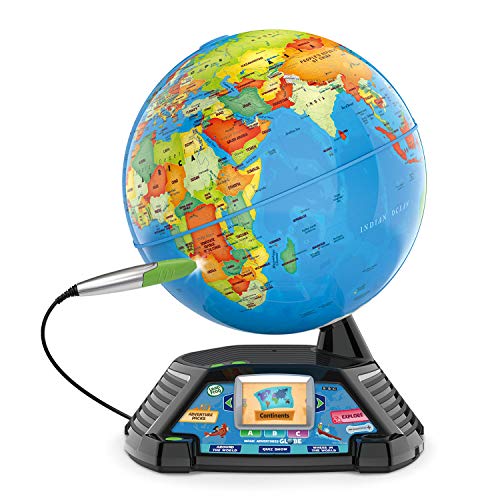
- 2.8-inch screen with BBC videos and animations
- Interactive games, quizzes, facts, and a stylus
- Covers habitats, animals, cultures, and geography
Best For: Children ages 5–12 who enjoy interactive learning
Geology Demonstration Pick

- Two-piece globe reveals Earth’s internal layers
- Includes temperature and distance data
- Soft foam design for hands-on classroom use
Best For: Small-group geology and STEM activities
Traditional Classroom Pick
Student Educational World Globe

- 12-inch globe with raised mountain relief
- Tilted axis and time dial support instruction
- More than 4,000 place names and boundaries
Best For: Classrooms and study desks needing a detailed physical globe
Hands-On Activity Pick

- Write-and-wipe surface for repeated labeling
- Supports geography, history, and trade-route lessons
- Includes guide, repair kit, hook, and string
Best For: Interactive classroom demonstrations for ages 5–10
Interactive AR Learning

- AR globe with 400+ wonders and 1,000 facts
- Constellation mode highlights 60+ constellations
- Includes games, quests, and a magic stylus
Best For: App-supported Earth and space science activities for ages 4+
Hands-On Geography Basics
Learning Resources Puzzle Globe

- Removable continent pieces teach matching and geography
- Includes labels for continents and oceans
- Activity guide contains 30+ planet facts
Best For: Screen-free preschool geography and Earth science activities
Earth Science Explorer

- Opens into surface, crust, mantle, and glowing core
- Adds fossils, minerals, and geology to 1,000+ facts
- App has no subscriptions, ads, or in-app purchases
Best For: Hands-on geology and Earth structure lessons for ages 4–10
Best Classroom Globe

- Detailed political map with colorful, readable features
- Rotating design supports hands-on exploration
- Removable stand is useful for demonstrations and storage
Best For: Traditional geography lessons and classroom reference
Best Intro Geology Globe
Openable Interactive Science Globe
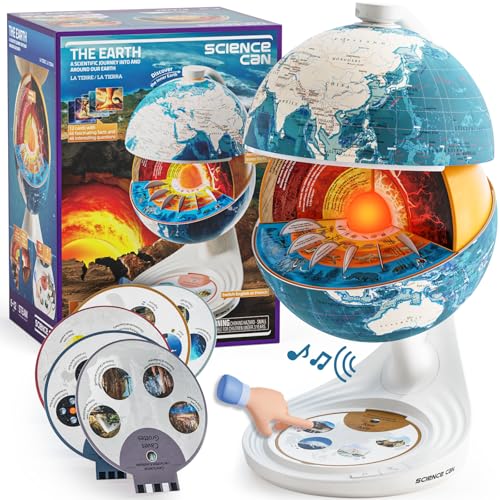
- Opens to show crust, mantle, and inner core
- Includes an illuminated core and 48 spoken facts
- English/French knowledge and quiz modes add interaction
Best For: Hands-on Earth science for children ages 6–12
Best Bilingual STEM Globe

- Openable design demonstrates Earth’s internal layers
- Bilingual English/French audio includes 48 facts
- LED core and quiz mode support engaging STEM activities
Best For: Bilingual Earth science and geography learning for ages 6+
Interactive Learning Pick – Magic Adventures Globe
The LeapFrog Magic Adventures Globe is a strong choice for families seeking interactive globes for science lessons. Its stylus, quizzes, facts, and BBC video content introduce children to habitats, animals, cultures, landmarks, and geography in an engaging format.
Best For: Children ages 5–12 who learn well through games, video, and guided exploration.
Pros:
- Explores animals, habitats, cultures, countries, capitals, and other geography topics.
- Includes a 2.8-inch screen with videos and animations.
- Offers interactive games, quizzes, and thousands of facts.
Cons:
- Requires four AA batteries for regular use.
- Designed for one player at a time.
This globe is particularly useful when science lessons extend beyond map skills into ecosystems, world cultures, and Earth-focused discovery. The interactive format may be more engaging than a traditional globe for younger learners.
Geology Demonstration Pick – Cross-Section Earth Model
The Learning Resources Cross-Section Earth Model makes Earth science concepts tangible. As globes for science lessons, its two-piece foam design is useful for showing students the planet’s internal layers during geology, STEM, and classroom demonstrations.
Best For: Small-group geology activities and hands-on lessons for learners ages 5 and up.
Pros:
- Splits in half to reveal Earth’s layers.
- Soft foam construction is suited to repeated classroom handling.
- Displays temperature and distance information for each geological layer.
- Compact 5-inch size can be examined by small groups.
Cons:
- Its compact size may limit visibility for larger groups.
- Focuses on Earth’s layers rather than a detailed world map.
This model is a practical supplement to a broader geography curriculum, especially when students need to see and handle a representation of Earth’s structure. Its foam construction also makes it approachable for younger learners.
Traditional Classroom Pick – Student Educational World Globe
The Replogle Student Educational Classic World Globe offers a traditional way to support geography and science instruction. Among globes for science lessons, its 12-inch raised-relief surface, tilted axis, and time dial provide useful visual references for classroom or study-desk use.
Best For: Students, teachers, and classrooms needing a detailed physical world globe with raised terrain.
Pros:
- 12-inch diameter provides a visible learning surface.
- Raised relief adds texture to mountain areas.
- Includes an accurately tilted axis and time dial.
- Features more than 4,000 place names and boundary markers.
Cons:
- Requires assembly before use.
- Traditional map format does not provide interactive content.
This is a solid foundational globe for lessons involving continents, boundaries, place names, mountain ranges, and time zones. The physical relief can help students connect map information with Earth’s terrain.
Hands-On Activity Pick – Inflatable Labeling Globe
The Learning Resources Inflatable Labeling Globe is designed for active demonstrations and group practice. This write-and-wipe option stands out among globes for science lessons because students can label locations, routes, and geographic features directly on its surface with a wet-erase marker.
Best For: Classroom demonstrations and interactive geography, history, and trade-route activities for ages 5–10.
Pros:
- Write-and-wipe surface supports repeat labeling activities.
- Useful for geography, history, social studies, and trade-route lessons.
- Includes an activity guide, repair kit, display hook, and string.
- Requires no batteries.
Cons:
- Requires a wet-erase marker for labeling activities.
- Inflatable vinyl construction may need occasional repair.
This globe works well when the lesson calls for student participation rather than passive viewing. Its reusable surface makes it especially practical for demonstrations, labeling practice, and route-based activities.
Interactive AR Learning – Orboot Earth Explorer Globe
For families seeking globes for science lessons, the PlayShifu Orboot Earth Explorer combines a physical 10-inch globe with augmented-reality exploration. Children can investigate geography, constellations, ecosystems, and more through the companion app, games, quizzes, and quests.
Best For: Young learners ages 4 and up who enjoy interactive, app-supported STEM activities and space-themed discovery.
Pros:
- AR app offers more than 400 wonders and 1,000 facts.
- Constellation mode illuminates more than 60 constellations.
- Includes games, quizzes, scavenger hunts, and ecosystem activities.
- Magic stylus and included passport, stickers, and stamp add hands-on variety.
Cons:
- A compatible device is required but is not included.
- The learning experience depends partly on using the companion app.
This is a strong choice when science lessons benefit from visual, game-based interaction. Its mix of Earth exploration and constellation study makes it more versatile than a basic reference globe, though families should plan for device use.
Hands-On Geography Basics – Learning Resources Puzzle Globe
The Learning Resources Puzzle Globe is a simple, tactile option for globes for science lessons focused on continents, oceans, landmarks, wildlife, and global awareness. Its removable, color-coded pieces let children learn through matching and direct manipulation rather than screens.
Best For: Preschool and beginner learners, classroom centers, and Montessori-inspired geography activities.
Pros:
- Seven continent pieces provide hands-on shape-matching practice.
- Detachable continent name plates and ocean labels reinforce geography vocabulary.
- Landmark and wildlife illustrations encourage discussion about cultures and ecosystems.
- Includes a multilingual activity guide with more than 30 facts.
Cons:
- Its beginner design offers less depth than an advanced reference globe.
- The manual puzzle format does not provide digital interaction.
This globe works well when the goal is to make early geography concrete and approachable. It supports fine-motor practice and introductory Earth science conversations, especially in preschool or early elementary settings.
Earth Science Explorer – Orboot Core Interactive Globe
Among globes for science lessons, the PlayShifu Orboot Core stands out for making Earth’s interior part of the activity. Its three-layer design lets children open the globe to explore the surface, fossil-filled crust, mineral-rich mantle, and glowing core, with additional AR content covering geography and geology.
Best For: Ages 4–10, homeschool or classroom lessons that connect geography with fossils, minerals, geology, and Earth’s structure.
Pros:
- Three-layer construction provides a clear hands-on model of Earth’s interior.
- Combines 1,000+ general facts with fossil, mineral, and geology content.
- App access has no subscriptions, in-app purchases, ads, or ongoing Wi-Fi requirement after setup.
- Designed to support learning from naming continents to understanding how Earth works.
Cons:
- Initial exploration requires setup with the companion app.
- The AR features require access to a compatible device.
This is the most science-focused option in the group, particularly for lessons about geology and Earth’s layers. Its physical construction encourages active exploration, while the app extends the globe into a broader geography and Earth science resource.
Best Classroom Globe – 8-Inch Rotating World Globe
For straightforward globes for science lessons, this 8-inch rotating model provides a durable, easy-to-read political map. Its colorful details and removable stand make it practical for classroom demonstrations, geography activities, or home study.
Best For: Classrooms and families seeking a traditional rotating globe for introductory geography and Earth studies.
Pros:
- Detailed map identifies countries, continents, capitals, boundaries, oceans, islands, rivers, and deserts.
- Rotating design encourages hands-on exploration of different regions.
- Removable base and frame support demonstrations and easier storage.
- Plastic construction and 8-inch size balance durability with portability.
Cons:
- Focuses on political geography rather than Earth’s internal structure.
- Does not include interactive audio, quizzes, or lighting.
This is a solid choice when you want a conventional globe that students can spin, examine, and reference during geography-focused science lessons without adding electronic features.
Best Intro Geology Globe – Openable Interactive Science Globe
Among globes for science lessons, this openable 8-inch model stands out for making Earth science tangible. Children can examine the crust, mantle, and inner core, then use bilingual facts and quiz mode to reinforce geography learning.
Best For: Kids ages 6–12 who learn best through hands-on geology activities, spoken facts, and quizzes.
Pros:
- Openable design reveals Earth’s layered core structure.
- LED core provides a visual way to discuss Earth’s interior.
- Offers 48 geography and landmark facts in English and French.
- Quiz mode turns geography practice into an interactive activity.
Cons:
- Its content is designed for children and may be limited for advanced science study.
- Electronic features require use of the built-in audio and lighting components.
This globe combines a geological model with interactive geography content, making it more versatile than a basic map globe for introductory Earth science and classroom exploration.
Best Bilingual STEM Globe – LED Talking Earth Globe
For globes for science lessons that combine geology, geography, and language practice, this 8-inch interactive model offers several ways to engage learners. Its openable structure, glowing core, bilingual audio, and quiz mode support visual, hands-on, and active study.
Best For: Children ages 6 and up, bilingual households, and classrooms introducing Earth’s layers alongside geography and cultural facts.
Pros:
- Hands-on construction exposes the crust, mantle, and glowing core.
- Switches between English and French for bilingual learning.
- Provides 48 geography, landmark, and cultural facts.
- Quiz mode helps children review information through play.
Cons:
- At 8 inches, the globe may provide less map detail than a larger traditional model.
- Its interactive functions make it more feature-rich than needed for simple map reference.
With included internal structure pieces and learning cards, this model is a strong fit when a science lesson benefits from both a physical geology demonstration and guided interactive review.
How We Picked These Globes for Science Lessons
We focused on products that support clear, hands-on learning rather than decoration alone. The selection covers several teaching approaches: physical Earth models for explaining continents and landforms, cutaway designs for interior-Earth lessons, puzzles for active learning, and digital or talking globes for guided exploration.
We also considered age range, durability, ease of setup, visibility from a desk or small group, and whether the globe can support more than one lesson. Interactive products were included for classrooms that can use apps, audio, lights, or augmented reality, while simpler models remain useful when reliability and quick setup matter most.
Quick Comparison
| Type | Best for | Main advantage | Potential limitation |
|---|---|---|---|
| Traditional globe | Everyday geography and Earth orientation | Simple, durable, and easy to reference | Usually offers limited interactive content |
| Raised-relief globe | Landforms and physical geography | Makes elevation easier to visualize | May be harder to read from a distance |
| Cross-section model | Earth’s layers and geology | Shows internal structure directly | Less useful for broad world-location practice |
| Inflatable or puzzle globe | Group activities and younger learners | Portable and engaging | May be less detailed than a rigid globe |
| Interactive, AR, or talking globe | Independent exploration and STEM enrichment | Adds facts, games, audio, or visual effects | May require batteries, an app, or compatible devices |
Key Buying Factors for Globes for Science Lessons
Lesson Objective
Choose a standard globe for continents, oceans, latitude, longitude, and rotation. For geology units, a cross-section Earth model can explain the crust, mantle, outer core, and inner core more clearly than a surface-only globe. Raised relief is especially helpful when teaching mountains, plateaus, and other physical features.
Age and Interaction Level
Young children often benefit from large labels, puzzles, audio prompts, and guided games. Older students may get more value from physical detail, accurate cartography, and models that support teacher-led demonstrations. AR and app-connected products can increase engagement, but confirm that your classroom has compatible devices and dependable connectivity if required.
Size, Readability, and Storage
An 8-inch globe is convenient for desks, shelves, and small groups, while a larger model is easier to read during whole-class instruction. Inflatable designs are simpler to store and transport. Check the stand, meridian, and rotating mechanism for stability if students will handle the globe frequently.
Accuracy and Durability
Look for legible labels, a stable base, and surfaces that can withstand repeated use. A globe with a bonus map or supplemental activities may extend its teaching value. For interactive models, check software support, battery requirements, included accessories, and whether content is appropriate for the intended age group.
Who Should Buy Which Globes for Science Lessons?
Choose the Learning Resources Cross-Section Earth Model for lessons centered on Earth’s interior and geology. The Replogle raised-relief student globe is a strong fit for traditional geography and physical-landform instruction. For flexible group work, consider the Learning Resources Inflatable Labeling Globe or Puzzle Globe.
Families and classrooms seeking guided digital exploration should look at the PlayShifu Orboot options, while talking or LED models can suit children who learn well through audio and visual feedback. The LeapFrog Magic Adventures Globe is geared toward interactive discovery, and the KISEER model offers a straightforward rotating globe for basic classroom reference. Compare the remaining interactive choices by age fit, app or battery needs, and the specific science topics you plan to teach.