Choosing among electronic loads under 500 is mostly about matching the load to your voltage, current, and testing workflow. The right model can make power supply validation, battery discharge testing, and bench diagnostics faster and more reliable.
This roundup focuses on practical options with the control modes, display clarity, and connectivity most buyers actually use, without paying for features you do not need.
Best 10 Electronic Loads Under 500 Picks for 2026
Lab-Ready Dynamic Tester
OWON OEL3020 Programmable DC Load

- 300W programmable load with 0-300V and 0-20A range
- 5kHz dynamic testing with adjustable slew rate
- USB, RS232, and RS485 control with SCPI support
Best For: Automated lab testing and transient response work
Programmable All-Rounder

- 200W load for power supplies, batteries, and chargers
- CC, CV, CR, and CP modes plus dynamic loading
- USB and RS-232 connectivity with sequence programming
Best For: General-purpose bench testing with automation
Professional 300W Pick

- 300W maximum power rating for testing devices and batteries
- Multiple loading modes for versatile scenarios
- Professional-grade design for reliable load testing
Best For: General-purpose 300W bench testing
Budget Workhorse
120W Bench DC Load with CC/CV/CR/CP

- 120W max with 0-150V and 0-20A range
- Supports CC, CV, CR, CP, and short-circuit testing
- Includes WH/AH timing plus clear LED readings
Best For: Small DC testing jobs on a budget
PC-Control Pick
150W Programmable Load with USB Interface

- USB PC interface with software included
- 150W, low-ripple DC load for bench testing
- Protection for OV, OC, OP, overheat, and polarity reversal
Best For: Repeatable testing with computer control
High-Capacity Choice
400W Programmable DC Load Tester

- 400W rating with 0-150V and 0-40A range
- 12 modes including battery, LED, scan, and list tests
- USB remote control plus TFT display and safety protections
Best For: Higher-power bench and production testing
Lab-Grade Single-Channel Bench Load
Siglent SDL1020X-E 200W Programmable DC Load

- 150 V / 30 A, up to 200 W
- CC, CV, CR, and CP plus dynamic modes
- List function supports up to 100 steps
Best For: Single-channel lab testing of batteries and DC power supplies
High-Power Multi-Mode Tester
ET5410A+ 400W Programmable DC Electronic Load
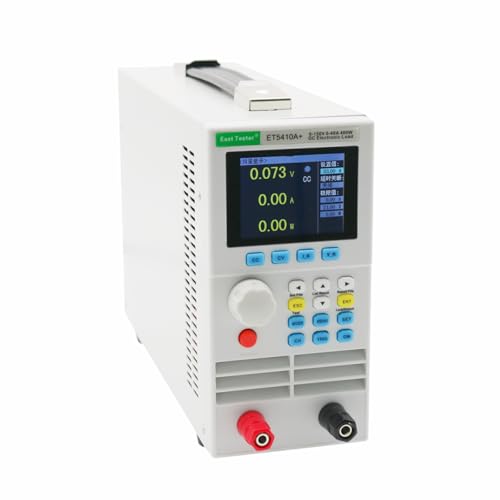
- 0-150 V, 0-40 A, up to 400 W
- Six measurement modes plus battery testing
- USB port and built-in protection functions
Best For: Higher-power bench testing with battery and power-supply functions
Fast Dynamic Bench Load
Rigol DL3021 200W Programmable DC Electronic Load

- 150 V / 40 A with 200 W capacity
- 15 kHz dynamic mode for transient testing
- LAN, USB, and RS232 with SCPI support
Best For: Automated lab and R&D testing with fast dynamic response
Lab-Ready Dynamic Tester – OWON OEL3020 Programmable DC Load
If you need one of the more capable electronic loads under 500 for bench testing, the OWON OEL3020 stands out for its 300W rating, wide voltage range, and fast dynamic response. It is built for automated power-supply, battery, and component testing, with USB, RS232, and RS485 control plus SCPI support for remote workflows.
Best For: R&D teams, lab benches, and automated test setups that need programmable control and dynamic load testing.
Pros:
- 300W, 0-300V, and 0-20A operating range for broad test coverage
- 5kHz dynamic loading with adjustable current rise rate for transient testing
- USB, RS232, and RS485 connectivity with SCPI support for automation
- Built-in protections including OCP, OVP, OPP, OTP, and reverse polarity protection
Cons:
- More advanced than a basic manual load, so it may be more than casual users need
- Designed as a benchtop tester rather than a simple portable meter
Overall, the OEL3020 is a strong pick when you want a programmable load that can do more than steady discharge testing. Its dynamic mode, connectivity, and protection suite make it well suited to serious power testing workflows.
Programmable All-Rounder – UNI-T UTL1020S-E 200W Load
For buyers comparing electronic loads under 500, the UNI-T UTL1020S-E is a practical 200W programmable option for everyday power-supply, charger, battery, and DC-DC converter testing. It covers the core load modes you actually use, while adding list mode and sequence programming for more automated test routines.
Best For: Bench users who want a flexible programmable load with automation features and a solid warranty.
Pros:
- 200W programmable DC electronic load for common bench testing tasks
- CC, CV, CR, and CP modes cover standard test scenarios
- List mode and sequence programming support automated testing
- USB and RS-232 connectivity for remote control
Cons:
- Lower power rating than 300W-class alternatives
- Heavier bench unit at 15 pounds
The UTL1020S-E makes sense if you want a straightforward programmable load with enough features for repeated testing. Its mode coverage, automation support, and protection features give it broad usefulness without overcomplicating the bench.
Budget Battery Tester – 150W 20A Adjustable Electronic Load
If you want a lower-cost option among electronic loads under 500, this 150W unit focuses on battery discharge testing and basic programmable operation. It includes a color display, four working modes, and built-in monitoring features that make it practical for checking capacity and discharge behavior.
Best For: Battery capacity testing and budget-minded users who need a compact programmable load.
Pros:
- 150W maximum power and 20A maximum load current
- Four modes: constant current, constant voltage, constant power, and constant resistance
- 2.4-inch TFT display shows voltage, current, power, capacity, internal resistance, and more
- Supports discharge stop voltage, time limit settings, and external NTC temperature monitoring
Cons:
- Lower power ceiling than 200W and 300W alternatives
- Best suited to discharge testing rather than advanced automated lab work
This model is a sensible pick when your main goal is battery testing on a tighter budget. It offers the core load modes and monitoring tools you need, but it is less feature-rich than the more advanced programmable benches in this roundup.
Professional 300W Pick – UNI-T UTL8511+ DC Load 300W
The UNI-T UTL8511+ is a straightforward 300W choice for buyers who want one of the stronger electronic loads under 500 without extra complexity in the listing. According to the supplied details, it offers multiple loading modes and a professional-grade design aimed at power-device and battery testing.
Best For: Users who want a 300W bench load for general power-device and battery testing.
Pros:
- 300W maximum power rating for broader test coverage
- Multiple loading modes for different test scenarios
- Professional-grade design focused on reliable load testing
Cons:
- Product details provided are limited compared with the other models
- No connectivity or display specifics were listed in the supplied notes
If you want a 300W UNI-T load and do not need a long feature list to make the decision, the UTL8511+ is an easy candidate. It looks best suited to standard bench testing where power rating and general versatility matter most.
Budget Workhorse – 120W Bench DC Load with CC/CV/CR/CP
If you need electronic loads under 500 for basic bench testing, this 120W DC load covers the core modes without getting overly complicated. It supports CC, CV, CR, CP, plus short-circuit testing, making it practical for checking batteries, power supplies, and other DC sources on a small lab budget.
Best For: Hobbyists, repair benches, and general-purpose DC load testing where a simple front-panel interface is enough.
Pros:
- Offers CC, CV, CR, CP, and short-circuit test modes.
- Wide range: 0-150V, 0-20A, and up to 120W.
- Includes WH and AH timing measurements for battery testing.
- Front-panel buttons, knobs, and LED display keep operation straightforward.
Cons:
- 120W rating is lower than larger programmable loads.
- No PC control mentioned in the supplied notes.
- Best suited to smaller DC test setups rather than high-power applications.
Overall, this is a practical pick if you want an affordable, easy-to-use load with the main test modes most buyers need. It gives you useful measurement features without pushing beyond a compact desktop format.
PC-Control Pick – 150W Programmable Load with USB Interface
Among electronic loads under 500, this 150W model stands out if you want programmable control and PC connectivity in a compact tester. It supports constant current, constant power, and constant resistance modes, and the included USB software makes it a stronger fit for repeatable bench work.
Best For: Users who want a programmable DC load with USB control for battery, solar, or power-supply testing.
Pros:
- Programmable PC USB interface with software included.
- Supports CC, CP, and CR modes for common DC test tasks.
- Built-in protection for over-voltage, over-current, over-power, over-heat, and polarity reversal.
- LCD display with backlight and selectable AC input.
Cons:
- 150W output is modest compared with higher-power bench loads.
- Supplied notes do not mention CV mode.
- Weighs 10 pounds, so it is less lightweight than some compact units.
This is a solid step up if you value software control and protection features over raw power. It fits well in a lab or workshop where repeatable testing matters more than maximum wattage.
High-Capacity Choice – 400W Programmable DC Load Tester
If you are comparing electronic loads under 500 and need more headroom, this 400W tester is the strongest option in the group. It supports CC, CV, CR, CP, combined modes, and multiple specialized test functions, so it is aimed at more serious charger, battery, and power-supply evaluation.
Best For: Labs, repair benches, and production-style testing that need higher power capacity and USB remote operation.
Pros:
- High 400W rating with 0-150V input and 0-40A current support.
- Includes 12 test modes, such as battery test, LED test, dynamic tran test, scan test, and list test.
- USB control supports PC remote operation and automated testing.
- 2.8-inch TFT LCD, shortcut keys, and key lock improve day-to-day usability.
Cons:
- More complex than basic loads if you only need simple manual testing.
- Higher-capacity features may be unnecessary for small hobby projects.
- Needs careful setup to use the wider range of test functions effectively.
This model makes the most sense when you want one load to cover a broad range of professional test jobs. The higher wattage and remote-control support make it the most capable choice here.
Lab-Grade Single-Channel Bench Load – Siglent SDL1020X-E 200W Programmable DC Load
Siglent Technologies SDL1020X-E Programmable DC Electronic Load,1 Channel,150 V/30 A, 200 W
Check Price On AmazonIf you’re comparing electronic loads under 500 for bench testing, the Siglent SDL1020X-E is a strong pick when you want a compact, programmable unit with serious control. It supports CC, CV, CR, and CP modes, plus dynamic testing, so it fits battery work, power supply checks, and general DC load evaluation in a lab or development setting.
Best For: Engineers and technicians who need a precise single-channel programmable load for battery and power-supply testing.
Pros:
- 150 V / 30 A input range with up to 200 W total power
- Supports four static modes: CC, CV, CR, and CP
- Includes dynamic modes and a list function with up to 100 steps
- Adjustable current rise time down to 0.001 A/µs
Cons:
- Single-channel design limits you to one DUT at a time
- Lower power rating than some 400 W alternatives
- Heavier bench unit at 15 pounds
Overall, the SDL1020X-E stands out if your priority is controlled, repeatable testing rather than maximum wattage. It’s a practical choice for anyone who values programmable features and detailed load behavior in a bench instrument.
High-Power Multi-Mode Tester – ET5410A+ 400W Programmable DC Electronic Load
Among electronic loads under 500, this 400W tester is built for users who want more output headroom and a broad feature set. It covers 0-150 V and up to 40 A, and its operating modes include battery testing, LED testing, dynamic testing, scanning, list testing, and internal resistance checks, making it useful for mixed bench tasks.
Best For: Buyers who want a higher-power programmable load with battery-test and measurement functions in one device.
Pros:
- High capacity rating of 0-150 V, 0-40 A, and up to 400 W
- Six basic measurement modes including CC, CV, CR, and CP
- Extra functions for battery test, LED test, scanning, and list test
- USB port plus protection functions for easier bench use
Cons:
- Less established brand recognition than some lab-focused competitors
- Interface details are limited beyond the 2.8-inch TFT screen
- Heavier than compact hobby-grade tools at 2.8 kg
This is a feature-rich option if you need higher power than many 200W units can offer. The mix of programmable modes and battery-focused functions makes it a flexible choice for power supply and charger testing.
Fast Dynamic Bench Load – Rigol DL3021 200W Programmable DC Electronic Load
If you’re shopping electronic loads under 500 and want a proven bench tool for response testing, the Rigol DL3021 is a compelling option. It supports CC, CV, CR, and CP modes, and its 15 kHz dynamic mode with adjustable rise speed makes it well suited for evaluating transient performance in power supplies and regulators.
Best For: Engineers who need a programmable load with fast dynamic testing and remote-control integration.
Pros:
- 150 V / 40 A rating with 200 W power handling
- Supports CC, CV, CR, and CP test modes
- 15 kHz dynamic mode with adjustable rise speed from 0.001 A/µs to 5 A/µs
- LAN, USB, and RS232 interfaces with SCPI support
Cons:
- Only 200 W, so it is not the highest-power choice in this group
- Single-load bench format may be more than casual users need
- More suited to lab workflows than quick plug-and-play use
The DL3021 is best when speed, repeatability, and automation matter as much as basic load capacity. Its interface support and dynamic performance make it especially useful for test benches and R&D work.
How We Picked the Best Electronic Loads Under 500
For Electronic Loads Under 500, we prioritized real bench value: usable power ratings, broad voltage and current coverage, stable operation in common modes, and interfaces that make repeat testing easier. We also favored models that suit both hobby and professional work, rather than niche units with limited flexibility.
Quick Comparison
The main differences come down to power ceiling, maximum input voltage, maximum current, and supported modes such as CC, CV, CR, and CP. Lower-wattage units are often enough for smaller adapters and battery packs, while 200W to 400W models are better for stronger supplies, higher discharge rates, and more demanding validation tasks. If you plan to use a PC or automate tests, USB or RS232 control is worth paying attention to.
Key Buying Factors for Electronic Loads Under 500
Power Rating and Headroom
Choose a load with more wattage than your typical test case requires. Extra headroom helps with heat management and avoids hitting the ceiling too early during battery or supply testing.
Voltage, Current, and Mode Support
Make sure the input limits fit your lab targets. A unit that supports CC, CV, CR, and CP will cover the widest range of use cases and is usually the safest long-term purchase.
Display, Controls, and Connectivity
A clear display and straightforward front-panel controls save time during repeated setup changes. USB or serial control is useful if you want data logging, scripted tests, or remote operation.
Cooling, Stability, and Noise
Higher-power loads need effective cooling and good stability under dynamic changes. If you plan frequent high-load use, pay attention to fan noise, ripple behavior, and whether the unit stays consistent during longer sessions.
Who Should Buy Which Electronic Loads Under 500?
Buy a 120W to 150W model if you mainly test small adapters, chargers, and modest battery packs. Step up to 200W to 300W if you want a more versatile bench tool for power supplies and higher-capacity batteries. Choose a 400W class unit if you regularly work near the top end of the category and want more margin for demanding discharge tests.
If you are comparing Electronic Loads Under 500 for general lab use, the best choice is usually the one that balances power, interface flexibility, and ease of operation for the devices you test most often.