The best drill presses for model making make it easier to drill clean, repeatable holes in wood, plastic, metal, and small craft components. Compact benchtop designs can deliver better control than a handheld drill while taking up far less workspace than a full-size machine.
This roundup compares 10 mini and portable models by precision, speed adjustment, spindle travel, chuck range, worktable design, motor power, and overall suitability for detailed hobby work.
Best 10 Drill Presses for Model Making Picks for 2026
Best for Precision Layouts
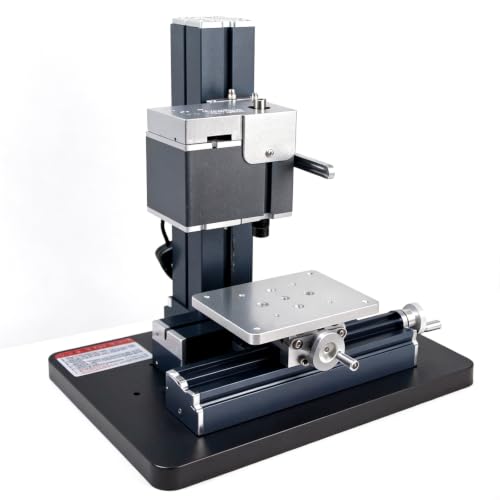
- 145 mm X travel with 40 mm Y and Z travel
- 0.02 mm handwheel graduations
- 20,000 RPM motor with 1–6 mm chuck
Best For: Detailed model layouts, PCB work, and small parts
Best Rotary-Tool Stand
Dremel Drill Press Workstation

- Straight and angled drilling in 15-degree increments
- Up to 2-inch drilling depth
- Compatible with several Dremel rotary tools
Best For: Portable detail work with a compatible Dremel tool
Best Compact All-Rounder

- Adjustable 24V power up to 7,000 RPM
- 40 mm maximum drilling stroke
- Includes vise and 10-piece HSS bit set
Best For: Small model, jewelry, repair, and DIY projects
Best Low-Speed High-Torque Pick
Compact High-Torque Mini Drill Press

- 440–880 RPM seven-speed range
- B10 chuck accepts 0.6–6 mm bits
- Includes a small metal vise
Best For: Pen making, jewelry, epoxy, and low-speed model work
Compact Precision Pick

- Seven-speed control for varied craft materials
- Locking depth ring supports repeatable holes
- Included 1–55 mm vise handles varied shapes
Best For: Small-scale models, crafts, jewelry, and light soft-metal work
High-Speed Versatility Pick
Three-Speed Precision Benchtop Drill Press

- Three speed ranges cover delicate to fast drilling
- 10 mm chuck accommodates larger bits
- Cast iron base supports smooth benchtop operation
Best For: Model making, crafts, jewelry, and general DIY materials
Expandable Workshop Pick

- Rigid frame uses bearings and dual springs
- 40 mm stroke suits detailed small-scale work
- Base supports a vise or CNC sliding table
Best For: Precision models, jewelry, and expandable hobby workshops
Best with Extra Features
Upgrade Mini Benchtop Drill Press
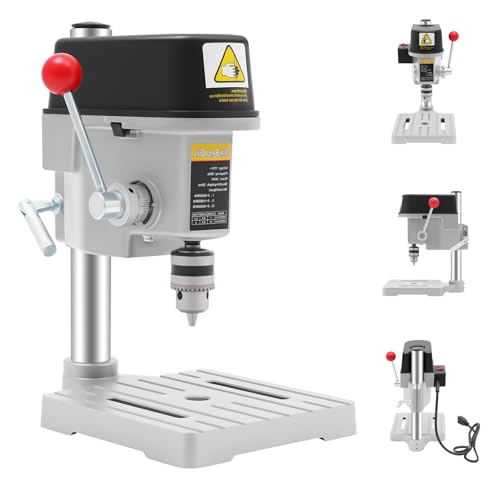
- Three speed ranges up to 16,000 rpm
- Marked depth control from 0-0.98 inches
- Stable steel-and-cast-iron desktop build
Best For: Small model-making, jewelry, and craft drilling
Versatile Tabletop Choice
Hoteche Variable Speed Mini Drill Press

- Three speeds from 2,200 to 5,000 rpm
- 170 x 170 mm work table
- Keyed chuck accepts 0.6-6.5 mm bits
Best For: Model building, PCB work, and mixed-material DIY
Accessory-Rich Hobby Pick
Mini Micro Bench Drill Press with 7 Speeds

- Seven adjustable speeds up to 3,000 rpm
- Includes vise and 2 mm cobalt drill bit
- Compact metal build with non-slip base pads
Best For: Detailed hobby work and varied small-material drilling
Best for Precision Layouts – X-Y-Z Mini Drill Press
For model makers who need repeatable hole placement, this compact drill press for model making combines an X-Y positioning table with fine Z-axis control. Its 36W motor reaches 20,000 RPM and accepts 1–6 mm bits for small work in wood, PCB material, acrylic, plastic, aluminum, and copper.
Best For: Detailed layouts, PCB work, model parts, and other small projects where controlled positioning matters.
Pros:
- X-axis travel is 145 mm, while Y and Z each travel 40 mm.
- 0.02 mm handwheel graduations support fine, repeatable adjustments.
- All-metal construction and dovetail slides help reduce vibration-related play.
- Compact 250 × 208 × 300 mm benchtop footprint.
Cons:
- The 6 mm chuck capacity limits it to small drill bits.
- The single-speed motor does not offer adjustable speed settings.
- Its low-voltage design still requires securing the base to a stable bench.
This is the strongest choice here for precision-focused model making, especially when evenly spaced holes and incremental depth control are more important than high material capacity.
Best Rotary-Tool Stand – Dremel Drill Press Workstation
This Dremel workstation is a practical option for model makers who already own a compatible rotary tool. It supports perpendicular and angled drilling, includes a depth stop for repeatable holes, and can hold the tool horizontally for sanding, polishing, or grinding.
Best For: Dremel users who want a portable drill press for model making and other detailed bench tasks.
Pros:
- Drills straight or angled holes in 15-degree increments, up to 90 degrees horizontal.
- Compatible with multiple Dremel models, including the 4300, 4000, 3000, 8250, 8240, and 8220.
- Depth markings and a depth stop help maintain consistent drilling depth.
- Metal base includes four clamping points for added stability.
Cons:
- It is a stand and requires a compatible Dremel rotary tool.
- Drilling depth is limited to 2 inches.
- It offers less dedicated positioning control than a true X-Y drill press.
Choose this workstation if flexibility and compatibility with an existing Dremel setup matter more than having a standalone motor and precision cross-slide table.
Best Compact All-Rounder – B10 Upgraded Mini Drill Press
For hobbyists seeking a small, versatile drill press for model making, this B10 benchtop machine offers adjustable speed, a 40 mm drilling stroke, and a 0.6–6 mm chuck range. Its compact metal frame is suited to wood, plastic, resin, aluminum, and other soft materials used in craft projects and repairs.
Best For: Desk-sized model making, jewelry and toy projects, mobile-phone or watch repair, and general DIY drilling.
Pros:
- 24V adjustable power supply provides variable speed up to 7,000 RPM.
- Solid metal structure, linear bearings, and motor placement are designed to reduce vibration.
- Base slots support adding the included vise or a compatible CNC sliding table.
- Includes a mini metal vise and a 10-piece HSS twist-bit set.
Cons:
- The 40 mm maximum stroke is intended for small workpieces.
- The 6 mm chuck capacity excludes larger drill bits.
- It is specified for soft materials rather than heavy-duty metal drilling.
This model offers a useful balance of adjustability, compact size, and included accessories, making it a practical starting point for varied small-scale model and craft work.
Best Low-Speed High-Torque Pick – Compact High-Torque Mini Drill Press
This compact machine targets model makers who value torque and controlled low-speed drilling over rapid bit rotation. Its B10 chuck accepts 0.6–6 mm bits, while the 440–880 RPM range is positioned for wood, metal, stainless steel, copper, aluminum, epoxy resin, and acrylic projects.
Best For: Pen making, jewelry, epoxy work, woodworking, and model projects that benefit from low-speed control.
Pros:
- High-torque design is intended for harder materials, including stainless steel and metal.
- Seven speed settings cover a 440–880 RPM range.
- Includes a small metal vise for holding workpieces.
- Compact structure is suited to home workshops and DIY craft spaces.
Cons:
- The maximum 880 RPM speed is unsuitable for projects requiring high rotational speed.
- The 6 mm chuck limits bit size.
- Supplied dimensions and specifications should be checked carefully before planning larger workpieces.
Among these drill presses for model making, this is the better fit for deliberate, low-speed work and tougher small materials, provided its limited speed range matches your projects.
Compact Precision Pick – Rear-Motor Mini Drill Press
For model makers working with basswood, balsa, resin, plastic, PCBs, or thin soft metals, this compact drill press emphasizes controlled, repeatable drilling. Its rear-mounted 795 motor, seven-speed adjustment, work light, and included vise make it a practical choice when bench space is limited.
Best For: Small-scale model making, jewelry, crafts, and light drilling in wood, plastic, resin, and thin aluminum or copper.
Pros:
- Seven-speed control supports different materials and bit sizes.
- Locking depth ring and a 5 cm scaled column help with repeatable drilling.
- Included vise clamps materials from 1–55 mm, including irregular shapes.
- Work light and rear-mounted motor improve visibility and reduce interference around the drilling area.
Cons:
- The 1–6 mm chuck limits it to relatively small drill bits.
- Its 3.5 cm drilling stroke is intended for small workpieces rather than deep holes.
- Soft metals may require repeated passes and cooling with oil or water.
This is a focused, space-saving option for precision craft work rather than heavy-duty drilling. The depth controls and vise are particularly useful for model-making batches where consistency matters.
High-Speed Versatility Pick – Three-Speed Precision Benchtop Drill Press
This compact drill press is suited to model makers who want a wider speed range for delicate drilling and finishing work. Its cast iron base, copper-wire motor, 10 mm chuck, and three adjustable speed ranges provide more capacity than many miniature craft-focused machines.
Best For: Model making, DIY crafts, jewelry work, and drilling wood, plastic, resin, aluminum, and other non-rigid materials.
Pros:
- Three speed ranges extend from 1,800 to 12,000 rpm, with a listed maximum of up to 16,000 rpm.
- 10 mm maximum chuck size accepts larger bits than the 6 mm models in this roundup.
- Cast iron base and full copper-wire motor are designed for smooth operation and reduced bit breakage.
- Compact benchtop format saves workspace compared with larger drill presses.
Cons:
- The supplied information focuses on non-rigid materials and does not position it as a heavy-duty metal drill press.
- It has three speed settings rather than continuous speed control.
- Its larger footprint than the smallest mini presses may matter on crowded benches.
Choose this model when speed flexibility and a larger chuck are more important than the smallest possible footprint. It offers a useful balance for makers who switch between model materials and general DIY tasks.
Expandable Workshop Pick – Compact B10 Mini Drill Press
For drill presses for model making, this compact B10 machine stands out for its rigid metal frame and expandable base. The 795 motor, adjustable 24V supply, 40 mm stroke, and compatibility with a mini vise or CNC sliding table make it useful for precise toy models, jewelry, and other small-scale projects.
Best For: Precision model making, jewelry benches, CNC-style setups, and drilling wood, plastic, resin, aluminum, and other soft materials.
Pros:
- Three-axis metal structure, linear bearings, and dual springs are designed for controlled drilling.
- Adjustable speed reaches up to 7,000–8,000 rpm, depending on the listed specification.
- 40 mm maximum drilling stroke provides useful depth for a compact machine.
- Base slots can accommodate a mini vise or CNC sliding table for expanded setups.
Cons:
- The 0.6–6 mm B10 chuck is limited to small drill bits.
- It is intended for soft materials and small workpieces, not heavy-duty metal drilling.
- The supplied specifications list 220V power, so buyers should verify electrical compatibility.
This is the strongest fit for makers who value rigidity and future expandability in a small footprint. Its base design is especially appealing if your model-making bench may later incorporate a vise or sliding table.
Best with Extra Features – Upgrade Mini Benchtop Drill Press
For model makers who need compact, controlled drilling, this mini benchtop drill press combines a stable steel-and-cast-iron structure with three speed settings. Its marked depth dial and 0-0.98-inch stroke range make it useful for repeatable holes in small wood, metal, and craft components.
Best For: Model making, jewelry work, and small DIY projects requiring adjustable speed and drilling depth.
Pros:
- Three speed ranges reach up to 16,000 rpm for different drilling tasks.
- Depth markings help control drilling pressure and hole depth.
- Sturdy support column and thickened base help reduce shaking.
- Handles 1-10 mm drill bits and includes a compact desktop design.
Cons:
- Drill bits are not included.
- Its stated capacity is limited to 0.63 inches in wood and 0.24 inches in metal.
- High maximum speed may be excessive for some delicate materials.
Choose this model if precise depth control and a broad speed range matter more than large workpiece capacity. It is a practical option among drill presses for model making, especially for compact bench setups.
Versatile Tabletop Choice – Hoteche Variable Speed Mini Drill Press
This Hoteche mini drill press is suited to model makers working with wood, plastic, metal, or PCB materials. Its variable settings, keyed 1/4-inch chuck, 170 x 170 mm table, and 23 mm spindle travel provide a useful balance of control and workspace for small projects.
Best For: Model building, PCB drilling, and general DIY work with small to medium workpieces.
Pros:
- Three adjustable speed settings run from 2,200 to 5,000 rpm.
- Keyed 0.6-6.5 mm chuck is designed to hold bits firmly.
- 170 x 170 mm work table supports small to medium workpieces.
- 23 mm spindle travel allows controlled deeper drilling.
Cons:
- Its 100-watt motor is intended for DIY and hobby projects rather than heavy-duty work.
- Maximum stated capacities are 10 mm in wood and 5 mm in steel.
- The keyed chuck requires the included chuck key for bit changes.
For buyers comparing drill presses for model making, this is a well-rounded tabletop choice when moderate speed, a usable work surface, and compatibility with several materials are priorities.
Accessory-Rich Hobby Pick – Mini Micro Bench Drill Press with 7 Speeds
This compact micro drill press gives model makers seven speed settings for adjusting performance across materials such as wood, acrylic, PVC, aluminum, and soft steel. A metal base, non-slip pads, adjustable height, and included vise support controlled small-part drilling.
Best For: Detailed model making, circuit-board work, and small projects involving varied materials.
Pros:
- Seven adjustable speeds provide finer control than a basic three-speed machine.
- Includes a vise, cobalt drill bit, chuck key, hex key, and power supply.
- Thickened steel spindle and heavy-duty metal base help limit vibration.
- Compact 7 x 5.1 x 8.4-inch form fits neatly on a workbench.
Cons:
- Maximum speed is 3,000 rpm, lower than some compact alternatives.
- Stated wood drilling capacity is only 0.24 inches.
- The 6 mm maximum chuck size limits compatible bit diameter.
This model stands out when accessory value, seven-speed adjustment, and compact stability are important. It is particularly suitable for precision hobby work where a vise and included bit can simplify setup.
How We Picked the Best Drill Presses for Model Making
We focused on compact benchtop machines and drill-press stands that suit model builders, makers, pen turners, jewelry crafters, and DIY users. The comparison emphasizes controllability and repeatability rather than maximum drilling capacity alone.
Key criteria included chuck size, spindle travel, speed range, motor design, table dimensions, workholding options, portability, lighting, and the ability to handle common model-making materials. Models with useful positioning features, such as an X-Y table or variable-speed control, received particular consideration because they can make small, accurately placed holes easier to produce.
Quick Comparison
| Feature | Why It Matters |
|---|---|
| Chuck range | Determines which small drill bits and accessories the machine can securely hold. |
| Speed control | Helps match cutting speed to wood, plastic, metal, and delicate materials. |
| Spindle travel | Sets the practical drilling depth and affects control over thicker workpieces. |
| Worktable | A larger or adjustable table gives better support and positioning. |
| Motor and construction | Influences sustained performance, vibration, and durability. |
| Portability | Important when the press must be stored between projects or moved around a small workspace. |
Key Buying Factors for Drill Presses for Model Making
Precision and Stability
Look for a rigid column, low runout, smooth feed action, and a table that does not flex easily. A stable base is often more valuable than a higher advertised RPM because vibration can enlarge holes and damage small parts.
Speed and Material Compatibility
Variable speed is useful when switching between plastic, softwood, hardwood, brass, aluminum, and other materials. High speeds can suit tiny bits and softer materials, while slower settings generally provide better control for larger bits and some metals. Always follow the bit manufacturer’s recommendations.
Chuck, Travel, and Table Size
Confirm that the chuck accepts the drill-bit sizes you already own. A B10 or similarly compact chuck is common on mini presses, while a 1/4-inch chuck may suit small rotary-tool accessories. Check spindle travel and throat depth against the largest parts you expect to drill.
Workholding and Safety
A vise, clamps, or a sacrificial board can prevent parts from spinning or shifting. Choose a machine with an accessible power switch, secure guards where applicable, and enough table space to keep fingers away from the bit. Wear eye protection and avoid loose clothing.
Who Should Buy Which Drill Presses for Model Making?
Choose an X-Y table model if hole placement and repeatability are your top priorities. A Dremel workstation is a practical choice for users who already own a compatible rotary tool and want a compact guided-drilling setup. Variable-speed mini presses are more versatile for mixed materials, while simpler B10 or fixed-speed machines can be suitable for straightforward craft drilling and occasional model work.
If portability matters most, prioritize a compact table and manageable weight. For frequent metalworking or thicker stock, favor stronger motors, slower speed settings, rigid construction, and a properly supported workpiece. Before buying, verify voltage, included accessories, replacement-bit compatibility, and the manufacturer’s stated capacity.