Computerized telescopes take much of the guesswork out of stargazing, making it easier to find planets, nebulae, and star clusters fast.
Whether you want a beginner-friendly model or a more capable GoTo setup, the right choice depends on aperture, portability, and how much automation you want.
Best 10 Computerized Telescopes Picks for 2026
Top 8-inch GoTo pick

- 8-inch Schmidt-Cassegrain optics
- GoTo mount with 40,000+ objects
- SkyAlign speeds up setup
Best For: Serious observers who want a computerized 8-inch scope for planets and deep sky
Smartphone-guided reflector
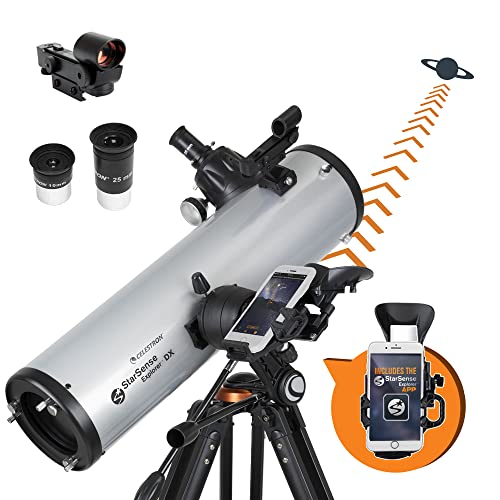
- Phone app guides you to targets
- 130mm Newtonian reflector
- Dual-axis slow-motion controls
Best For: Beginners who want smartphone-guided observing with stronger aperture
Portable GoTo SCT

- Computerized GoTo mount
- 6-inch Schmidt-Cassegrain optics
- SkyAlign simplifies alignment
Best For: Astronomers who want a compact computerized telescope with solid versatility
Entry-level guided scope
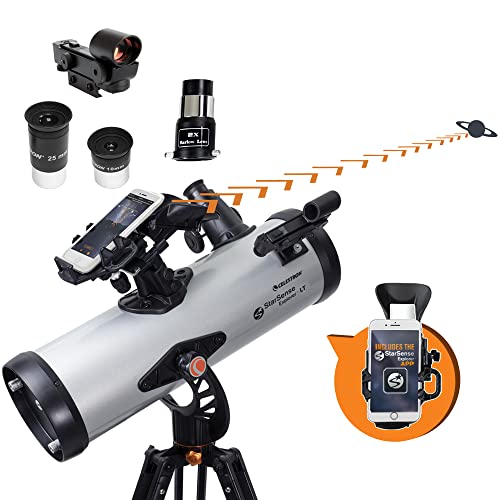
- Phone-guided sky navigation
- 114mm Newtonian reflector
- Lightweight beginner-friendly build
Best For: Beginners who want an affordable guided telescope for easy backyard use
Top Pick for Compact GoTo Imaging
Celestron NexStar 5SE Schmidt-Cassegrain Computerized Telescope

- 40,000+ object GoTo database
- 5-inch Schmidt-Cassegrain optics
- Built-in wedge for astroimaging
Best For: Observers who want a compact GoTo telescope that can handle visual viewing and entry-level imaging
Best Budget Family GoTo
Celestron 114LCM Computerized Reflector Telescope for Beginners

- Finds 4,000 celestial objects automatically
- Includes tripod, eyepieces, and StarPointer
- Sky Tour suggests good targets to view
Best For: Families and beginners who want a simple computerized telescope package
Best Portable Moon-and-Planet Scope
Celestron NexStar 4SE Maksutov-Cassegrain GoTo Telescope

- 4-inch Maksutov-Cassegrain optics
- 40,000+ object GoTo database
- Compact design with built-in wedge
Best For: Travelers and casual observers prioritizing portability and crisp lunar/planet views
Portable Starter GoTo
Celestron NexStar 102SLT Computerized Telescope

- 40,000+ object database with tracking
- SkyAlign setup for fast alignment
- Compact 102mm refractor for portable use
Best For: Beginners and families wanting an easy-to-move GoTo telescope
Planet-First Power
Celestron NexStar 127SLT Maksutov-Cassegrain

- 127mm aperture for stronger light gathering
- High-contrast Maksutov-Cassegrain optics
- SkyAlign GoTo with 40,000+ object database
Best For: Users wanting sharper lunar and planetary views with GoTo convenience
Ultra-Portable GoTo
Celestron NexStar 90SLT Portable Telescope

- Smallest, easiest-to-carry SLT model
- 40,000+ object database with tracking
- SkyAlign setup for quick observing
Best For: Travelers and casual observers prioritizing portability
Top 8-inch GoTo pick – Celestron NexStar 8SE
If you want computerized telescopes that can handle both planetary detail and deep-sky observing, the Celestron NexStar 8SE stands out with its 8-inch Schmidt-Cassegrain optics and fully automated GoTo mount. It’s built for users who want a compact setup with serious light-gathering power, plus fast alignment and a large object database.
Best For: Observers ready to step up to a computerized 8-inch telescope for planets, galaxies, and globular clusters.
Pros:
- 8-inch aperture gathers strong light for lunar, planetary, and deep-sky viewing
- Fully computerized GoTo mount with 40,000+ object database
- SkyAlign makes setup simple, even if you don’t know star names
- Compact Schmidt-Cassegrain design stays relatively portable
Cons:
- Manual focus means you still adjust sharpness by hand
- Batteries, AC adapter, or PowerTank are not included
- More advanced and larger than a beginner-friendly starter scope
This is a strong all-around choice if you want automation without giving up aperture. The NexStar 8SE is especially appealing for buyers who want a capable, upgrade-friendly computerized telescope in a portable form.
Smartphone-guided reflector – Celestron StarSense DX 130AZ
For buyers exploring computerized telescopes without a fully motorized mount, the Celestron StarSense Explorer DX 130AZ uses your smartphone to guide you to targets with on-screen arrows. Its 130mm Newtonian reflector and smooth slow-motion controls make it a practical option for backyard astronomy and guided deep-sky viewing.
Best For: Beginners who want phone-assisted sky navigation with a capable reflector and simple manual tracking.
Pros:
- StarSense Explorer app provides guided object finding based on your location and time
- 130mm reflector delivers sharp views of the Moon, planets, and bright deep-sky objects
- Dual-axis slow-motion controls help you center targets smoothly
- Curated list of tonight’s best objects makes planning easy
Cons:
- Mount is manual, not fully computerized or motorized
- Requires a smartphone to use the core navigation features
- Heavier than the smaller LT model at 18 pounds
This model bridges the gap between app-guided convenience and hands-on observing. It’s a smart choice if you want a guided experience without moving up to a fully automated GoTo system.
Portable GoTo SCT – Celestron NexStar 6SE
The Celestron NexStar 6SE is one of the most practical computerized telescopes for buyers who want GoTo convenience in a more compact package than the 8-inch model. Its 6-inch Schmidt-Cassegrain optics, automated tracking, and SkyAlign setup make it a flexible option for observing planets, the Moon, and brighter deep-sky targets.
Best For: Users who want a computerized telescope with strong performance and easier portability than a larger SCT.
Pros:
- Fully computerized GoTo mount with 40,000+ object database
- 6-inch aperture offers a good balance of detail and portability
- SkyAlign helps you get observing quickly
- Compatible with Celestron accessories for future upgrades
Cons:
- Manual focus requires hands-on adjustment
- Power sources are not included
- Less light-gathering than the 8-inch NexStar 8SE
If you want an easier-to-manage GoTo setup without sacrificing the Celestron computerized experience, the 6SE is a well-rounded pick. It offers the same automation philosophy as the larger model in a more manageable size.
Entry-level guided scope – Celestron StarSense LT 114AZ
If you’re shopping computerized telescopes but prefer a simpler, lower-cost route, the Celestron StarSense Explorer LT 114AZ uses smartphone-based sky recognition to guide you to targets. Its 114mm Newtonian reflector and lightweight manual mount make it an approachable option for newcomers who want help finding what to look at.
Best For: Beginners who want guided sky navigation in a lightweight, easy-to-handle telescope.
Pros:
- StarSense app turns your phone into a guided sky navigation tool
- 114mm reflector provides bright views of the Moon and major planets
- Lightweight design is easy to move and store
- Includes 2x Barlow lens plus two eyepieces for more viewing options
Cons:
- Manual altazimuth mount, not a fully computerized GoTo system
- Uses altitude-only slow-motion adjustment rather than dual-axis controls
- Smaller aperture than the 130mm StarSense model
This is a practical entry point for anyone who wants app-guided observing without a complex setup. It’s best suited to casual backyard sessions and learning the night sky at a comfortable pace.
Top Pick for Compact GoTo Imaging – Celestron NexStar 5SE Schmidt-Cassegrain Computerized Telescope
If you want computerized telescopes that balance portability with capable optics, the Celestron NexStar 5SE is a strong all-around choice. Its 5-inch Schmidt-Cassegrain design, fully automated GoTo mount, and SkyAlign setup make it easy to start observing without juggling star charts.
Best For: Beginners and upgraders who want a compact GoTo scope with enough aperture for the Moon, planets, and brighter deep-sky targets.
Pros:
- 40,000+ object database with NexStar+ hand control and automatic slewing/tracking
- 5-inch aperture and StarBright XLT coatings in a compact, portable tube
- SkyAlign gets the mount aligned quickly using three bright stars or planets
- Built-in wedge supports entry-level astroimaging and polar alignment
Cons:
- Manual focus, so it is not a fully automated imaging system
- Power sources are not included
- At 5 inches, it is less suited to faint deep-sky work than larger apertures
Overall, the NexStar 5SE is the most versatile pick here if you want a computerized telescope that can grow with you. It combines easy GoTo operation with a practical optical design and enough flexibility for visual observing plus light astrophotography.
Best Budget Family GoTo – Celestron 114LCM Computerized Reflector Telescope for Beginners
For shoppers comparing computerized telescopes on a budget, the Celestron 114LCM keeps setup simple while still automating object location. Its GoTo mount can find thousands of objects, and the Sky Tour button is helpful when you just want the telescope to suggest what is worth viewing right now.
Best For: Families, kids, and beginners who want an easy-to-use computerized reflector with basic accessories included.
Pros:
- Computerized GoTo mount can locate 4,000 celestial objects
- Sky Tour button builds an observing list automatically
- Includes tripod, 25mm and 9mm eyepieces, and StarPointer red dot finderscope
- Free download of Starry Night software for planning sessions
Cons:
- Motorized alt-az mount is more basic than the NexStar models
- Manual focus and a smaller feature set than higher-end computerized scopes
- Supplied notes emphasize bright views, but not advanced astroimaging
The 114LCM is a practical starter option if your main goal is learning the sky with automated guidance. It is less advanced than the 5SE or 4SE, but it offers a useful bundle and straightforward GoTo performance for new users.
Best Portable Moon-and-Planet Scope – Celestron NexStar 4SE Maksutov-Cassegrain GoTo Telescope
If you are shopping computerized telescopes for sharp lunar and planetary viewing in a compact package, the NexStar 4SE is a compelling pick. Its 4-inch Maksutov-Cassegrain optics are built for high-contrast views, while the NexStar GoTo system and SkyAlign technology keep setup and target finding simple.
Best For: Travelers and casual observers who want a lightweight GoTo telescope tuned for the Moon and planets.
Pros:
- 4-inch Maksutov-Cassegrain optics deliver sharp, high-contrast views
- 40,000+ object database with computerized slewing and tracking
- SkyAlign simplifies alignment without needing to know star names
- Compact and portable design with built-in wedge for imaging support
Cons:
- Smaller aperture than the 5SE limits light gathering
- Manual focus and no included power source
- More focused on Moon and planets than wide-field observing
The NexStar 4SE is the easiest recommendation if portability matters more than aperture. It gives you the same computerized GoTo convenience as the larger model, but in a lighter setup that makes quick observing sessions less of a chore.
Portable Starter GoTo – Celestron NexStar 102SLT Computerized Telescope
If you want computerized telescopes that are easy to move and quick to set up, the Celestron NexStar 102SLT is a practical entry point. Its 102mm refractor design, SkyAlign routine, and 40,000+ object database make it a convenient option for backyard sessions, camping trips, and first-time GoTo observing.
Best For: Beginners and families who want a compact computerized telescope for portable lunar, planetary, and general sky viewing.
Pros:
- Computerized hand control with a 40,000+ object database and object tracking
- SkyAlign helps get you observing in minutes with minimal setup
- 102mm aperture is suited to the Moon, Saturn, Jupiter, and more
- Compact, portable build works well for trips and dark-sky outings
Cons:
- Manual focus means it is not fully automated in every step
- Runs on batteries or external power, so power planning matters
The 102SLT is a balanced choice if you want computerized telescope convenience without a bulky footprint. It leans toward portability and straightforward use, which makes it a sensible all-around pick for casual observing.
Planet-First Power – Celestron NexStar 127SLT Maksutov-Cassegrain
Among computerized telescopes in this class, the NexStar 127SLT stands out for its larger 127mm Maksutov-Cassegrain optics and high-contrast view. It uses the same 40,000+ object database and SkyAlign setup, but adds more reach for detailed looks at the Moon, Jupiter, Saturn, and brighter deep-sky targets.
Best For: Observers who want a more powerful computerized telescope for sharper planetary and lunar viewing.
Pros:
- 127mm aperture gives you more light-gathering than smaller SLT models
- Maksutov-Cassegrain optics are built for high-contrast, high-resolution views
- SkyAlign and computerized tracking simplify finding objects
- Portable enough for backyard observing or camping trips
Cons:
- Heavier than the 90SLT and less compact for transport
- Manual focus means you still fine-tune by hand
If planetary detail matters most, this model offers the strongest optics of the three. It is a solid choice for users who want a computerized telescope that emphasizes sharp image quality without giving up GoTo convenience.
Ultra-Portable GoTo – Celestron NexStar 90SLT Portable Telescope
If portability is the priority, the NexStar 90SLT is one of the most travel-friendly computerized telescopes in the SLT line. Its smaller 90mm Maksutov-Cassegrain tube, SkyAlign system, and object database make it easy to pack, set up, and use for quick sessions on the Moon and planets.
Best For: Travelers and casual observers who want a lightweight computerized telescope for simple setup and planetary viewing.
Pros:
- Smallest and most portable SLT model in this group
- Computerized object database with tracking for easy target finding
- SkyAlign gets the telescope ready in minutes
- Good fit for Moon, Saturn, and Jupiter viewing
Cons:
- 90mm aperture is smaller than the 102SLT and 127SLT
- Manual focus and battery-powered operation require a little hands-on management
The 90SLT makes sense when compact size matters more than maximum aperture. It delivers the core computerized telescope experience in a lighter package that is easier to carry and store.
How We Picked the Best Computerized Telescopes
We focused on models that balance ease of use, reliable GoTo performance, and practical optics for common viewing targets. That means prioritizing sturdy mounts, straightforward alignment systems, and aperture sizes that can actually show more detail on the Moon, planets, and brighter deep-sky objects.
We also considered portability and setup time, since many Computerized Telescopes are best used when they are easy to carry outside and ready to observe quickly.
Quick Comparison: What Matters Most
In this lineup, larger apertures generally offer brighter, more detailed views, while smaller tube sizes are easier to transport and set up. Schmidt-Cassegrain and Maksutov-Cassegrain designs tend to be compact and strong for planetary observing, while Newtonian and refractor options can be more budget-friendly or beginner-friendly depending on the mount and alignment system.
Key Buying Factors for Computerized Telescopes
Aperture and Optical Design
Aperture is one of the biggest drivers of performance. Bigger apertures gather more light, which helps with detail and fainter targets. If you want a versatile all-rounder, a Schmidt-Cassegrain often offers a strong mix of compact size and capable optics. Maksutov-Cassegrain models are especially appealing for crisp lunar and planetary views.
Mount, Tracking, and Alignment
GoTo functionality is only useful if the mount is stable and alignment is manageable. SkyAlign-style systems and smartphone-guided setups can reduce the learning curve, but they still work best when the tripod is level and the initial setup is done carefully. For beginners, simple alignment and smooth tracking matter more than a long feature list.
Portability and Ease of Use
Many Computerized Telescopes are compact enough for casual backyard use, but weight and bulk still matter. If you plan to travel often or store the telescope in a small space, a lighter and more compact design may be the smarter buy. If the telescope is hard to move, it is less likely to get used.
Power and Accessories
Most computerized mounts need reliable power, so battery life or external power options can be important. It also helps to consider included eyepieces, finders, smartphone guidance, and whether the system supports future upgrades.
Who Should Buy Which Computerized Telescopes?
Beginners who want the fastest path to finding objects should look for easy alignment and guided navigation. Shoppers who care most about planets and the Moon may prefer a Maksutov-Cassegrain or a well-balanced Schmidt-Cassegrain. Those who want a more flexible, budget-conscious entry point may lean toward smaller aperture models or smartphone-guided designs. In short, the best Computerized Telescopes are the ones that match your observing goals, your storage space, and how much setup you are willing to do before each session.