Choosing among compound microscopes can be overwhelming when magnification, optics, stage design, and camera options all start to blur together. The right model depends on how you plan to use it: classroom learning, hobby biology, or more serious lab work.
This roundup focuses on practical value, clear viewing performance, and features that matter most for real users, so you can quickly narrow down the best fit for your needs in 2026.
Best 10 Compound Microscopes Picks for 2026
Research-Grade Trinocular Choice
Swift SW380T 40X-2500X Compound Microscope

- 40X to 2500X viewing range with 4 achromatic objectives
- Trinocular head accepts camera attachments for imaging
- Siedentopf head and ultra-precise focusing improve comfort and control
Best For: Users who want a research-style compound microscope with camera expandability
Beginner STEM Kit Pick
Emarth 40X-1000X Kids Compound Microscope
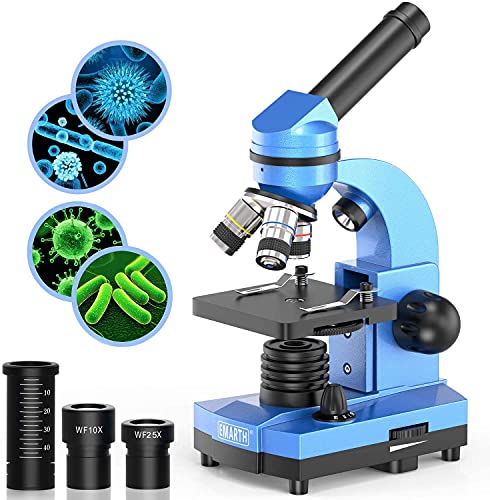
- 40X to 1000X magnification for beginner biology work
- 52-piece kit includes slides and tools for hands-on learning
- Top and bottom LED lighting supports different specimen types
Best For: Beginners, kids, and homeschool science learners
Digital Classroom Workhorse
Poothoh 40X-5000X Trinocular Microscope

- Includes a 1.3MP USB camera for imaging and sharing
- 40X to 5000X magnification with four achromatic objectives
- Double-layer metal stage and variable diaphragm improve control
Best For: Teachers and lab users who need digital viewing and capture
Balanced Multi-Use Trinocular Pick
PalliPartners 40x-2000x Compound Microscope

- 40x to 2000x range handles everyday specimen observation
- Dual LED illumination works for transparent and opaque samples
- Trinocular head and double-layer stage add practical versatility
Best For: Everyday learning, classroom use, and basic lab observation
Lab-Ready Binocular Scope
40X–2500X Binocular Microscope

- 40X–2500X magnification with 3 objectives
- Dual LED lighting for different specimen types
- Includes filters, slides, phone holder, and toolkit
Best For: Students and home labs needing a versatile binocular compound microscope
Research-Grade Imaging Pick

- Trinocular head with 2.0MP USB camera
- Software adds stitching, EDF, and measurement
- Mechanical stage and Abbe condenser improve control
Best For: Users who need digital capture and analysis with a compound microscope
Student-Friendly All-Rounder
White 40X–2500X Compound Microscope

- 40X–2500X range with dual LED lighting
- Phone holder and rotating eyepieces add convenience
- Includes slides, tools, and basic accessories
Best For: Students and families wanting a compact, easy-to-use compound microscope
Lab-Grade Trinocular With Camera

- Trinocular head with high-pixel electronic eyepiece
- 195 achromatic objective lens with infinity optical system
- Large lab accessory kit included
Best For: Adults needing a camera-ready laboratory-style compound microscope
Classic Lab Binocular Pick
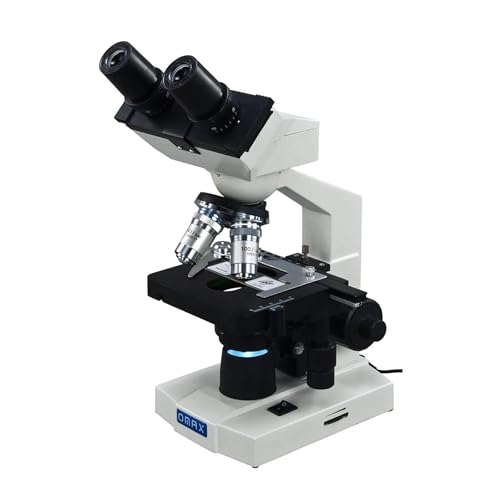
- Binocular head with WF10X and WF20X eyepieces
- Double-layer mechanical stage and coaxial focusing
- Includes slides, cover slips, and cleaning paper
Best For: Students and labs wanting a dependable traditional compound microscope
Research-Grade Ergonomic Choice

- Siedentopf binocular head with 30-degree ergonomic tilt
- Wide-field 10X and 25X eyepieces included
- Mechanical stage with ultra-precise focusing
Best For: Users wanting comfortable shared viewing and precise slide control
Research-Grade Trinocular Choice – Swift SW380T 40X-2500X Compound Microscope
If you want a compound microscope that feels more lab-ready than starter-level, the Swift SW380T is built for detailed slide viewing with a broad 40X to 2500X range. Its trinocular head, wide-field eyepieces, and ultra-precise focusing make it a practical pick for students, clinicians, and serious hobbyists who want room to grow into more advanced work.
Best For: High school, university, clinical, and hobby users who want a camera-ready trinocular compound microscope with fine focusing.
Pros:
- 40X, 100X, 250X, 400X, 1000X, and 2500X viewing options from 4 DIN achromatic objectives
- Siedentopf head with 10X and 25X wide-field eyepieces and a 30-degree tilt for comfort
- Trinocular head supports camera attachments for viewing, livestreaming, recording, and capture
- Ultra-precise coarse and fine focusing system for careful specimen adjustment
Cons:
- Microscope camera attachment is not included
- AC-powered design is less portable than battery units
- Built for serious use, so it may be more microscope than a casual beginner needs
Overall, the SW380T stands out as a flexible compound microscope for users who value optical range, comfort, and future camera expansion. It is especially appealing if you need shared viewing or expect to document specimens.
Beginner STEM Kit Pick – Emarth 40X-1000X Kids Compound Microscope
This compound microscope is aimed at beginners who want a hands-on way to learn biology without jumping straight into more advanced equipment. With 40X to 1000X magnification, LED illumination, and a 52-piece educational kit, it gives kids, students, and adult newcomers a straightforward setup for classroom or home use.
Best For: Kids, homeschoolers, and first-time students who want a true compound microscope with a full educational starter kit.
Pros:
- 40X to 1000X magnification for school-level biology observation
- Includes 52 pieces with prepared slides, blank slides, and tools
- Dual top and bottom LED illumination helps with opaque and translucent specimens
- Metal frame, rotatable head, and easy focus system support beginner use
Cons:
- Battery powered, and batteries are not included
- Not as advanced as higher-magnification research models
- Best suited to entry-level learning rather than specialized lab work
For a family or classroom-friendly compound microscope, this kit is attractive because it combines the scope with accessories needed to start exploring right away. It keeps the focus on learning, with features that help beginners see clear results quickly.
Digital Classroom Workhorse – Poothoh 40X-5000X Trinocular Microscope
If you need a compound microscope that can also feed a screen, this trinocular model is built around that workflow. The included 1.3MP USB camera, mechanical stage, and 40X to 5000X magnification range make it a strong fit for classroom demonstration, shared viewing, and specimen documentation.
Best For: Adults, educators, and lab users who want a trinocular compound microscope with USB imaging support.
Pros:
- 1.3MP USB camera with Mac and Windows support for viewing, recording, and sharing
- 40X to 5000X range with 4x, 10x, 60x, and 100x achromatic objectives
- Double-layer metal stage offers stable X/Y movement for slide positioning
- LED lighting with variable diaphragm helps adjust illumination for clearer viewing
Cons:
- Designed for electric power, so it is less convenient away from a workstation
- Higher-end setup may be more than casual users need
- Best value depends on whether you will use the included camera features
As a compound microscope, this one leans into versatility by combining strong optical range with built-in digital capture. It makes the most sense if your work involves teaching, sharing, or documenting specimens regularly.
Balanced Multi-Use Trinocular Pick – PalliPartners 40x-2000x Compound Microscope
For buyers who want a practical compound microscope without overcomplicating the setup, this trinocular model covers the essentials well. Its 40x to 2000x range, dual LED illumination, and double-layer stage make it suitable for home science, classroom work, and basic specimen inspection.
Best For: Families, students, and beginner lab users who want a trinocular compound microscope for everyday biological observation.
Pros:
- 40x to 2000x adjustable magnification covers basic observation needs
- Dual top and bottom LED lighting supports transparent and non-transparent specimens
- Double-layer stage helps hold slides steady during viewing
- Trinocular head supports camera or additional imaging device use
Cons:
- Magnification ceiling is lower than some higher-end trinocular models
- 4.5-degree real angle of view is relatively narrow
- Camera capability is implied by the head design and item highlight, but the core use is still basic observation
This is a sensible compound microscope for users who want a flexible, everyday platform rather than a highly specialized rig. It offers enough features for learning and documentation while staying approachable for mixed-use settings.
Lab-Ready Binocular Scope – 40X–2500X Binocular Microscope
If you’re comparing compound microscopes for school, home study, or more advanced lab work, this JECONE binocular model offers a practical mix of high magnification and user-friendly handling. The 40X–2500X range, dual LED illumination, and adjustable coarse/fine focus make it suited to a wide range of specimen types, while the included slides, phone holder, and color filters add value for beginners and students who want to observe and capture results.
Best For: Students, homeschooling families, and hobbyists who want a binocular compound microscope with strong magnification and versatile lighting.
Pros:
- 40X–2500X magnification with WF25X and 10X eyepieces plus 4X, 10X, and 100X objectives
- Dual LED incident and transmitted lighting for opaque and translucent specimens
- Five-color filter wheel helps improve observation without staining slides
- Binocular head with 45° incline, 360° rotation, and adjustable interpupillary distance
Cons:
- Best suited to users who want a more feature-rich setup rather than the simplest starter scope
- At 2.27 kg, it is not the lightest option for frequent moving
This is a well-rounded compound microscope for buyers who want strong optical flexibility and comfort-focused design in one package. It stands out most when you want a teaching or home-lab microscope that can handle both everyday viewing and more detailed inspection.
Research-Grade Imaging Pick – SW350T Trinocular Microscope
Among compound microscopes in this class, the SWIFT SW350T is built for users who need both visual inspection and digital capture. Its trinocular head, 2.0MP USB camera, and analysis software for Windows and Mac make it a strong choice for labs that document specimens, measure images, or share findings, while the 40X–2500X optical range and mechanical stage support detailed observation.
Best For: Lab users, students, and researchers who want a trinocular compound microscope with digital imaging and analysis tools.
Pros:
- Trinocular design with upgraded 2.0MP USB camera for photo and video capture
- Software includes image stitching, EDF, and measurement tools for Windows and Mac
- 40X–2500X research-grade optics with 4 achromatic objectives and wide-field eyepieces
- Double-layer mechanical stage and Abbe condenser support precise specimen control
Cons:
- More specialized than a basic student microscope, so it may be more than some casual users need
- Corded electric design and 4.7 kg weight make it better for fixed setups than portability
This model is best viewed as a documentation-friendly compound microscope rather than just a viewing tool. If image capture, measurement, and repeatable lab work matter most, the SW350T offers a more professional workflow than simpler classroom models.
Student-Friendly All-Rounder – White 40X–2500X Compound Microscope
If you want compound microscopes that balance strong magnification with approachable features, this white JECONE model is a practical pick for students and home learning. It offers the same 40X–2500X range as higher-cost options, plus dual LED lighting, a 5-color filter wheel, and a phone holder, making it easy to view slides and capture images without a complicated setup.
Best For: Kids, students, and homeschooling families looking for a compact compound microscope with useful accessories.
Pros:
- 40X–2500X magnification with WF25X/10X eyepieces and 4X/10X/100X objectives
- Dual LED illumination works for both opaque objects and translucent slides
- Phone holder and 360° rotating eyepieces make viewing and sharing easier
- Includes accessories such as prepared slides, blank slides, tweezers, and droppers
Cons:
- Not as feature-rich as trinocular or research-oriented models
- Smaller and lighter build may feel less substantial than heavier metal lab microscopes
This is a straightforward compound microscope for users who want broad usefulness without a steep learning curve. It is especially appealing for first-time buyers who want accessories included and enough optical range to grow with their skills.
Lab-Grade Trinocular With Camera – 40X-5000X Adult Microscope
If you want compound microscopes with a broad feature set for teaching, lab work, or inspection, this trinocular model is built to do a lot. It combines wide-angle eyepieces, a high-pixel electronic eyepiece, a 195 achromatic objective lens, and an infinity optical system aimed at clearer imaging across a very wide magnification range.
Best For: Adults who want a laboratory-style compound microscope with camera support and a generous accessory kit.
Pros:
- 40X-5000X maximum magnification with WF10x and WF25x eyepieces.
- Trinocular design includes a high-pixel electronic eyepiece for imaging.
- 195 achromatic objective lens and infinity optical system for clearer views.
- Includes a large lab gift pack with slides, coverslips, tools, and more.
Cons:
- Feature-rich setup may be more than a casual hobby user needs.
- Accessory-heavy package can feel complex if you only need a basic scope.
This is a strong pick if you want compound microscopes with more advanced viewing and documentation options. The dual mechanical stage, adjustable focusing lens, and 306° swivel head add practicality for longer sessions and different users.
Classic Lab Binocular Pick – 40X-2000X OMAX Microscope
This OMAX model is a practical choice among compound microscopes if you want solid lab features without moving into the most complex setup. It offers binocular viewing, adjustable LED illumination, a double-layer mechanical stage, and achromatic DIN objectives for routine lab or teaching use.
Best For: Students, labs, and buyers who want a traditional binocular compound microscope with dependable core features.
Pros:
- 40X-2000X magnification with WF10X and WF20X eyepieces.
- Double-layer X-Y mechanical stage with scales for controlled slide movement.
- Coaxial coarse and fine focus knobs plus adjustable LED lighting.
- Includes 100 blank slides, 100 cover slips, and lens cleaning paper.
Cons:
- Binocular head is practical but less flexible than trinocular models for imaging.
- Not the highest magnification option in this roundup.
For buyers who want a proven, straightforward setup, this microscope covers the essentials well. The metal frame, Abbe condenser, and included consumables make it a steady fit for repeated use in a classroom or small lab.
Research-Grade Ergonomic Choice – 40X-2500X SWIFT SW380B
The SWIFT SW380B is a research-style entry in compound microscopes, built around an ergonomic Siedentopf binocular head and wide-field eyepieces. Its 30-degree tilt, rotatable head, mechanical stage, and ultra-precise focusing make it a strong fit for longer observation sessions and shared use.
Best For: Users who want an ergonomic binocular microscope with research-style handling and flexible eyepiece options.
Pros:
- Siedentopf binocular head supports shared use and interpupillary adjustments.
- Wide-field 10X and 25X eyepieces provide flexible viewing options.
- 30-degree tilt is designed to reduce neck strain during longer sessions.
- Mechanical stage and ultra-precise focusing support controlled slide work.
Cons:
- No accessory bundle is listed in the provided notes.
- Maximum magnification is lower than some other high-range options here.
If ergonomics and everyday usability matter most, this microscope stands out. It keeps the focus on stable compound viewing with a comfortable head design and practical controls for extended work.
How We Picked These Compound Microscopes
We prioritized models that balance image clarity, useful magnification ranges, stable mechanical stages, and overall build quality. We also looked at whether a microscope is easier to use for beginners, flexible enough for home schooling, or better suited to advanced users who want trinocular viewing or camera support.
Quick Comparison
For fast sorting, think in three groups: beginner and student models for simple slide viewing, midrange binocular options for better comfort and control, and trinocular or camera-equipped Compound Microscopes for recording, sharing, or more demanding lab-style use. Higher magnification is not automatically better if the optics, illumination, and stage control are weak.
Key Buying Factors for Compound Microscopes
Magnification Range
Look for a useful working range rather than the biggest number on the box. Lower settings are important for locating specimens, while higher settings help with detail. In practice, optical quality matters more than extreme advertised magnification.
Optics and Head Design
Binocular heads are comfortable for longer viewing sessions, while trinocular Compound Microscopes add a camera port for imaging and teaching. Siedentopf-style heads are a plus because they make focusing more comfortable for different users.
Stage, Focus, and Illumination
A mechanical stage makes slide movement much smoother and more precise. Coarse and fine focusing should feel stable, and bright LED lighting with adjustable control helps you get cleaner images from thin or translucent samples.
Accessories and Practical Value
Slide kits, phone adapters, USB cameras, and prepared sample sets can add real convenience, especially for students or first-time buyers. These extras are most useful when they support learning rather than replacing core optical quality.
Who Should Buy Which Compound Microscopes?
Students and families should look for easy setup, included accessories, and solid low-to-mid magnification for everyday learning. Adults who want a more capable home lab setup may prefer binocular or trinocular Compound Microscopes with a mechanical stage and better optics. Buyers planning documentation, instruction, or light research should lean toward camera-ready models with trinocular heads and smoother focusing controls.
If you want the simplest recommendation, choose the model that best matches your user level first, then compare stage quality, optical comfort, and accessory value before deciding.