A good monopod gives photographers extra support without the bulk and setup time of a tripod. The best camera monopods balance height, load capacity, portability, locking speed, and stability for the way you actually shoot.
This roundup compares 10 options ranging from compact carbon-fiber travel models to aluminum monopods with detachable feet or stand bases. Use the guide below to narrow the choices by camera setup, shooting conditions, and budget.
Best 10 Camera Monopods Picks for 2026
Best Budget Camera Monopod
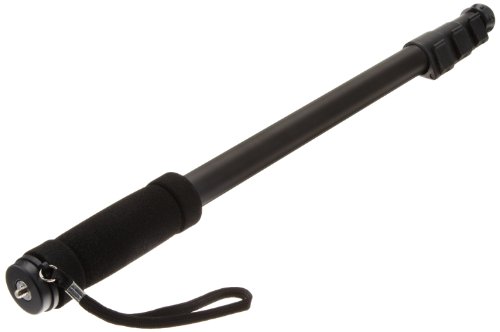
- 67-inch, four-section aluminum design
- 6.6-pound capacity with rubber foot and spikes
- Lightweight build with bag and wrist strap
Best For: Affordable everyday camera and scope support
Best Premium Camera Monopod
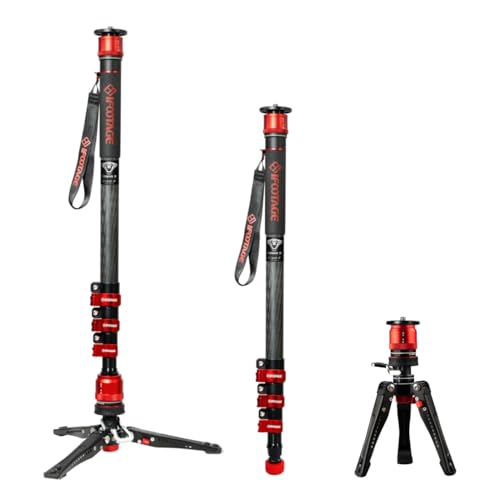
- 71-inch carbon-fiber monopod with 17.6-pound payload
- Foot pedal and automatic quick-release system
- Detachable 3-in-1 base with adjustable damping
Best For: Fast-moving sports, wildlife, wedding, and video work
Best Camera Monopod With Base
NEEWER T222 Extendable Monopod
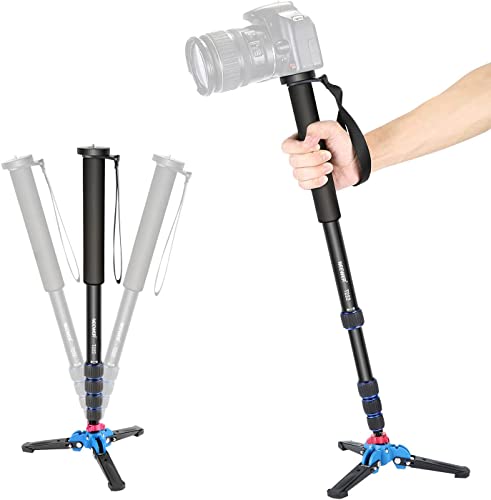
- 66-inch, five-section aluminum monopod
- Detachable three-leg base with 15-degree tilt
- 11-pound maximum load and 20.5-inch folded size
Best For: Flexible panoramic and low-angle photography
Best Heavy-Duty Camera Monopod
Manfrotto 290 Carbon Fiber Monopod

- 22-pound stated load capacity
- Lightweight carbon-fiber construction
- Four sections with 59.4-inch maximum height
Best For: Heavy camera setups and compact travel support
Best Lightweight Camera Monopod

- Lightweight aluminum build weighs about 0.83 pounds
- Extends from 16.9 to 61 inches
- Supports up to 11.02 pounds
Best For: Travel, hiking, and versatile outdoor shooting
Best Carbon Fiber Camera Monopod
SIRUI P-326 Compact Carbon Fiber
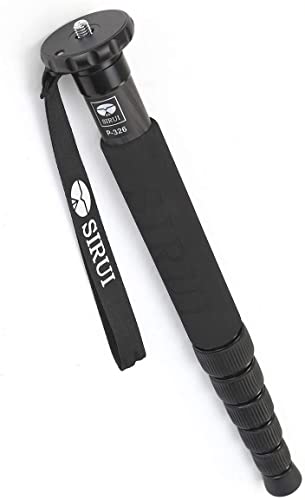
- 8X carbon fiber construction weighs about 400 grams
- Six-section design folds to 15 inches
- Rated to support up to 22 pounds
Best For: Lightweight travel and compact storage
Best 2-in-1 Camera Monopod
SmallRig CT-10 Tripod & Monopod

- Converts from tripod to monopod
- Extends from 16 to 71 inches
- Includes a 360-degree ball head
Best For: Content creation and versatile camera support
Best Heavy-Duty Pick
SIRUI 75.8-inch Aluminum Monopod

- 12 kg listed load capacity
- Detachable 3-in-1 tripod base
- 360° panning and quick release
Best For: High-capacity photo and video setups
Best Carbon-Fiber Option
SmallRig 65.6-inch Ball Head Monopod

- Lightweight 1.73 kg carbon fiber
- One-touch height adjustment
- Built-in bubble level and accessory thread
Best For: Portable outdoor shooting
Best Budget Travel Pick
Manbily A-222 Aluminum Monopod

- Lightweight 0.67 kg travel design
- Folds to 21 inches
- Includes rubber and spike feet
Best For: Compact travel photography
Best Budget Camera Monopod – Amazon Basics 67-Inch Monopod
If you want straightforward camera support without adding much weight to your kit, this Amazon Basics model is a practical choice among camera monopods. Its four-section aluminum design extends to 67 inches, while the rubber foot and retractable spikes help it adapt to different surfaces.
Best For: Budget-conscious photographers and scope users who need lightweight, adjustable support for equipment up to 6.6 pounds.
Pros:
- Extends to 67 inches for flexible shooting angles.
- Supports cameras, video cameras, and scopes up to 6.6 pounds.
- Rubber foot and retractable spikes improve footing on varied surfaces.
- Includes a carrying bag, wrist strap, and cushion grip.
Cons:
- Not water resistant.
- Its 6.6-pound capacity is lower than that of several heavier-duty options.
This is a sensible entry-level monopod for travel and everyday shooting. The sub-one-pound aluminum construction favors portability, though users with heavier cameras or demanding video setups may want a higher-capacity model.
Best Premium Camera Monopod – IFOOTAGE Cobra 3 C180F-P
The IFOOTAGE Cobra 3 is built for fast-paced shooting where quick setup and stable movement matter. This carbon-fiber camera monopod combines a foot-operated locking system, quick release, and a detachable base that can function as a tabletop mini tripod or low-profile support.
Best For: Sports, wedding, wildlife, and video shooters who need fast adjustments, strong capacity, and versatile support.
Pros:
- Foot pedal enables quick locking and 360-degree swiveling without bending down.
- Supports up to 17.6 pounds vertically and extends to 71 inches.
- Convertible 1/4-inch and 3/8-inch mounting screws suit cameras, gimbals, scopes, lights, and more.
- Detachable base can serve as a mini tripod or low-profile support.
Cons:
- At 2.8 pounds, it is heavier than simpler travel monopods.
- Its 27-inch collapsed length may be less compact for some bags.
- Not water resistant.
With its generous payload, lengthened feet, damping adjustment, and rapid controls, the Cobra 3 is aimed at photographers and videographers who prioritize operational flexibility over minimal weight. The included carry bag and warranty add practical value for frequent use.
Best Camera Monopod With Base – NEEWER T222 Extendable Monopod
The NEEWER T222 adds a detachable three-leg base to a conventional extendable monopod, giving you more setup flexibility than a basic single-pole design. Its five-section aluminum construction reaches 66 inches, and the base supports a 15-degree tilt for panoramic movement.
Best For: Photographers who want a portable monopod that can also provide supported low-angle or panoramic shooting.
Pros:
- Five-section design adjusts from 20.5 to 66 inches.
- Monopod and aluminum three-leg base support up to 11 pounds.
- 15-degree base tilt enables 360-degree panoramic rotation.
- Foam handle and portable design improve carrying comfort.
Cons:
- The manufacturer notes that the monopod should be held by hand when a camera is mounted.
- Not water resistant.
- The included base adds components compared with a simple monopod.
The T222 is a useful middle ground for photographers who want more stability options without moving to a full tripod. Its detachable base expands its use, but careful handling remains important when supporting a mounted camera.
Best Heavy-Duty Camera Monopod – Manfrotto 290 Carbon Fiber Monopod
The Manfrotto 290 is a strong, travel-friendly option for photographers who need substantial load capacity in a carbon-fiber design. Its four leg sections allow quick height adjustments, while rubber leg warmers and an angled wrist strap add comfort during extended handling.
Best For: Photographers and videographers carrying heavier camera setups who want a compact carbon-fiber monopod.
Pros:
- 22-pound listed load capacity supports demanding camera setups.
- Carbon-fiber construction weighs about 1.1 pounds.
- Four sections adjust from 19.29 to 59.4 inches.
- Rubber leg warmers and angled wrist strap improve handling comfort.
Cons:
- Its 59.4-inch maximum height is shorter than some competing models.
- It does not include a head or additional accessories beyond the monopod.
- Not water resistant.
The 290 balances low carry weight with an unusually high stated payload, making it a compelling choice when strength matters more than maximum reach. Its 19.29-inch folded length also suits photographers who need a compact support tool for travel.
Best Lightweight Camera Monopod – ULANZI TB12 61-Inch
The ULANZI TB12 is a practical choice among camera monopods for photographers who want a lightweight, travel-ready support option. Its five-section aluminum design extends from 16.9 to 61 inches, weighs about 0.83 pounds, and supports up to 11.02 pounds.
Best For: Travel, hiking, wildlife photography, and photographers who want monopod, selfie-stick, or walking-stick modes.
Pros:
- Lightweight design folds to about 16.9 inches and fits a 20-inch carry-on.
- Offers five height settings from 16.9 to 61 inches.
- Supports cameras and gear weighing up to 11.02 pounds.
- Can be used in monopod, selfie-stick, hiking-stick, and trekking-pole modes.
Cons:
- Not water resistant.
- Its 61-inch maximum height is lower than some taller support systems.
Choose the TB12 if portability and flexible outdoor use matter more than advanced tripod functionality. It is a versatile, compact option for everyday camera support on the move.
Best Carbon Fiber Camera Monopod – SIRUI P-326 Compact Carbon Fiber
SIRUI Camera Monopod P-326 6 Section Carbon Fiber Compact Lightweight Travel Monopod
Check Price On AmazonThe SIRUI P-326 is a compact carbon fiber option for photographers comparing camera monopods for travel and everyday shooting. Its six-section design folds to 15 inches, weighs 400 grams, and has a stated maximum load of 22 pounds.
Best For: Travelers and photographers who prioritize low weight, compact storage, and a high stated load capacity.
Pros:
- Lightweight 8X carbon fiber construction weighs about 400 grams.
- Six sections fold to a compact 15-inch size.
- Supports up to 22 pounds according to the supplied specifications.
- Reversible 1/4-inch-20 and 3/8-inch-16 mounting screw adds compatibility.
Cons:
- Does not include the broader alternate modes listed for some multipurpose monopods.
- Its supplied specifications do not state a ball head is included.
The P-326 stands out when compactness and carbon fiber construction are the priorities. Its wrist strap, hand grip, and silicon twist locks also support comfortable handling during mobile shooting.
Best 2-in-1 Camera Monopod – SmallRig CT-10 Tripod & Monopod
The SmallRig CT-10 is a versatile alternative to dedicated camera monopods because its aluminum tripod converts into a monopod. It reaches 71 inches, folds to 16.9 inches, and includes a 360-degree ball head for horizontal and vertical shooting.
Best For: Content creators and photographers who want one support system for tripod, monopod, low-angle, phone, and camera use.
Pros:
- Converts between a full tripod and a monopod.
- 360-degree ball head supports horizontal and vertical shooting angles.
- Adjusts from 16 to 71 inches with four sections and flip locks.
- Compatible with cameras, phones, action cameras, and projectors using 1/4-inch-20 or 3/8-inch-16 threads.
Cons:
- At 3.4 pounds, it is substantially heavier than lightweight dedicated monopods.
- Telephoto lenses may require an additional tripod or lens mount ring for balance.
- Not water resistant.
The CT-10 is the strongest fit for buyers who value flexibility over minimal weight. Its tripod conversion, ball head, accessory threads, and low-angle capability make it useful for more than monopod support alone.
Best Heavy-Duty Pick – SIRUI 75.8-inch Aluminum Monopod
For photographers and videographers who need substantial support, this SIRUI camera monopod combines a 12 kg listed load capacity with a detachable tripod base and quick-release hardware. Its 360° panning collar also adds useful flexibility for video work.
Best For: DSLR, mirrorless, and camcorder users who want high capacity, panning control, and multiple setup options.
Pros:
- Supports up to 12 kg according to the product features.
- Converts between a footed monopod, extension rod, and low-angle tripod base.
- Quick-release system and reversible 1/4-inch and 3/8-inch mounting screw simplify setup.
- Built-in 360° panning design works without a ball head.
Cons:
- At 2.1 kg, it is heavier than the other options here.
- The aluminum construction is less weight-focused than a carbon-fiber model.
- The base is not water resistant.
The SIRUI is the most feature-rich and load-capable choice in this group. It makes sense when stability, quick changes, and video-friendly panning matter more than minimizing carry weight.
Best Carbon-Fiber Option – SmallRig 65.6-inch Ball Head Monopod
This SmallRig camera monopod emphasizes portability and quick operation. Its four-section carbon-fiber leg folds to 68 cm, while the one-touch height adjustment provides fast, one-handed positioning for outdoor and confined-space shooting.
Best For: Outdoor photographers and videographers who want a lighter carbon-fiber monopod with fast height adjustment.
Pros:
- Lightweight 1.73 kg carbon-fiber design folds to 68 cm.
- One-touch adjustment locks the monopod at any position.
- Legs support up to 15 kg, while the ball head supports up to 5 kg.
- Bubble level and 1/4-inch accessory thread expand its usefulness.
Cons:
- The ball head is limited to a 5 kg load.
- Its 65.6-inch maximum height is shorter than the SIRUI’s listed height.
- It has no supplied tripod-foot conversion mentioned in the product details.
The SmallRig is a strong balance of portability and speed. Choose it when carbon-fiber weight savings and one-handed adjustment are more important than a detachable support base.
Best Budget Travel Pick – Manbily A-222 Aluminum Monopod
For travelers seeking an affordable, compact camera monopod, the Manbily A-222 offers five-section adjustment from 21 to 67 inches and weighs just 0.67 kg. Its foldable three-foot base, wrist strap, and interchangeable feet make it practical for changing locations.
Best For: Travel photographers who prioritize low weight, compact storage, and flexible footing.
Pros:
- Very light at 0.67 kg and folds to 21 inches.
- Quick-lock sections adjust from 21 to 67 inches.
- Includes rubber and metal spike feet for different surfaces.
- Comes with a detachable wrist strap and foldable tripod base.
Cons:
- The base is intended to improve stability, not function as a standalone tripod.
- It has no ball head included.
- The manufacturer recommends avoiding the smallest-diameter tube section for better stability.
The Manbily is the easiest option here to carry on trips. It is best for supported shooting rather than hands-off tripod-style use, so keep the wrist strap around your hand during operation.
How We Picked the Best Camera Monopods
We focused on practical features that affect real-world shooting: maximum height, folded size, material, section count, stated load capacity, locking design, foot or base configuration, and included accessories. Carbon fiber models generally reduce weight and vibration, while aluminum designs can offer strong value and durable handling. We also considered whether each monopod suits travel, sports, wildlife, video, or general-purpose photography.
Because a monopod is not a freestanding tripod unless it includes a suitable base, stability claims should be judged carefully. A foot or detachable stand can improve balance, but users still need to support the camera in many situations.
Quick Comparison
| Best For | What to Prioritize | Recommended Type |
|---|---|---|
| Travel and hiking | Low weight and compact folded length | Carbon fiber, compact six-section model |
| Sports and wildlife | Fast locks, working height, and rigidity | Four-section monopod with a secure foot |
| Video and heavier cameras | Load capacity, base stability, and smooth movement | Heavy-duty model with a stand base or feet |
| Occasional use | Affordable construction and included bag | Aluminum monopod with simple rubber foot |
Key Buying Factors for Camera Monopods
Height and Folded Size
Choose a maximum height that lets you work comfortably without constantly bending over. A shorter folded length matters for carry-on luggage and day packs, while more sections can improve portability but may require more adjustments.
Material and Weight
Aluminum Camera Monopods are typically less expensive and can withstand rough handling. Carbon fiber is often lighter and better at damping vibration, making it appealing for travel and long shooting sessions. Check the complete system weight, including the head and camera.
Load Capacity and Locks
Match the rated capacity to your camera, lens, and head—not just the camera body. Leave a margin for stability. Twist locks pack neatly, while flip locks are often faster to inspect and operate with gloves.
Feet, Bases, and Mounting
A rubber foot helps on hard surfaces, while spikes or interchangeable feet can improve outdoor traction. Detachable tripod-style bases provide more support for static framing, but they add weight and do not eliminate the need for careful handling. Confirm whether a ball head, QR plate, or camera mount is included.
Who Should Buy Which Camera Monopods?
Travel photographers should favor a lightweight carbon-fiber model with a short folded length. Sports and wildlife shooters will benefit from a rigid, quick-adjusting monopod that reaches near eye level and supports a long lens. Video creators should look for a stable base, compatible quick-release system, and enough capacity for the camera, lens, and accessories. Budget-conscious photographers can choose an aluminum model with a rubber foot and carrying bag for occasional use. If you frequently switch between handheld, monopod, and low-support shooting, a model with a removable stand base offers the most flexibility.