The best camera monopods for mirrorless cameras provide extra stability without the bulk of a full tripod. They are especially useful for travel, events, wildlife, sports, and handheld video where quick repositioning matters.
Our roundup includes compact aluminum and carbon-fiber options, fluid-base video monopods, and models with detachable feet or tripod bases. Use the guide below to match capacity, height, portability, and support style to your camera setup.
Best 10 Camera Monopods for Mirrorless Cameras Picks for 2026
Best Value Support
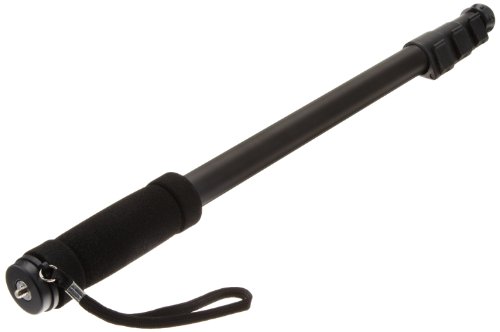
- 6.6-pound camera and scope capacity
- 67-inch reach with four sections
- Lightweight design with bag and wrist strap
Best For: Affordable everyday mirrorless camera support
Best for Smooth Video
Manfrotto Element MII Video Monopod

- Integrated fluid base for smooth panning
- Supports loads up to 16 kg
- Foldable base and quick twist locks
Best For: Mirrorless video rigs and controlled camera movement
Best Compact Budget Pick

- Weighs 0.59 pounds
- Folds to 16.75 inches
- Includes adapter, pouch, spike, and wrist strap
Best For: Lightweight travel and hiking setups
Best Travel Versatility

- 15.4-pound capacity in a compact design
- Reversible 1/4-inch and 3/8-inch screw
- Walking-stick handle and interchangeable feet
Best For: Outdoor travel, sports, and wildlife photography
Best All-in-One Support
NEEWER Extendable Monopod with Foldable Base
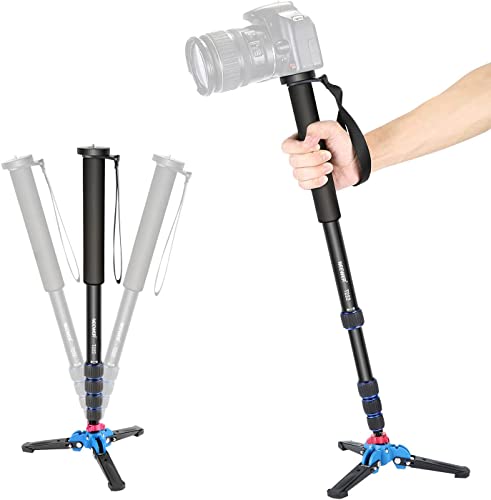
- Detachable three-leg base adds support
- Extends to 168 cm and folds to 52 cm
- 5 kg recommended load with aluminum construction
Best For: Mirrorless shooters wanting monopod and supported-base flexibility
Best Tripod-Monopod Hybrid
SmallRig CT-10 Aluminum Monopod

- Converts between tripod and monopod
- 71-inch height with 360-degree ball head
- Supports cameras, phones, and accessories
Best For: Traveling creators who need multiple support modes
Best Lightweight Strength
Koolehaoda 62-Inch Carbon Fiber Monopod

- 650 g carbon-fiber construction
- Supports up to 10 kg/22 pounds
- Folds to 38 cm with reversible mounting screws
Best For: Travel and telephoto photographers needing high capacity
Best Lightweight Travel Pick
ULANZI TB12 61-Inch Camera Monopod

- Weighs about 0.83 pounds
- Extends to 61 inches
- Supports up to 11.02 pounds
Best For: Travel, hiking, wildlife, and everyday mirrorless shooting
Best Stability Features
Koolehaoda 69-Inch Monopod With Tripod Base

- Removable tripod base with tilt and rotation
- Extends to 69.6 inches
- Supports up to 13 pounds
Best For: Mirrorless users wanting versatile support and height
Best Simple Compact Option
ULANZI TB12 61-Inch Aluminum Monopod

- Weighs 378 grams
- Folds to 16.9 inches
- Supports up to 5kg
Best For: Compact travel and outdoor mirrorless camera setups
Best Value Support – Amazon Basics 67-Inch Monopod
For shoppers comparing camera monopods for mirrorless cameras, this Amazon Basics model offers a straightforward, lightweight support option with useful height range and a 6.6-pound capacity. Its four-section aluminum design reaches 67 inches while remaining under 1 pound.
Best For: Everyday mirrorless camera photography, scopes, and shooters who want an affordable, portable monopod.
Pros:
- Supports cameras and scopes up to 6.6 pounds.
- Extends to 67 inches with four leg sections.
- Includes a rubber foot, retractable spikes, wrist strap, and carrying bag.
- Lightweight aluminum construction weighs less than 1 pound.
Cons:
- Not water resistant.
- Its basic design may be less suited to advanced video work than a fluid-base monopod.
This is a practical pick when portability, simple height adjustment, and low cost matter more than specialized video features.
Best for Smooth Video – Manfrotto Element MII Video Monopod
Among camera monopods for mirrorless cameras, the Manfrotto Element MII stands out for video-oriented control. Its integrated fluid cartridge is designed for smoother panning, while the foldable base and twist locks make it practical to set up and carry.
Best For: Mirrorless and DSLR video shooters who prioritize smooth panning and support for heavier setups.
Pros:
- Integrated fluid base supports smooth, judder-free panning.
- Supports loads up to 16 kg.
- Foldable base feet improve portability.
- Ergonomic twist locks allow quick adjustment.
Cons:
- Its folded length is about 19.88 inches, making it less compact than some travel models.
- It is designed primarily around video use rather than the simplest still-photo setup.
This is the strongest choice in the group for controlled camera movement and heavier video configurations, provided you can accommodate its longer folded size.
Best Compact Budget Pick – Altura Photo 62-Inch Monopod
The Altura Photo is a compact option for anyone comparing camera monopods for mirrorless cameras on a budget. It collapses to 16.75 inches, weighs just 0.59 pounds, and includes a universal mount with a 3/8-inch screw adapter.
Best For: Travel photographers and hikers who need a small, light monopod for cameras or scopes up to 5 pounds.
Pros:
- Collapses to 16.75 inches and weighs 0.59 pounds.
- 62-inch maximum height offers useful shooting reach.
- Includes a 1/4-inch universal thread and 3/8-inch adapter.
- Foam grip, wrist strap, rubber foot, retractable spike, and pouch are included.
Cons:
- 5-pound capacity is lower than some alternatives.
- It offers less maximum height than the 67-inch Amazon Basics model.
Choose this model when packability is the priority and your mirrorless camera setup stays within its 5-pound load limit.
Best Travel Versatility – Manbily A-555L Camera Monopod
The Manbily A-555L adds travel-focused versatility to the camera monopods for mirrorless cameras category. It folds to 15.7 inches, supports up to 15.4 pounds, and includes interchangeable rubber and metal feet plus a handle that lets it function as a walking stick.
Best For: Travel, sports, wildlife, and outdoor photographers who want high load capacity and adaptable footing.
Pros:
- Supports up to 15.4 pounds with a 28-millimeter leg.
- Folds to 15.7 inches and extends to 61 inches.
- Reversible 1/4-inch and 3/8-inch mounting screw accommodates cameras, camcorders, and heads.
- Includes walking-stick handle, phone holder, carry case, and interchangeable foot options.
Cons:
- It weighs 1.1 pounds, more than the lighter compact models listed here.
- Its six-section design reaches 61 inches, less than some taller alternatives.
- Not water resistant.
This is a versatile outdoor choice for photographers who value rugged load capacity, compact packing, and the option to adapt the monopod for uneven terrain or walking-stick use.
Best All-in-One Support – NEEWER Extendable Monopod with Foldable Base
For photographers comparing camera monopods for mirrorless cameras, the NEEWER T222 stands out by combining a tall monopod with a detachable three-leg support base. Its aluminum-alloy construction, five-section adjustment, and 5 kg maximum recommended load make it a flexible option for travel and general outdoor shooting.
Best For: Mirrorless camera users who want a monopod that can also stand with support from a compact tripod base.
Pros:
- Extends from 52 to 168 cm and folds to 52 cm for transport.
- Detachable three-leg base provides added support and enables 360-degree panoramic rotation with 15-degree tilt.
- Aluminum-alloy construction, foam handle, and 5 kg maximum recommended load.
- Includes 1/4-inch camera mounting screw and a 3/8-inch bottom thread for a mini tripod.
Cons:
- The camera must be held or supported when mounted on the monopod; it can fall if left unattended.
- At 1.3 pounds, it is not the lightest option in this group.
- The product is not water resistant.
The T222 is a practical choice when you want more flexibility than a basic monopod offers. Its included base adds stability for supported shooting, while the extended height and compact folded length suit outdoor use.
Best Tripod-Monopod Hybrid – SmallRig CT-10 Aluminum Monopod
The SmallRig CT-10 is a versatile pick among camera monopods for mirrorless cameras because it converts from a full tripod to a monopod. It offers a 360-degree ball head, a 16- to 71-inch working range, and broad compatibility with cameras, phones, and other threaded devices.
Best For: Content creators and travelers who need one support system for tripod, monopod, low-angle, and phone setups.
Pros:
- 2-in-1 design converts from an aluminum tripod to a monopod.
- 360-degree metal ball head supports horizontal and vertical shooting.
- Adjusts from 16 to 71 inches with four-section legs and quick-release flip locks.
- Supports up to 33 pounds vertically and includes three extra 1/4-inch threaded holes for accessories.
Cons:
- At 3.4 pounds, it is considerably heavier than a dedicated lightweight monopod.
- Telephoto zoom lenses may require an additional tripod or lens mount ring for better balance.
- The product is not water resistant.
The CT-10 is best viewed as a multifunctional support platform rather than a minimalist monopod. Its heavier build and 43 cm folded size trade some portability for tripod stability, accessory mounting, and shooting-angle versatility.
Best Lightweight Strength – Koolehaoda 62-Inch Carbon Fiber Monopod
For photographers seeking camera monopods for mirrorless cameras with a high load rating, the Koolehaoda MP-286C pairs a 10-layer carbon-fiber shaft with a 10 kg capacity. Its six twist-lock sections, compact 38 cm folded length, and reversible 1/4-20 and 3/8-16 mounting system make it suited to travel, events, and heavier lens setups.
Best For: Mirrorless photographers who prioritize low weight, compact packing, and support for larger camera-and-lens combinations.
Pros:
- Carbon-fiber construction weighs about 650 g and helps dampen vibration.
- Supports up to 10 kg/22 pounds, accommodating heavier telephoto setups.
- Extends from 15 to 62 inches using six quick twist-lock sections.
- Includes reversible 1/4-20 and 3/8-16 screws, a phone holder, metal spike, wrist strap, and carrying bag.
Cons:
- Its 62-inch maximum height is lower than the 71-inch SmallRig.
- Twist locks may be less immediately tactile than flip locks for users who prefer lever adjustments.
- The product is not water resistant.
The MP-286C offers the strongest portability-to-capacity balance in this selection. It is especially appealing for long shoots where a lightweight monopod and a high load rating matter more than an integrated standing base.
Best Lightweight Travel Pick – ULANZI TB12 61-Inch Camera Monopod
For photographers seeking camera monopods for mirrorless cameras, the ULANZI TB12 emphasizes portability without giving up useful reach. It extends to 61 inches, folds to 16.9 inches, weighs about 0.83 pounds, and supports up to 11.02 pounds.
Best For: Travel, hiking, wildlife photography, and casual mirrorless or DSLR shooting.
Pros:
- Lightweight aluminum design weighs approximately 0.83 pounds.
- Five-section construction offers height settings from 16.9 to 61 inches.
- Supports cameras and accessories weighing up to 11.02 pounds.
- Can also function as a selfie stick or trekking pole.
Cons:
- It is not water resistant.
- Its single-leg design does not provide the freestanding stability of a full tripod.
The TB12 is a practical choice when low carry weight and compact storage matter most. Its multiple modes add flexibility for outdoor users, while the 5kg capacity suits many mirrorless camera setups.
Best Stability Features – Koolehaoda 69-Inch Monopod With Tripod Base
Among camera monopods for mirrorless cameras, the Koolehaoda K-266 stands out for its removable tripod base and broad height range. Its aluminum construction supports up to 13 pounds, while the six-section design reaches 69.6 inches.
Best For: Mirrorless camera users who want adjustable height, a detachable base, and adaptable footing for indoor or outdoor shooting.
Pros:
- Removable tripod base allows 360-degree rotation and 20-degree tilt.
- Extends from 18 inches to 69.6 inches with six sections.
- Supports up to 13 pounds and includes reversible 1/4-inch and 3/8-inch screws.
- Includes rubber feet, metal spikes, a phone clip, tools, and carrying bag.
Cons:
- At approximately 0.96kg, it is heavier than the ULANZI TB12 models listed here.
- The additional tripod base and accessories make it a less minimalist travel option.
- It is not water resistant.
The K-266 is the more feature-rich option for photographers who value extra ground support and mounting flexibility. Its removable base can also serve as a mini tripod for tabletop photography or video calls.
Best Simple Compact Option – ULANZI TB12 61-Inch Aluminum Monopod
The ULANZI TB12 is a straightforward choice for shoppers comparing camera monopods for mirrorless cameras. It combines a 61-inch maximum height with a 16.9-inch folded size, weighs 378 grams, and supports up to 11 pounds.
Best For: Photographers who want a compact, lightweight monopod for travel, outdoor use, and image or video capture.
Pros:
- Compact folded length fits easily into a travel setup or 20-inch carry-on.
- Five sections provide adjustment from 43cm to 155cm.
- Reinforced aluminum construction supports up to 5kg.
- Offers monopod, selfie-stick, and trekking-pole modes.
Cons:
- It is not water resistant.
- It does not include the removable tripod base found on the Koolehaoda model.
This TB12 version makes sense for users who prioritize a light, uncomplicated support stick. Its compact dimensions and several operating modes make it especially convenient for travel and outdoor shooting with compatible mirrorless cameras.
How We Picked the Best Camera Monopods for Mirrorless Cameras
We compared these 10 monopods by the features that matter most in real-world mirrorless shooting: stated load capacity, maximum and folded length, construction, section count, locking system, foot design, head compatibility, and included accessories. We also considered how easily each model fits travel, street, sports, wildlife, and video workflows.
Because mirrorless kits vary significantly in size, a lightweight monopod may suit a compact body and standard zoom, while a heavier design is preferable for a telephoto lens, cage, microphone, or external monitor. Always check the manufacturer’s capacity specifications and account for the complete camera-and-lens setup.
Quick Comparison
| Best For | What to Look For |
|---|---|
| Travel and everyday photography | Light weight, compact folded size, and a carrying bag |
| Sports and wildlife | High load capacity, secure locks, and a stable rubber foot |
| Video shooting | Fluid base, smooth movement, and compatible video head |
| Low-cost support | Aluminum construction, simple controls, and standard mounting threads |
| Maximum portability | More sections, short folded length, and a compact foot design |
Key Buying Factors for Camera Monopods for Mirrorless Cameras
Load Capacity and Rig Weight
Choose a monopod rated comfortably above your full rig’s weight. Include the camera body, lens, battery grip, cage, microphone, monitor, and any quick-release plate. Extra capacity generally improves rigidity and handling, particularly with front-heavy lenses.
Height, Folded Size, and Section Count
A monopod should reach a comfortable shooting height without forcing you to hunch. More sections can create a shorter packed length for travel, but they also add more locks to adjust and may feel less rigid when fully extended. Four or five sections are often a practical balance.
Base and Foot Design
A rubber foot helps maintain contact on hard floors and pavement. A detachable or foldable tripod base adds support for video and controlled movements, but it increases weight and bulk. A simple foot is usually better for fast-moving photographers who treat the monopod as a handheld stabilizing aid.
Material and Locking System
Aluminum models typically deliver good value and durability. Carbon fiber can reduce weight and dampen vibration, though it often costs more. Twist locks pack neatly, while flip locks are easy to inspect and operate quickly with gloves.
Mounting and Accessories
Confirm that the mounting screw and included head suit your camera plate or ball head. A carrying bag, wrist strap, removable base, and compatible quick-release system can make a noticeable difference during regular use.
Who Should Buy Which Camera Monopods for Mirrorless Cameras?
Choose a lightweight, compact aluminum model if you carry a small mirrorless body while traveling or walking. Photographers using longer lenses should prioritize a higher-capacity monopod with sturdy locks and a reliable rubber foot. Videographers should focus on a fluid-base model that allows controlled pans and tilts, ideally paired with a dedicated video head. If you frequently switch between supported and mobile shooting, a monopod with a removable or foldable tripod base offers the most flexibility.