A reliable camera gimbal for DSLR shooting can transform handheld footage, smoothing walking shots, pans, and tracking moves without requiring a full support rig.
We compared 10 popular stabilizers from DJI, Zhiyun, and FeiyuTech to help you match payload capacity, camera compatibility, portability, and advanced features to your shooting style.
Best 10 Camera Gimbal for Dslr Picks for 2026
Best Overall

- 3 kg payload with extended tilt axis
- Native vertical shooting plate
- Teflon-coated arms for precise balancing
Best For: Creators using larger camera-and-lens combinations
Best for DSLR Compatibility
- Broad DSLR and mirrorless compatibility
- 926 g body with sling mode
- Up to 14 hours of battery life
Best For: Users wanting lighter handling and extensive camera support
Best Compact Option

- 2 kg payload for lighter camera setups
- Automated axis locks for quick setup
- Fast vertical switching and optional tracking
Best For: Fast-moving creators using lighter cameras or phones
Best Ergonomic Design

- 5.5 lb stated payload
- Integrated hanging handle and support bracket
- Trajectory memory and multiple creative modes
Best For: Shooters wanting comfortable, flexible handheld operation
Best Smart-Tracking Pick

- Auto axis locks enable faster setup.
- Includes intelligent subject tracking.
- Switches to vertical shooting in about 10 seconds.
Best For: Solo creators and videographers who want fast, intelligent shooting assistance.
Best High-Payload Option

- Handles a tested payload up to 3 kg.
- Offers native vertical shooting.
- Provides up to 16 hours of battery life.
Best For: DSLR and mirrorless setups with heavier lenses or long shooting sessions.
Best Lightweight Choice
- Weighs just 795 g.
- Supports payloads up to 2 kg.
- Includes native vertical shooting and a color touchscreen.
Best For: Traveling creators using compact DSLR or mirrorless camera setups.
Smart Tracking Pick

- Built-in AI tracking with gesture control
- 2.5 kg payload for DSLR and mirrorless setups
- Quick vertical mounting and touchscreen controls
Best For: DSLR and mirrorless creators who want integrated tracking and flexible shooting modes
Pro Workflow Pick

- Precise balancing with fine-tuning knobs
- Includes intelligent tracking and briefcase handle
- Up to 14 hours of standby time
Best For: Advanced creators seeking refined balancing and comprehensive production controls
Most Versatile Pick

- Supports cameras, smartphones, and action cameras
- 18-meter AI tracking with fast response
- Detachable handle doubles as a remote control
Best For: Solo creators using multiple camera types and shooting formats
Best Overall – DJI RS 4
The DJI RS 4 is a strong camera gimbal for DSLR and mirrorless shooters who want generous payload capacity, smoother balancing, and efficient vertical-video workflows. Its 3 kg capacity accommodates many mainstream camera-and-lens combinations.
Best For: Hybrid creators who need a capable gimbal for larger mirrorless or DSLR setups and frequent vertical shooting.
Pros:
- Supports up to 3 kg and provides an extended tilt axis for more balancing space.
- Native vertical shooting plate enables quick horizontal-to-vertical changes without extra accessories.
- Teflon-coated arms reduce friction for more precise balancing.
- Supports PF, PTF, and FPV modes, including configurable 3D Roll 360 or Custom mode.
Cons:
- At 1.55 kg, it is relatively substantial for extended handheld use.
- The BG70 battery grip is sold separately.
- It is not water resistant, and the DJI Ronin app must be downloaded from DJI’s website on Google Play-incompatible devices.
Choose the RS 4 when payload headroom and flexible shooting modes matter more than minimizing size. It is a well-rounded option for demanding solo video setups.
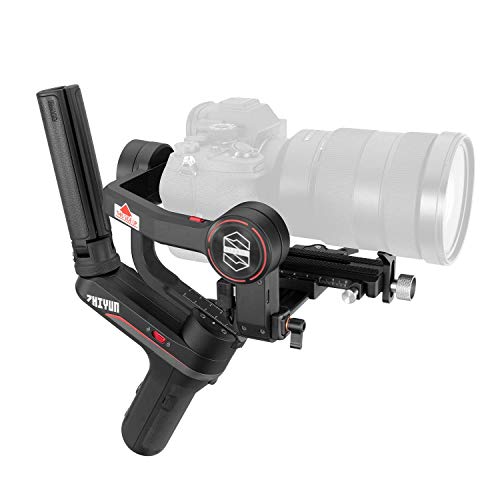
Best for DSLR Compatibility – Zhiyun Weebill S
Zhiyun Weebill S [Official] 3-Axis Gimbal Stabilizer for Mirrorless and DSLR Cameras
Check Price On AmazonThe Zhiyun Weebill S is a practical camera gimbal for DSLR and mirrorless cameras, with broad listed compatibility and a compact 926 g body. Its sling mode can make underslung shooting more comfortable during longer sessions.
Best For: DSLR and mirrorless users who value a lighter design, sling-style handling, and broad camera compatibility.
Pros:
- Compatible with numerous Sony, Panasonic, Canon, Nikon, Fujifilm, Olympus, and cinema-camera models.
- Compact folded design and approximately 14-hour battery life.
- Sling mode supports more comfortable underslung shooting.
- Optional image-transmission module can provide 1080p/30fps transmission over up to 100 meters.
Cons:
- Practical payload is 2.5 kg; heavier lenses such as 70-200mm f/2.8 may reduce effective capacity because of torque.
- Full camera control requires a separately compatible USB control cable.
- Not water resistant.
The Weebill S is appealing if you want a lighter gimbal with extensive camera support. Check the compatibility chart and cable requirements before buying, especially for camera-control features.
Best Compact Option – DJI RS 4 Mini
The DJI RS 4 Mini is a compact camera gimbal for DSLR-style and mirrorless workflows that prioritizes quick setup. Automated axis locks, fast vertical switching, and subject tracking make it suited to creators who need to move quickly.
Best For: Solo creators using lighter mirrorless cameras, vlog cameras, or phones for fast-moving and vertical content.
Pros:
- Automated axis locks help make the gimbal ready in about one second.
- Supports up to 2 kg and works with cameras and smartphones.
- Switches from horizontal to vertical shooting in about 10 seconds.
- Optional Intelligent Tracking Module keeps subjects framed during orbit shots and solo filming.
Cons:
- Its 2 kg payload is lower than the full-size RS 4.
- The Intelligent Tracking Module is an additional component rather than a stated standard feature.
- Not water resistant, and the DJI Ronin app may require download from DJI’s website.
Consider the RS 4 Mini when portability and rapid setup are more important than supporting heavier DSLR-and-lens combinations. Its smartphone compatibility also adds flexibility for mixed-camera creators.
Best Ergonomic Design – FeiyuTech SCORP-C
The FeiyuTech SCORP-C is a camera gimbal for DSLR and mirrorless users who want integrated handling features. Its hanging handle, tilted grip, built-in support bracket, and 5.5 lb payload are designed for flexible handheld and underslung shooting.
Best For: Camera operators who prioritize comfortable grip options, quick setup, and creative movement modes.
Pros:
- Supports a stated 5.5 lb payload for many listed DSLR and mirrorless combinations.
- Integrated hanging handle supports upright or underslung shooting.
- Built-in folding bracket lets the gimbal stand without a separate tripod.
- Offers trajectory memory, fast-follow, panorama, time-lapse, space, and vertical-shooting modes.
Cons:
- Compatibility and camera-control features vary by model and cable, so the camera list should be checked carefully.
- Advertised battery runtime is 10 to 13 hours, shorter than the Weebill S’s stated 14 hours.
- Not water resistant.
The SCORP-C stands out for its built-in ergonomic design and creative shooting options. It is a sensible pick for filmmakers who want multiple holding positions without adding as much external support gear.
Best Smart-Tracking Pick – DJI RS 4 Mini Combo
The DJI RS 4 Mini Combo is a strong camera gimbal for DSLR and mirrorless users who want quick setup, intelligent subject tracking, and flexible shooting options. Its auto axis locks, Teflon-enhanced balancing, and 2 kg payload support make it practical for fast-moving shoots and lighter camera setups.
Best For: Videographers who prioritize fast transitions, solo filming, intelligent tracking, and native vertical shooting.
Pros:
- Auto axis locks help speed up setup and pack-down.
- Includes the RS Intelligent Tracking Module for keeping subjects framed.
- Supports horizontal-to-vertical switching in about 10 seconds.
- Includes a tripod and briefcase handle for added shooting flexibility.
Cons:
- Its maximum payload is 2 kg, so heavier DSLR and lens combinations may not be suitable.
- It is not water resistant.
- Android users may need to download the DJI Ronin app from DJI’s official website rather than Google Play.
The RS 4 Mini Combo stands out when convenience and tracking matter as much as stabilization. It is especially appealing for creators who frequently switch between standard and vertical formats.
Best High-Payload Option – ZHIYUN CINEPEER Weebill 3E
The ZHIYUN CINEPEER Weebill 3E is a camera gimbal for DSLR and mirrorless cameras that combines a 3 kg tested payload with a lightweight body. Its native vertical mode, long battery life, and compatibility with larger lens combinations make it a useful choice for demanding shoots.
Best For: DSLR and mirrorless users carrying heavier camera-and-lens combinations or filming for extended periods.
Pros:
- Supports a tested payload of up to 3 kg.
- Native vertical shooting does not require extra accessories or dismantling the gimbal.
- Up to 16 hours of battery life supports long shooting days.
- Bluetooth shutter control can trigger recording or photo capture after pairing.
Cons:
- The package includes only a Panasonic control cable; other camera brands require additional cables.
- The sling grip and wrist rest for Sling Mode 2.5 are sold separately.
- It is not water resistant.
Choose the Weebill 3E if payload capacity and endurance are higher priorities than the smallest possible travel footprint. Check camera compatibility and control-cable requirements before buying.
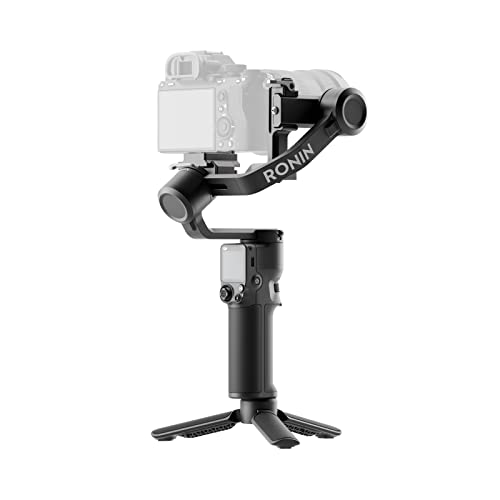
Best Lightweight Choice – DJI RS 3 Mini
The DJI RS 3 Mini is a lightweight camera gimbal for DSLR and mirrorless setups, weighing 795 g and supporting up to 2 kg. It offers three-axis stabilization, Bluetooth shutter control, native vertical shooting, and a color touchscreen in a compact design suited to travel.
Best For: Travelers and content creators who want a portable gimbal for lighter camera and lens combinations.
Pros:
- Lightweight 795 g design is easier to carry and hold for extended shooting.
- Supports camera-and-lens combinations up to 2 kg.
- Native vertical shooting is convenient for social media content.
- Includes a 1.4-inch full-color touchscreen and Bluetooth shutter control.
Cons:
- The 2 kg payload may limit heavier DSLR and lens setups.
- DJI Ronin app access is required for activation and full functionality.
- It is not water resistant.
The RS 3 Mini is a practical fit for creators who value low weight and portability without giving up core three-axis stabilization features. It is best matched with compact or moderate-weight camera setups.
Smart Tracking Pick – FeiyuTech SCORP 2 DSLR Gimbal
If you want a capable camera gimbal for DSLR and mirrorless shooting, the FeiyuTech SCORP 2 combines 3-axis motorized stabilization with built-in subject tracking. Its 2.5 kg payload, vertical-shooting setup, and camera-control options make it practical for creators who want fewer accessories in their kit.
Best For: DSLR and mirrorless filmmakers who want integrated AI tracking, vertical filming, and hands-on camera controls.
Pros:
- Built-in AI tracking activates through gestures without an extra tracking accessory.
- Supports up to 2.5 kg and includes a lens holder for larger camera setups.
- Offers quick vertical mounting, a 1.3-inch touchscreen, and a multifunction control knob.
- Supports wired or Bluetooth camera control, depending on compatibility.
Cons:
- At 1,070 g, it is not the lightest option for extended handheld use.
- It is not water resistant.
- Camera-control features may vary by camera model and connection method.
The SCORP 2 is a well-rounded choice when payload capacity and built-in tracking matter more than minimizing weight. Its included accessories and direct vertical-shooting setup add flexibility for both conventional video and social-oriented content.
Pro Workflow Pick – DJI RS 5 Camera Gimbal Combo
The DJI RS 5 is a camera gimbal for DSLR and mirrorless users who prioritize refined balancing and a complete shooting setup. This combo includes intelligent tracking, an electronic briefcase handle, automated axis locks, and a quick-open tripod for a more streamlined production workflow.
Best For: Professional and advanced creators who need precise balancing, low-angle control, and extended operating time.
Pros:
- Fine-tuning knobs and Teflon interlayers help simplify precise balancing.
- Enhanced Intelligent Tracking Module can track people, vehicles, or pets.
- Electronic briefcase handle supports intuitive single-handed, low-angle operation.
- Fully charges in one hour and provides up to 14 hours of standby time.
Cons:
- At 1.62 kg, it is the heaviest gimbal in this selection.
- The full combo may be more equipment than casual users need.
- The DJI Ronin app is not available through Google Play and requires an official-site download.
The RS 5 Combo stands out for production-oriented handling and setup efficiency. Its automated locks, balancing adjustments, tracking module, and included accessories make it a strong choice for demanding camera work, provided you are comfortable with its larger size and weight.
Most Versatile Pick – FeiyuTech SCORP Mini 3 Pro
The FeiyuTech SCORP Mini 3 Pro is a versatile camera gimbal for DSLR users who also shoot with compact cameras, smartphones, or action cameras. Its 2 kg payload, detachable remote handle, and 18-meter AI tracking range make it especially useful for solo creators working across different types of equipment.
Best For: Solo content creators who need one gimbal for cameras, phones, and action cameras.
Pros:
- Four-in-one compatibility supports mirrorless, compact, smartphone, and action cameras.
- AI Tracking 4.0 offers a stated maximum tracking distance of 18 meters.
- Detachable handle can serve as a remote control for more flexible operation.
- Modular quick-release hardware supports fast switching between horizontal and vertical shooting.
Cons:
- Its 2 kg payload is lower than the SCORP 2’s 2.5 kg capacity.
- It is not water resistant.
- Compatibility and control features may differ across cameras, phones, and action cameras.
The SCORP Mini 3 Pro is the most adaptable option here for creators who frequently change capture devices. It offers useful solo-shooting features and strong stabilization in a lighter package, though larger DSLR setups should stay within the 2 kg payload limit.
How We Picked the Best Camera Gimbal for Dslr Cameras
We focused on the factors that most affect real-world DSLR and mirrorless shooting: maximum payload, balance range, motor strength, stabilization modes, battery life, controls, and camera compatibility. We also considered whether each model is practical for handheld use, travel, event work, or more demanding production setups.
Compatibility matters as much as headline capacity. A gimbal must balance your camera body, lens, battery, memory card, and accessories—not just the camera’s listed weight. We also favored models with useful adjustment controls, reliable locking mechanisms, and clear support for common Canon, Sony, Nikon, Fujifilm, and Panasonic setups.
Quick Comparison
| What to compare | Best for | What to check |
|---|---|---|
| Payload capacity | DSLRs, cinema lenses, and accessories | Total rig weight and balance range |
| Compact design | Travel and run-and-gun shooting | Camera size, grip comfort, and folded dimensions |
| Advanced tracking | Solo creators and presenters | Subject tracking compatibility and included hardware |
| Combo bundles | Filmmakers building a complete kit | Included focus motors, transmitters, handles, or lights |
Key Buying Factors for a Camera Gimbal for Dslr
Payload and Balancing
Choose a gimbal with comfortable headroom above your fully assembled camera weight. A heavier lens, external monitor, microphone, or follow-focus motor can push a compact stabilizer beyond its ideal range. Proper mechanical balancing also reduces motor strain and improves battery life.
Camera Control and Compatibility
Check whether the gimbal supports your camera’s shutter, recording, focus, zoom, and wireless functions. Compatibility can vary by camera model and cable, so verify the manufacturer’s current compatibility list before buying.
Size, Grip, and Operating Modes
Compact models are easier to carry, but larger gimbals may provide stronger motors and more comfortable handles. Look for pan follow, lock, and portrait modes if you shoot social content, interviews, weddings, or moving scenes. A built-in display and quick-access controls can make setup faster.
Battery and Accessories
Review rated runtime, charging method, and whether batteries are removable. Combo packages may include valuable accessories, but compare their price with buying only the stabilizer if you already own compatible focus, mounting, or tracking equipment.
Who Should Buy Which Camera Gimbal for Dslr?
Choose a compact mini model if portability is your priority and you use a lightweight DSLR, mirrorless body, or small lens. These are well suited to travel, casual filmmaking, and social video.
Choose a mid-size three-axis gimbal for the best balance of capacity, controls, and portability. This category fits many everyday DSLR and mirrorless kits used for weddings, events, interviews, and commercial content.
Choose a larger or combo model if you regularly add heavier lenses, wireless transmitters, focus motors, monitors, or other accessories. The extra capacity and included tools can justify the higher price for professional workflows.
Before ordering, weigh your complete rig, confirm camera compatibility, and leave some payload margin. The best Camera Gimbal for Dslr shooting is the one you can balance quickly, carry comfortably, and operate confidently for the entire session.