Choosing a benchtop laboratory centrifuge comes down to more than just RPM. Tube capacity, rotor style, control accuracy, and safety features all affect how well a unit fits your workflow.
This roundup focuses on practical options for clinical, research, and prep tasks, helping you compare compact desktop models by performance, usability, and sample size.
Best 10 Benchtop Laboratory Centrifuge Picks for 2026
Best for Fast Routine Runs
ONiLAB PRP Benchtop Centrifuge, 6x Tubes

- Two quick-start programs for repeat workflows
- LCD shows RPM or g-force with timer control
- Safety interlock and overspeed detection built in
Best For: Small labs and clinics that need a simple, easy-to-run centrifuge for routine separations.
Best for Small Labs
BINGOX 4000 RPM Benchtop Centrifuge

- Two-knob speed and timer control for simple operation
- 6-tube rotor handles up to 20 mL tubes in balanced runs
- Clear lid and compact build suit classroom and small-lab use
Best For: Students, educators, and small labs needing a simple centrifuge for routine sample separation.
Best for Simple PRP Runs
ONiLAB Lab PRP Benchtop Centrifuge

- 300-5000 rpm, up to 2600 xg
- Two quick-start programs with memory
- Quiet operation and multiple safety locks
Best For: Small labs and PRP workflows that want an easy-to-use benchtop centrifuge.
Best for Basic Low-Speed Work
Lab Benchtop Centrifuge, 4000 RPM, 6 Tubes

- 4,000 RPM low-speed operation
- Timer and speed control included
- Compact 6-place rotor for 20 mL tubes
Best For: Small labs and clinics that need a simple centrifuge for routine low-speed separation.
Best for PRP/PRF Workflows
Lab PRP Benchtop Centrifuge CEN-001

- 300-5000 RPM range with RPM/RCF readout
- Two user presets for faster repeat runs
- Adapters for 1.5-5 mL, 7 mL, 10 mL, and 15 mL tubes
Best For: Cosmetic labs, research teams, and clinics running low-speed PRP/PRF separations.
Best for Small Sample Runs
Mxmoonant 6-Tube Benchtop Centrifuge
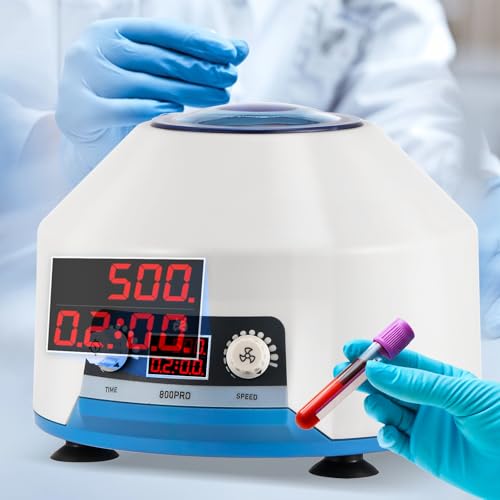
- 6-tube, 15 ml capacity for compact sample batches
- LCD display with separate speed and time controls
- 300-4000 RPM range fits basic PRP and lab separation
Best For: Clinics, small labs, and desktop users handling low-volume sample separation.
Best for Fast Micro-Sample Runs
4E's USA High Speed Micro Centrifuge

- 15,000 RPM max speed with 15,100 xg RCF
- PULSE quick spins and fast acceleration/braking
- Programmable for up to 10 routines with auto lid opening
Best For: Small labs and routine bench work that need fast, repeatable microtube spins.
Best for Low-Speed PRP Runs
CGOLDENWALL 8x15ml Benchtop Centrifuge
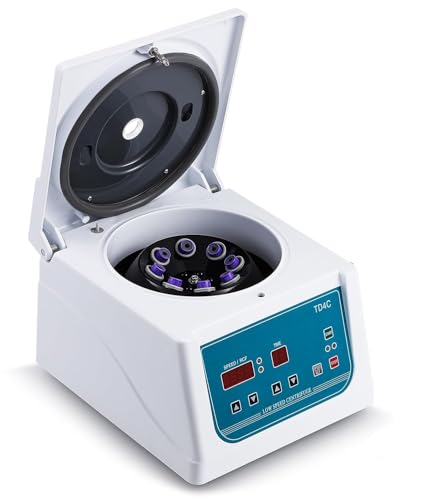
- 100-4000 RPM speed range with 1880 xg max force
- Holds 8 x 15 ml tubes for common lab formats
- Timer, LED display, and lid lock simplify daily use
Best For: Small labs and clinics needing a low-speed centrifuge for routine PRP-style separation.
Best for Routine Lab Work
ONiLAB Digital Desktop Centrifuge

- Fits common 50 mL and 15 mL tube sizes
- Simple digital controls with RPM/G-force display
- Built-in safety features and stable benchtop design
Best For: Teaching labs and routine sample separation with simple digital control.
Best for PRP & Serum Prep
DEJUN 4x100ml Lab Benchtop Centrifuge
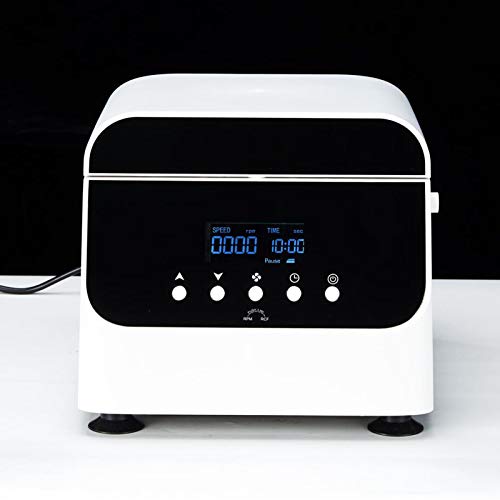
- 4 x 100 ml rotor for batch sample handling
- LCD display with 0-99 min timer controls
- Low-vibration design with lid safety stop
Best For: Labs and clinics needing a straightforward low-speed centrifuge for PRP, serum separation, and similar workflows.
Best for Fast Routine Runs – ONiLAB PRP Benchtop Centrifuge, 6x Tubes
If you want a benchtop laboratory centrifuge that keeps everyday sample prep simple, the ONiLAB model is built around quick-start convenience, a clear LCD, and enough speed range for common routine separations. It’s a practical fit for labs that value easy operation, safety interlocks, and a compact footprint over advanced programmability.
Best For: Small labs, clinics, and training spaces that need a straightforward benchtop centrifuge for routine tube separation.
Pros:
- Two quick-start programs and one-key operation make repeat runs easy
- LCD display supports RPM or g-force, plus timer control from 30 seconds to 99 minutes
- Safety features include lid interlock, overspeed detection, and automatic lock release
- Compact 6-place rotor handles common tube sizes from 1.5 mL to 15 mL
Cons:
- Capacity is limited to six tubes per run
- Not the right choice if you need higher throughput or advanced lab automation
Overall, this benchtop laboratory centrifuge stands out for simple control and dependable routine use rather than max capacity or feature-heavy programming. If your workflow is mostly repeatable PRP-style or general separation tasks, it offers a solid balance of speed, safety, and convenience.
Best for Small Labs – BINGOX 4000 RPM Benchtop Centrifuge
If you need a practical benchtop laboratory centrifuge for basic sample prep, this compact BINGOX unit gives you adjustable speed, a built-in timer, and a clear safety lid for easy monitoring. It is a straightforward fit for educational settings, PRP workflows, and light research tasks where simple controls matter more than advanced programmability.
Best For: Students, educators, and small labs that need a simple benchtop laboratory centrifuge for routine sample separation.
Pros:
- Speed and time are controlled with two easy-to-use rotary knobs
- 6-tube rotor supports balanced runs for up to six 20 mL tubes
- Clear lid helps you observe the centrifugation process during operation
- Useful for PRP separation, education, cosmetics research, and sample prep
Cons:
- 6-tube capacity is modest for higher-volume workflows
- Manual controls are less flexible than digital models
- Speed range is limited compared with higher-end laboratory centrifuges
Overall, this benchtop laboratory centrifuge is a sensible pick if you want a compact, easy-to-operate machine for routine tasks without paying for extras you may not need. Its balanced rotor design, timer, and transparent lid make it especially approachable for first-time users and smaller workspaces.
Best for Simple PRP Runs – ONiLAB Lab PRP Benchtop Centrifuge
If you want a benchtop laboratory centrifuge that is straightforward to operate for routine sample prep, this ONiLAB unit keeps the controls simple while still covering the speeds and tube sizes most small labs need. The digital display, preset start programs, and adjustable timer make it practical for repeatable daily use.
Best For: Small labs, clinics, and PRP workflows that need an easy-to-run benchtop centrifuge with basic programmable control.
Pros:
- 300-5000 rpm range with up to 2600 xg for routine separation tasks
- Two quick-start programs plus knob-based memory for faster repeated runs
- Runs quietly at up to 56 dB with lid-lock, overspeed detection, and self-test safety features
- Supports multiple common tube sizes with a 6-place fixed-angle rotor and adaptors
Cons:
- Lower-capacity design may not suit higher-throughput lab workloads
- Best suited to basic centrifugation rather than advanced protocol control
- Bulkier than compact mini centrifuges at nearly 14 pounds
Overall, this benchtop laboratory centrifuge is a solid fit if you value easy operation, preset convenience, and safety features over advanced customization. It is a sensible pick for routine sample separation in smaller workspaces.
Best for Basic Low-Speed Work – Lab Benchtop Centrifuge, 4000 RPM, 6 Tubes
If you want a straightforward benchtop laboratory centrifuge for routine samples, this low-speed desktop unit covers the essentials without adding unnecessary complexity. With a 4,000 RPM max speed, timer, and adjustable speed control, it is a practical pick for light-duty lab, medical practice, or educational use where consistency matters more than high-end performance.
Best For: Routine low-speed separation tasks in small labs, clinics, and training environments that need a simple, compact centrifuge.
Pros:
- Simple speed and timer controls for everyday operation
- Compact benchtop design suited to small workspaces
- 6-place rotor with 20 mL x 6 capacity for basic sample handling
- Low-speed operation fits common routine separation needs
Cons:
- 4000 RPM limit may be too modest for more demanding protocols
- Limited capacity compared with larger benchtop laboratory centrifuge models
- Best suited to light-duty use rather than advanced lab applications
Overall, this benchtop laboratory centrifuge makes sense if you need an affordable, uncomplicated machine for standard low-speed work. It is more about dependable basics than specialty features, which can be exactly what a small lab or practice needs.
Best for PRP/PRF Workflows – Lab PRP Benchtop Centrifuge CEN-001
If you need a benchtop laboratory centrifuge for low-speed PRP/PRF processing, the Maccx CEN-001 gives you a wide 300-5000 RPM range, programmable memory, and a compact footprint that fits routine lab use without overcomplicating the controls.
Best For: Cosmetic labs, research teams, and clinics that want a low-speed benchtop centrifuge with preset programs and multiple tube adapters.
Pros:
- Broad 300-5000 RPM range with RPM or RCF display for flexible setup
- Two programmable presets help speed up repeat runs
- Includes adapters for 1.5-5 mL, 7 mL, 10 mL, and 15 mL tubes
- Safety features include door interlock, overspeed detection, and auto diagnostics
Cons:
- Max RCF of 2600×g is better for low-speed applications than heavy-duty separation
- Single-rotor setup may be limiting for users who need larger capacity
- Not the quietest option at higher loads, though 52 dB is still moderate
Overall, this benchtop laboratory centrifuge is a practical fit when you want simple controls, repeatable programs, and enough tube flexibility for everyday PRP/PRF or sample separation tasks.
Best for Small Sample Runs – Mxmoonant 6-Tube Benchtop Centrifuge
If you need a compact benchtop laboratory centrifuge for routine PRP or small-batch sample separation, the Mxmoonant unit covers the basics well. It offers a 6-tube rotor, 300-4000 RPM control, and an LCD display for quick at-a-glance monitoring, making it a practical fit for simple desktop workflows.
Best For: Clinics, teaching labs, and home or small practice setups that want a straightforward desktop centrifuge for low-volume processing.
Pros:
- LCD digital display makes speed and time easy to track during operation
- Adjustable 300-4000 RPM and 0-100 minute timing give useful control
- 6-tube, 15 ml capacity suits compact sample runs and PRP workflows
- Low 50W motor and sub-50 dB noise help keep desktop use manageable
Cons:
- 110V power limits use to compatible regions
- Not ideal for larger throughput or heavier-duty lab workloads
- Requires balanced loading, which adds a small extra step for single samples
Overall, this benchtop laboratory centrifuge is a sensible pick if your priority is simple controls, compact size, and dependable low-volume separation rather than advanced features or high-capacity output.
Best for Fast Micro-Sample Runs – 4E's USA High Speed Micro Centrifuge
If you need a benchtop laboratory centrifuge for quick, repeatable micro-sample work, this 4E’s USA model focuses on speed, control, and workflow efficiency. It reaches up to 15,000 RPM, offers programmable runs, and adds PULSE quick spins for short turnaround tasks.
Best For: Small labs, teaching labs, and routine bench workflows that need fast spins for 0.2ml to 2ml tubes with simple repeatable operation.
Pros:
- High top speed with 15,100 xg RCF for demanding microcentrifuge tasks
- Programmable storage for up to 10 settings simplifies repetitive workflows
- Fast acceleration/braking and auto lid opening help save time between runs
- PULSE quick spins are handy for brief, on-demand sample prep
Cons:
- Designed for microtubes only, so it won’t replace larger-capacity centrifuges
- High-speed focus may be more than needed for basic low-volume use
Overall, this benchtop laboratory centrifuge is a strong fit if speed, consistency, and ease of use matter more than maximum tube capacity. It’s a practical pick for labs that want fast micro-sample processing without a complicated setup.
Best for Low-Speed PRP Runs – CGOLDENWALL 8x15ml Benchtop Centrifuge
If you need a benchtop laboratory centrifuge for routine low-speed separation, this CGOLDENWALL model offers a practical mix of adjustable speed, a compact 8-tube rotor, and straightforward timer control. It is suited to common lab tasks where repeatable performance and simple operation matter more than high-throughput capacity.
Best For: Small labs, clinics, and users who want a low-speed benchtop centrifuge for PRP-style and general separation work.
Pros:
- 100-4000 RPM range with up to 1880 xg for flexible low-speed workflows
- 8 x 15 ml capacity fits common 5-15 ml tubes used in labs and clinics
- 1-99 minute timer and LED display make settings easy to monitor
- Lid lock and sub-65 dB operation improve everyday usability
Cons:
- Not a high-capacity option for larger batch processing
- Best suited to lighter-duty laboratory tasks rather than demanding industrial use
Overall, this benchtop laboratory centrifuge is a sensible pick if you want a simple desktop unit for routine separation work and controlled low-speed operation. Its modest size and easy controls make it especially appealing for labs that value practicality over advanced features.
Best for Routine Lab Work – ONiLAB Digital Desktop Centrifuge
If you need a practical benchtop laboratory centrifuge for everyday sample prep, this ONiLAB model covers the basics well: multiple tube sizes, simple digital controls, and adjustable speed and time settings for routine separation tasks.
Best For: Teaching labs, small research settings, and routine sample separation where ease of use and broad tube compatibility matter more than advanced features.
Pros:
- Supports a wide range of tube sizes, including 50 mL and 15 mL formats
- Digital RPM/G-force display with timer, pulse spin, and adjustable braking
- Safety-focused design with lid interlock, overspeed detection, and self-diagnosis
- Stable build with brushless motor, cast-iron base, and suction feet
Cons:
- Not ideal if you need higher speeds or higher g-force for more demanding protocols
- Single fixed-angle setup limits flexibility compared with modular systems
- At 13.2 pounds, it is still a benchtop unit rather than a truly portable option
Overall, this benchtop laboratory centrifuge is a solid fit for labs that want straightforward operation, decent capacity, and dependable safety features without paying for advanced performance extras.
Best for PRP & Serum Prep – DEJUN 4x100ml Lab Benchtop Centrifuge
If you need a practical benchtop laboratory centrifuge for routine low-speed sample work, this DEJUN model offers a useful mix of capacity, simple controls, and safety features. It spins up to 4000 rpm, holds 4 x 100 ml tubes, and adds an LCD display plus a 0-99 minute timer for straightforward day-to-day use.
Best For: Labs, clinics, and research settings that want a low-speed centrifuge for PRP, serum separation, and other general separation tasks.
Pros:
- 4 x 100 ml rotor gives solid capacity for batch processing
- LCD display and timer make operation easy to monitor
- Low vibration, low noise, and stabilized feet improve bench stability
- Auto-stop lid protection adds a helpful safety layer
Cons:
- 110V only, so compatibility depends on your workspace power
- Low-speed design is not suited for high-RCF applications
- Bulkier than compact mini centrifuge options
For buyers who want a dependable benchtop laboratory centrifuge without complicated programming, this DEJUN unit covers the core basics well. Its strength is simple, stable operation for common separation workflows rather than advanced performance features.
How We Picked These Benchtop Laboratory Centrifuges
We prioritized models that balance usable speed ranges, clear timer controls, and capacities suited to common lab tubes. We also looked for stable desktop footprints, readable displays, and rotor setups that match everyday sample-prep needs.
Because buyers use a Benchtop Laboratory Centrifuge for very different tasks, we favored a mix of low-speed PRP-style units, higher-speed microcentrifuges, and larger-capacity machines.
Quick Comparison
If you need routine blood or PRP processing, low-speed units with 6-place or 8-place rotors are usually the easiest fit. For microtubes and small-volume research work, a higher-RPM model with stronger RCF will be the better choice. Larger 50 mL or 100 mL tube capacity is more useful when batch size matters more than top-end speed.
Key Buying Factors for a Benchtop Laboratory Centrifuge
Speed and RCF
RPM tells you how fast the rotor spins, but RCF tells you the actual separation force. For real-world performance, compare both values. If you work with delicate samples, lower-speed control can matter just as much as maximum speed.
Tube Capacity and Rotor Type
Match the rotor to your most common tube size. A Benchtop Laboratory Centrifuge that fits 1.5 mL to 15 mL tubes is ideal for small samples, while 50 mL or 100 mL capacity is better for larger-volume workflows. Fixed-angle rotors are common and practical for general use.
Controls, Timer, and Display
Digital speed and time settings make repeatable runs easier. Look for a timer that supports your typical protocols and a display that is easy to read at a glance.
Footprint, Noise, and Stability
Since these units sit on the bench, compact size and stable operation matter. If your workspace is shared or limited, choose a machine that is easy to position, level, and clean.
Safety and Build Quality
Secure lid locking, balanced loading, and sturdy housing are important in any lab environment. Better build quality can improve consistency and reduce vibration during repeated use.
Who Should Buy Which Benchtop Laboratory Centrifuge?
Choose a low-speed PRP-focused centrifuge if you mainly process blood-derived samples, cosmetic prep, or routine separation tasks. Choose a high-speed microcentrifuge if you need stronger force for small tubes, pellet formation, or research workflows.
If you handle mixed tube sizes, pick a versatile Benchtop Laboratory Centrifuge with multiple adapters or broader rotor compatibility. For higher throughput, larger-capacity models are the most practical choice, especially when you want fewer runs per batch.